Introduction
Landscape lighting in 2026 is moving beyond simple solar fixtures toward systems that combine energy independence with responsive illumination. Motion-activated solar bollards now offer a practical way to improve safety, reduce wiring costs, and limit unnecessary nighttime power use across paths, campuses, parks, and residential sites. This article explains the design and technology trends shaping current specifications, from sensor performance and battery chemistry to light output strategies and placement considerations. By the end, readers will have a clear view of what makes these bollards effective, where they fit best, and what to watch when planning future-ready outdoor spaces.
Why Motion-Activated Solar Bollards Matter in 2026
The landscape architecture and commercial lighting sectors are undergoing a structural shift toward decentralized, intelligent illumination. By 2026, motion-activated solar bollards have evolved from niche sustainable alternatives into primary specification choices for corporate campuses, municipal parks, and high-end residential developments. This transition is driven by the convergence of high-efficiency photovoltaics, advanced energy storage, and sophisticated presence-detection algorithms, allowing these fixtures to operate as reliable, autonomous micro-grids without the burden of extensive subterranean wiring.
Defining motion-activated solar bollards
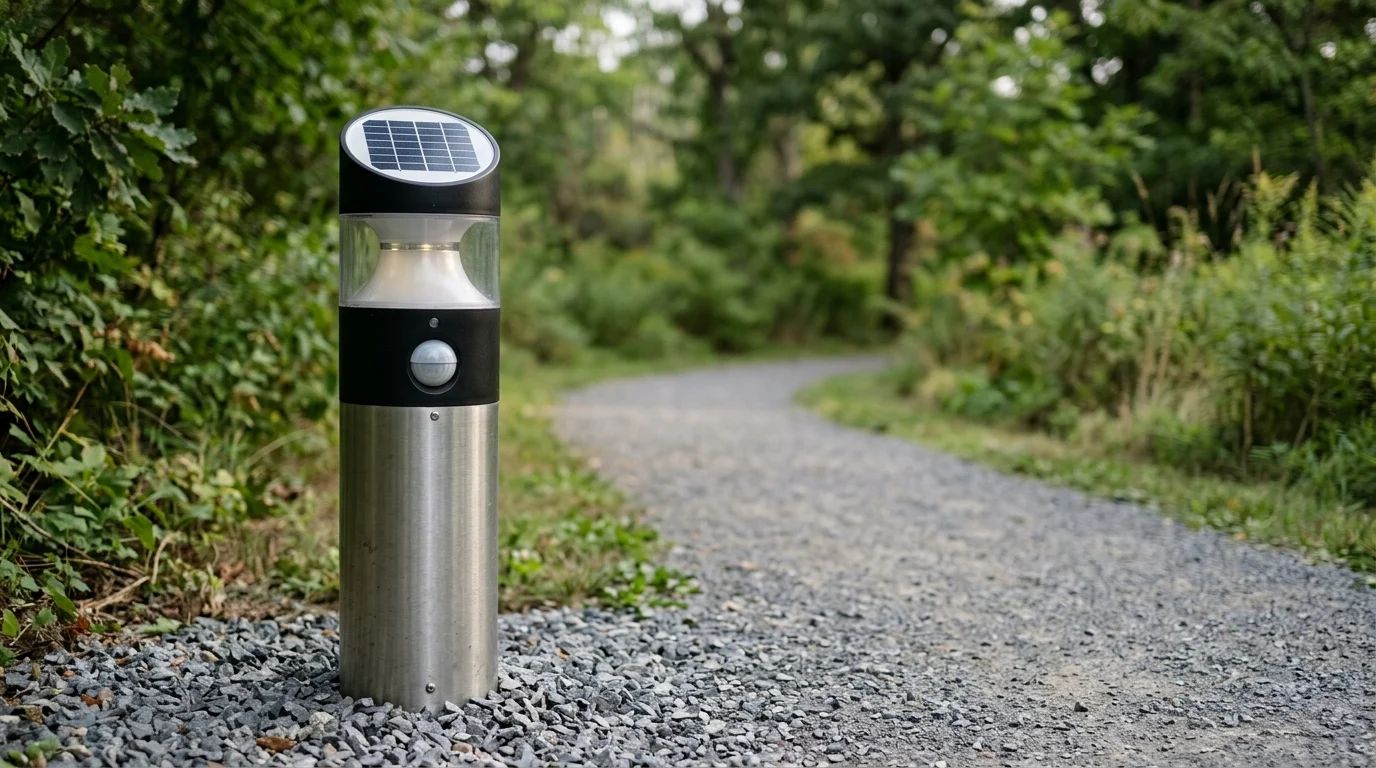
At their core, motion-activated solar bollards are self-contained pathway luminaires that use integrated solar panels to charge an internal battery pack, which subsequently powers an LED array controlled by environmental sensors. Unlike traditional dusk-to-dawn solar lights that often deplete their energy reserves before morning, these intelligent fixtures rely on passive infrared (PIR) or microwave radar sensors to optimize power consumption. They typically operate on a dual-mode profile, maintaining a low-output ambient state—often around 20% to 30% of maximum luminosity—and instantly scaling to 100% output when pedestrian or vehicular movement is detected within the sensing zone.
Modern commercial iterations rely on monocrystalline silicon panels with conversion efficiencies exceeding 22%, paired with lithium iron phosphate (LiFePO₄) battery banks. This specific chemical composition provides a resilient cycle life of over 2,000 charge-discharge cycles, translating to roughly five to seven years of reliable daily operation before natural capacity degradation begins to impact overall photometric performance.
Key 2026 design and demand drivers
The demand for motion-activated solar bollards in 2026 is heavily influenced by stringent environmental regulations and escalating skilled labor costs. Municipalities are increasingly adopting Dark Sky mandates, requiring fixtures with zero uplight (a U0 rating in the BUG classification system) to mitigate urban light pollution. Motion activation inherently supports these ecological initiatives by drastically reducing overall lumen output and energy waste when pathways remain unoccupied.
Financially, the elimination of trenching, conduit installation, and grid connection fundamentally alters project economics. Traditional hardwired commercial installations often incur trenching and civil engineering costs ranging from $25 to $50 per linear foot, depending on the terrain and urban density. By bypassing these requirements, developers can reallocate capital toward higher-quality luminaire aesthetics. The integration of vertical solar cylinders—which wrap highly efficient monocrystalline cells entirely around the extruded aluminum bollard shaft—has resolved long-standing aesthetic complaints regarding flat, top-mounted solar panels. This 360-degree energy harvesting approach ensures continuous charging regardless of specific pathway orientation, a critical advancement for complex 2026 landscape designs.
How to Compare Motion-Activated Solar Bollard Performance

Specifying commercial-grade solar lighting requires a rigorous analytical approach. Procurement teams and lighting designers must evaluate hardware not merely on peak lumen output but on the system’s ability to balance energy generation, storage capacity, and precise sensor actuation across varying seasonal and environmental conditions.
Core criteria for commercial-grade evaluation
The most critical metric for any off-grid luminaire is its autonomy—the number of consecutive days the fixture can operate at specified light levels without direct sunlight. A robust commercial motion-activated solar bollard must deliver a minimum of 3 to 5 days of autonomy to ensure uninterrupted safety lighting during prolonged overcast winter periods. This requires precise sizing of the LiFePO4 battery relative to the LED load and the geographic solar insolation data of the installation site.
Sensor reliability also dictates performance. While standard PIR sensors are highly sensitive to ambient temperature fluctuations and possess a limited reach, spec-grade fixtures in 2026 predominantly feature 5.8GHz microwave radar sensors. These sensors offer an omnidirectional detection radius of 8 to 12 meters and are immune to false triggers caused by wind-blown debris or sudden thermal shifts, ensuring the battery is only taxed when genuine occupancy occurs. Thermal management also plays a pivotal role in performance comparison. Since high-capacity batteries degrade rapidly when exposed to extreme heat, spec-grade fixtures incorporate thermal isolation chambers between the LED heat sink and the battery compartment, maintaining the core temperature of the energy storage unit within an optimal 15°C to 25°C operating window.
What to include in a comparison table
To effectively differentiate between entry-level and high-performance options, specifiers should use a standardized evaluation matrix. A comprehensive comparison table clarifies the technical disparities that impact long-term total cost of ownership (TCO) and operational reliability.
| Specification Metric | Entry-Level Commercial | High-Performance 2026 Spec |
|---|---|---|
| Battery Chemistry | Lithium-ion (LiCoO₂) | Lithium Iron Phosphate (LiFePO₄) |
| System Autonomy | 1 to 2 days | 4 to 6 days |
| Sensor Technology | PIR (Passive Infrared) | 5.8GHz Microwave Radar |
| Detection Radius | 3 to 5 meters | 8 to 12 meters |
| Luminous Efficacy | 100 – 120 lm/W | 160 – 200 lm/W |
| Operating Temperature | -10°C to 45°C | -20°C to 60°C |
By analyzing these specific parameters, buyers can avoid under-specified units that risk premature battery failure or inadequate winter performance, ensuring the selected hardware aligns with the rigorous demands of commercial landscape environments.
Compliance, Installation, and Sourcing Risks
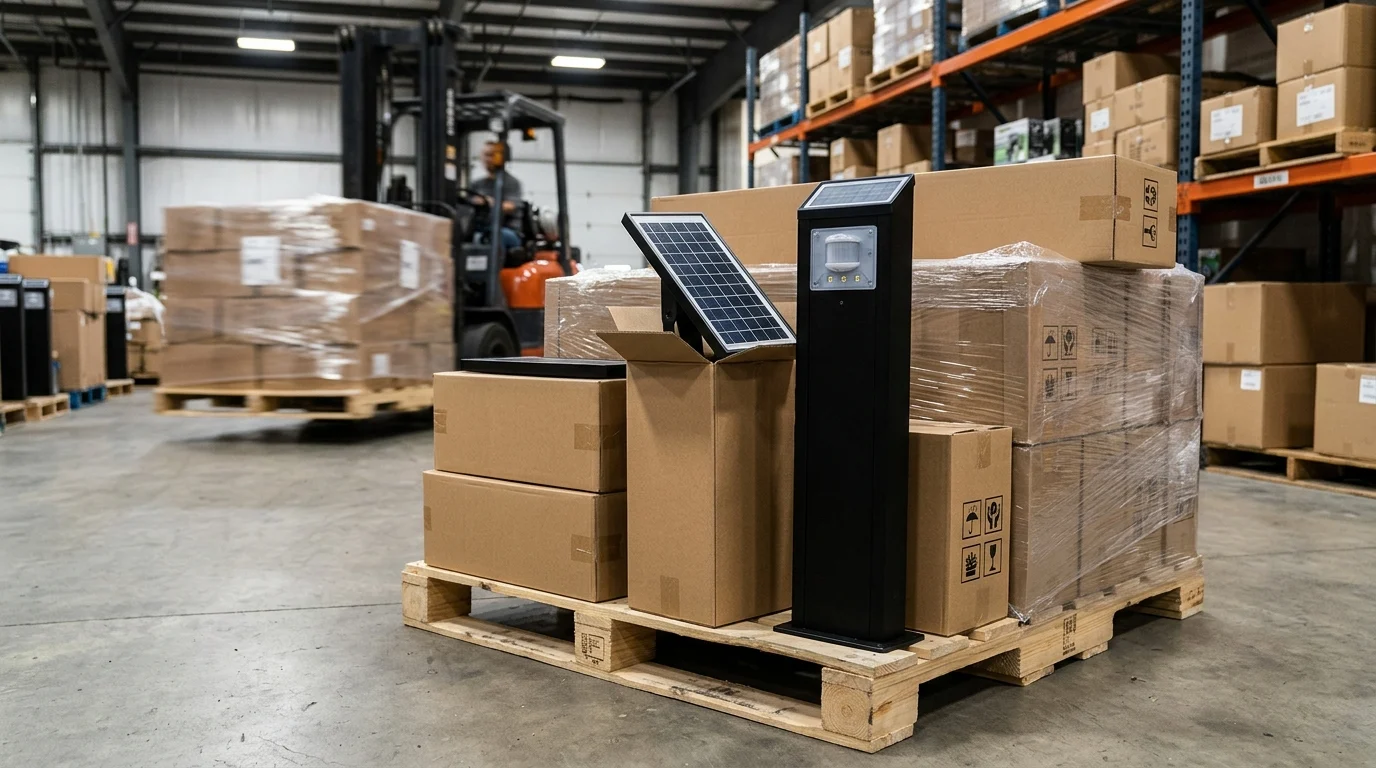
Even the highest-performing hardware can become a liability if compliance standards are ignored or if supply chain vulnerabilities disrupt project timelines. Successfully deploying motion-activated solar bollards at scale requires navigating building codes, accessibility requirements, and complex international sourcing dynamics.
Code, accessibility, and durability considerations
Pathway lighting must adhere to strict accessibility and life-safety codes. Under the Americans with Disabilities Act (ADA) and similar international standards, commercial pathways must maintain specific uniformity ratios and a minimum illumination level of 1 footcandle (approximately 10.8 lux) at the walking surface. Specifiers must calculate the motion-triggered lumen output and the fixture spacing—typically 15 to 25 feet apart depending on optic distribution—to guarantee these thresholds are met without creating blinding glare.
Durability ratings are equally non-negotiable.
Key Takeaways
- The most important conclusions and rationale for motion-activated solar bollards
- Specs, compliance, and risk checks worth validating before you commit
- Practical next steps and caveats readers can apply immediately
Frequently Asked Questions
What battery type is best for commercial motion-activated solar bollards?
LiFePO4 is the preferred choice. It typically delivers 2,000+ cycles, stable performance, and about 5-7 years of daily use before noticeable capacity drop.
How many backup days should a motion-activated solar bollard provide?
For commercial projects, target 3-5 days of autonomy. That helps maintain pathway lighting through cloudy periods and winter weather without grid power.
Which sensor is better for 2026 projects: PIR or microwave radar?
Microwave radar is usually better for spec-grade projects. It offers roughly 8-12 meters of detection, broader coverage, and fewer false triggers than standard PIR.
Why are motion-activated solar bollards popular for landscape design in 2026?
They reduce trenching and wiring costs, support Dark Sky goals, and improve energy efficiency by dimming when areas are unoccupied and brightening only when motion is detected.
Can Morelux support custom motion-activated solar bollard projects?
Yes. Morelux supports project buyers with custom pole solutions, technical drawings, engineer assistance, dependable manufacturing, and fast quote response for infrastructure and commercial applications.