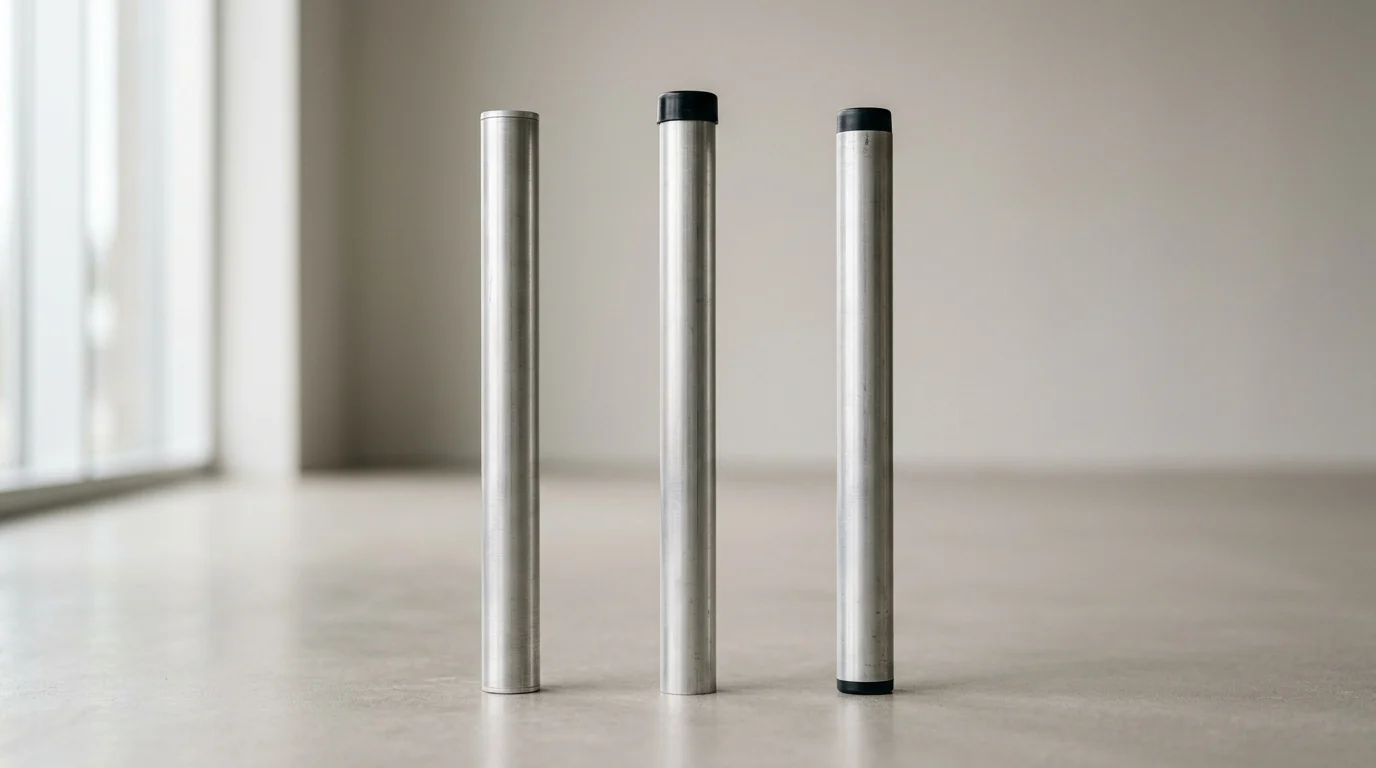
Strategic Advantages of Aluminum Poles
The deployment of 5G networks relies heavily on network densification through small cells. This architectural shift moves infrastructure from macro cell towers to street-level assets, placing rigorous demands on the physical poles housing the equipment. Extruded and spun aluminum poles have emerged as a primary structural solution for these integrated nodes, balancing aesthetic mandates with structural integrity. Procurement teams must evaluate base materials not only for load-bearing capacity but also for modularity and long-term environmental resilience.
Platform fit for dense urban deployments
Urban environments dictate strict spatial and weight limitations, particularly for retrofits or rooftop-mounted nodes. Aluminum poles manufactured from marine-grade alloys, specifically 6063-T6, provide an optimal foundation for these deployments. With typical wall thicknesses engineered between 3mm and 5mm, and base diameters scaled from 114mm to 200mm depending on the internal equipment load, these structures integrate seamlessly into existing cityscapes.
The lightweight nature of aluminum is a critical logistical advantage. Weighing 35% to 50% less than equivalent carbon steel structures, aluminum poles significantly reduce the need for heavy lifting equipment during street-level installations. This weight reduction accelerates deployment timelines and cuts labor costs, making the material highly suitable for rapid, high-density rollouts across metropolitan grids.
When aluminum is preferred over steel
While galvanized steel remains a staple in highway and macro-tower applications, aluminum is structurally and economically superior for dense urban 5G nodes. The primary driver is corrosion resistance; aluminum naturally forms a protective oxide layer, eliminating the need for periodic re-galvanization or touch-up painting in high-salinity coastal zones or heavy-pollution urban centers.
Over a standard 15- to 20-year telecom infrastructure lifecycle, aluminum poles yield a substantially lower total cost of ownership (TCO) due to near-zero maintenance requirements. Furthermore, aluminum’s superior machinability allows for precise CNC routing of internal channels and access hatches. This precision is required for concealing complex power and fiber optic cabling, maintaining the sleek, tamper-resistant profile demanded by municipal zoning boards.
Thermal and RF Design Evaluation
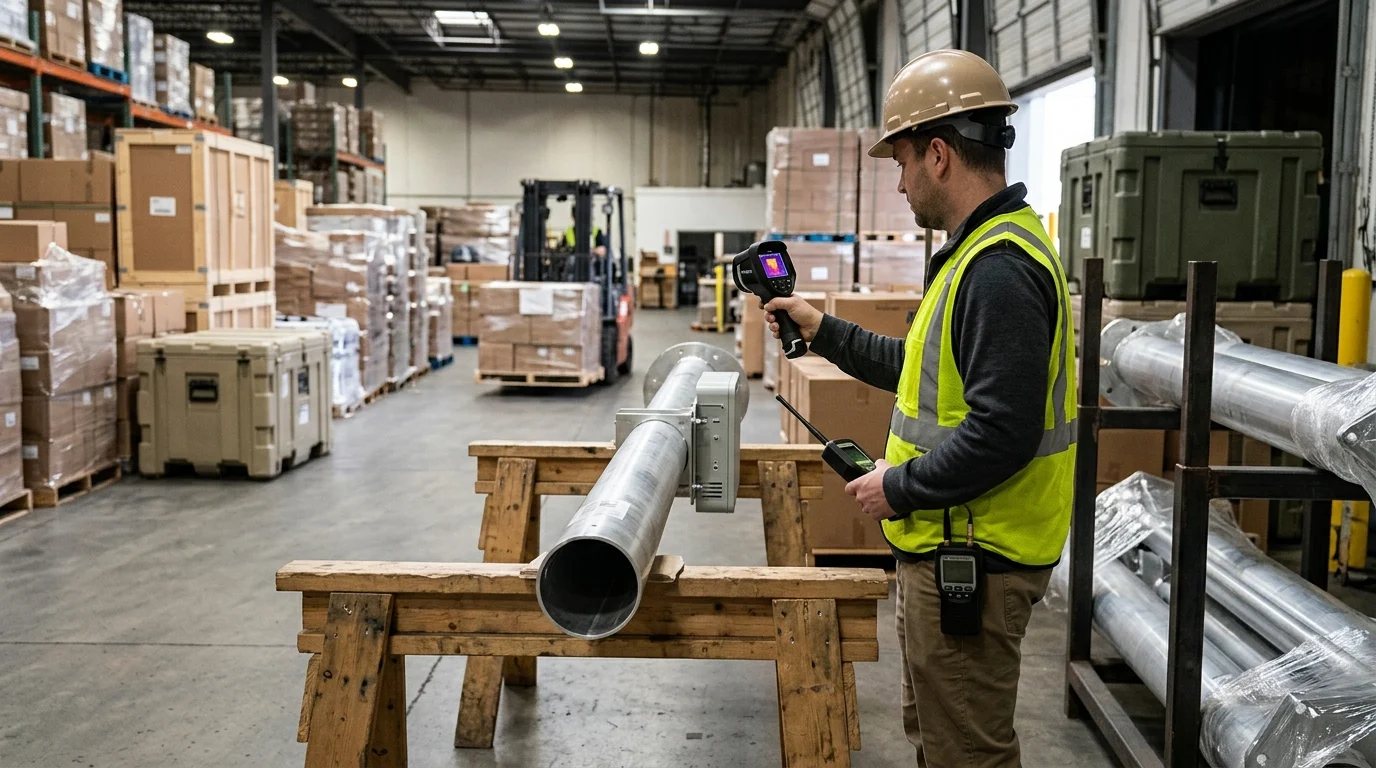
Integrating active radio equipment, baseband units, and power supplies into a confined cylindrical space presents complex engineering challenges. For 5G small cells, the pole is no longer just a passive structural support; it is an active component of the network hardware. Evaluating aluminum poles requires a rigorous analysis of how the enclosure manages internal heat loads and interacts with high-frequency radio waves.
Key thermal specifications for integrated poles
5G radios, particularly those operating in the mmWave spectrum, generate substantial thermal loads that must be dissipated to prevent equipment throttling or hardware failure. Aluminum excels in passive thermal management, acting as an extended heat sink for the enclosed electronics.
The thermal conductivity of 6063-T6 aluminum is approximately 200 W/m·K, which is nearly four times higher than that of standard carbon steel (roughly 45 to 50 W/m·K). Manufacturers often design custom extrusions with internal heat-dissipating fins or specific wall thicknesses—typically between 4mm and 6mm for high-load zones—to optimize heat transfer from the internal radios to the external ambient air. Maintaining internal operating temperatures below the critical 55°C threshold is vital for maximizing the lifespan of the housed telecom electronics.
RF factors that affect antenna performance
While aluminum is excellent for thermal dissipation, its high electrical conductivity makes it entirely opaque to radio frequencies. Consequently, 5G antennas cannot be housed behind aluminum walls. Integrated smart poles solve this by utilizing a hybrid construction: an aluminum lower shaft for structural support and thermal management, coupled with an RF-transparent radome at the apex.
The design of the transition joint between the aluminum collar and the composite radome is critical to prevent water ingress and maintain structural rigidity under high wind loads, which are often rated for 120 mph to 150 mph depending on regional compliance codes. Procurement specifications must clearly delineate the boundary between the RF-blocking metal and the transmission zone.
| Material Characteristic | Aluminum (6063-T6) | Carbon Steel (Galvanized) | Composite Radome (Fiberglass) |
|---|---|---|---|
| Thermal Conductivity | ~200 W/m·K | ~50 W/m·K | < 1 W/m·K |
| RF Transparency | Opaque (0%) | Opaque (0%) | High (>95% transmission) |
| Density | 2.7 g/cm³ | 7.8 g/cm³ | 1.8 – 2.0 g/cm³ |
| Primary Pole Function | Heat sink, structural base | High-load structural base | Antenna concealment |
Sourcing, Compliance, and Procurement Criteria
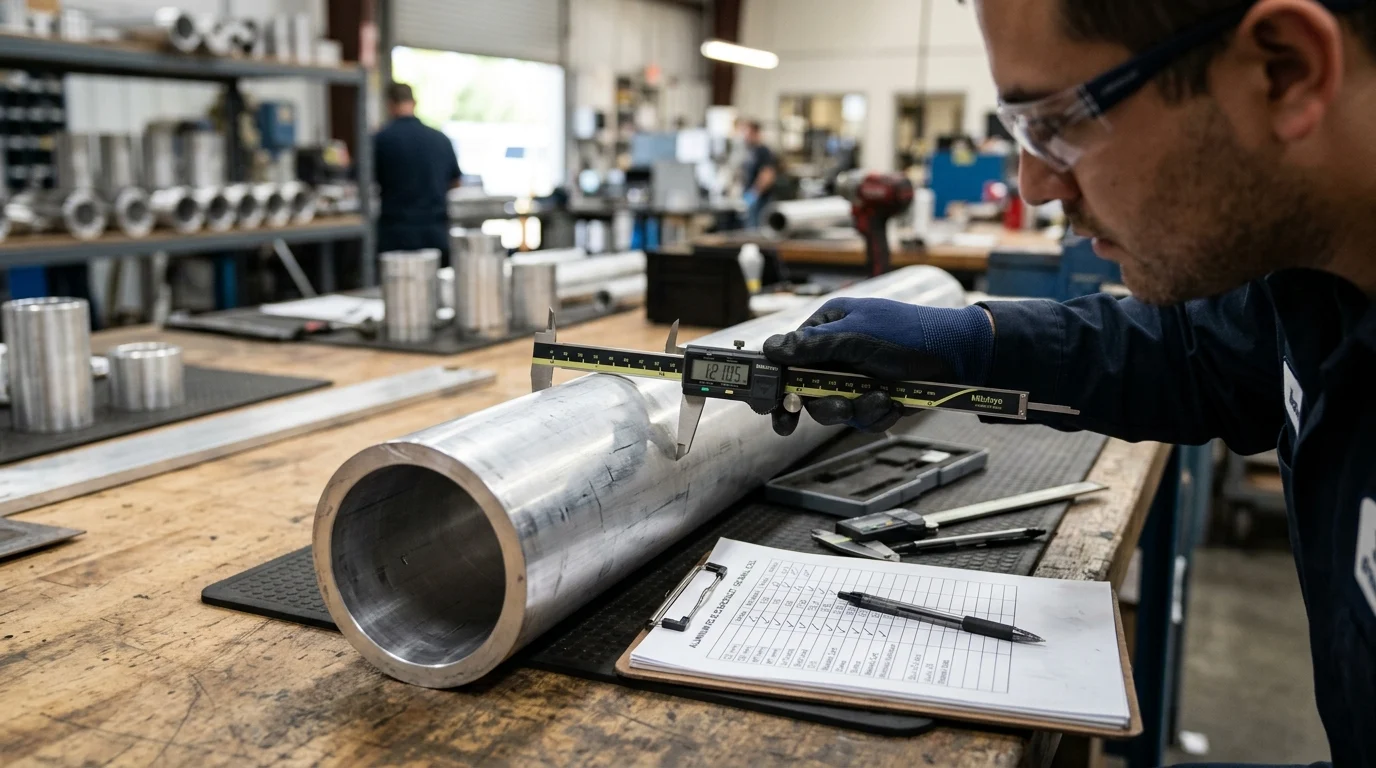
Procuring aluminum poles for large-scale 5G deployments requires strict vendor qualification. Buyers must assess a manufacturer’s capacity to deliver consistent quality across hundreds or thousands of units while adhering to municipal codes and telecom standards. A robust supply chain strategy focuses on vertical integration, ensuring that the manufacturer controls the critical stages of fabrication, finishing, and compliance testing.
Supplier capabilities, testing, and customization
Leading manufacturers handle cutting, bending, spinning, welding, coating, and anodizing under one roof. This integration is crucial for maintaining the tight tolerances required for telecom equipment mounting. Procurement teams should verify that suppliers conduct rigorous non-destructive testing (NDT) on structural welds and perform salt spray testing—typically exceeding 1,000 hours—to validate the durability of anodized or powder-coated finishes.
Customization capabilities are equally important. Buyers often require specific base flange dimensions, such as a 114mm to 250mm diameter footprint, alongside custom access doors featuring tamper-proof locking mechanisms. Minimum Order Quantities (MOQs) for highly customized extruded profiles usually start between 50 and 100 units, making it essential to align supplier production capacity with phased deployment schedules.
How to compare quotations and delivery terms
When evaluating quotations, buyers must look beyond the unit price of the raw pole. A comprehensive quote comparison should factor in surface treatment costs, internal mounting brackets, and any specific alloy premiums. Logistics play a massive role in the final landed cost; because poles are high-volume, low-density cargo, optimizing shipping container space is a primary cost lever.
Buyers should request detailed packing configurations, aiming for 40-foot High Cube containers that can efficiently stack nested or modular pole designs to minimize freight costs per unit.
Key Takeaways
- Wholesale sourcing and supply-chain implications for Aluminum Poles
- Specifications, compliance, and commercial terms buyers should validate
- Actionable recommendations for distributors and procurement teams
Frequently Asked Questions
Why are aluminum poles preferred for 5G small cells?
They are 35%–50% lighter than steel, resist corrosion, and support clean cable concealment for urban small-cell installations.
Can 5G antennas be placed inside an aluminum pole?
No. Aluminum blocks RF signals, so antennas should sit in an RF-transparent radome above the aluminum section.
What thermal target should an integrated 5G pole design meet?
Keep internal equipment temperatures below 55°C using 6063-T6 aluminum, suitable wall thickness, and passive heat-dissipation features.
What pole details should buyers confirm before requesting a quote from Morelux?
Share pole height, top and base diameter, wall thickness, wind load, antenna/radio layout, access door needs, and finish requirements for faster drawings and pricing.
Can Morelux customize aluminum poles for 5G small-cell projects?
Yes. Morelux can provide custom dimensions, technical drawings, engineer support, and manufacturing for integrated smart-pole and telecom pole projects.