Introduction
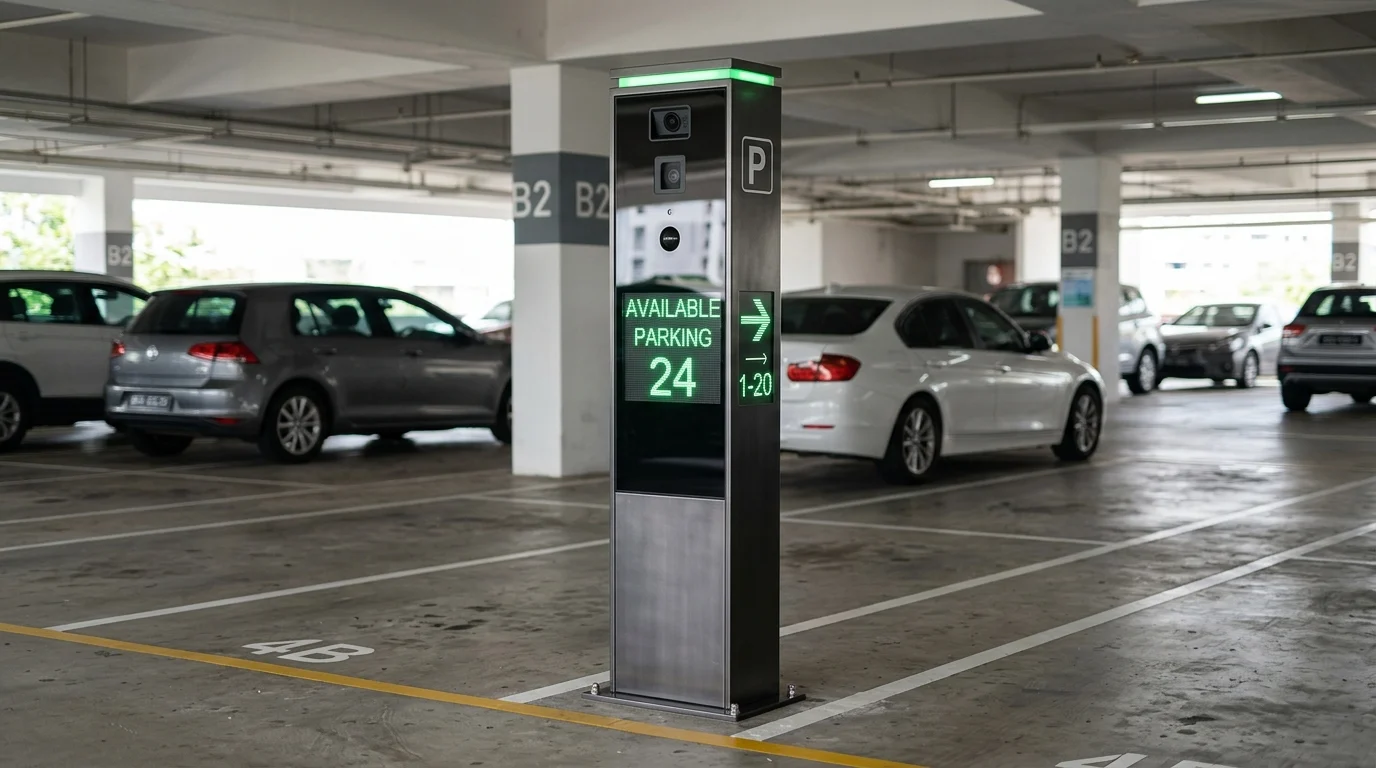
Finding parking is a small decision that creates outsized pressure on city streets. A smart parking guidance pole addresses that problem by displaying real-time space availability at key approach points, helping drivers choose the right route before they enter congested blocks or circle crowded facilities. This article explains how these poles work, what technologies support their live updates, and why they matter for traffic flow, emissions, and driver experience. It also connects the system’s street-level function to broader goals for municipalities, parking operators, and commercial districts, providing a practical foundation for evaluating where this infrastructure delivers the most value.
Why Smart Parking Guidance Poles Matter
Urban mobility planners consistently face a critical bottleneck: the phenomenon of parking search traffic. Studies indicate that up to 30% of traffic congestion in dense urban centers is generated by drivers actively cruising for available parking spaces. The deployment of a smart parking guidance pole network serves as a frontline mitigation strategy, intercepting drivers at critical decision points and routing them directly to available inventory.
Rather than relying on static signage or disparate mobile applications, these physical infrastructure assets provide immediate, high-visibility data to all drivers, regardless of their in-car technology. This creates a unified approach to urban traffic management.
How they reduce circulation and congestion
The primary mechanism through which these guidance systems alleviate congestion is real-time spatial data distribution. By integrating with ground sensors or camera-based occupancy networks, a smart parking guidance pole dynamically updates available space counts for specific zones or parking structures.
Empirical traffic flow analyses demonstrate that strategically placed dynamic signage can reduce localized cruising time by up to 43%. This reduction directly translates to a measurable decrease in greenhouse gas emissions and idle fuel consumption, fundamentally optimizing the urban traffic flow equation while minimizing the risk of secondary traffic accidents caused by distracted, searching drivers.
Why cities and operators are adopting them
Municipalities and private parking operators are aggressively adopting these systems due to compelling return on investment (ROI) metrics. For operators, directing drivers efficiently minimizes the time spaces sit vacant, frequently increasing overall facility utilization rates from an industry average of 65% to over 85% during peak operational hours.
Furthermore, cities leverage these poles to distribute traffic loads across multiple facilities. This prevents the hyper-congestion that occurs when drivers queue outside a single high-demand garage while secondary lots remain underutilized, effectively balancing the load across the municipal parking grid.
What Defines a High-Performance Smart Parking Guidance Pole
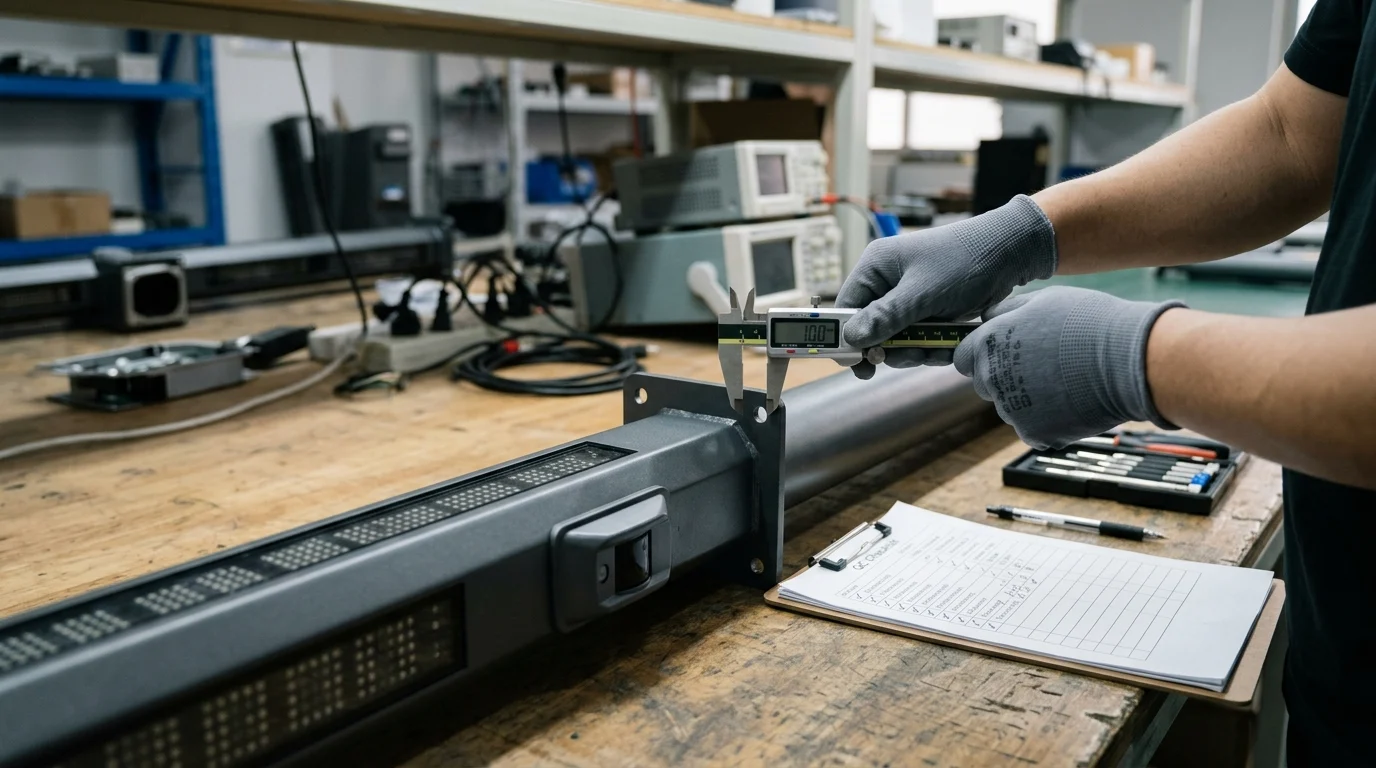
A modern smart parking guidance pole is no longer a simple static sign with a digital counter; it is a sophisticated edge-computing endpoint designed to function flawlessly in harsh outdoor environments. Evaluating these assets requires a deep understanding of their internal architecture, environmental resilience, and communication protocols.
Core components and system integration
The core architecture of a high-performance pole consists of a high-luminance LED matrix, an industrial-grade IoT controller, and redundant communication modules typically supporting 4G/LTE, 5G, or LoRaWAN. System integration relies on robust API connectivity, utilizing protocols such as MQTT or RESTful APIs to ensure seamless handshakes between the physical pole and the central parking management system (CPMS).
This architecture allows the pole to process localized logic—such as displaying “FULL” when inventory drops below a 2% threshold—without relying entirely on continuous cloud connectivity, thereby ensuring operational continuity during network outages.
| Component | Specification Standard | Industry Baseline |
|---|---|---|
| LED Matrix Pitch | P4 to P10 | P6 for optimal urban viewing |
| Connectivity | Cellular / LPWAN | 4G LTE with 5G readiness |
| Controller | Industrial Edge Gateway | MTBF > 50,000 hours |
| API Protocols | NTCIP / MQTT / REST | Standardized NTCIP 1203 |
Sensor accuracy, display visibility, and durability
Hardware specifications dictate the operational lifespan and reliability of the guidance pole. Sensor data ingestion must maintain an accuracy rate exceeding 99% to prevent driver frustration caused by false availability. Visibility is equally critical; the LED displays must output a minimum of 5,000 nits of brightness to remain legible under direct sunlight, coupled with ambient light sensors for automatic, dynamic dimming at night.
Durability standards mandate an ingress protection rating of at least IP65—preferably IP67 for coastal or heavy-weather regions—to protect internal electronics from dust and moisture. Furthermore, the internal thermal management system must support a tested operating temperature range spanning from -40°C to +70°C to withstand extreme seasonal variations without experiencing thermal throttling or hardware failure.
How to Compare Smart Parking Guidance Pole Options
Procurement teams must navigate a fragmented market of hardware vendors and software integrators. Comparing smart parking guidance pole options requires a standardized evaluation framework that prioritizes interoperability, energy efficiency, and strict adherence to international transportation standards.
Key evaluation criteria for buyers
When evaluating competing models, buyers must scrutinize total power consumption and communication latency. High-efficiency poles typically operate with a peak power consumption of less than 150W. This low power draw makes them viable for off-grid, solar-powered deployments in areas where trenching for electrical lines is cost-prohibitive or environmentally disruptive.
Furthermore, the data latency between a vehicle vacating a space and the pole updating its display must remain under 2 seconds to ensure real-time accuracy. Buyers should also demand open-architecture software, ensuring the hardware is not permanently locked into a single vendor’s proprietary backend ecosystem, which can artificially inflate future software licensing fees.
Standards, accessibility, and environmental requirements
Regulatory compliance acts as a strict filter during the procurement phase. In European and international markets, poles acting as variable message signs (VMS) must comply with the EN 12966 standard, which governs visual performance, physical performance, and durability. In North America, NEMA TS 4 standards are frequently applied.
Structurally, the pole must be engineered to withstand severe environmental stressors, including certified wind load resistance up to 40 meters per second (approximately 90 mph). Accessibility standards also dictate the physical dimensions and mounting heights to ensure the signage does not obstruct pedestrian pathways, block sightlines at crosswalks, or violate local ADA compliance mandates.
How to Plan Implementation and Deployment
The transition from procurement to active deployment is a complex logistical exercise. Successful implementation of a smart parking guidance pole network requires rigorous spatial planning, precise traffic modeling, and stringent vendor service level agreements (SLAs) to ensure long-term operational stability.
Site survey, traffic modeling, and placement
Effective placement is governed by driver reaction times and urban speed limits. Traffic modeling dictates that a smart parking guidance pole should be positioned approximately 50 to 100 meters upstream of a major intersection or decision point. This spacing allows drivers traveling at 50 km/h sufficient time to safely process the information and change lanes.
Comprehensive site surveys must account for line-of-sight obstructions, such as seasonal tree canopies, transit shelters, or commercial awnings. Advanced deployments frequently utilize digital twin simulations to map out the visual catchment area of each pole before concrete is poured for the foundations, ensuring maximum visibility across all approach vectors.
| Deployment Phase | Timeline | Key Deliverables |
|---|---|---|
| Site Survey & Permitting | Weeks 1-4 | Line-of-sight analysis, municipal approvals |
| Hardware Sourcing | Weeks 4-10 | Manufacturing, QA testing, shipping |
| Civil Works & Installation | Weeks 10-12 | Foundation pouring, electrical trenching |
| Commissioning & Calibration | Weeks 12-14 | API integration, latency testing (<2s) |
Sourcing, installation, and after-sales support
Supply chain lead times for industrial-grade guidance poles typically range from 6 to 8 weeks, necessitating accurate project forecasting to align with municipal construction windows. The installation phase involves both civil engineering for the structural foundation and electrical engineering for grid tie-ins and data hardwiring, if cellular options are bypassed.
Post-installation, the focus shifts to after-sales support. Municipalities must negotiate SLAs that guarantee a minimum of 99.9% system uptime. Maintenance contracts should specify bi-annual preventative maintenance schedules, including physical enclosure inspections, LED pixel diagnostics, and over-the-air (OTA) firmware updates to patch security vulnerabilities and maintain protocol compatibility.
How to Choose the Right Smart Parking Guidance Pole for
Selecting the optimal smart parking guidance pole requires looking beyond the initial purchase price. Decision-makers must evaluate the total cost of ownership (TCO) over a projected 7 to 10-year lifecycle, balancing upfront capital expenditures against ongoing operational costs and future scalability.
Balancing cost, scalability, and maintenance
The financial model for these systems is divided into Capital Expenditure (CAPEX) and Operating Expenditure (OPEX). A commercial-grade smart parking guidance pole typically requires a CAPEX of $2,000 to $5,000 per unit, depending on the LED matrix size, structural materials, and integrated edge-computing capabilities.
However, routine maintenance, cellular data plans, and software API licensing can add an annual OPEX equivalent to 10% to 15% of the initial hardware cost. Selecting modular poles—where individual LED panels, power supplies, or communication modems can be hot-swapped without replacing the entire chassis—significantly reduces long-term maintenance costs and minimizes system downtime during repairs.
Final selection criteria for decision-makers
Final selection hinges on a vendor’s proven track record and the hardware’s capacity for future-proofing. Decision-makers should mandate a minimum 3-year comprehensive warranty that covers both parts and labor, protecting the initial municipal or corporate investment.
Additionally, as urban infrastructure rapidly evolves toward autonomous and connected ecosystems, the chosen poles should feature modular expansion slots to support emerging technologies, such as Vehicle-to-Everything (V2X) communication radios and edge-AI traffic camera modules. By prioritizing open standards, hardware modularity, and robust environmental resilience, cities and private operators can ensure their investment yields sustained traffic optimization and maximum long-term value.
Key Takeaways
- The most important conclusions and rationale for the smart parking guidance pole
- Specs, compliance, and risk checks worth validating before you commit
- Practical next steps and caveats readers can apply immediately
Frequently Asked Questions
What is a smart parking guidance pole?
It is a pole-mounted digital sign that shows real-time parking availability and directions, helping drivers reach open spaces faster and reducing search traffic.
How do smart parking guidance poles improve urban traffic flow?
They cut cruising time by guiding drivers to available lots or zones, which reduces congestion, queueing, fuel waste, and localized emissions.
What specifications should buyers check first?
Focus on LED visibility above 5,000 nits, IP65/IP67 protection, reliable 4G/5G or LoRaWAN connectivity, and API support such as MQTT, REST, or NTCIP.
Can Morelux customize smart parking guidance poles for projects?
Yes. Morelux supports customized steel or aluminum pole solutions with technical drawings, engineer support, and manufacturing matched to infrastructure project requirements.
How fast can Morelux provide a quote for a smart parking guidance pole project?
Morelux typically offers a fast response and can provide project quotes within 24 hours, helping sourcing teams move quickly on planning and procurement.