Introduction
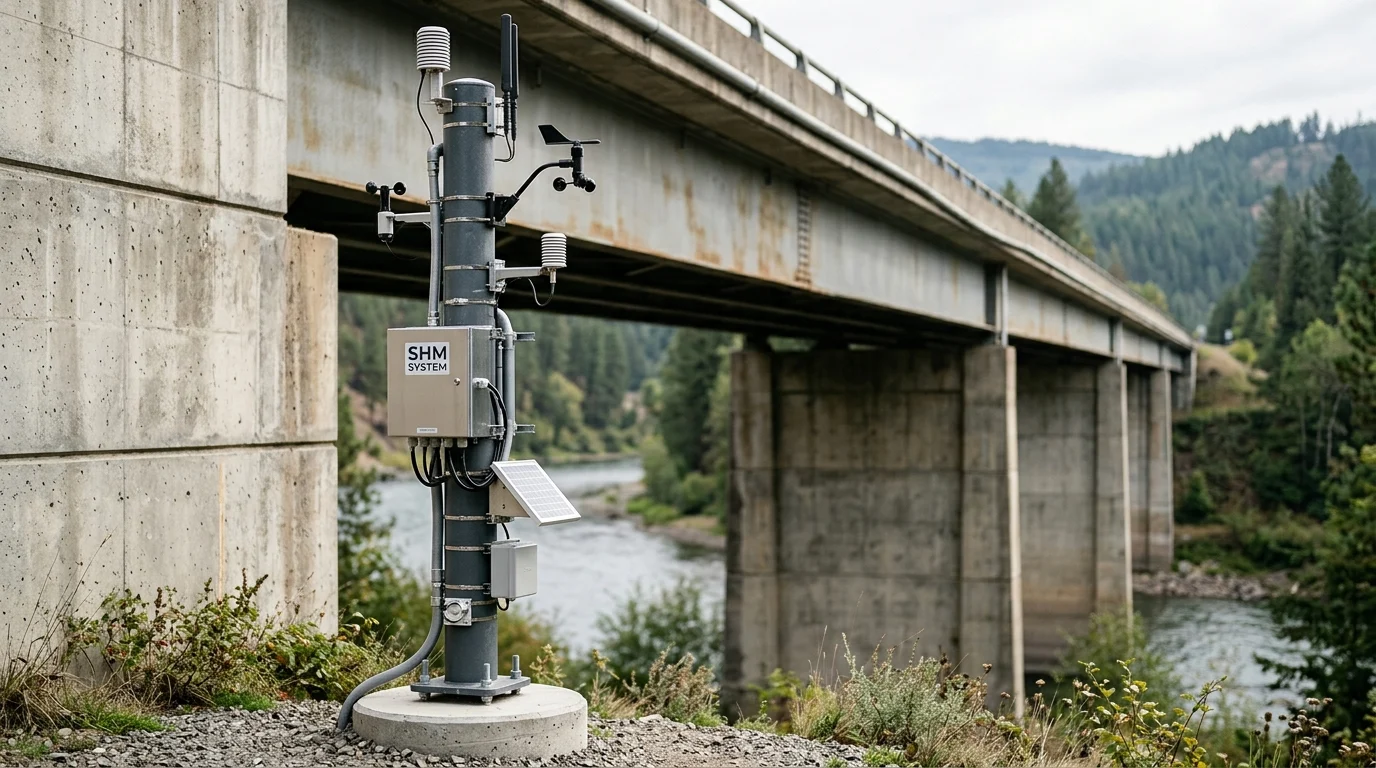
Utilities and municipalities are under pressure to detect pole deterioration before it leads to outages, safety incidents, or costly emergency replacements. A structural health monitoring pole equipped with fiber optic sensors addresses that need by turning a passive asset into a continuous source of strain, temperature, and load data. This article explains how fiber optic sensing works inside pole structures, why it performs reliably in electrically noisy or high-voltage environments, and what operational and commercial factors are driving adoption. With that foundation, the discussion moves into how these systems support predictive maintenance, extend asset life, and improve confidence in infrastructure decisions.
Why Are Structural Health Monitoring Poles Becoming Strategic Assets
The deployment of the structural health monitoring pole represents a fundamental shift in civil engineering and infrastructure management. Transitioning from reactive visual inspections to proactive, data-driven oversight requires assets capable of measuring their own structural integrity in real time. By embedding fiber optic sensing networks directly into the metallic or composite matrices of utility, lighting, and communication poles, asset owners gain unprecedented visibility into material fatigue, environmental stress, and load-bearing capacity.
How do fiber optic sensors enable continuous monitoring?
Fiber optic sensors utilize light propagation to detect microscopic physical changes along the length of the fiber. Technologies such as Fiber Bragg Grating (FBG) allow engineers to measure strain and temperature fluctuations with extreme precision, typically achieving a strain accuracy of ±1 microstrain (με) and a temperature resolution of 0.1°C. Because the sensing element is composed of silica glass and uses photons rather than electrons, the entire telemetry system is completely immune to electromagnetic interference (EMI) and radio frequency interference (RFI). This makes optical sensing ideal for high-voltage transmission environments or dense urban corridors where traditional electrical strain gauges would suffer from severe signal degradation.
Which commercial pressures are accelerating adoption?
The commercial imperative for these systems stems from the mounting liabilities associated with aging infrastructure. Asset managers face stagnant maintenance budgets alongside increasing extreme weather events that push structural limits. By integrating continuous monitoring, municipalities and utilities can extend the safe operational lifespan of critical poles by 15 to 20 years through targeted, condition-based maintenance rather than arbitrary replacement schedules. Furthermore, quantifiable structural data significantly lowers risk profiles, frequently enabling a 10% to 15% reduction in asset insurance premiums and preventing catastrophic failures that carry massive liability costs.
What Defines a Structural Health Monitoring Pole with Fiber Optic
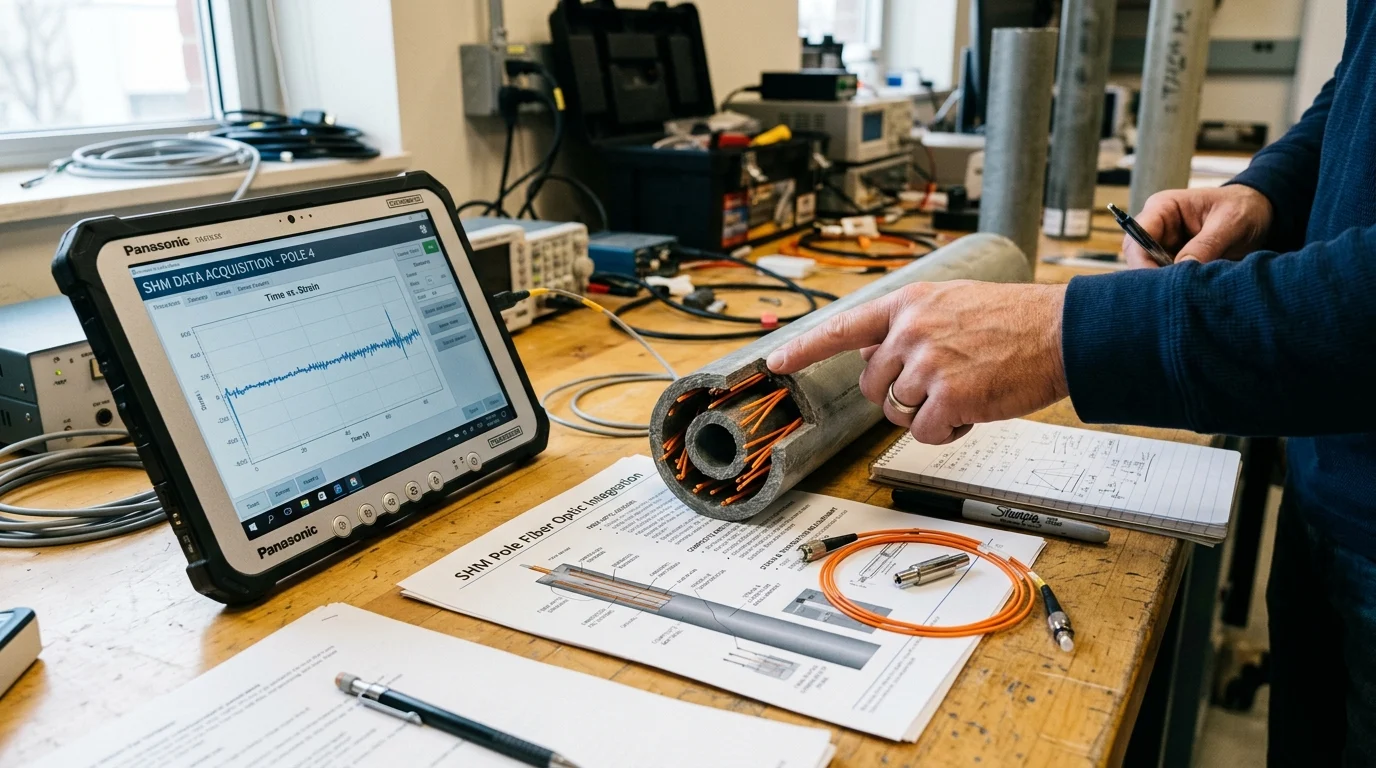
A comprehensive structural health monitoring pole is not merely a passive support structure; it is an integrated opto-mechanical system. Defining its architecture requires understanding the interplay between the load-bearing materials, the embedded photonics, and the sophisticated data acquisition hardware that interprets the optical signals.
Which components, specifications, and data outputs matter most?
The primary components include the core pole structure (typically galvanized steel, spun concrete, or fiber-reinforced polymer), the embedded or surface-mounted optical fibers, and the optical interrogator unit. Critical specifications revolve around dynamic range and sampling frequency. For applications involving dynamic loads—such as wind-induced vibration, vortex shedding, or vehicular impact—interrogators must support sampling rates exceeding 1000 Hz to capture transient stress waves. The primary data outputs generated include real-time strain profiles, temperature compensation curves, and triaxial displacement vectors, all of which are fed into digital twin models for predictive analytics.
How do fiber optic sensing options compare?
Engineers must choose between localized and distributed sensing architectures based on the spatial resolution and coverage area required by the project.
| Sensing Technology | Spatial Resolution | Maximum Range | Typical Application |
|---|---|---|---|
| Fiber Bragg Grating (FBG) | Discrete (Point) | ~10 km | High-frequency dynamic strain monitoring at specific stress points (e.g., base flanges). |
| Brillouin Optical Time Domain Analysis (BOTDA) | 0.5m to 1.0m | Up to 100 km | Continuous strain and temperature monitoring over long infrastructure corridors. |
| Rayleigh Backscattering | < 10 mm | ~70 meters | Ultra-high resolution fatigue detection in localized critical weld joints. |
Which trade-offs should buyers evaluate?
The primary trade-offs lie among spatial resolution, interrogation speed, and capital expenditure. High-density FBG arrays provide excellent dynamic response but require complex multiplexing and precise placement at known stress concentrations prior to manufacturing. Conversely, BOTDA offers continuous monitoring over massive distances but typically suffers from slower sampling rates (often < 1 Hz), making it unsuitable for rapid impact detection. Buyers must also evaluate the cost of the optical interrogator, which serves as the brain of the system. Industrial-grade interrogators can range from $15,000 to over $40,000 depending on channel count and sampling speed—a cost that must be amortized across multiple instrumented poles to ensure economic viability.
How Should Engineers Specify and Deploy Structural Health Monitoring Policies?
Deploying a structural health monitoring pole demands rigorous site-specific engineering. The integration of delicate optical fibers into heavy civil infrastructure means that environmental loads and installation methodologies must be strictly controlled to prevent sensor damage and ensure accurate, repeatable data collection.
Which site, loading, and mounting conditions affect design?
Design specifications must account for maximal environmental loading, including aerodynamic forces, seismic activity, and soil-structure interaction. Poles deployed in coastal or hurricane-prone regions are frequently engineered to withstand 150 mph wind zones per AASHTO LTS-6 specifications, requiring sensors to track micro-deflections under severe wind loading. The mounting conditions—whether direct-buried, flange-mounted on concrete caissons, or attached to existing superstructures—dictate the placement of the baseline reference sensors. Strain transfer from the foundation to the pole base is a critical metric, requiring specialized anchor bolt monitoring to differentiate between foundation settlement and pole shaft fatigue.
What specification and deployment steps reduce installation risk?
To minimize installation risk, the optical fibers must be heavily armored or encapsulated before leaving the manufacturing facility. Common practices involve embedding the bare fibers within stainless steel capillary tubes or pultruded fiber-reinforced polymer (FRP) strips prior to bonding them to the pole matrix. Specification documents must mandate rigorous factory acceptance testing (FAT), including optical time-domain reflectometer (OTDR) traces to verify baseline attenuation. During deployment, field technicians must ensure optical loss remains strictly below 0.5 dB per connection point. Pre-installation calibration under known mechanical loads establishes a reliable baseline for all future strain measurements.
How should purchasers assess lifecycle cost and data quality?
Assessing lifecycle costs requires evaluating the shift from capital expenditures (CAPEX) to operational expenditures (OPEX). While the initial procurement of a fully instrumented structural health monitoring pole may run between $5,000 and $12,000—significantly higher than a standard passive pole—this premium is rapidly offset by the elimination of manual non-destructive testing (NDT) inspections, which can easily cost upwards of $2,000 annually per site. Purchasers must also scrutinize data quality over the asset’s lifespan; specifying a minimum optical signal-to-noise ratio (SNR) ensures the interrogator can still distinguish structural anomalies even as the fiber undergoes natural long-term attenuation.
Which Compliance and Supply Chain Factors Matter Most
The intersection of civil infrastructure, photonics, and enterprise IT networks introduces a complex matrix of regulatory and compliance standards. Procuring a structural health monitoring pole requires navigating industrial qualifications that bridge structural engineering, optical physics, and cybersecurity.
Which codes, environmental qualifications, and cybersecurity requirements apply?
Embedded fiber optic sensors must adhere to international standards such as IEC 61757, which governs the performance and reliability of optical strain sensors. The junction boxes, splice enclosures, and interrogator housings mounted on the pole typically require IP67 or NEMA 4X ratings to survive extreme weather, salt spray, and UV degradation over decades. Because these poles transmit critical infrastructure data to centralized servers, cybersecurity is paramount. Edge computing modules processing the optical data must support IEEE 802.1X port-based network access control and utilize AES-256 encryption for all telemetry data transmitted over cellular networks or hardwired fiber backhauls.
How do sourcing models and vendor capabilities affect outcomes?
The supply chain for these specialized poles is highly fragmented, often requiring tight coordination between traditional steel fabricators and specialized photonics integrators. Lead times for custom-engineered structural health monitoring poles frequently extend to 12–16 weeks due to the precision required during the sensor bonding and epoxy curing phases. Minimum order quantities (MOQs) also vary; while some vendors accommodate 1 to 5 units for municipal pilot programs, volume pricing and dedicated engineering support typically engage at 50+ units. Buyers must carefully evaluate vendor capabilities regarding software ecosystems to avoid proprietary lock-in, prioritizing interrogators that output open-source data formats (such as JSON or CSV via REST APIs) for seamless integration into existing enterprise asset management platforms.
What Is the Best Framework for Selecting a Structural Health
Selecting the optimal structural health monitoring pole requires aligning the technical capabilities of the sensing architecture with the specific risk profile of the deployment site. A structured evaluation framework ensures that capital is deployed efficiently without over-engineering the solution.
Which use-case matrix helps match product to application?
A formalized use-case matrix is the most effective tool for matching sensor types and pole architectures to field applications.
| Deployment Environment | Primary Structural Hazard | Recommended Sensor Technology | Interrogator Placement Strategy |
|---|---|---|---|
| High-Wind Coastal Zones | Fatigue at base flange / weld tearing | High-density FBG arrays at base | Local edge-computing enclosure (IP67) |
| Heavy Snow / Ice Regions | Static overload / buckling | Distributed BOTDA along vertical axis | Centralized hub (multiplexed across poles) |
| High-Traffic Urban Intersections | Vehicular impact / dynamic shock | Fast-sampling FBG (>1000 Hz) | Embedded in crash-rated pedestal |
| Corrosive Industrial Sites | Internal material degradation | Distributed Rayleigh backscattering | Remote facility via dark fiber link |
What should decision-makers prioritize when balancing performance and cost?
When balancing performance and cost, decision-makers must prioritize total cost of ownership (TCO) across a standard 30-year design life. Over-specifying sensor density or demanding unnecessarily high sampling rates can exponentially inflate interrogator costs and cloud data storage fees without providing actionable engineering insights. The focus should remain strictly on identifying the critical failure modes of the specific pole design and instrumenting only those vulnerable zones. By standardizing the physical pole design while modularizing the optical payload, infrastructure owners can scale structural health monitoring pole deployments strategically, ensuring robust network resilience and highly optimized maintenance budgets.
Key Takeaways
- The most important conclusions and rationale for Structural Health Monitoring Pole
- Specs, compliance, and risk checks worth validating before you commit
- Practical next steps and caveats readers can apply immediately
Frequently Asked Questions
What is a structural health monitoring pole?
It is a pole engineered with embedded or mounted fiber optic sensors to track strain, temperature, and movement in real time for safer, condition-based maintenance.
Why use fiber optic sensors in poles?
They provide precise measurements and are immune to EMI/RFI, making them reliable for utility corridors, smart poles, and other electrically noisy infrastructure sites.
Which fiber optic sensing option fits a pole project best?
Use FBG for high-speed monitoring at key stress points, BOTDA for long, continuous coverage, and Rayleigh for very fine weld or fatigue detection on critical areas.
What should buyers specify before requesting a quote?
Share pole material, height, load data, site wind conditions, sensor locations, sampling rate, and output needs. This helps Morelux provide faster drawings, engineering support, and an accurate quote.
Can Morelux customize structural health monitoring poles for infrastructure projects?
Yes. Morelux supports custom steel or aluminum pole manufacturing, technical drawings, engineer coordination, and responsive quotation for city, utility, and commercial infrastructure projects.