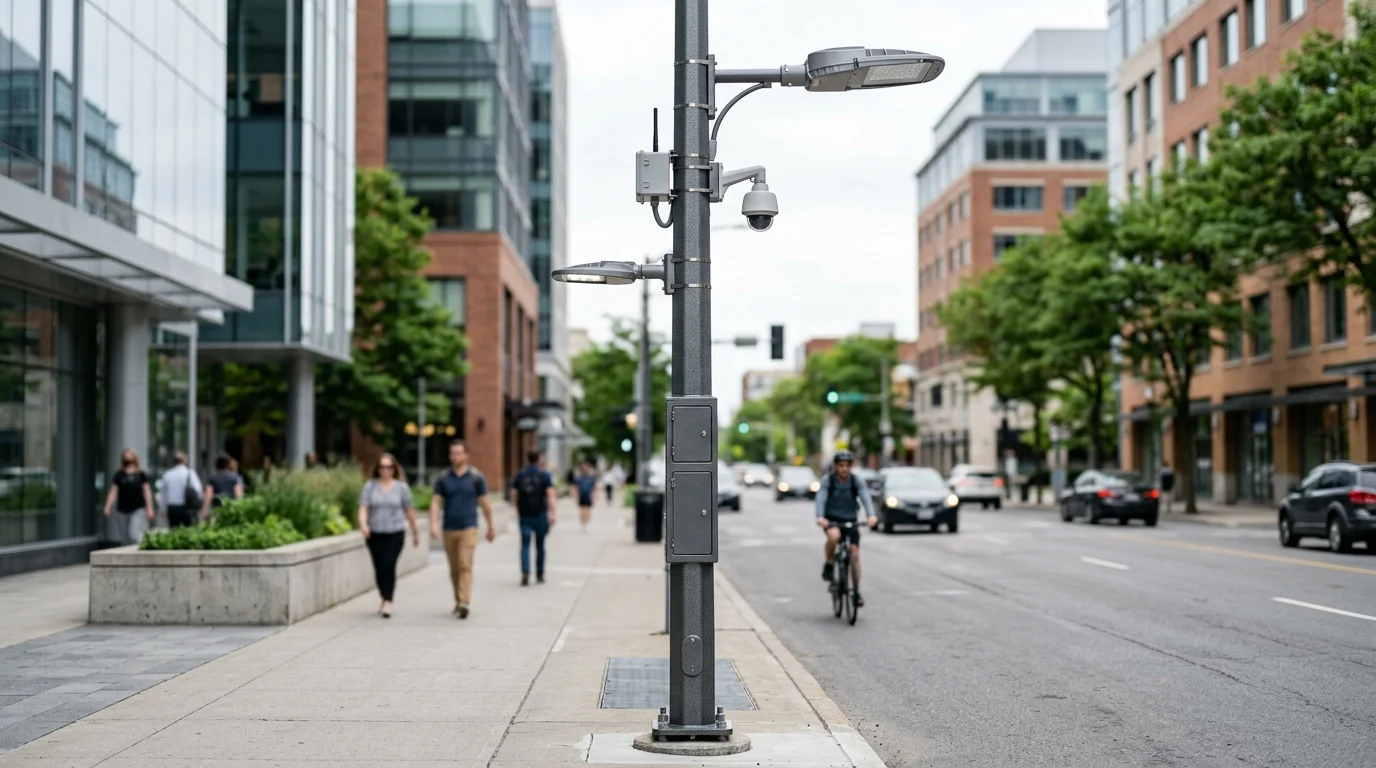
As cities add lighting, cameras, sensors, and wireless equipment to the public right-of-way, separate poles quickly create visual clutter, maintenance complexity, and inefficient use of space. 3D modeling offers a practical way to evaluate consolidation before installation by showing how multiple devices can be integrated onto a single street light pole with accurate spatial, structural, and operational detail. This article explains how the approach supports planning, engineering coordination, and smarter infrastructure decisions, helping readers understand where consolidation adds value, what constraints must be modeled, and how digital design reduces risk before field deployment.
Benefits of 3D modeling for street light pole consolidation
Urban infrastructure is undergoing a fundamental transformation as municipalities transition toward smart city ecosystems. Historically, city blocks have been cluttered with disparate vertical assets, including lighting fixtures, traffic signals, telecommunication nodes, and environmental sensors. The advent of 3D modeling street light pole consolidation provides a highly accurate digital twin framework to conceptualize, engineer, and deploy multi-functional vertical structures. By utilizing advanced spatial modeling, urban planners and structural engineers can virtually eliminate infrastructure redundancies before physical construction begins.
What street light pole consolidation means
At its core, consolidation involves integrating multiple municipal and commercial payloads onto a single engineered structure. Instead of maintaining separate poles for roadway illumination, pedestrian lighting, 5G small cells, PTZ surveillance cameras, and traffic management systems, cities can utilize a unified asset. Effective 3D modeling street light pole consolidation allows engineers to map the exact placement, orientation, and spatial footprint of each component within a digital environment.
This digital-first approach directly combats the proliferation of urban street clutter. By transitioning from a fragmented infrastructure model to a consolidated one, municipalities can routinely achieve a 30% to 40% reduction in the total number of vertical assets occupying the public right-of-way. This consolidation not only improves urban aesthetics but also significantly expands the usable sidewalk space for pedestrians and micro-mobility solutions.
Cost, procurement, and lifecycle drivers
The financial implications of utilizing digital models for infrastructure consolidation are substantial across both capital expenditure (CapEx) and operational expenditure (OpEx). In traditional deployments, installing three distinct poles requires three separate excavation processes, concrete foundation pours, and utility trenching operations. Consolidating to a single multi-tenant pole can eliminate redundant foundation costs, which typically range from $2,500 to $4,500 per excavated site depending on subterranean urban complexities.
From a lifecycle perspective, maintaining a single consolidated asset streamlines ongoing maintenance protocols and vendor servicing. Digital models generated during the design phase serve as permanent asset management records, detailing exact specifications, wiring schematics, and load capacities. Furthermore, by optimizing the structural design through 3D simulation, municipalities often observe a 25% to 35% reduction in total steel or aluminum tonnage required per city block, driving down raw material procurement costs while achieving superior functional utility.
Technical and compliance criteria for evaluating pole consolidation
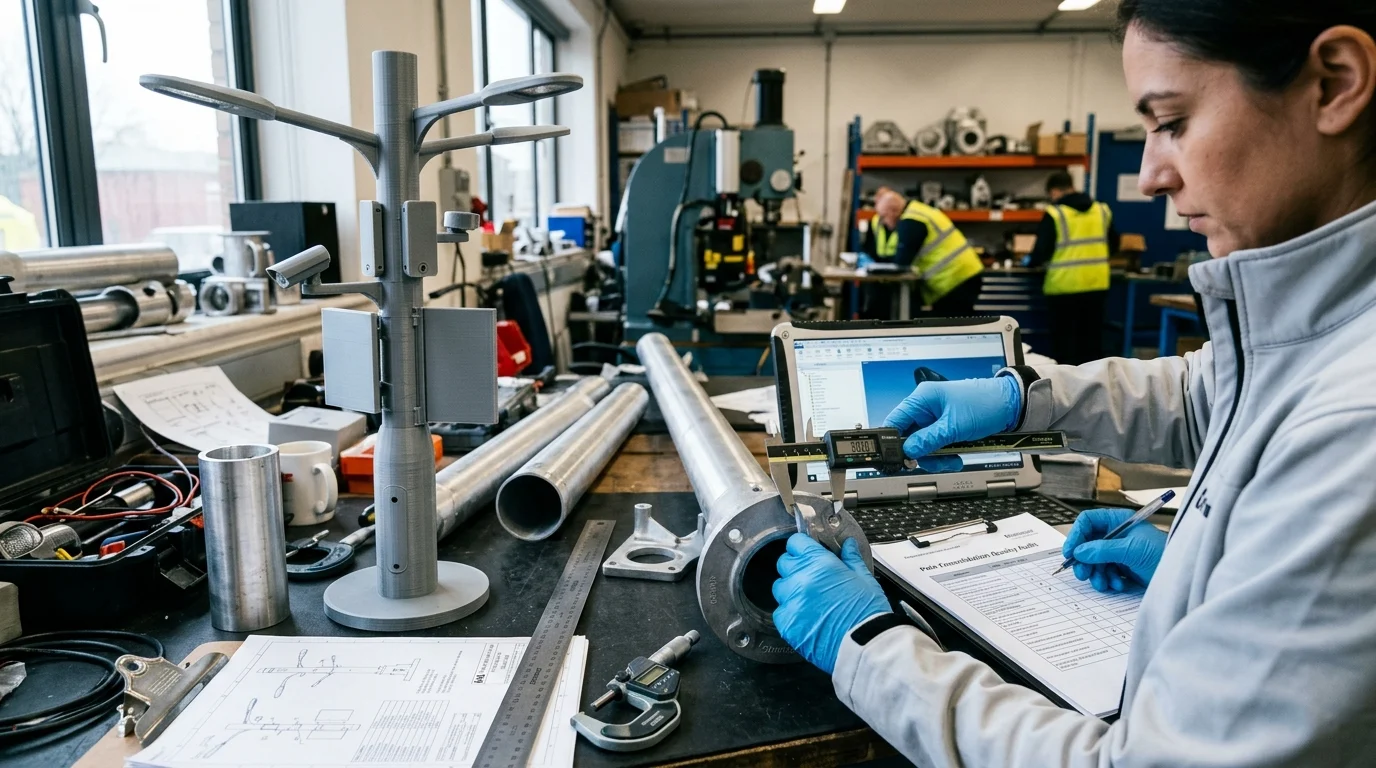
Transitioning from conceptual design to physical deployment requires rigorous engineering validation. Consolidating multiple hardware systems onto a single vertical structure inherently increases the physical and environmental stresses placed on that asset. Advanced 3D modeling serves as the critical testing ground to ensure that proposed consolidated poles meet strict municipal codes, federal safety standards, and long-term durability requirements.
Pole geometry, structural loads, and materials
The primary technical challenge in pole consolidation is managing the combined weight and Effective Projected Area (EPA) of all attached equipment. Structural engineers must calculate wind loads based on stringent standards, such as the AASHTO LTS-6 specifications, which dictate that poles in hurricane-prone coastal regions must withstand wind zones of up to 150 mph, while inland zones typically require 90 to 120 mph ratings. 3D simulation software allows engineers to apply virtual wind loads against the cumulative EPA of integrated 5G antennas, luminaire arms, and camera housings to identify potential failure points.
Material selection is equally critical to accommodating these elevated structural loads. The choice of substrate heavily influences the pole’s load capacity, deflection limits, and procurement costs. Below is a comparative matrix of common structural materials evaluated during the modeling phase:
| Material | Base Cost Multiplier | Max EPA Load Capability | Typical Lifespan |
|---|---|---|---|
| Standard Galvanized Steel | 1.0x | High (Up to 40 sq ft) | 30-40 Years |
| Extruded Aluminum | 1.4x | Medium (Up to 25 sq ft) | 50+ Years |
| Fiber-Reinforced Polymer | 1.8x | Low to Medium | 40+ Years |
Comparison frameworks for city planning
For city planning departments, 3D modeling provides a quantifiable framework for comparing different consolidation scenarios. Software tools enable clash detection, ensuring that the underground foundations of the proposed multi-functional poles do not intersect with existing water mains, fiber optic conduits, or gas lines. This virtual probing prevents costly change orders during the excavation phase.
Additionally, compliance with the Americans with Disabilities Act (ADA) and local zoning ordinances can be verified digitally. Planners can simulate pedestrian flow around the newly modeled bases to guarantee the mandated minimum 48-inch unobstructed pedestrian clearance on sidewalks. By overlaying the consolidated pole designs onto geographic information system (GIS) data, municipalities can objectively score different vendor proposals based on spatial efficiency, structural safety margins, and regulatory compliance.
How municipalities can execute pole consolidation projects

Successful execution of a consolidated infrastructure initiative requires moving beyond isolated engineering tasks to establish comprehensive, multi-disciplinary workflows. Municipalities must synchronize data collection, digital twin creation, and physical manufacturing processes while aligning the interests of utility providers, telecommunication carriers, and public works departments.
Data capture, digital modeling, and vendor coordination
The execution phase begins with high-fidelity data capture of the existing urban environment. Municipalities typically deploy mobile LiDAR scanning units and photogrammetry to generate dense point clouds with spatial accuracies of 5 to 10 millimeters. This empirical data is imported into Building Information Modeling (BIM) platforms, establishing the baseline environment for the 3D modeling street light pole consolidation process.
Once the digital environment is established, vendor coordination becomes the primary operational focus. Telecommunication providers must verify that the proposed antenna elevations meet their radio frequency (RF) propagation requirements, while traffic engineers must confirm that signal heads maintain optimal visibility. By utilizing a centralized 3D model, all stakeholders can collaboratively adjust hardware placement, mitigating physical interference and ensuring that thermal dissipation from high-powered 5G transceivers does not degrade adjacent LED lighting drivers.
Decision frameworks for infrastructure leaders
Infrastructure leaders require structured decision frameworks to manage the scale and complexity of municipal rollouts.
Key Takeaways
- The most important conclusions and rationale for 3D modeling street light pole consolidation
- Specs, compliance, and risk checks worth validating before you commit
- Practical next steps and caveats readers can apply immediately
Frequently Asked Questions
What is 3D modeling street light pole consolidation?
It is the digital design of one pole that combines lighting, cameras, signals, or telecom equipment, helping cities reduce clutter, validate fit, and plan installation before fabrication.
Why should city buyers use 3D models before ordering consolidated poles?
3D models reveal clashes, load issues, and access problems early, reducing change orders, foundation rework, and procurement risk during infrastructure projects.
Can Morelux provide custom drawings and engineer support for consolidated pole projects?
Yes. Morelux supports project buyers with custom technical drawings, engineering input, and fast quotations, typically within 24 hours for qualified inquiries.
How do 3D models help with wind load and EPA checks?
They let engineers place each device virtually, calculate combined EPA and weight, and verify the pole design against required wind ratings and structural limits.
Which materials are commonly used for consolidated street light poles?
Galvanized steel is common for high load capacity and value, while aluminum suits corrosion resistance and long service life. The right choice depends on payload, site, and budget.