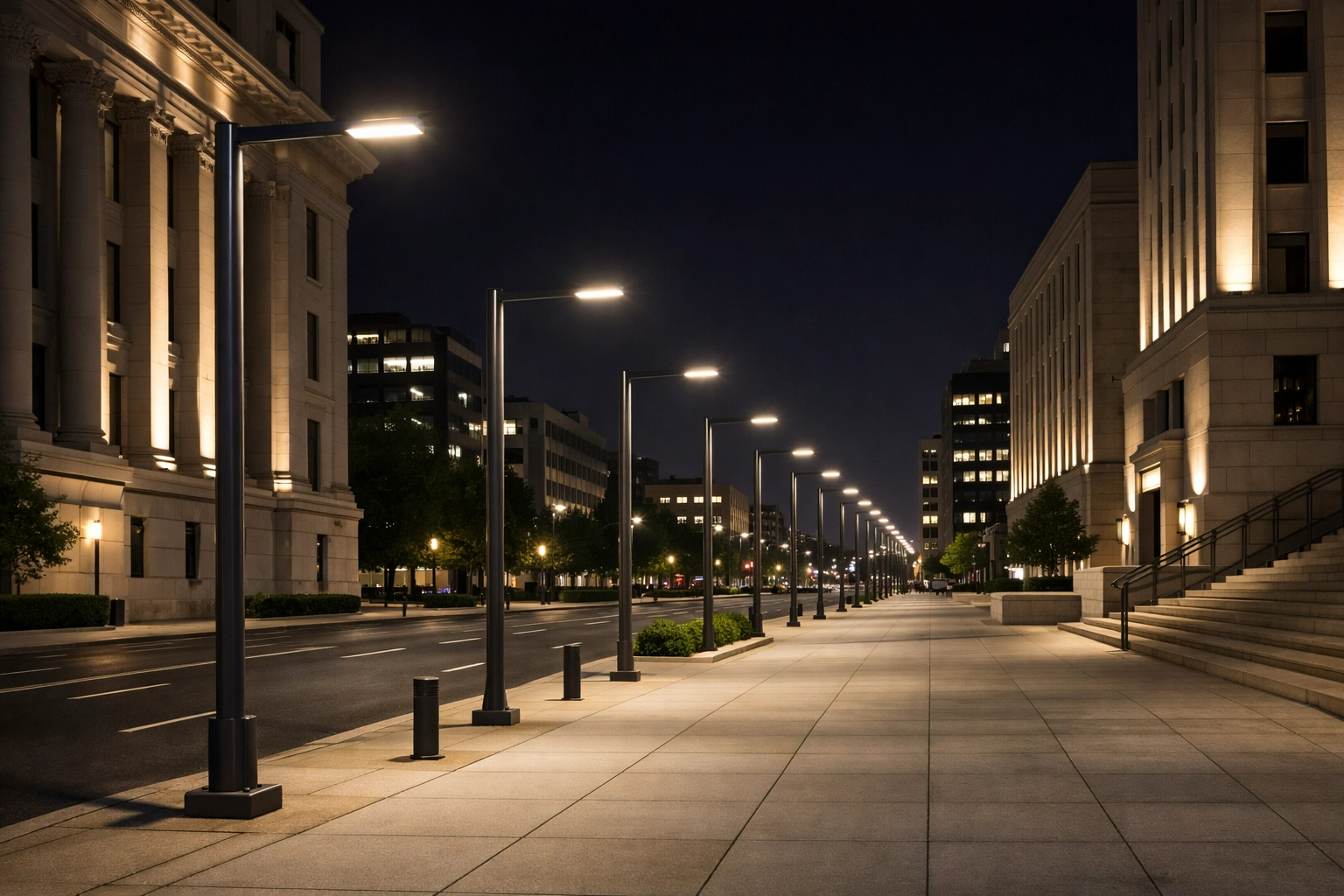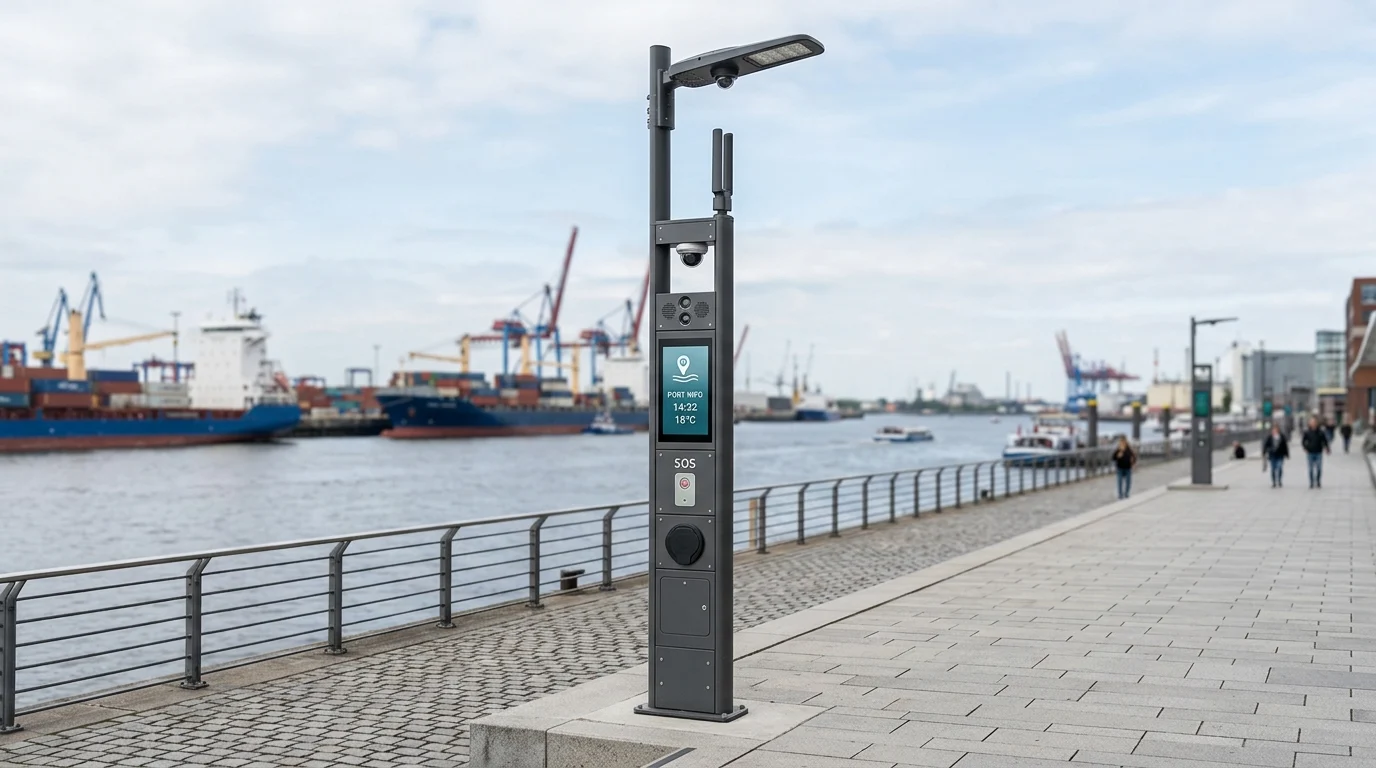
Across logistics parks and port corridors, a single pole is increasingly expected to do far more than provide light. A smart port streetlight pole combines illumination, surveillance, wireless connectivity, and environmental sensing into one compact infrastructure node, helping operators manage traffic, improve safety, and support data-driven automation without expanding the site footprint. This article explains why that integration matters, what technologies are typically built into these poles, and how they contribute to more efficient yard operations, stronger security coverage, and better readiness for connected equipment such as AGVs, cameras, and edge devices.
Why is the port smart streetlight pole becoming essential
Modern maritime and inland logistics hubs are rapidly transitioning from legacy infrastructure to highly integrated digital ecosystems. At the core of this transformation is the Port Smart Street Light Pole, a structural asset that evolves standard illumination into a centralized, multi-functional node. By consolidating disparate hardware onto a single vertical footprint, facility operators eliminate redundant trenching, reduce physical clutter, and establish a ubiquitous grid for data collection across sprawling container yards and high-traffic transit corridors where spatial efficiency is paramount.
How do lighting, surveillance, connectivity, and environmental sensing work together
The efficacy of a port-smart street light pole lies in its modular payload capacity. High-efficacy LED luminaires, typically ranging from 150W to 300W for high-mast yard applications, operate in tandem with Pan-Tilt-Zoom (PTZ) surveillance cameras and LiDAR sensors. Equipped with edge-based AI video analytics, these optical systems can automatically execute container optical character recognition (OCR) and monitor personnel for personal protective equipment (PPE) compliance. This optical tier is supported by integrated 5G micro-base stations or Wi-Fi 6 access points, providing the low-latency bandwidth required for autonomous guided vehicles (AGVs) and real-time asset tracking.
Simultaneously, environmental sensing units monitor microclimate variables critical to port safety. Anemometers measure wind velocity to dictate crane operating limits, while air quality sensors track PM2.5 and PM10 particulate matter generated by diesel exhaust. Edge computing gateways housed within the pole aggregate this telemetry, filtering and compressing data before transmitting it to the central terminal operating system (TOS).
Which operational pressures in ports and logistics parks drive adoption
Intense operational pressures are accelerating the deployment of these intelligent systems. Logistics hubs operate on relentless 24/7 schedules where any disruption cascades into significant financial losses. Labor shortages and the push toward autonomous yard operations demand dense, reliable network coverage that traditional macro-cell towers struggle to provide across stacked metal containers, which frequently create signal dead zones.
Furthermore, energy volatility forces facility managers to aggressively optimize power consumption. By utilizing DALI-2 or Zigbee dimming protocols triggered by motion sensors and ambient light detectors, a port smart streetlight pole network routinely achieves 40% to 60% energy savings compared to static high-pressure sodium or legacy LED installations. This operational efficiency directly addresses both stringent environmental sustainability mandates and severe margin compression within the global logistics sector.
What technical specifications and compliance factors should define

Deploying electronic infrastructure in marine and heavy logistics environments requires rigorous adherence to industrial specifications. A smart port street light pole must withstand persistent exposure to saline aerosols, extreme dynamic wind loads, and heavy mechanical vibrations from nearby container handling equipment, making commercial-grade poles entirely unsuitable.
Which core specifications matter most
The physical integrity of the pole dictates the survivability of the sensitive electronics it houses. Material selection generally mandates high-yield Q345 or Q235 structural steel, protected by hot-dip galvanization and a fluorocarbon or polyurethane topcoat exceeding 85 microns in thickness to prevent rapid oxidation.
The following table outlines the baseline specifications required for maritime logistics applications:
| Specification Category | Minimum Requirement / Threshold | Application Context |
|---|---|---|
| Wind Load Resistance | 50 m/s to 60 m/s (Category 15 Typhoon) | Prevents structural failure in coastal storms |
| Ingress Protection | IP65 (Pole body) / IP66 (Enclosures) | Protects internal gateways from heavy rain and dust |
| Impact Protection | IK08 to IK10 | Guards against debris and minor equipment collisions |
| Corrosion Resistance | >1000 hours salt spray test pass | Ensures 15-20 year lifespan in high-salinity ports |
How should buyers compare compliance, cybersecurity, and maintenance
Beyond structural resilience, buyers must rigorously evaluate electrical compliance and digital security. Luminaires and power distribution units should comply with IEC 60598 safety standards, featuring multi-stage surge protection devices (SPDs) rated between 10kV and 20kV to mitigate the high risk of lightning strikes common in open coastal topographies. System components should target a Mean Time Between Failures (MTBF) exceeding 50,000 hours.
Cybersecurity is equally critical, as these poles act as vulnerable network endpoints. Gateways must support encrypted transmission protocols, such as MQTT with TLS 1.2 or 1.3, and comply with ISO 27001 frameworks to prevent unauthorized access to surveillance feeds or terminal networks. From a maintenance perspective, modular equipment bays situated at accessible heights are essential. This compartmentalized design philosophy reduces the Mean Time To Repair (MTTR) to under 30 minutes, minimizing the need for specialized boom lifts during routine component swaps.
How should operators source, deploy, and justify a smart port?
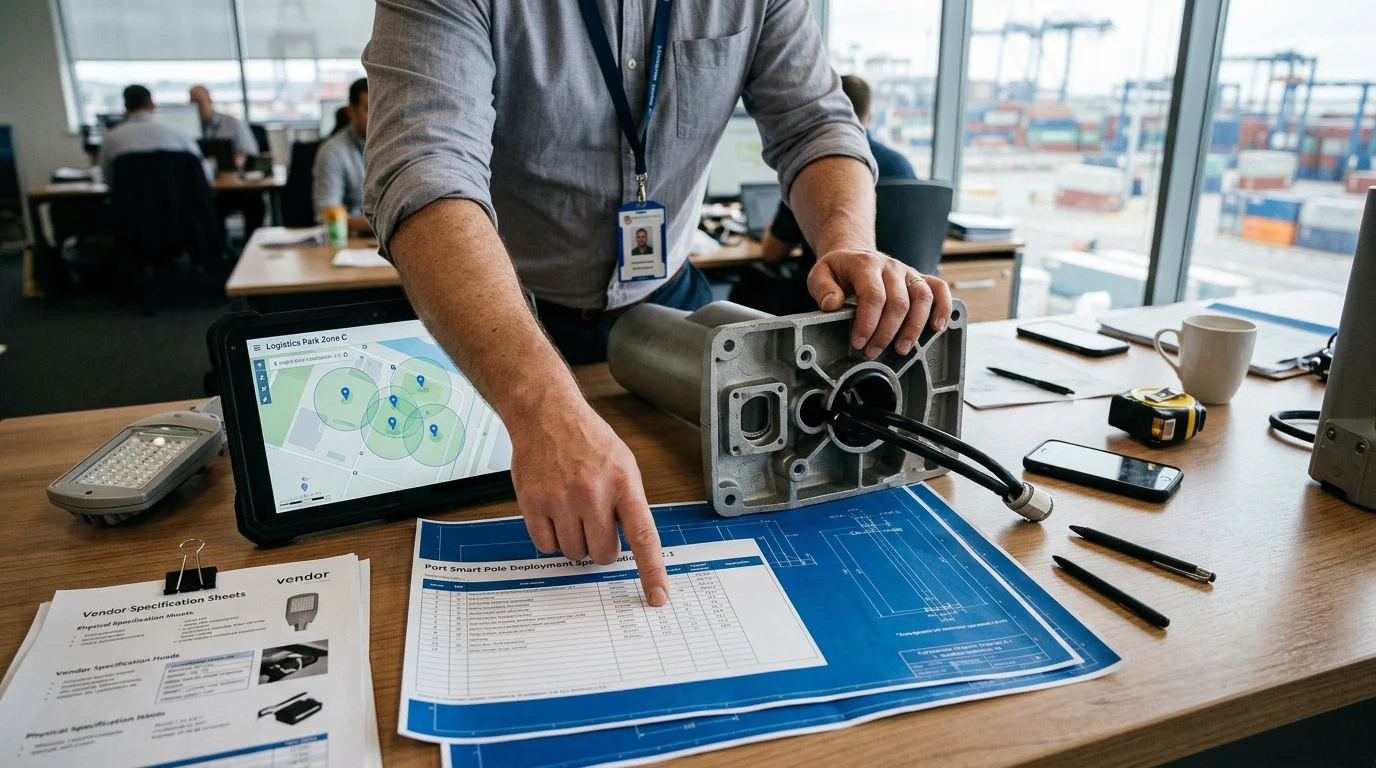
Transitioning from pilot programs to terminal-wide implementation requires a highly strategic approach to procurement and capital allocation. Facility operators must look beyond the initial hardware unit price to understand the holistic lifecycle costs, deployment logistics, and the vendor’s capacity for sustained integration support over a multi-decade operational lifespan.
What sourcing, factory audit, and deployment steps reduce risk
Strategic sourcing begins with stringent factory audits. Procurement teams should verify that manufacturers utilize automated robotic welding to ensure consistent seam integrity, which is vital for high-mast structural stability under dynamic loads. Audits must also validate in-house testing capabilities, specifically requesting documentation for 1000-hour salt spray tests and finite element analysis (FEA) reports for wind loading. Furthermore, buyers should confirm that the manufacturer utilizes modular pole segments designed to fit efficiently within standard 40-foot shipping containers, drastically reducing international freight costs.
During deployment, civil engineering coordination is a primary risk factor. For a standard 10-meter to 12-meter port smart street light pole carrying a heavy, asymmetrical sensor payload, reinforced concrete foundations often require depths exceeding 1.5 meters. Pre-cast foundation bolts and standardized flange plates must be aligned perfectly with subterranean conduit networks to prevent costly labor delays during the physical installation phase.
Which decision criteria help operators select the right solution
Selecting the optimal solution ultimately hinges on a rigorous Total Cost of Ownership (TCO) analysis.
Key Takeaways
- The most important conclusions and rationale for port smart street light pole
- Specs, compliance, and risk checks worth validating before you commit
- Practical next steps and caveats readers can apply immediately
Frequently Asked Questions
What makes a smart port street light pole different from a standard lighting pole?
It combines LED lighting, cameras, sensors, and wireless equipment on one pole, helping ports cut clutter, improve data coverage, and support safer 24/7 operations.
Which specifications are most important for port and logistics park poles?
Prioritize 50–60 m/s wind resistance, IP65/IP66 protection, IK08–IK10 impact rating, and salt-spray resistance above 1000 hours for coastal durability.
How much energy can a smart pole system save in a logistics park?
With DALI-2 or Zigbee dimming, motion sensing, and daylight control, smart pole networks typically reduce lighting energy use by 40% to 60%.
Can Morelux customize port smart street light poles for project requirements?
Yes. Morelux supports custom steel or aluminum pole designs, technical drawings, engineer assistance, and practical configurations for lighting, sensors, and communication devices.
How fast can Morelux provide a quote for a Port Smart street light pole project?
For most project inquiries, Morelux aims to provide a fast quotation within 24 hours, supported by responsive engineering and manufacturing communication.