Introduction
Choosing how an aluminum pole is made has direct consequences for strength, weight, surface finish, design flexibility, and unit cost. The comparison between spinning and casting matters because each process shapes the metal differently, leading to distinct mechanical behavior and manufacturing limits. This article explains how spinning and casting work, where each method performs best, and what trade-offs buyers, engineers, and specifiers should consider when evaluating poles for lighting or structural applications. With that context, the discussion can move into how process choice influences durability, appearance, production efficiency, and overall project value.
How Aluminium Pole Manufacturing Affects Cost and Performance
The aluminum pole manufacturing process fundamentally dictates the final product’s mechanical properties, aesthetic capabilities, and economic viability. Specifiers and procurement engineers must navigate the inherent trade-offs between two dominant fabrication methodologies: metal spinning and metal casting. The selected process alters the microstructural alignment of the aluminum, ultimately defining whether the pole can withstand high wind loads, resist environmental fatigue, or accommodate intricate, ornamental base geometries. Understanding these commercial and technical variables is the first step in value engineering a lighting or structural project.
Why spinning and casting are often compared
Spinning and casting represent the two primary avenues for transforming raw aluminum into functional lighting or structural poles, frequently drawing direct comparison during the engineering phase. Spinning utilizes extruded aluminum tubes—typically 6063-T6 or 6061-T6 alloy—yielding a seamless, continuous longitudinal grain structure with exceptional tensile strength, often exceeding 214 MPa (31,000 psi) in yield strength. This grain alignment makes spun poles highly resilient to dynamic bending forces. Conversely, sand or die casting involves pouring molten aluminum (commonly the A356-T6 alloy) into customized mold cavities. While this permits highly complex, non-cylindrical geometries that are impossible to machine on a lathe, the resulting cast structure exhibits an isotropic grain with lower tensile strength, generally hovering around 150 MPa (22,000 psi). Consequently, the two methods serve distinct structural applications within the industry.
Which commercial factors matter most for buyers
Procurement decisions hinge heavily on tooling expenditure, Minimum Order Quantities (MOQs), and production lead times. Spinning mandates relatively modest tooling investments, typically ranging from $2,000 to $5,000 for standard steel mandrels, rendering it economically feasible for low-to-medium volume production runs with MOQs frequently as low as 50 units. The lead time for new spun profiles is also concise, generally averaging 3 to 5 weeks. In contrast, casting requires complex, permanent molds or die tooling that demands steep capital outlays between $15,000 and $40,000, depending on core complexity. Consequently, cast aluminum poles necessitate substantially higher MOQs—frequently exceeding 500 units—to effectively amortize the initial tooling costs. However, at volumes scaling beyond 2,000 units, the automated nature of die casting can yield a lower per-unit cost than spinning.
How Spun and Cast Aluminium Poles Are Made
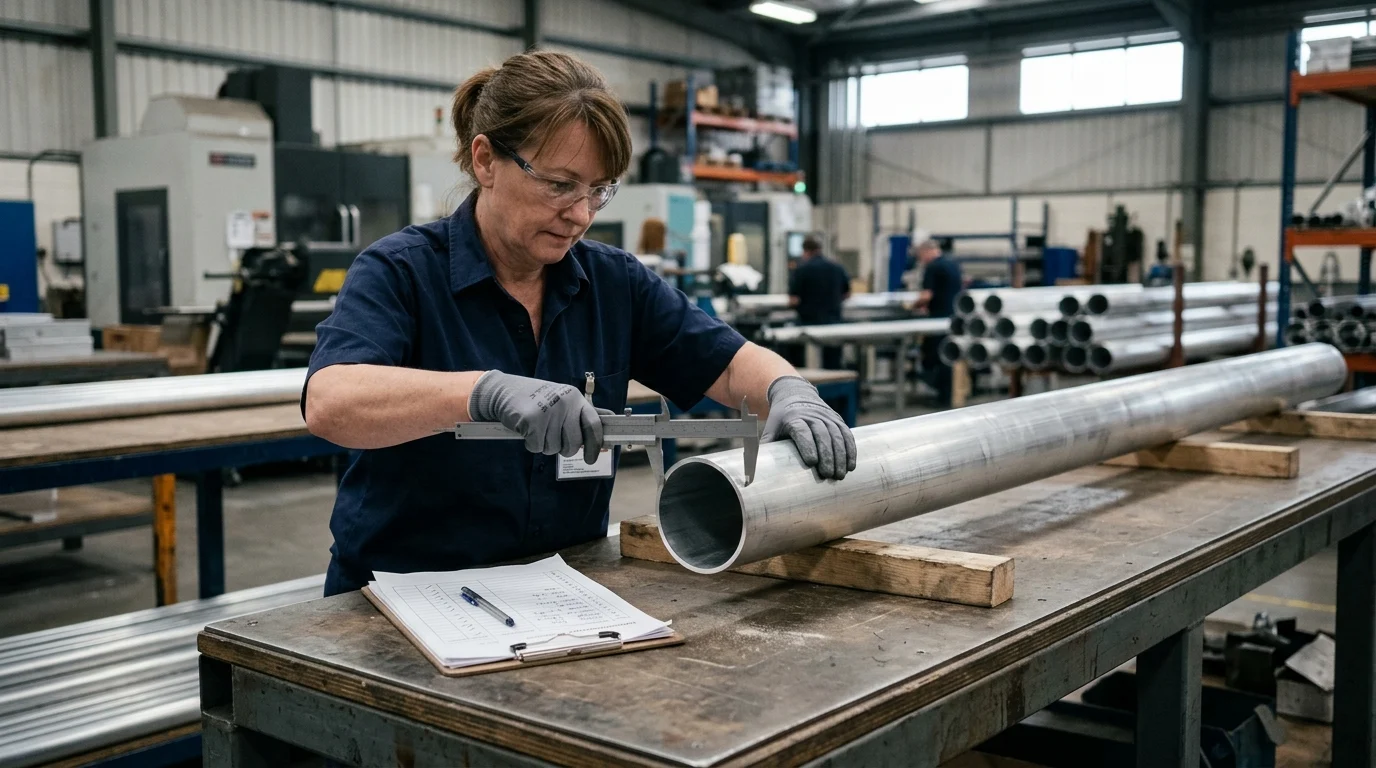
Understanding the metallurgical transformations inherent to each aluminum pole manufacturing process is critical for evaluating long-term field reliability. Both spinning and casting require precise thermal and mechanical controls, yet they manipulate the raw material through entirely divergent mechanisms. Quality control during these manufacturing stages directly impacts the pole’s susceptibility to corrosion, fatigue cracking, and structural failure.
How the spun aluminium pole process works
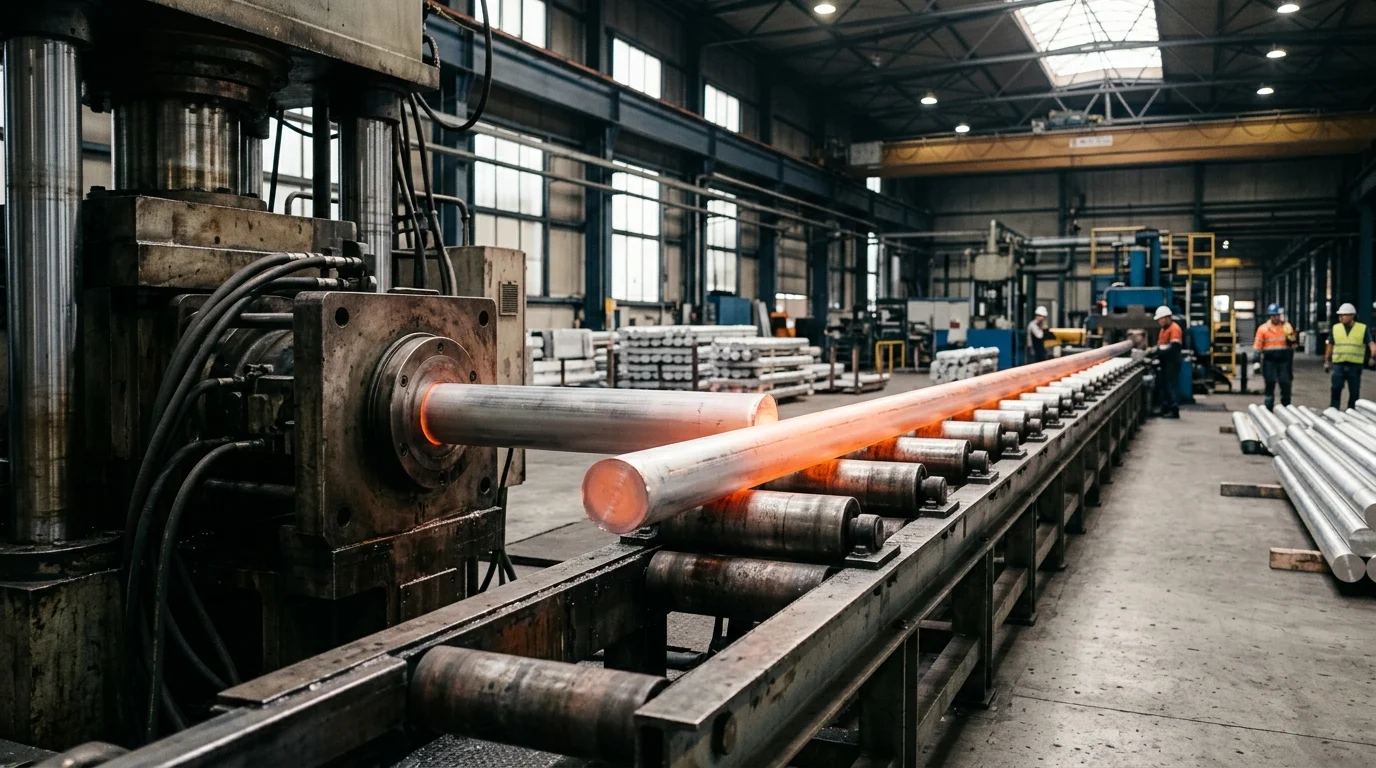
The spun aluminum pole process initiates with a seamless extruded aluminum tube mounted onto a high-speed computer numerical control (CNC) spinning lathe. As the tube rotates at velocities up to 1,500 RPM, localized thermal energy is applied, and heavy-duty steel rollers exert immense pressure against the exterior surface. This compressive force gradually shapes the aluminum over a hardened steel mandrel, simultaneously tapering the pole and work-hardening the metal. The spinning process maintains a highly consistent wall thickness—typically specified between 0.125 and 0.250 inches (3.18 to 6.35 mm)—while preserving the longitudinal grain flow of the original extrusion. Following the forming stage, the spun pole undergoes artificial aging in a precipitation heat treatment oven, elevating it to a T6 temper to maximize flexural rigidity and yield strength under dynamic loading conditions.
How the cast aluminium pole process differs
The cast aluminum pole process bypasses the extrusion phase entirely, relying instead on the phase transition of molten metal. High-silicon aluminum alloys are heated in a furnace to roughly 700°C (1,292°F) and poured or injected under pressure into a precision-engineered mold cavity. Unlike spinning, casting requires thicker minimum wall sections—rarely falling below 0.250 inches (6.35 mm)—to ensure the molten metal flows completely through the complex mold geometry without premature solidification, which causes defects known as “short shots.” Once cooled and ejected, the cast pole undergoes fettling to remove flash, risers, and gates, followed by precision CNC machining to tap mounting threads and face mating surfaces. To verify structural integrity, cast components often require X-ray or ultrasonic non-destructive testing (NDT) to detect internal porosity.
| Feature | Spun Aluminium Process | Cast Aluminium Process |
|---|---|---|
| Starting Material | Extruded seamless tube (e.g., 6063) | Molten alloy ingots (e.g., A356) |
| Grain Structure | Continuous, work-hardened | Isotropic, cast microstructure |
| Typical Wall Thickness | 0.125″ – 0.250″ (3.18 – 6.35 mm) | 0.250″ – 0.500″ (6.35 – 12.7 mm) |
| Geometric Limits | Symmetrical, tapered, cylindrical | Complex, asymmetric, ornamental |
| Tooling Lead Time | 3 to 5 weeks | 8 to 12 weeks |
| Typical MOQ | 50 – 100 units | 500+ units |
How to Choose the Right Aluminium Pole Manufacturing Process

Selecting the optimal aluminum pole manufacturing process requires a rigorous assessment of the project’s engineering specifications, environmental conditions, and architectural intent. Engineers must reconcile the desired aesthetic profile with strict wind load codes, structural safety margins, and long-term maintenance requirements established by transportation authorities.
How to compare spinning and casting for structural performance
Structural performance is primarily evaluated through the pole’s capacity to support a specific Effective Projected Area (EPA) under maximum local wind velocities, governed by standards such as AASHTO LTS-6. Spun aluminum poles inherently possess superior flexural strength and fatigue resistance due to their continuous grain structure. This allows them to support heavy luminaire EPAs in extreme wind zones, frequently rated for sustained wind gusts of 120 to 150 mph. Deflection under load is highly predictable and remains elastic. Conversely, cast aluminum poles exhibit an isotropic microstructure that is more susceptible to brittle fracture under high bending moments and continuous vortex shedding vibrations. Consequently, casting is rarely utilized for the primary vertical shaft of tall structures, though it remains the superior choice for manufacturing rigid, thick-walled decorative bases that securely anchor the entire assembly to the concrete foundation.
Key Takeaways
- The most important conclusions and rationale for the aluminum pole manufacturing process
- Specs, compliance, and risk checks worth validating before you commit
- Practical next steps and caveats readers can apply immediately
Frequently Asked Questions
Which process is better for high-wind aluminum poles?
Spinning is usually better. It keeps stronger grain flow and higher yield strength, making spun poles more reliable for roadway, traffic, and other wind-loaded infrastructure projects.
When is casting a better choice than spinning?
Choose casting when you need decorative shapes, complex bases, or non-cylindrical details that spinning cannot form efficiently. It suits ornamental designs more than slender structural shafts.
How do tooling cost and MOQ differ between spinning and casting?
Spinning typically needs lower tooling and can work for smaller orders. Casting usually requires expensive molds and higher MOQs, but unit cost may drop on very large-volume programs.
What quality checks are important for cast aluminum poles?
Ask for porosity inspection, dimensional checks, machining verification, and NDT such as X-ray or ultrasonic testing. These controls help confirm structural integrity before shipment.
Can Morelux support custom aluminum pole projects?
Yes. Morelux provides custom pole manufacturing, technical drawings, engineer support, and fast quotations, helping project buyers compare spun and cast options for performance, budget, and lead time.