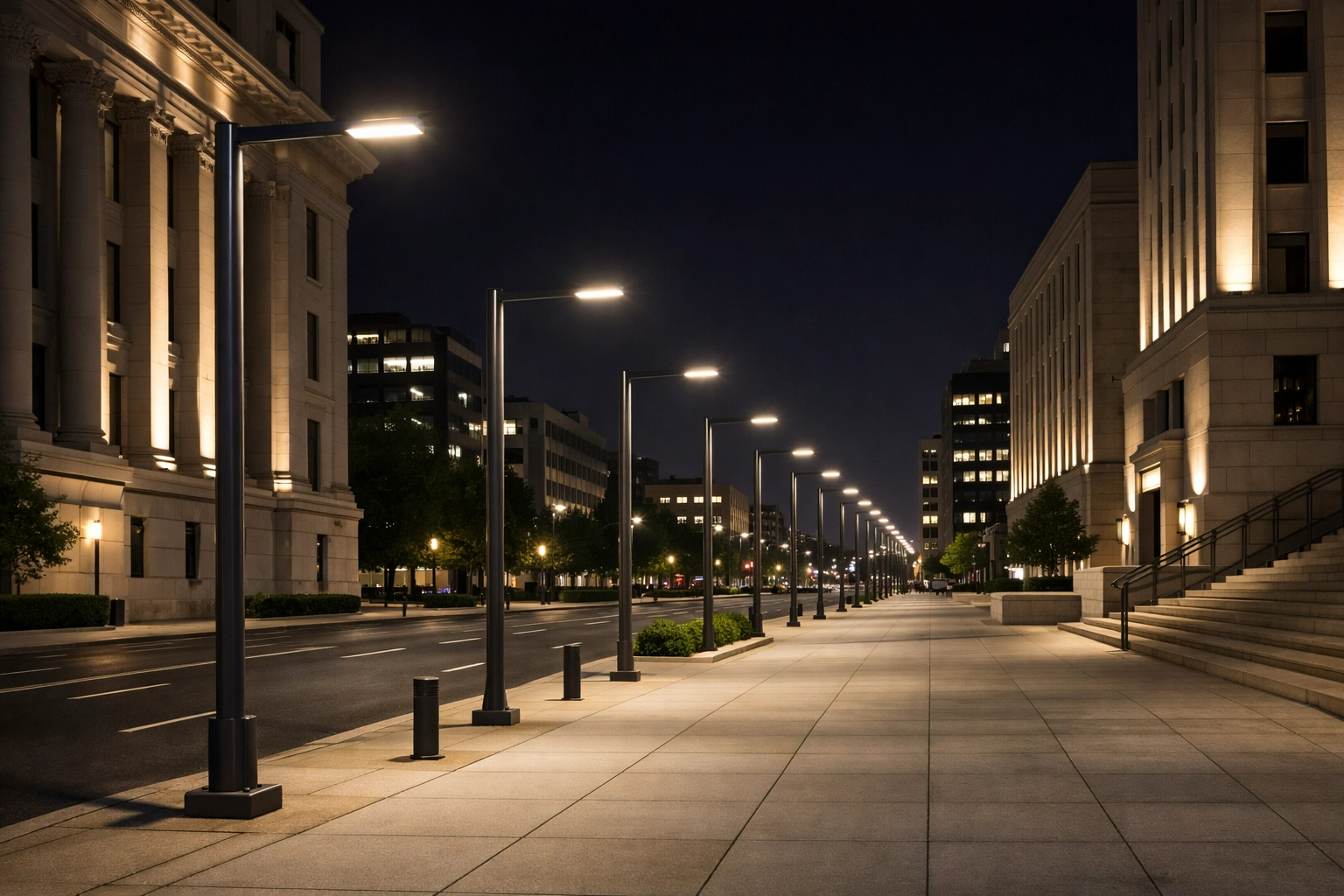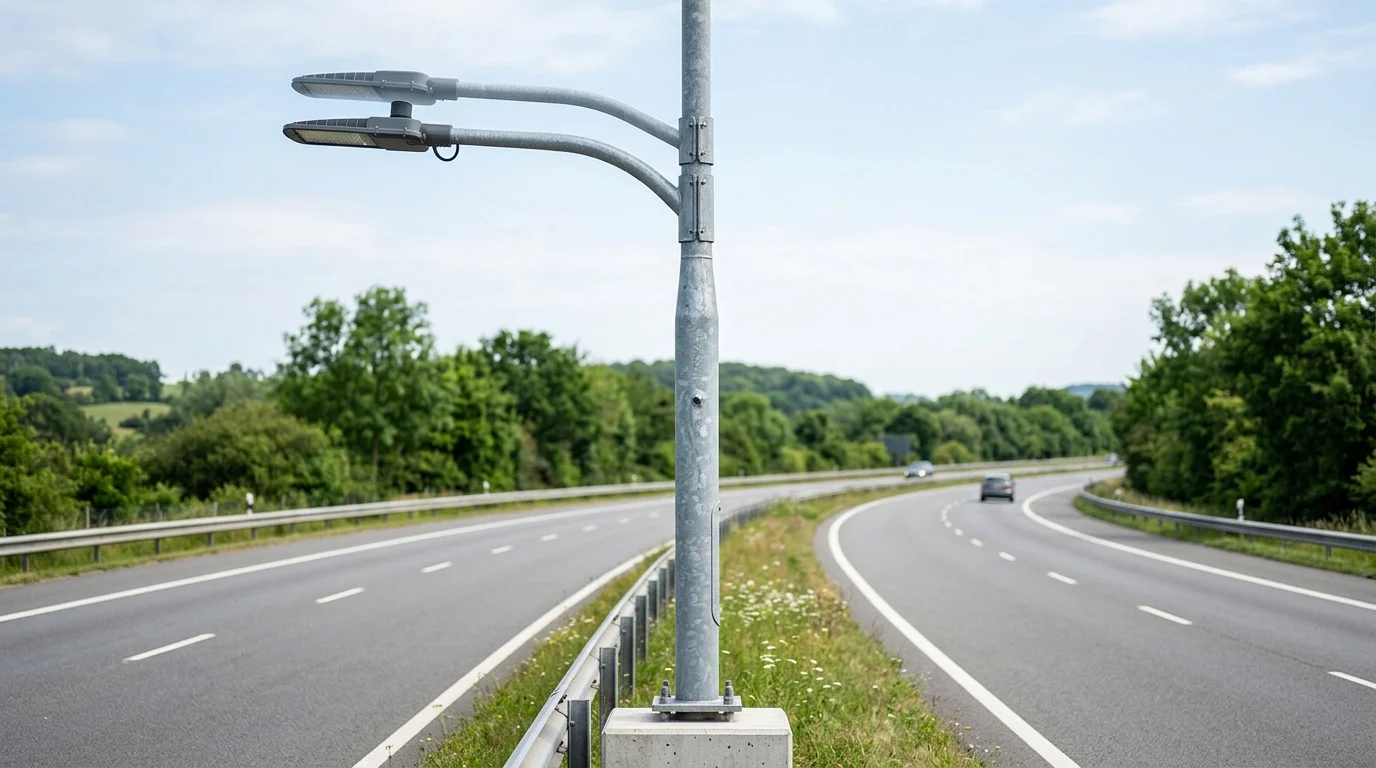
Choosing a highway lighting pole affects far more than fixture support. The right specification influences roadway visibility, impact safety, wind resistance, maintenance access, and the long-term cost of the lighting system. Because highway projects vary from rural stretches to major interchanges, pole height, material, mounting style, and structural ratings must match the site’s traffic conditions, lighting goals, and environmental loads. This article explains the key factors to evaluate, including application type, safety standards, durability, and lifecycle performance, so you can compare options more confidently and select a pole that fits both technical requirements and the project budget.
Why the right highway lighting pole matters
A highway lighting pole represents a critical intersection of civil engineering, optical performance, and public safety. Selecting the correct structural support for roadway illumination is not merely a basic procurement decision; it is a long-term infrastructure investment that dictates visibility, minimizes roadside hazards, and withstands decades of environmental stress.
Project goals and application scope
The initial phase of infrastructure planning requires defining the exact application scope. Highway environments range from complex multi-lane interchanges requiring high-mast installations to linear rural stretches utilizing continuous standard lighting. High-mast poles typically exceed 30 meters (100 feet) in height and support lowering rings with multiple high-lumen fixtures, effectively illuminating vast areas while reducing the total number of physical collision hazards near the roadway.
Conversely, standard continuous highway applications rely on poles ranging from 12 to 15 meters tall, spaced strategically to achieve optimal uniformity ratios and eliminate dark zones. The specific project goals—whether mitigating light trespass in adjacent residential zones, optimizing energy consumption, or meeting strict Department of Transportation (DOT) illumination thresholds—directly dictate the required pole height, mast arm length, and fixture orientation.
Safety, performance, and lifecycle impact
Safety and lifecycle performance are deeply intertwined in highway lighting infrastructure. A primary safety consideration is the implementation of breakaway mechanisms, such as slip bases or frangible transformer bases, which are engineered to shear upon vehicular impact at specific velocities. This design minimizes the kinetic energy transferred to the vehicle, significantly reducing fatality rates in run-off-road collisions.
From a lifecycle perspective, the structural integrity of a highway lighting pole must endure constant exposure to harsh elements. For instance, hot-dip galvanized steel poles are expected to deliver a functional lifespan of 25 to 50 years, depending heavily on local soil acidity, road salt application, and ambient humidity. Premature structural failure due to corrosion or metal fatigue not only poses severe safety hazards but also incurs exorbitant replacement costs, making rigorous lifecycle analysis an indispensable part of the initial selection criteria.
Key highway lighting pole specifications
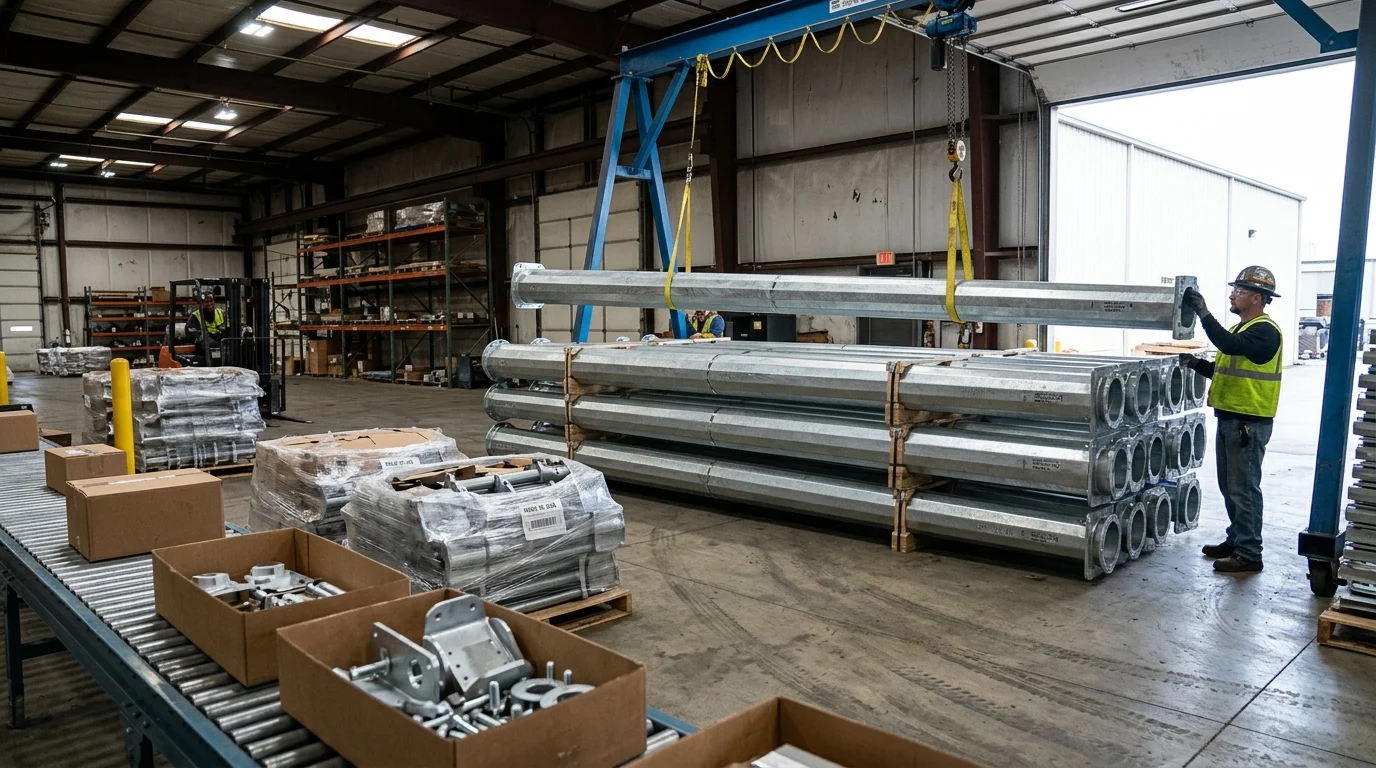
Translating project requirements into actionable procurement data requires a deep understanding of structural parameters. The technical specifications of a highway lighting pole govern its ability to support specific luminaire payloads while resisting dynamic environmental forces.
Material, height, geometry, and foundation interface
The physical composition and geometry of the pole form the baseline of its structural capacity. Carbon steel remains the industry standard due to its high tensile strength, with typical yield strengths ranging from 50,000 psi to 65,000 psi. Aluminum offers superior corrosion resistance and a lighter footprint, making it ideal for coastal environments, though it generally presents lower yield strengths (around 25,000 to 35,000 psi) and commands a higher initial price point.
Geometrically, engineers must select among round tapered, square, or multisided (octagonal or dodecagonal) cross-sections. Multisided tapered poles offer excellent strength-to-weight ratios for high-mast applications. Furthermore, the foundation interface is a critical specification; the bolt circle diameter (BCD), anchor bolt sizing, and base plate thickness must perfectly align with the poured concrete footing to ensure structural stability.
| Material | Typical Lifespan | Yield Strength (psi) | Relative Cost | Optimal Application |
|---|---|---|---|---|
| Galvanized Steel | 30–50 years | 50,000–65,000 | Moderate | Standard DOT highways |
| Aluminum | 50+ years | 25,000–35,000 | High | Corrosive coastal zones |
| Fiberglass | 20–40 years | Variable | Moderate to High | High-vibration environments |
Wind load, luminaire load, and structural performance
The most critical engineering calculation for any highway lighting pole is its Effective Projected Area (EPA) capacity. The EPA rating dictates the maximum combined weight and aerodynamic profile (sail area) of the luminaires and mast arms the pole can safely support at a given wind speed.
Designers must consult local wind zone maps to determine the baseline wind load, which can range from 90 mph in inland areas to extreme 150 mph gusts in hurricane-prone coastal regions. The structural performance must account for both steady-state wind pressures and vortex shedding—a phenomenon where wind-induced vibrations cause metal fatigue over time. Specifying a pole with an EPA rating that exceeds the total luminaire payload by a safety margin of at least 10% to 20% is a standard engineering practice to prevent catastrophic failure under peak dynamic loads.
How to choose a highway lighting pole
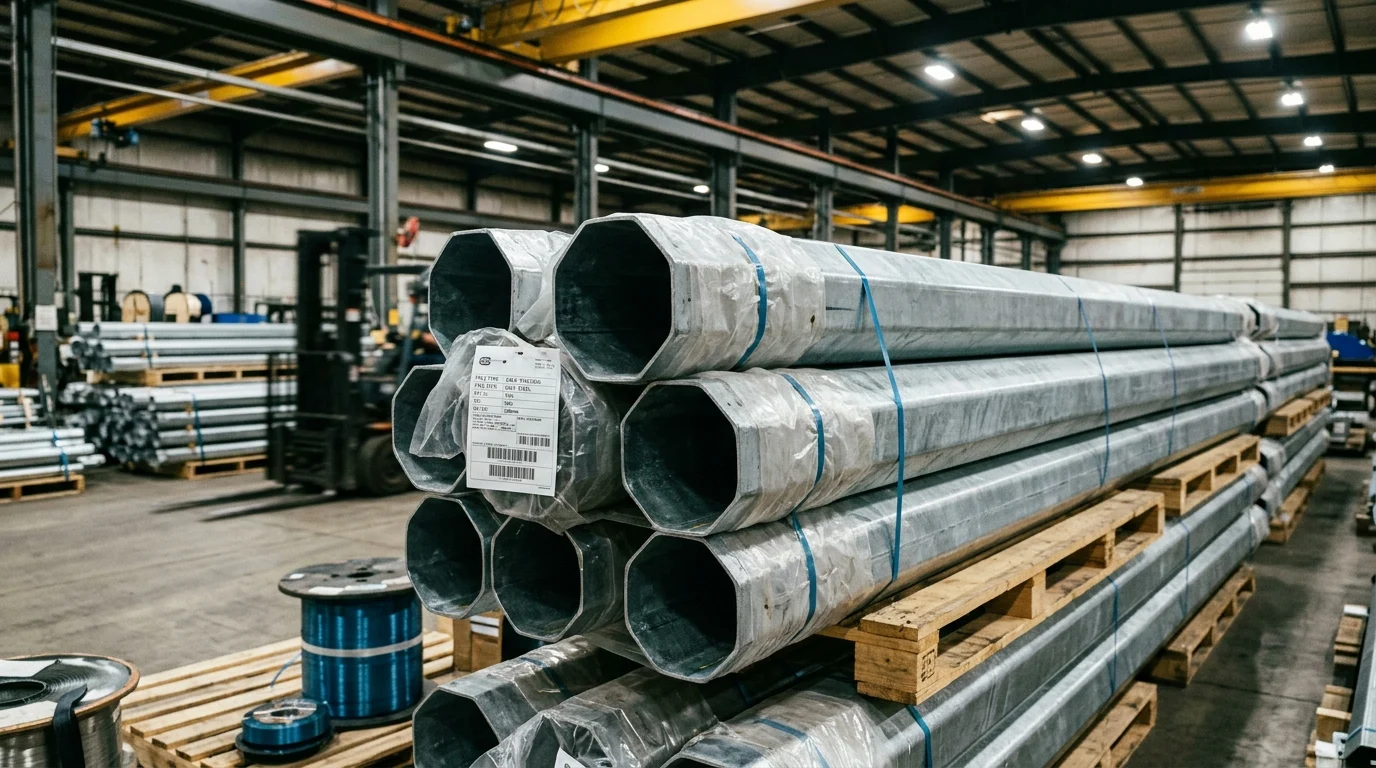
Navigating the procurement phase demands strict adherence to regulatory standards and a clear understanding of supply chain dynamics. Choosing the right manufacturer and managing logistics are just as vital as executing the initial engineering calculations.
Compliance, quality assurance, fabrication, and logistics
Regulatory compliance forms the non-negotiable foundation of highway infrastructure procurement. In North America, poles must strictly adhere to the American Association of State Highway and Transportation Officials (AASHTO) LTS-6 specifications, which govern structural supports for highway signs, luminaires, and traffic signals. Quality assurance documentation is paramount; buyers must verify that the manufacturer utilizes certified welders (e.g., AWS D1.1 standards) and that galvanizing processes meet rigorous benchmarks like ASTM A123 for zinc coating thickness.
Logistics and fabrication timelines also heavily influence project execution. Standard highway lighting pole configurations may have lead times of 4 to 6 weeks, whereas custom high-mast or heavy-duty architectures frequently require 12 to 16 weeks for fabrication and delivery. Additionally, buyers must account for Minimum Order Quantities (MOQs) and specialized flatbed freight requirements, as transporting 15-meter continuous lighting poles involves complex routing and specialized site offloading protocols.
Step-by-step selection process
Executing a flawless procurement strategy requires a methodical, step-by-step selection process. First, project engineers must complete a comprehensive photometric analysis to establish the required mounting heights, mast arm lengths, and pole spacing necessary to achieve target lux levels and uniformity across all traffic lanes.
Second, finalize the structural engineering requirements by calculating the total EPA of the selected LED fixtures and applying the localized wind speed data to determine the required pole wall thickness and geometry.
Key Takeaways
- The most important conclusions and rationale for highway lighting pole
- Specs, compliance, and risk checks worth validating before you commit
- Practical next steps and caveats readers can apply immediately
Frequently Asked Questions
What pole material is best for a highway lighting project?
Galvanized steel suits most DOT highway projects for strength and cost. Choose aluminum for coastal or high-corrosion areas where longer corrosion resistance justifies the higher price.
How do I choose the right pole height for highway lighting?
Match height to roadway type and coverage target. Standard highways often use 12–15 m poles, while large interchanges may need 30 m+ high-mast poles for wider, more uniform lighting.
Why is EPA rating important when selecting a highway lighting pole?
EPA rating shows how much fixture and arm wind area the pole can safely carry. Always check local wind speed, luminaire size, and mast arm length before finalizing the pole.
Do highway lighting poles need breakaway bases?
In many roadside applications, yes. Breakaway bases like slip bases or frangible bases help reduce crash severity and may be required by local roadway safety standards.
Can Morelux provide custom highway lighting poles and project support?
Yes. Morelux offers custom steel and aluminum pole solutions, fast quotes, technical drawings, engineer support, and dependable manufacturing for infrastructure and sourcing projects.