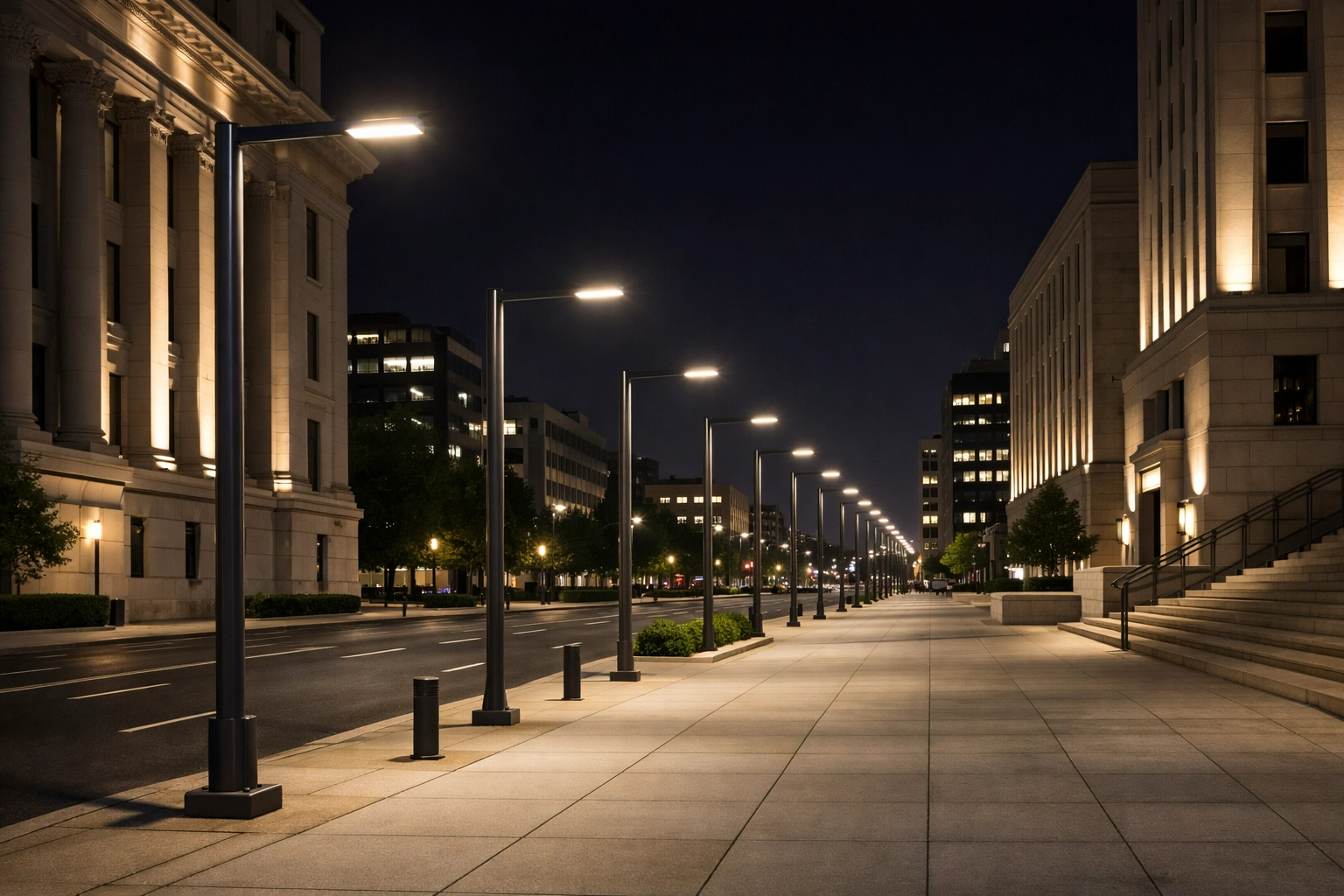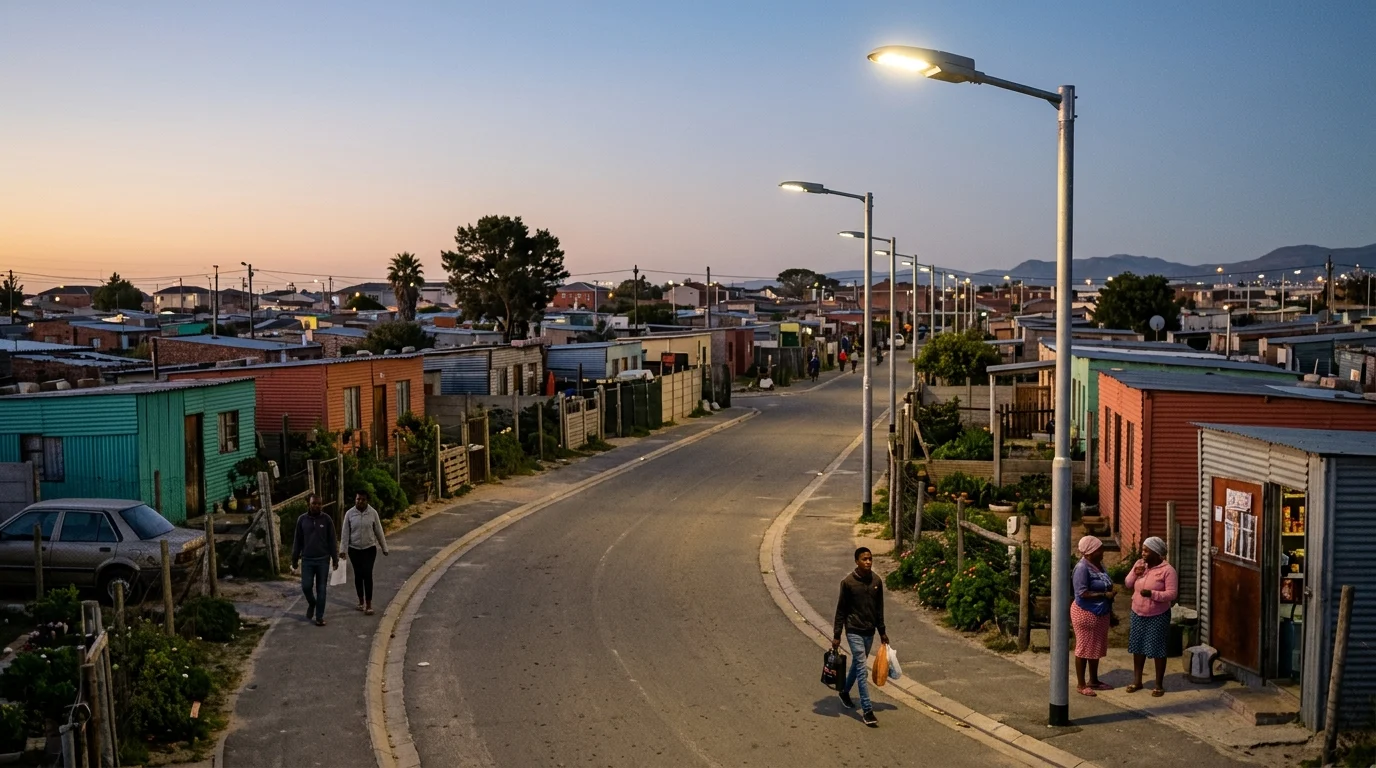
Township lighting budgets are often tight, but the cost of poor illumination is rarely small. Premature fixture failures, unsafe dark zones, excess glare, and high maintenance callouts can quickly erase any upfront savings from low-grade equipment. A smarter approach starts with measurable performance targets: pole spacing, lux levels, uniformity, energy use, LED lifespan, and pole durability. This article explains how municipal planners, infrastructure buyers, and sourcing teams can build reliable, efficient street lighting networks while controlling capital expenditure. It also highlights practical specification choices—such as L70 life ratings, BUG glare control, and engineered pole solutions—that help deliver safer roads and stronger long-term value.
Why Quality Matters in Township Street Lighting Projects
Developing township street lighting infrastructure requires municipal planners to navigate strict budgetary constraints while delivering reliable, high-performance illumination. Although the temptation to select the lowest-cost fixtures is high, substandard lighting frequently leads to inflated operational costs, premature failures, and compromised public safety.
A strategic approach demands a rigorous assessment of upfront capital expenditures against long-term operational viability. By prioritizing quality from the initial planning stages, municipalities can build resilient lighting networks that serve communities effectively without causing future financial strain.
Define project scope and success criteria
Establishing a precise project scope is the foundational step in any township lighting initiative. Planners must define exact success criteria, such as the total kilometers of roadway to be illuminated, the required pole spacing—typically ranging from 30 to 45 meters depending on the road classification—and the target energy consumption footprint.
Quantifying these metrics early helps municipalities avoid scope creep and ensures the selected lighting systems align with both budgetary limits and long-term infrastructure goals.
Link lighting quality to public safety
The correlation between high-quality street lighting and public safety is well documented; adequate nighttime illumination serves as a critical deterrent to both traffic accidents and localized crime.
Studies consistently indicate that upgrading to uniform, high-visibility LED streetlights can reduce nocturnal traffic collisions by up to 30%. Consequently, lighting quality is not merely an aesthetic consideration but a fundamental component of municipal risk management and community well-being.
Balance budget limits with long-term value
Balancing rigid budget limits with long-term value requires shifting focus from initial capital expenditure (CAPEX) to total lifecycle costs. A low-cost luminaire may save 15% upfront but often incurs severe maintenance penalties, frequently failing within two to three years.
Conversely, investing in premium fixtures that meet the L70 standard for 50,000 to 100,000 hours of operation ensures that a slightly higher initial investment is offset by a decade or more of maintenance-free reliability.
Key Technical Specifications That Affect Cost and Performance
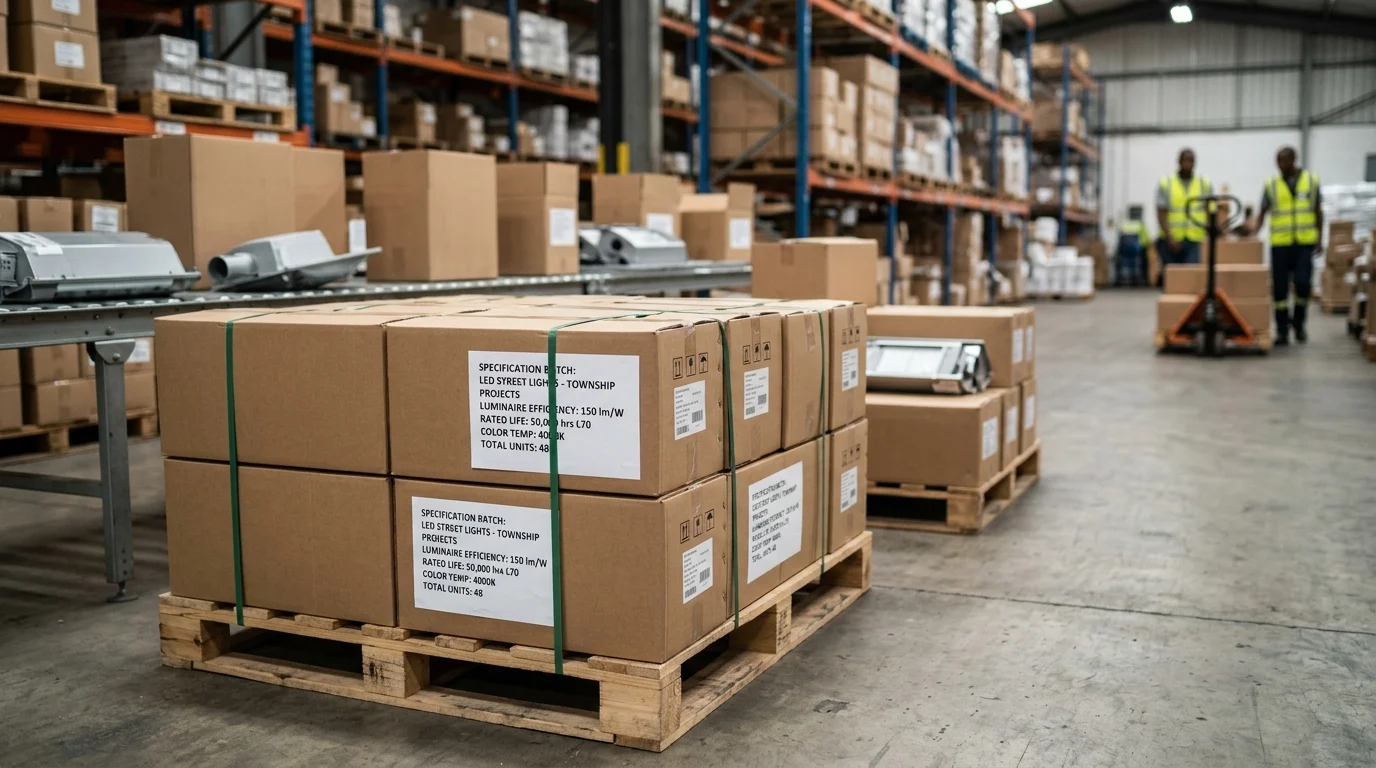
The performance and financial viability of a township lighting project are directly dictated by the technical specifications outlined during the engineering phase. Vague specifications inevitably result in the procurement of substandard equipment.
Municipal engineers must strictly define photometric parameters, mechanical durabilities, and electrical efficiencies to guarantee that the installed infrastructure performs as modeled and withstands local environmental conditions.
Illuminance, uniformity, and glare control
Illuminance, uniformity, and glare control are the primary photometric metrics that determine lighting efficacy. For standard residential township roads, an average illuminance of 5 to 15 lux is generally required, coupled with a minimum overall uniformity ratio (U0) of 0.40 to prevent dangerous dark spots.
Furthermore, strict adherence to the BUG (Backlight, Uplight, Glare) rating system is necessary to minimize light pollution and prevent disabling glare for motorists and pedestrians.
Luminaires, poles, optics, and color temperature
The selection of luminaires, poles, optics, and color temperature significantly impacts both visual comfort and physical resilience. Correlated Color Temperature (CCT) should ideally be restricted to the 3000K to 4000K range to reduce blue light scatter and minimize ecological disruption.
Pole heights must be optimized for road width. Six- to eight-meter poles are standard for local township roads, equipped with Type II or Type III optical distribution lenses to direct light precisely along the pavement rather than spilling into adjacent residential properties.
Lifecycle cost, warranty, and maintenance access
To mitigate total lifecycle costs, stringent mechanical ratings and comprehensive warranty terms must be specified. Luminaires must possess an ingress protection rating of at least IP66 to withstand heavy rainfall and dust, alongside an impact protection rating of IK08 or higher to resist vandalism and debris.
| Specification Parameter | Residential Township Road | Main Arterial Road |
|---|---|---|
| Average Illuminance (Eavg) | 5 – 15 Lux | 20 – 30 Lux |
| Uniformity Ratio (U0) | > 0.40 | > 0.40 |
| Correlated Color Temp (CCT) | 3000K – 4000K | 4000K – 5000K |
| Pole Height | 6 – 8 meters | 10 – 12 meters |
| Minimum Warranty | 5 Years | 7 – 10 Years |
Ensuring maintenance access is equally critical. Tool-less entry designs and modular driver compartments allow field technicians to service units rapidly without requiring specialized equipment, thereby reducing ongoing labor costs.
Comparing LED, Solar, Retrofit, and New Installations
Municipalities face multiple infrastructure pathways when deploying street lighting, each carrying distinct financial and logistical implications.
The decision matrix typically involves choosing between traditional grid-tied LED systems, autonomous solar-powered units, retrofitting existing poles, or executing entirely new greenfield installations based on site-specific constraints.
Grid-tied LED versus solar street lights
The debate between grid-tied LED and solar street lights centers on infrastructure readiness and long-term maintenance capacity. Grid-tied systems offer unparalleled reliability and lower per-unit fixture costs but are entirely dependent on existing power infrastructure.
In contrast, solar street lights provide grid independence and immunity to power outages. However, solar units require significant battery maintenance; modern lithium iron phosphate (LiFePO₄) battery packs require replacement every five to eight years—a cost that must be factored into the operational budget.
When solar lighting reduces civil works costs
Solar lighting becomes highly advantageous when evaluating the civil works costs associated with new installations. In undeveloped township sectors, the cost of trenching, laying underground cables, and installing transformer substations can account for 40% to 50% of the total project budget.
By eliminating the need for subterranean electrical infrastructure, solar lighting dramatically reduces both capital expenditure and deployment timelines, making it the superior choice for remote or newly established peripheral zones.
Retrofit versus new installation decisions
When existing infrastructure is present, the choice between retrofitting and undertaking a new installation hinges on the structural integrity of the legacy assets. Retrofitting existing High-Pressure Sodium (HPS) fixtures with LED luminaire heads utilizes existing eight-meter poles and wiring, keeping capital expenditures remarkably low while delivering 50% to 60% in immediate energy savings.
| Deployment Type | Primary Cost Driver | Typical Energy Savings (vs. HPS) | Best Application Scenario |
|---|---|---|---|
| Grid-Tied New Install | Trenching & Cabling (40-50%) | 50% – 60% | Developed areas with stable grid |
| Solar New Install | Battery & Panel Replacements | 100% (Off-grid) | Remote areas lacking infrastructure |
| LED Retrofit | Luminaire Hardware Only | 50% – 60% | Existing roads with sound poles |
Conversely, if legacy poles suffer from severe corrosion or structural fatigue, a completely new installation is mandatory to prevent catastrophic failures during high wind events or severe weather.
Procurement, Compliance, and Installation Requirements
The procurement phase represents a critical vulnerability in municipal infrastructure projects, where poorly drafted tender documents can allow inferior products to infiltrate the supply chain.
Robust compliance protocols and rigorous installation standards are essential to safeguard the project budget and ensure the final lighting network performs exactly as engineered.
Standards, electrical codes, and photometric reports
Adherence to recognized standards, electrical codes, and photometric reports is non-negotiable. Procurement officers must demand certified IES LM-79 and LM-80 reports from independent testing laboratories to verify the luminous efficacy and lumen maintenance of the proposed LEDs.
Furthermore, all equipment must strictly comply with regional electrical safety codes, such as IEC 60598, to guarantee safe operation under high-voltage conditions and varying environmental extremes.
Tender documents that prevent under-specified products
Crafting tender documents that prevent underspecified products requires establishing high technical floors. Tenders should mandate a minimum luminous efficacy of 130 to 150 lumens per watt (lm/W) to filter out obsolete, energy-inefficient LED chips.
Additionally, the documentation must stipulate a maximum allowable failure rate of less than 1% across the mandatory warranty period. This forces manufacturers to supply high-tier drivers and robust thermal management systems rather than cutting corners to win the bid.
Installation, logistics, testing, and handover
The final execution phase—encompassing installation, logistics, testing, and handover—requires strict oversight. Logistics must be coordinated to prevent on-site component damage, while installation must follow precise engineering drawings, including soil bearing capacity tests for new pole foundations.
Prior to official handover, comprehensive commissioning is required. This includes insulation resistance testing—typically requiring a reading greater than 2 megohms—and nighttime photometric surveys to confirm that the installed lux levels match the theoretical design models.
How Townships Can Deliver Projects Efficiently
Delivering township street lighting projects on a constrained budget requires highly disciplined project management and strategic deployment methodologies.
By prioritizing critical infrastructure and adopting scalable rollout strategies, municipalities can maximize the immediate impact of their capital investments while laying the groundwork for sustainable urban development.
Prioritize roads, intersections, and high-risk areas
Efficient delivery begins with prioritizing roads, intersections, and high-risk areas. Rather than attempting to illuminate an entire township simultaneously, planners should direct initial funding toward primary transit corridors and zones with historically high accident rates.
Intersections, which represent peak collision risks, must be prioritized with higher illuminance targets—often requiring 20 to 30 lux. This ensures maximum visibility for both pedestrians and cross-traffic before secondary residential streets are addressed.
Use phased rollout and performance verification
Implementing a phased rollout combined with continuous performance verification mitigates financial risk. For instance, a township planning a 1,000-pole deployment should execute the project in sequential phases, such as four batches of 250 poles.
This allows engineers to conduct real-world photometric verification and energy audits on the initial batch, ensuring the fixtures meet all contractual specifications before committing the remainder of the municipal budget to subsequent phases.
Plan maintenance and future expansion
Long-term success relies heavily on the ability to plan for maintenance and future expansion. Forward-thinking municipalities mandate the inclusion of NEMA or Zhaga receptacles (such as standard 7-pin sockets) on all new luminaires, ensuring the infrastructure is ready for future smart city integrations like wireless control nodes or environmental sensors.
Concurrently, financial planning must allocate 2% to 3% of the initial capital expenditure annually for routine operational maintenance, guaranteeing that the lighting network remains functional and visually optimal for decades.
Key Takeaways
- Define the project scope early by confirming roadway length, target energy use, and pole spacing, which is commonly 30 to 45 meters depending on road classification.
- Specify 5 to 15 lux average illuminance and at least U0 0.40 uniformity for many residential township roads to reduce dark spots and improve safety.
- Evaluate total lifecycle cost because low-cost luminaires may save about 15% upfront but can fail within two to three years.
- Choose quality LED fixtures with L70 ratings of 50,000 to 100,000 hours to reduce maintenance and extend reliable service life.
- Use clear tender requirements for optics, glare control, pole materials, coatings, and testing so suppliers deliver comparable and compliant solutions.
- Request technical drawings and engineering support before procurement to confirm pole strength, luminaire performance, and installation feasibility.
Frequently Asked Questions
How can townships reduce street lighting costs without sacrificing quality?
Focus on lifecycle cost, not only purchase price. Specify efficient LED luminaires, durable poles, proper optics, and maintenance-friendly designs to reduce failures, energy use, and replacement expenses over time.
What pole spacing is typical for township street lighting?
Many township roads use pole spacing of about 30 to 45 meters, depending on road width, traffic speed, mounting height, optics, and required illumination levels.
What lighting level is suitable for residential township roads?
A common target is 5 to 15 lux average illuminance with uniformity of at least U0 0.40. Final values should follow local road classifications and applicable lighting standards.
Why should municipalities avoid the cheapest luminaires?
Low-cost fixtures may save money upfront but often fail within two to three years, increasing maintenance costs and safety risks. Quality LEDs with L70 ratings of 50,000 to 100,000 hours provide better long-term value.
How does better street lighting improve public safety?
Uniform, high-visibility LED lighting reduces dark spots, improves driver reaction time, and can help lower nighttime traffic collisions by up to 30% when properly designed and installed.