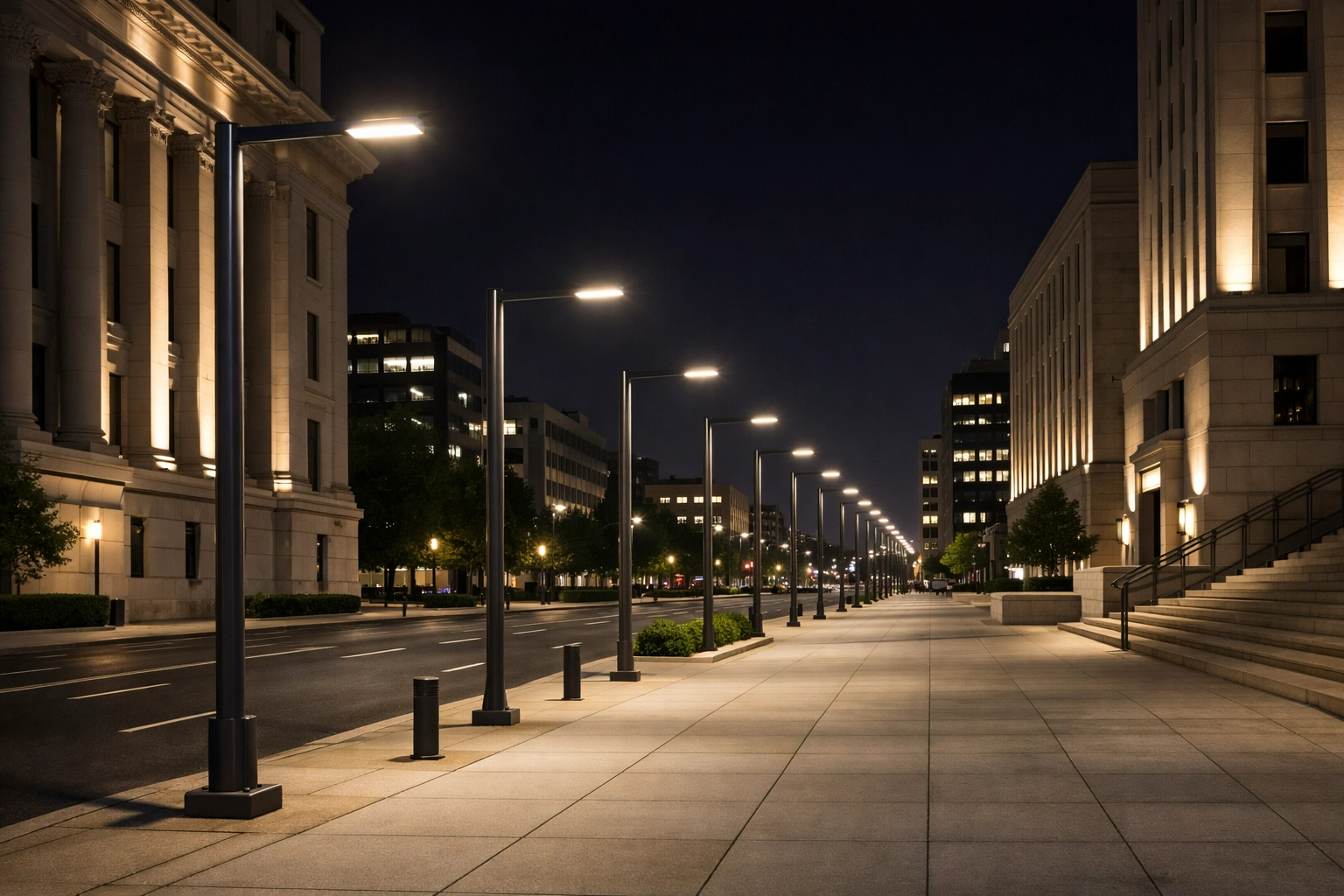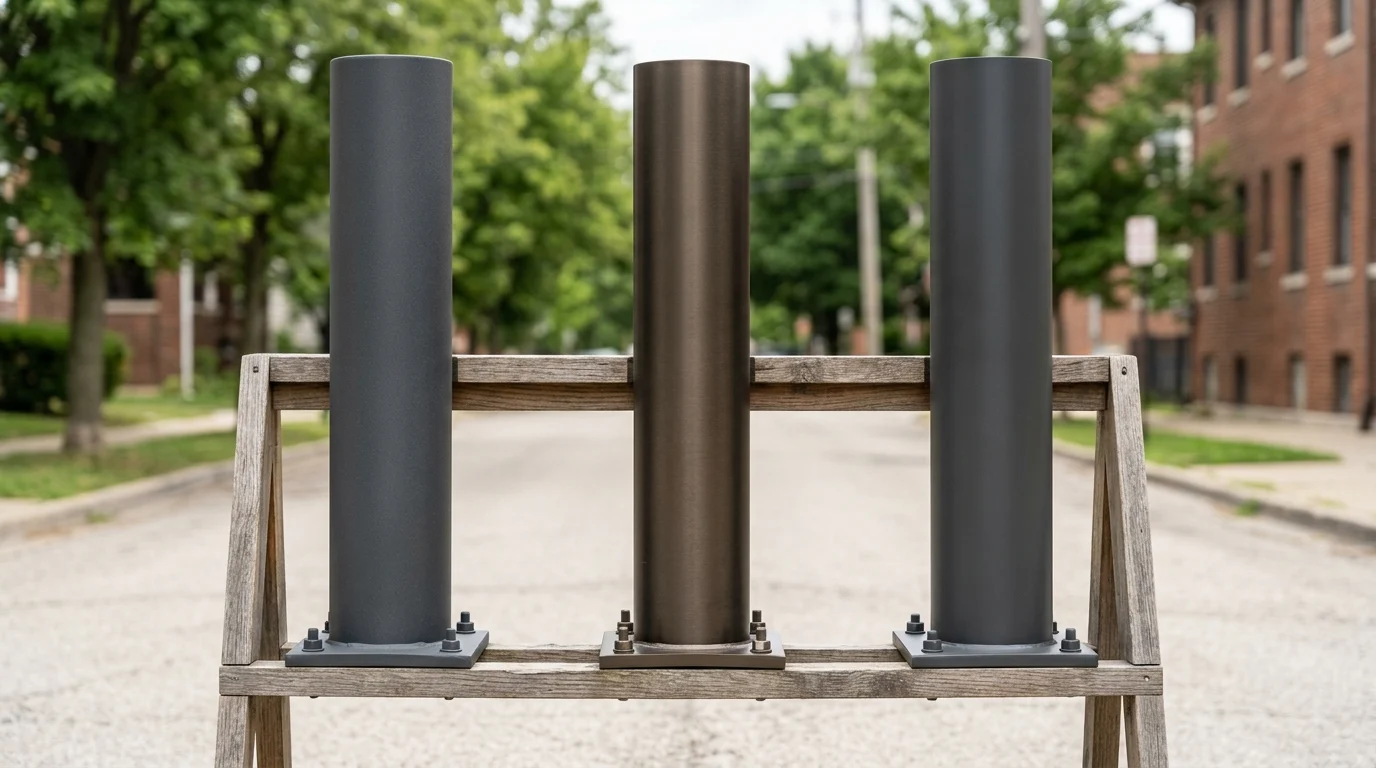
A street light pole finish is more than a color choice—it is a long-term protection system that affects corrosion resistance, maintenance budgets, and the visual consistency of public infrastructure. For projects expected to serve 15 to 25 years, the wrong surface treatment can lead to fading, blistering, recoating costs, or early replacement. This comparison looks at powder coating, anodizing, and fluorocarbon coating through the practical lens of substrate compatibility, exposure environment, durability testing, lifecycle cost, and appearance retention. For cities, contractors, and sourcing teams, understanding these differences helps specify poles that meet engineering requirements while controlling long-term project risk.
Why Surface Treatment Selection Matters for Street Light Poles
Selecting the appropriate surface treatment for street light poles is a critical engineering decision that directly impacts the structural longevity and aesthetic integrity of public lighting infrastructure. With municipal and commercial projects typically demanding a design life of 15 to 25 years, the exterior finish serves as the primary barrier against environmental degradation.
Lifecycle Cost and Maintenance Impact
The financial implications of surface treatment extend far beyond the initial capital expenditure. While premium finishes may command a higher upfront cost, premature coating failure can inflate lifecycle costs by up to 300% due to the complex logistics of site deployment, pole removal, recoating, and reinstallation. Engineers must calculate the total cost of ownership (TCO) over a 20-year horizon, balancing the initial coating application cost against projected maintenance intervals.
Corrosion Exposure and Service Environment
Street light poles are routinely subjected to aggressive environmental stressors, classified under ISO 12944 standards ranging from C2 (low atmospheric corrosivity) to C5-M (very high marine corrosivity). In coastal or heavy industrial zones, airborne chlorides and sulfur dioxide rapidly accelerate oxidation. Substrates require a coating system capable of withstanding continuous exposure, often measured by standard ASTM B117 salt spray testing exceeding 1,000 hours without significant blistering or creepage at the scribe.
Visual Consistency and Project Requirements
Urban planning mandates strict visual uniformity across lighting networks. Inferior surface treatments are susceptible to chalking and severe UV degradation, leading to mismatched pole colors within a few years of installation. High-quality finishes are specified to maintain visual consistency, typically requiring a color shift (Delta E) of less than 5.0 and gloss retention of at least 50% after 10 years of continuous outdoor exposure.
Surface Treatment Options for Street Light Poles
The industry relies primarily on three surface finishing technologies to protect and beautify street light poles. Each method offers distinct chemical and physical properties suited to different substrates and environmental demands.
Powder Coating for Steel and Aluminum Poles
Thermosetting polyester powder coating is the most ubiquitous finish for both galvanized steel and aluminum poles. Applied electrostatically and cured in ovens at temperatures between 180°C and 200°C, the powder cross-links into a durable, solid film. Standard specifications dictate a dry film thickness (DFT) of 60 to 120 microns. Powder coating provides excellent mechanical resistance against impact and abrasion, making it highly effective for standard municipal environments, though it may experience faster gloss loss in extreme UV conditions compared to advanced liquid coatings.
Anodizing for Aluminum Pole Surfaces
Anodizing is an electrochemical process exclusive to aluminum poles, converting the metal surface into a durable, corrosion-resistant anodic oxide finish. Unlike applied coatings, this oxide layer is fully integrated with the underlying aluminum substrate, meaning it cannot chip or peel. For exterior architectural applications, Class I anodizing is typically specified, requiring a minimum oxide thickness of 18 microns (0.7 mils). While it offers exceptional metallic aesthetics and surface hardness, color options are generally limited to clear, bronze, and black, and the process demands high-purity aluminum alloys to prevent visual defects.
Fluorocarbon Coating for High Weatherability
Fluorocarbon coatings, primarily formulated with polyvinylidene fluoride (PVDF) or fluoroethylene vinyl ether (FEVE) resins, represent the apex of weatherability. Industry standards require these coatings to contain a minimum of 70% fluoropolymer resin by weight. Applied as a liquid paint system and baked, fluorocarbon coatings typically achieve a DFT of 30 to 50 microns across a multi-coat system (primer, color coat, and optional clear coat). They deliver unparalleled resistance to UV radiation, chemical attack, and chalking, easily surpassing 20 years of service life in harsh environments.
How to Compare Surface Treatments
Comparing these three surface treatments requires a methodical evaluation of their physical properties, environmental resistance, and compliance with international architectural standards.
Key Comparison Criteria
To facilitate objective decision-making, engineers evaluate treatments across several primary metrics: dry film thickness, UV resistance, scratch resistance, and expected lifespan.
| Feature | Powder Coating | Anodizing | Fluorocarbon (PVDF) |
|---|---|---|---|
| Typical Thickness | 60 – 120 microns | 18 – 25 microns | 30 – 50 microns |
| UV Resistance | Moderate to High | High | Exceptional |
| Abrasion Resistance | High | Very High | Moderate |
| Design Lifespan | 10 – 15 years | 15 – 20+ years | 20 – 30 years |
| Substrate Compatibility | Steel, Aluminum | Aluminum Only | Steel, Aluminum |
Substrate, Coastal Exposure, and Pollution Factors
The choice of substrate heavily influences the viable treatment options. Steel poles, which require robust galvanic protection (such as hot-dip galvanizing) prior to finishing, are restricted to powder or fluorocarbon coatings. Aluminum poles can utilize all three. In coastal environments (ISO 12944 C5), where chloride deposition rates can exceed 300 mg/m²/day, the high chemical resistance of fluorocarbon coatings or marine-grade anodizing is strongly preferred over standard architectural powder coating.
Standards, Film Thickness, and Tolerance Requirements
Procurement specifications must align with recognized industry standards to ensure performance. High-performance powder and fluorocarbon coatings are typically benchmarked against AAMA 2604 or AAMA 2605. AAMA 2605, the most stringent standard, demands 4,000 hours of salt spray resistance and mandates that the coating retains at least 50% of its gloss after 10 years of South Florida weathering. Anodized finishes are governed by AAMA 611, which dictates coating weight, thickness tolerances, and seal integrity tests to prevent corrosive ingress.
Procurement and Quality Control Requirements
Even the most advanced surface treatment formulation will fail prematurely if applied poorly. Rigorous quality control protocols during procurement and factory application are non-negotiable.
Pretreatment Specifications
Surface preparation dictates the ultimate adhesion of any coating. For steel poles, abrasive blasting to an Sa 2.5 cleanliness standard is required, achieving a surface roughness profile of 40 to 75 microns to ensure mechanical interlocking of the primer. Aluminum poles undergoing powder or fluorocarbon coating require a multi-stage chemical pretreatment, typically utilizing chromate or advanced non-chromate conversion coatings, to eliminate oxidation and oils before the finish is applied.
Factory Process Controls
During the finishing process, factories must enforce strict environmental and procedural controls. Curing ovens must be routinely calibrated; a temperature drop of just 10°C below the specified 190°C target can result in under-cured powder with compromised impact resistance. In-line quality control should include continuous monitoring of dry film thickness using electromagnetic gauges, as well as destructive cross-hatch adhesion testing (ASTM D3359) on sample coupons, targeting a minimum classification of 4B to ensure proper bonding.
Packaging, Transport, and Site Handling
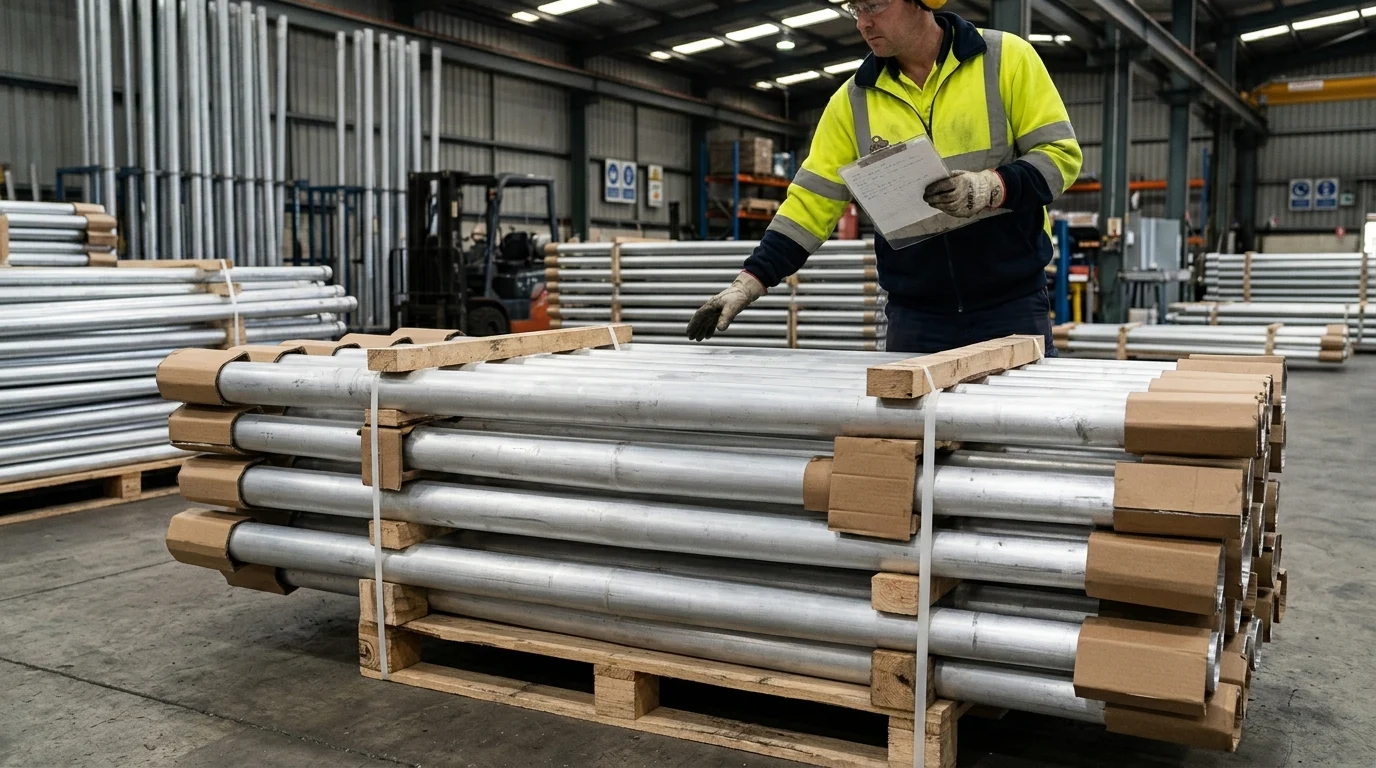
The integrity of the surface treatment must be preserved during transit from the manufacturing facility to the installation site. Finished poles should be wrapped in protective materials, such as 3mm thick EPE (Expanded Polyethylene) foam, to prevent abrasion during shipping. Procurement contracts should stipulate a maximum acceptable transit defect rate of less than 1%. Furthermore, handling protocols must require the use of nylon slings rather than steel chains during unloading and erection to avoid gouging the cured finish or anodic layer.
Decision Guide for Engineers and Buyers
Selecting the optimal surface treatment is an exercise in balancing upfront capital costs against environmental demands and long-term maintenance expectations.
When to Choose Powder Coating
Powder coating remains the standard choice for the vast majority of inland municipal and commercial lighting projects. With an application cost generally ranging from $10 to $18 per square meter, it offers the most cost-effective solution for environments classified as ISO 12944 C2 or C3. It is ideal when a wide spectrum of RAL colors is required for urban branding, provided the installation is not subject to extreme coastal salinity or intense, continuous UV radiation that would accelerate gloss loss.
When to Choose Anodizing
Anodizing is the premier choice when utilizing aluminum poles in modern urban or architectural settings where a metallic aesthetic is desired. Although it carries a cost premium of roughly 20% to 30% over standard powder coating, its integration with the substrate makes it immune to the filiform corrosion and peeling that can afflict painted poles. It is highly recommended for pedestrian-heavy zones where scratch resistance is paramount, provided the limited color palette of silver, bronze, or black aligns with the project vision.
When to Choose Fluorocarbon Coating
Fluorocarbon (PVDF) coating is the definitive solution for high-stakes environments.
| Project Environment | Recommended Treatment | Cost Profile | Expected Maintenance Interval |
|---|---|---|---|
| Standard Inland (C2/C3) | Powder Coating | Low ($) | 10-15 Years |
| Urban Pedestrian (High Wear) | Anodizing (Aluminum) | Medium ($$) | 20+ Years |
| Coastal / Marine (C5) | Fluorocarbon (PVDF) | High ($$$) | 25+ Years |
At $25 to $40 per square meter, fluorocarbon is the most expensive initial option. However, for coastal highways, heavy industrial zones, or regions with extreme solar irradiance (like desert environments), its 25-plus year lifespan and near-zero chalking rate make it the most economical choice over the infrastructure’s total lifecycle.
Key Takeaways
- Evaluate street light pole finishes by total cost of ownership over 15 to 25 years, not just initial coating price.
- Specify the coating system according to the project’s ISO 12944 exposure class, especially for coastal, industrial, or high-humidity sites.
- Use ASTM B117 salt spray performance, dry film thickness, gloss retention, and Delta E color shift as practical comparison metrics.
- Choose powder coating for cost-effective protection and color flexibility in standard municipal environments.
- Select anodizing only for aluminum poles when a chip-resistant, integrated metallic surface is required.
- Consider fluorocarbon coating for projects requiring stronger long-term UV stability, color retention, and premium exterior durability.
Frequently Asked Questions
Which surface treatment is best for coastal street light poles?
For coastal or C5-M marine environments, fluorocarbon coating or a high-spec coating system is usually preferred due to strong UV and corrosion resistance. Salt spray performance above 1,000 hours is a useful benchmark for demanding projects.
When should powder coating be selected for street light poles?
Powder coating is a cost-effective choice for standard municipal, roadway, garden, and commercial lighting projects. It offers good impact resistance, broad color options, and typical dry film thickness of 60 to 120 microns.
Can anodizing be used on steel light poles?
No. Anodizing is an electrochemical process for aluminum only. It creates an integrated oxide layer that resists peeling and chipping, making it suitable for aluminum poles requiring a durable metallic finish.
Why does surface treatment affect lifecycle cost?
A failed finish can require pole removal, transport, recoating, and reinstallation. Even if a premium treatment costs more upfront, it may reduce total ownership cost over a 15- to 25-year infrastructure life cycle.
How can project buyers compare coating durability?
Compare ISO 12944 corrosivity category, ASTM B117 salt spray hours, dry film thickness, UV resistance, gloss retention, and color shift. These data points help match the finish to the actual project environment.