Introduction
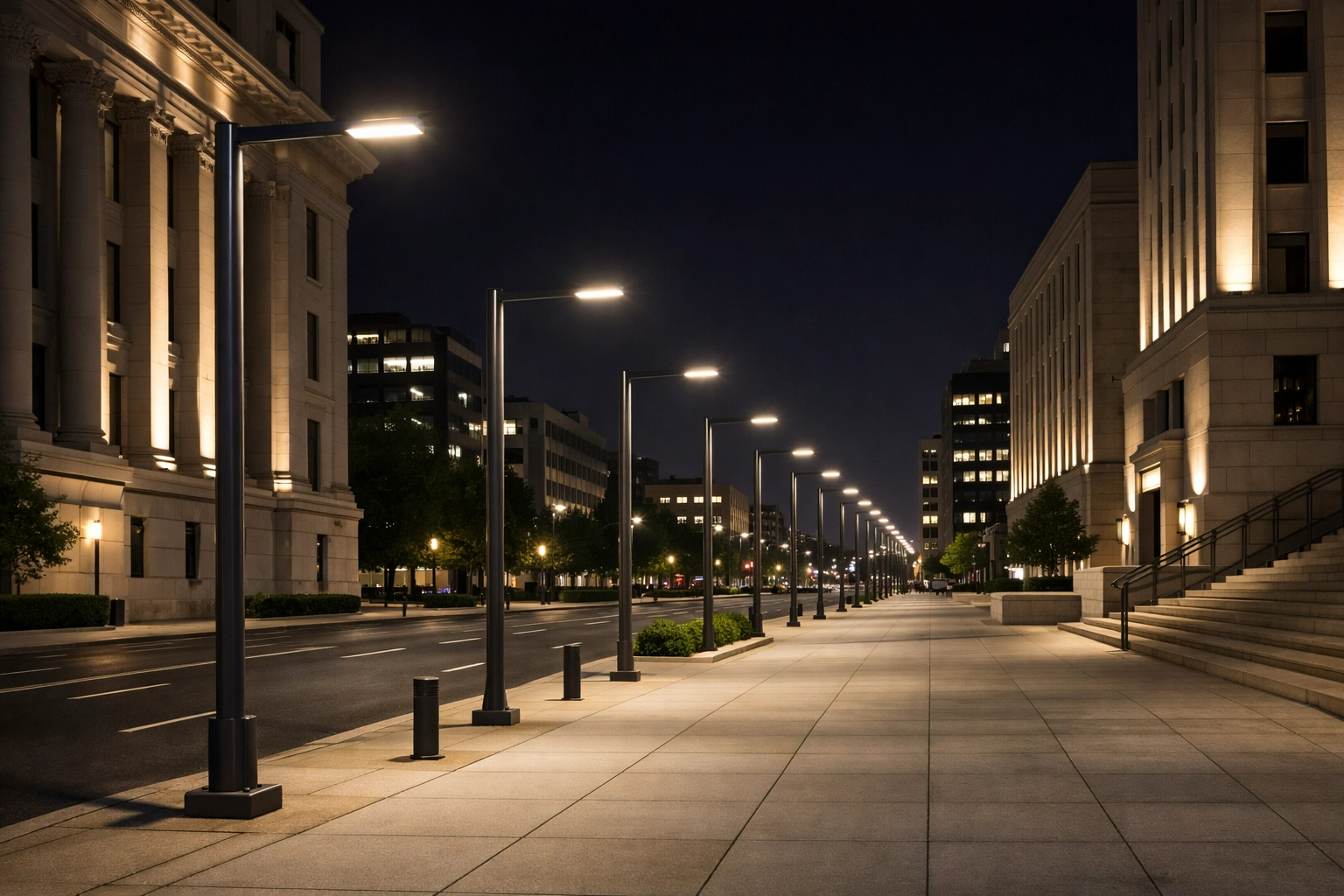
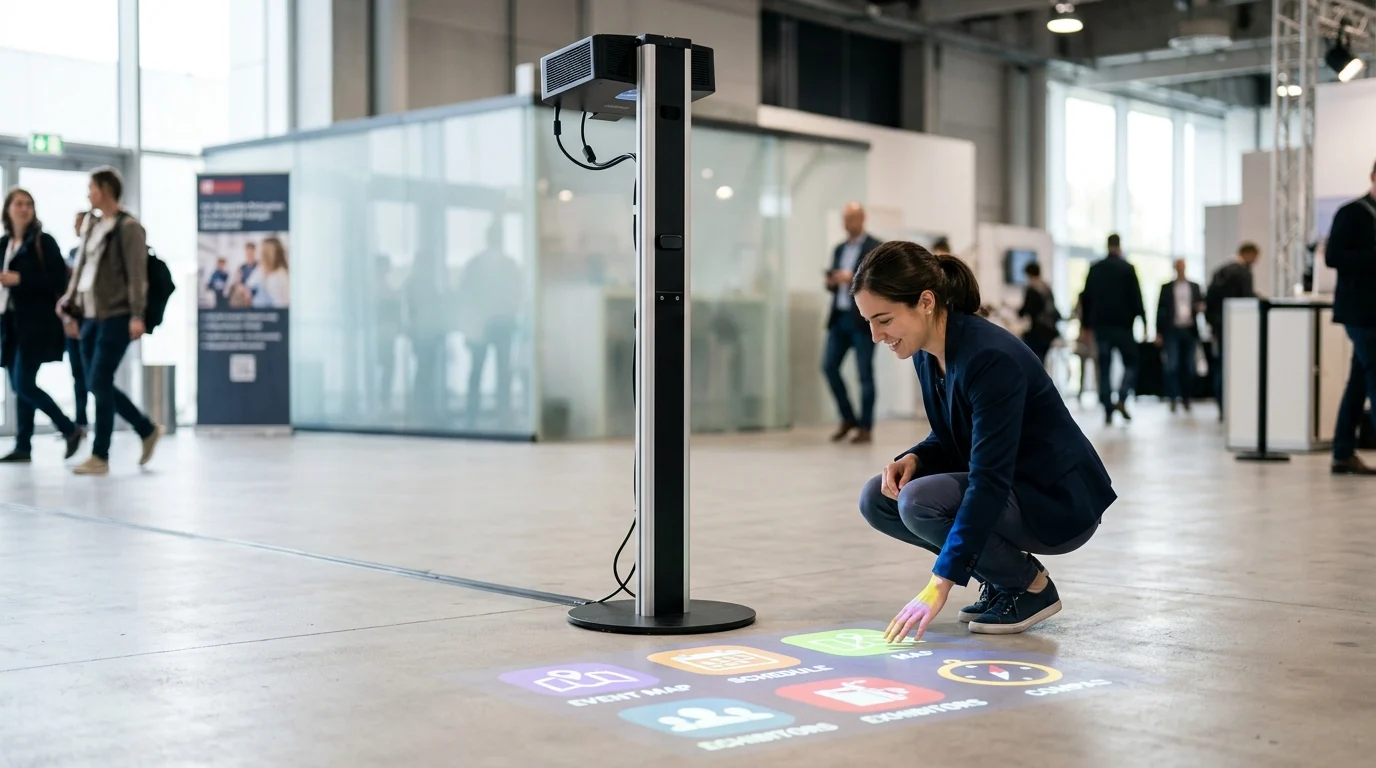
Pedestrian streets are no longer designed only for lighting and circulation; they are becoming programmable public environments. An interactive projection pole combines illumination, projection mapping, sensors, and networked control in one streetscape element, allowing pavements and nearby surfaces to respond to movement, time of day, and event needs. This article explains how these poles work, why cities and commercial districts are adopting them, and what design factors shape a successful installation, from user engagement and placemaking to infrastructure integration, content management, and long-term operational value.
Why Interactive Projection Poles Matter
The integration of interactive projection poles into pedestrian streets represents a critical evolution in urban infrastructure. Moving beyond static illumination, these specialized smart poles embed advanced projection mapping, motion tracking, and connectivity hardware directly into municipal streetscapes. By transforming inert pavements into dynamic digital canvases, civic authorities and commercial developers can fundamentally alter how pedestrians navigate and experience public spaces.
From an economic and utilization standpoint, interactive projection poles serve as high-yield assets. Deployments in commercial pedestrian zones have been shown to increase average visitor dwell time by 25% to 40%, creating a direct correlation with localized economic uplift. Furthermore, by consolidating lighting, surveillance, and interactive media into a single vertical asset, municipalities reduce street clutter while establishing a scalable foundation for future smart city applications.
How interactive projection poles support placemaking
Urban planners increasingly utilize interactive projection to bridge the gap between physical infrastructure and digital engagement, a core tenet of modern placemaking. Traditional placemaking relies on physical installations—such as seating, landscaping, and static art—which require significant capital to refresh or replace. In contrast, projection poles introduce software-defined public spaces.
Through centralized content management systems, a single pedestrian corridor can transition from hosting interactive educational games during the day to displaying ambient, generative art in the evening. This temporal flexibility ensures the pedestrian street remains relevant and engaging across different demographics and times of day, fostering a stronger sense of community ownership and sustained foot traffic.
Which urban use cases deliver the most value
The most successful interactive projection pole deployments target use cases that merge utility with entertainment. Dynamic wayfinding stands out as a primary application; rather than relying on static signage, interactive poles can project real-time, multilingual directional arrows or maps onto the ground, responding to the proximity of pedestrians or live transit schedules.
Experiential retail augmentation represents another high-value use case. Commercial districts utilize ground projections to create interactive brand activations or gamified promotional zones outside storefronts, capturing pedestrian attention without violating strict municipal signage ordinances. Additionally, civic engagement applications—such as projecting localized historical data or interactive public safety alerts—deliver high utility while maximizing the return on the municipality’s hardware investment.
What Makes an Effective Interactive Projection Pole
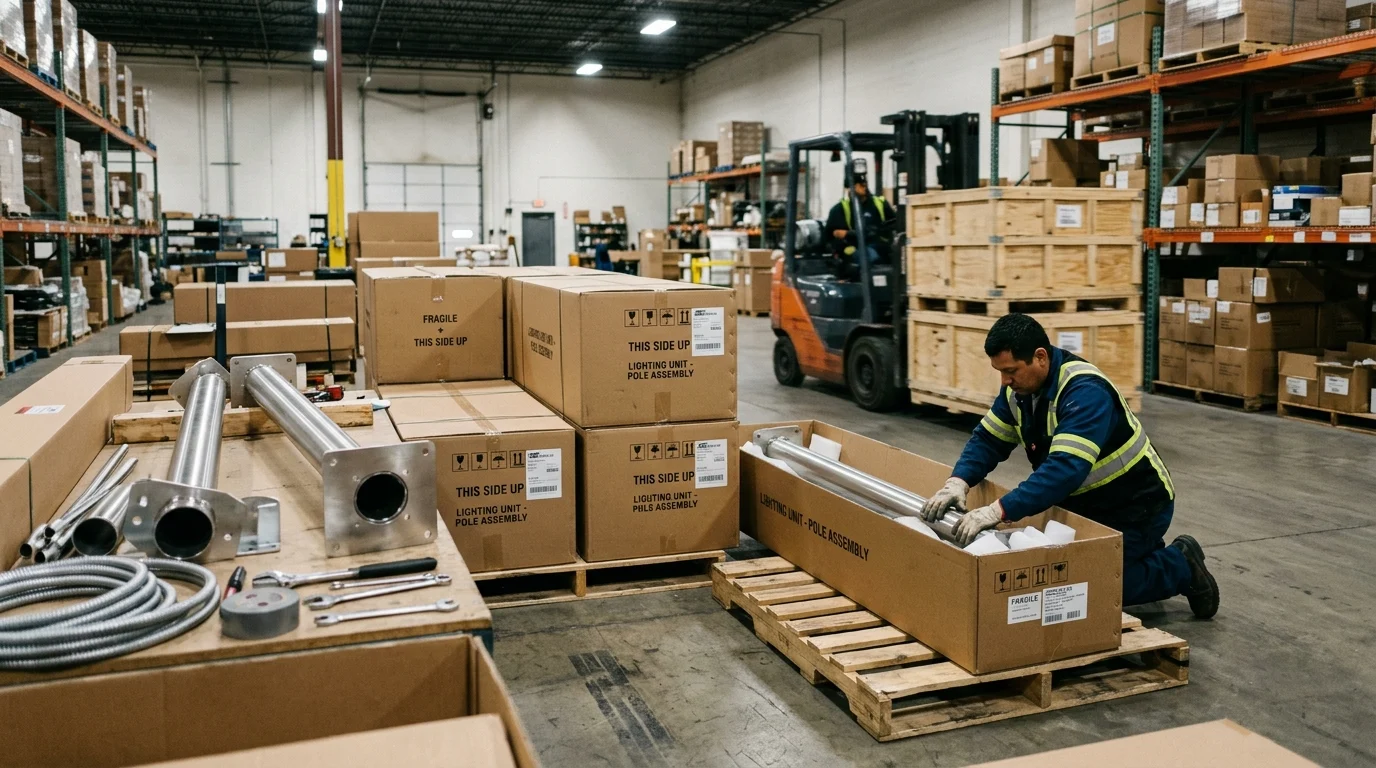
Engineers face distinct mechanical and optical challenges when embedding high-performance audiovisual hardware into municipal street furniture. The primary constraint is spatial volume; standard pedestrian light poles feature diameters restricted to 200mm to 350mm. Accommodating projection optics, active cooling systems, and sensor arrays within this narrow cylindrical form factor requires highly specialized, miniaturized components.
An effective interactive projection pole must balance aesthetic integration with industrial-grade performance. If the technology is too obtrusive, it disrupts the architectural harmony of the streetscape; if it is underpowered, the projected content becomes invisible under ambient street lighting or daylight conditions.
Which core design elements and projection technologies matter most
The selection of the projection light engine is the most critical design decision. Solid-state illumination is mandatory for outdoor municipal deployments due to its longevity and reliability. Laser phosphor and RGB laser technologies are the industry standards, offering operational lifespans exceeding 20,000 hours with minimal degradation.
| Technology | Lifespan | Color Accuracy | Thermal Output | Suitability for Pole Integration |
|---|---|---|---|---|
| Laser Phosphor | 20,000+ hours | High | Moderate | Excellent (Standard for most deployments) |
| RGB Laser | 30,000+ hours | Very High | High | Good (Requires advanced cooling) |
| LED | 30,000+ hours | Moderate | Low | Poor (Insufficient brightness for outdoor scale) |
Beyond the projector, the integration of edge-computing modules is essential. These local processing units interpret sensor data in real-time, ensuring that interactive content responds to pedestrian movements with virtually zero latency, a necessity for maintaining the illusion of a responsive environment.
How brightness, throw ratio, sensors, and enclosure affect performance
To compete with ambient urban lighting, projection modules must deliver exceptional brightness. Effective pedestrian street deployments typically require a minimum output of 8,000 to 12,000 ANSI lumens. Furthermore, the throw ratio must be carefully calculated based on the pole’s height. Given typical mounting heights of 4 to 6 meters, a short-throw or ultra-short-throw lens (e.g., 0.8:1 or shorter) is necessary to cast a sufficiently large image footprint on the pavement.
Interactivity relies heavily on the sensor payload. LiDAR sensors and stereoscopic depth cameras are the preferred technologies, as they can track multiple pedestrians simultaneously regardless of ambient light levels. Finally, the environmental enclosure dictates the system’s survivability. The projector housing must achieve at least an IP65 and, ideally, an IP66 rating to prevent particulate and moisture ingress while incorporating hydrophobic glass to maintain optical clarity during precipitation.
How to Compare Interactive Projection Pole Solutions
Selecting the optimal interactive projection pole architecture requires rigorous evaluation of both the hardware ecosystem and the underlying software management platforms. Because these systems blend civil infrastructure with high-end AV technology, the vendor landscape is fragmented, ranging from traditional street lighting manufacturers to specialized digital out-of-home (DOOH) integrators.
Municipalities and developers must account for a typical hardware lifecycle of 5 to 7 years. Consequently, procurement decisions must be driven by Total Cost of Ownership (TCO) analysis—factoring in energy consumption, software licensing, and maintenance intervals—rather than strictly evaluating the initial capital expenditure.
Which criteria to use when evaluating vendors and products
When evaluating vendors, technical buyers should prioritize thermal management strategies. Because projectors generate substantial heat, and outdoor poles are exposed to direct solar loading, vendors must demonstrate proven active cooling systems (such as liquid cooling loops or specialized thermoelectric coolers) that do not compromise the IP rating.
Software architecture is equally important. A robust solution must include a cloud-based content management system (CMS) capable of remote diagnostics. System administrators should be able to monitor lumen output, internal operating temperatures, and sensor health in real-time. Vendors that offer open APIs for their CMS allow cities to integrate the projection poles into broader smart city dashboards, enhancing operational efficiency.
What trade-offs exist between custom designs and retrofit options
A major decision in any deployment is choosing between retrofitting existing infrastructure and installing custom-built smart poles. Retrofit solutions involve mounting external projector housings and sensor brackets onto existing light poles. This approach significantly reduces civil engineering costs but often results in a bulky, aesthetically compromised appearance.
| Evaluation Metric | Custom Smart Pole | Retrofit Solution |
|---|---|---|
| Initial CapEx | High ($15k – $30k+ per unit) | Moderate ($8k – $15k per unit) |
| Deployment Time | Long (Requires civil works/trenching) | Short (Utilizes existing footprint) |
| Aesthetic Integration | Seamless (Internal components) | Obtrusive (External appendages) |
| Structural Payload | Engineered for exact weight/wind loads | Limited by existing pole capacity |
| Thermal Management | Integrated into pole chassis | Reliant on external housing fans |
Custom designs, conversely, are engineered from the ground up to house AV equipment internally. While the initial capital expenditure is higher, custom poles offer superior vandal resistance, better thermal dissipation through the pole chassis, and a seamless architectural finish that urban designers generally prefer.
How to Reduce Project Delivery Risk
Executing an interactive projection pole deployment in a high-traffic pedestrian street involves navigating strict civil engineering constraints and municipal codes. The physical installation is rarely a plug-and-play endeavor; it requires extensive coordination between AV integrators, civil contractors, and local utility providers.
Failure to properly assess the physical and regulatory environment can lead to costly delays or system failures. For instance, projection modules and their associated climate control systems require substantial power, with continuous draws ranging from 800W to 1500W per pole. Standard street lighting circuits are rarely dimensioned to handle this load, necessitating significant electrical upgrades.
How to plan site surveys, power, and installation requirements
Thorough site surveys are the first line of defense against project risk. Engineers must evaluate subsurface conditions to determine the feasibility of trenching for new power and data lines. While 5G connectivity can eliminate the need for fiber optic trenching for data transfer, hardwired power remains unavoidable.
Installation planning must also account for structural integrity. The addition of heavy projection modules—whether internal or external—alters the center of gravity and the wind profile of the pole. Engineering sign-off is required to ensure the foundation and the pole itself can withstand local environmental stressors, typically requiring wind load ratings that exceed 140 km/h.
Which compliance, safety, accessibility, and durability factors to check
Compliance with local safety and accessibility standards is non-negotiable. Projected content must adhere to ADA (Americans with Disabilities Act) or equivalent global accessibility guidelines. This includes avoiding rapid flashing effects (typically keeping transitions below 3 flashes per second) to mitigate the risk of triggering photosensitive epilepsy among pedestrians.
Physical durability is another critical factor. Because pedestrian streets are prone to vandalism and accidental impacts, the lower sections of the pole must feature an IK10 impact resistance rating, while the optical glass protecting the projector lens should meet at least an IK08 rating. Furthermore, the system must be certified to operate across extreme thermal ranges, typically specified from -20°C to +50°C, ensuring uninterrupted performance throughout seasonal extremes.
How to Choose the Right Deployment Strategy
A successful transition from a localized proof-of-concept to a permanent, multi-zone interactive projection network relies on a structured deployment strategy. The strategic phase bridges the gap between hardware installation and long-term operational success, ensuring that the technology delivers sustained value to the public and the stakeholders.
Experts heavily recommend a phased rollout. A typical pilot phase lasting 90 to 120 days is critical to capture sufficient seasonal, environmental, and demographic variations. This data allows project managers to refine sensor sensitivity, adjust content pacing, and validate the actual TCO before committing to a broader, city-wide procurement contract.
Which procurement, pilot testing, and service model decisions matter
Procurement models for smart city infrastructure are evolving. While traditional capital expenditure (CapEx) models remain common, many municipalities are shifting toward Hardware-as-a-Service (HaaS) agreements. In a HaaS model, the vendor retains ownership of the equipment, and the city pays a recurring fee that covers the hardware, CMS licensing, and comprehensive maintenance.
Regardless of the procurement model, Service Level Agreements (SLAs) must be strictly defined. Interactive projection poles have highly visible failure states—a blank or misaligned projection immediately signals urban decay. SLAs should mandate strict response times, demanding 99.9% uptime guarantees and requiring vendors to hold local spare parts inventory to facilitate rapid swap-outs of failed optical engines.
How to align vendor selection, content governance, and operations
Aligning vendor capabilities with internal operational workflows is vital for long-term governance. Content governance policies must be established early to dictate who has the authority to update projections. A decentralized governance model allows local business improvement districts to upload promotional content, while a centralized model restricts control to municipal authorities for wayfinding and civic messaging.
Finally, operational alignment requires continuous remote monitoring. The deployment strategy must include the integration of the pole’s diagnostic data into the city’s existing maintenance workflows. By leveraging predictive maintenance algorithms—such as replacing a laser light source when its output drops below 70% of its original brightness, rather than waiting for a total failure—operators can ensure the interactive pedestrian street remains a vibrant, reliable public asset.
Key Takeaways
- The most important conclusions and rationale for the interactive projection pole
- Specs, compliance, and risk checks worth validating before you commit
- Practical next steps and caveats readers can apply immediately
Frequently Asked Questions
What is an interactive projection pole used for on pedestrian streets?
It combines lighting, projection, and sensors to create wayfinding, art, games, and public messages on pavements, helping cities improve engagement and foot traffic.
Which projection technology works best for outdoor interactive poles?
Laser phosphor is usually the best choice for municipal projects because it offers strong brightness, a 20,000+ hour life, and easier pole integration than RGB laser.
What pole customization can Morelux support for interactive projection projects?
Morelux can support custom steel or aluminum pole designs, technical drawings, fabrication details, surface finishing, and engineering coordination for infrastructure and smart street projects.
How do you choose the right pole structure for projection equipment?
Check pole diameter, internal space, cooling needs, mounting strength, cable routing, and maintenance access to ensure the projector, sensors, and controls fit safely and perform reliably.
How fast can project buyers get a quote and technical support from Morelux?
Morelux emphasizes fast response, including 24-hour quotes, plus engineer support to review specifications, drawings, and manufacturing options for custom pole sourcing.