Introduction
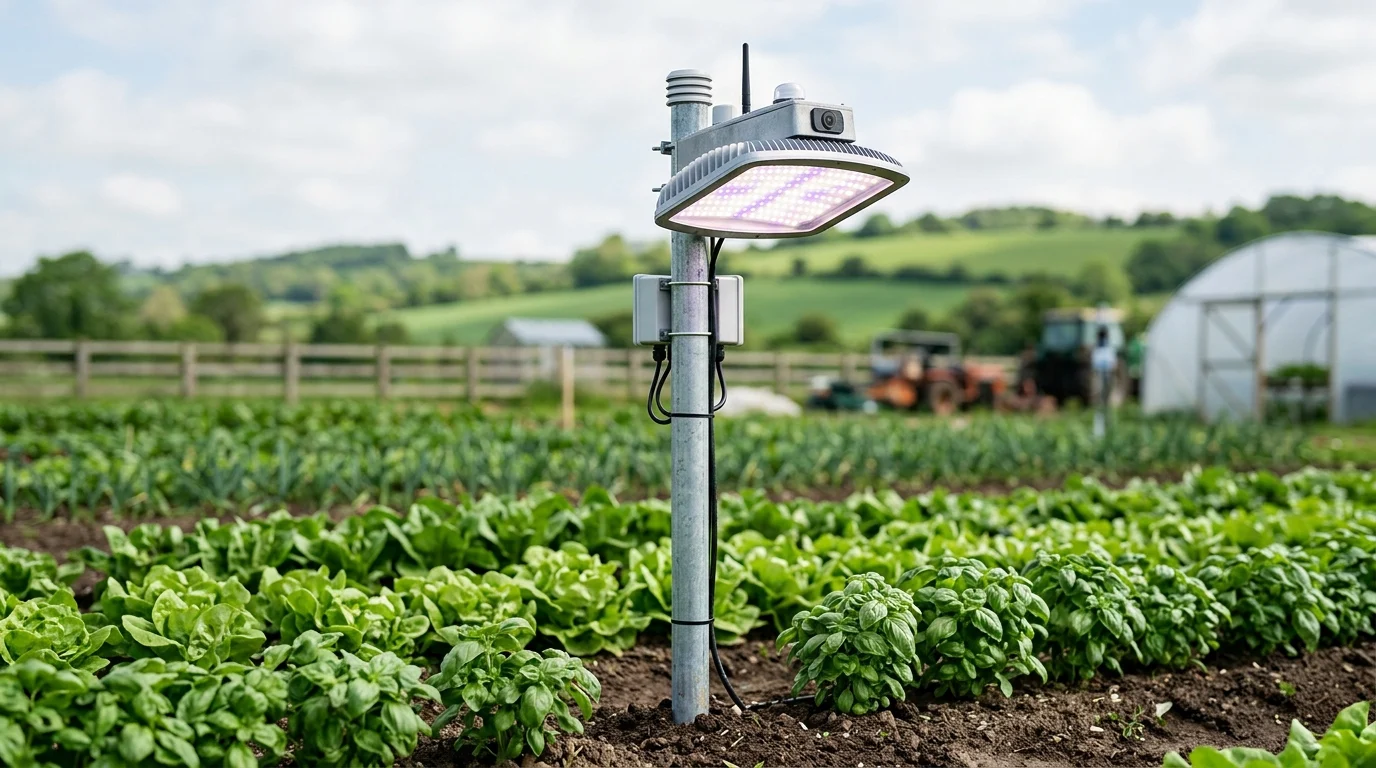
A smart farm lighting pole combines illumination, power delivery, connectivity, and field sensing in one structure, turning a basic utility asset into a practical platform for precision agriculture. Instead of supporting visibility alone, it can host sensors that track soil conditions, microclimate changes, crop stress, and pest activity while relaying data to farm management systems in near real time. This article explains why that integration matters, how it reduces manual scouting and infrastructure complexity, and what makes these poles valuable as farms pursue higher yields with tighter labor, water, and energy constraints. From strategic role to deployment benefits, the following sections outline how sensor-based lighting poles support more responsive and efficient crop monitoring.
Why Is the Smart Farm Lighting Pole Strategic Infrastructure
The convergence of agricultural illumination and Internet of Things (IoT) sensor networks has elevated the smart farm lighting pole from a simple utility structure to a critical piece of strategic infrastructure. By consolidating power distribution, wireless communication gateways, and environmental monitoring into a single vertical asset, these poles establish the physical backbone required for precision agriculture. Unlike traditional farm lighting, which serves a singular purpose and often requires extensive trenching for grid connectivity, modern smart poles operate as autonomous or semi-autonomous nodes. They provide continuous data streams that enable operators to optimize resource allocation, mitigate environmental risks, and maximize crop yields.
As agricultural operations face intensifying pressure to increase output while minimizing inputs, deploying integrated sensor masts offers a scalable solution. These structures bridge the gap between digital agronomy software and the physical field environment, ensuring that high-resolution data on soil health, microclimates, and pest activity is captured with minimal latency and maximum reliability.
How do labor pressure, data-driven agronomy, and rural electrification drive adoption
The adoption of smart farm lighting poles is primarily accelerated by severe agricultural labor shortages, which currently force operators to reduce manual field scouting by up to 30% during peak seasons. Automated sensor networks mounted on these poles replace manual data collection, providing agronomists with continuous, high-fidelity metrics without requiring human intervention. This shift toward data-driven agronomy relies heavily on the dense deployment of localized sensors to detect micro-variations in temperature, humidity, and soil moisture across large acreages.
Furthermore, rural electrification challenges make traditional wired infrastructure cost-prohibitive. Smart poles equipped with 100W to 300W photovoltaic panels and integrated battery storage bypass the need for extensive grid extensions. This off-grid capability allows farm operators to deploy sophisticated monitoring networks in remote field sectors where running traditional power lines would cost upward of $15,000 per mile, democratizing access to advanced agricultural technology.
Which commercial use cases make smart farm lighting poles valuable
In commercial environments, the value of smart farm lighting poles is most pronounced in high-value crop production, such as vineyards, orchards, and specialized horticulture. For example, in viticulture, poles equipped with multi-spectral imaging cameras and localized frost sensors can trigger automated wind machines or localized heating systems when temperatures drop below a critical 2°C threshold, preventing catastrophic crop loss.
Another high-value use case is precision irrigation management. Poles integrated with soil moisture probes at varying depths (e.g., 30cm, 60cm, and 90cm) transmit real-time volumetric water content data to central controllers. This integration typically allows commercial farms to reduce water consumption by 15% to 25% while preventing nutrient leaching caused by over-irrigation. Additionally, integrated insect traps with automated counting sensors enable targeted pesticide application, reducing chemical costs and supporting sustainable farming certifications.
What Defines a Smart Farm Lighting Pole
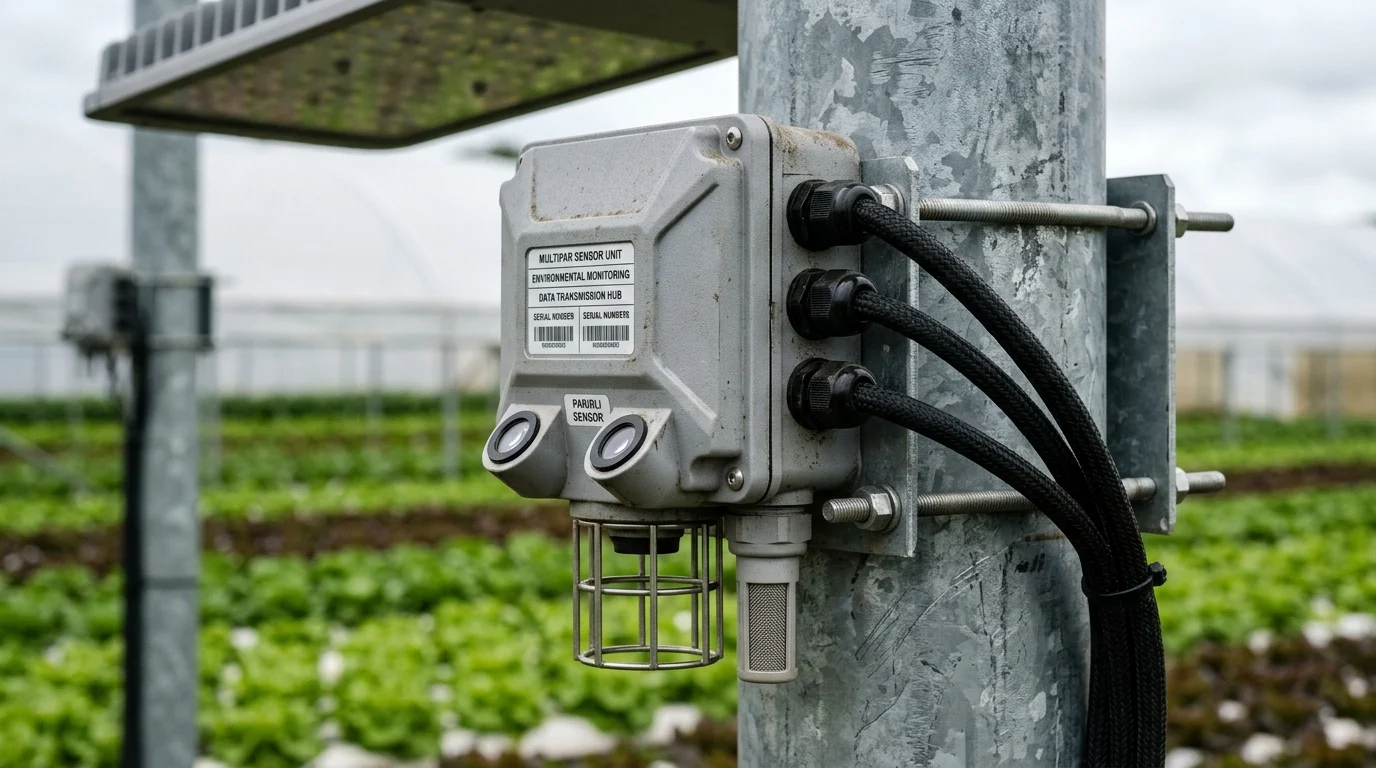
A smart farm lighting pole is a modular, vertically integrated platform engineered to support both horticultural lighting and a diverse array of environmental sensors. Rather than retrofitting standard streetlights, these specialized poles are purpose-built to withstand aggressive agricultural environments while providing a stable mounting point for precision instrumentation. The architecture typically consists of a foundational mast, an independent power generation and storage module, a programmable LED luminaire, and a customizable sensor payload connected via an industrial-grade communication gateway.
Which core components, performance specifications, and integrations matter
The core components of a smart farm lighting pole must meet stringent agricultural performance specifications. The lighting module typically utilizes high-efficacy LED arrays delivering 130 to 150 lumens per watt (lm/W), often featuring tunable spectrums to support specific photoperiodic responses in crops or to minimize insect attraction. The sensor payload generally includes anemometers for wind speed, pyranometers for solar radiation, and multi-parameter atmospheric sensors measuring ambient temperature, relative humidity, and barometric pressure.
Environmental resilience is critical; therefore, the luminaire and all electronic enclosures must carry a minimum ingress protection rating of IP66 or IP67 to withstand heavy irrigation, chemical spraying, and dust accumulation. Additionally, the structural integrity of the pole must be engineered to withstand wind loads of up to 130 km/h (80 mph) when fully loaded with solar panels and sensor arrays, ensuring uninterrupted data collection during severe weather events.
How do smart farm lighting pole configurations compare by use case
Smart pole configurations vary significantly based on the agricultural environment they are designed to serve. Below is a comparison of standard configurations tailored to different operational use cases:
| Configuration Type | Typical Height | Power Architecture | Primary Sensor Payload | Primary Communication |
|---|---|---|---|---|
| Open Field / Row Crop | 6.0m – 8.0m | 100% Solar Off-Grid (200W+ panel) | Wind, Solar Radiation, Soil Moisture | LoRaWAN / NB-IoT |
| High-Density Orchard | 4.0m – 5.0m | Hybrid (Grid + Battery Backup) | Frost Detection, Multi-spectral Imaging | Mesh Wi-Fi / Zigbee |
| Controlled Greenhouse | 2.5m – 4.0m | Grid-Tied PoE (Power over Ethernet) | CO₂, Vapor Pressure Deficit (VPD), PAR | Ethernet / Wi-Fi 6 |
| Livestock / Dairy | 5.0m – 6.0m | Grid-Tied with Solar Assist | Ammonia (NH₃), H₂S, Motion Tracking | Private LTE / LoRaWAN |
Open field configurations prioritize height for maximum wireless range and solar exposure, whereas greenhouse variants focus on dense, high-bandwidth data transmission via wired connections. Orchard configurations require a balance, often utilizing mesh networks to navigate the signal-dampening effects of dense tree canopies.
How Should Buyers Evaluate Design and Connectivity
Evaluating the design and connectivity of smart farm lighting poles requires a rigorous assessment of both physical durability and digital interoperability. Buyers must look beyond basic illumination metrics to understand how the pole’s structural materials will survive decades of exposure to agrochemicals and how its data architecture will integrate with existing farm management information systems (FMIS). A failure in either mechanical resilience or network reliability compromises the entire investment.
Which mechanical, electrical, and environmental specifications matter most
Mechanical specifications must account for the corrosive nature of agricultural environments. Buyers should prioritize poles constructed from extruded aluminum alloy (e.g., 6063-T5) or Q235 steel treated with a hot-dip galvanized coating of at least 80 microns to prevent rust from fertilizers and pesticide drift. For coastal or highly corrosive environments, a C4 or C5-M marine-grade powder coating is mandatory.
Electrically, the system must tolerate extreme temperature fluctuations. Industrial-grade components should be rated for operating temperatures ranging from -30°C to +65°C. Furthermore, thermal management of the battery enclosure is critical; lithium iron phosphate (LiFePO4) batteries are preferred over standard lithium-ion or lead-acid due to their superior thermal stability and longer lifecycle, typically offering 3,000 to 5,000 charge cycles before degrading to 80% capacity.
How do connectivity protocols, power architecture, and edge integration differ
Connectivity protocols dictate the range, bandwidth, and power consumption of the sensor network. LoRaWAN (Long Range Wide Area Network) operating at 868 MHz or 915 MHz is the industry standard for open-field deployments, offering line-of-sight transmission up to 15 kilometers with exceptionally low power draw. However, for applications requiring high-resolution image transmission (e.g., visual pest counting), higher bandwidth protocols like NB-IoT or 4G/5G LTE are necessary, albeit at the cost of higher power consumption.
Power architecture heavily influences edge integration. Poles with substantial battery reserves (e.g., 100Ah to 150Ah at 12V) can support localized edge computing modules. Edge computing allows the pole to process raw sensor data locally—such as running machine learning algorithms to identify specific insect species from camera feeds—and only transmit the final analytical output, thereby conserving network bandwidth and reducing cloud computing costs.
Which comparison criteria best support vendor evaluation
To effectively evaluate vendors, operators should utilize a standardized comparison matrix that weighs both hardware robustness and software flexibility. Proprietary, closed-loop systems should generally be avoided in favor of platforms offering open APIs and MQTT protocol support.
| Evaluation Criterion | Standard Specification | Premium Specification | Impact on Farm Operations |
|---|---|---|---|
| Battery Autonomy | 2 Days (No sun) | 5-7 Days (No sun) | Prevents data loss during prolonged overcast weather |
| Sensor Integration | Proprietary closed ecosystem | Open architecture (SDI-12, RS485, I2C) | Allows integration of third-party, specialized ag-sensors |
| Lighting Control | Basic On/Off Photocell | DALI-2 or 0-10V Dimming with Scheduling | Optimizes energy use and supports specific crop photoperiods |
| Wind Resistance | 100 km/h (Class 1) | 150 km/h (Class 3 hurricane rated) | Ensures structural survival in extreme weather zones |
Selecting a vendor capable of meeting premium specifications significantly reduces the total cost of ownership (TCO) by extending hardware lifecycles and minimizing the need for emergency field maintenance.
What Procurement and Deployment Steps Reduce Risk
Procuring and deploying a network of smart farm lighting poles involves complex logistical and regulatory challenges. Because these assets blend heavy physical infrastructure with advanced telecommunications, project managers must navigate a matrix of safety certifications, supply chain constraints, and civil engineering requirements. A structured approach to procurement and installation minimizes financial risk and ensures the deployed network functions reliably from day one.
Which compliance, safety, and regional certification issues should buyers review
Compliance and safety certifications are non-negotiable for mitigating liability and ensuring interoperability. The luminaire components must adhere to IEC 60598 standards for electrical safety, while all wireless transmitting devices must carry regional certifications such as FCC Part 15 (United States) or CE RED (Europe) to ensure they do not cause electromagnetic interference. Furthermore, RoHS compliance ensures that no hazardous materials, such as heavy metals, will leach into the soil if a component is damaged.
Lightning protection and grounding are critical safety concerns in open agricultural fields. Buyers must ensure that installation plans include proper grounding rods, achieving an earth resistance of less than 10 ohms. Without adequate grounding, a single lightning strike can permanently destroy the delicate microprocessors and sensor payloads across multiple interconnected poles, resulting in thousands of dollars in hardware losses.
How should buyers manage sourcing, installation planning, and logistics
Sourcing smart farm lighting poles requires careful timeline management. Due to the customized nature of the sensor payloads and battery sizing, manufacturers typically require lead times of 8 to 12 weeks from purchase order to delivery. Additionally, buyers should be aware of Minimum Order Quantities (MOQs), which often range from 20 to 50 units for fully customized configurations, making small-scale pilot projects potentially more expensive on a per-unit basis.
Installation logistics heavily depend on the chosen foundation type. While traditional concrete footings provide maximum stability, they require extensive curing time and heavy machinery. Alternatively, helical screw piles can be installed rapidly with minimal soil disturbance, allowing a three-person crew to deploy up to 10 to 15 poles per day. Coordinating the delivery of poles, pouring foundations, and scheduling specialized technicians for sensor calibration must be meticulously planned to avoid disrupting critical planting or harvesting windows.
Which Decision Criteria Should Guide Investment
Investing in smart farm lighting poles represents a significant capital expenditure that must be justified through measurable operational efficiencies and yield improvements. Farm operators and corporate agribusinesses must adopt a holistic financial perspective, weighing upfront costs against long-term operational savings. The decision to invest hinges on evaluating total lifecycle costs, the scalability of the network, and the specific agronomic challenges of the deployment site.
How should operators weigh capital cost, maintenance burden, and scalability
Capital expenditure (CAPEX) for smart farm lighting poles typically ranges from $1,200 to $3,500 per unit, heavily dependent on the complexity of the sensor payload, battery capacity, and mast height. However, operators must also model the operational expenditure (OPEX) and maintenance burden. Routine maintenance includes cleaning solar panels and recalibrating sensitive environmental sensors every 12 to 24 months. Furthermore, operators must budget for battery replacements every 5 to 7 years, which can cost $200 to $400 per pole.
Scalability is a vital decision criterion, requiring operators to ensure initial deployments can seamlessly expand across larger acreages as operational needs grow.
Key Takeaways
- The most important conclusions and rationale for Smart Farm Lighting Pole
- Specs, compliance, and risk checks worth validating before you commit
- Practical next steps and caveats readers can apply immediately
Frequently Asked Questions
What is a smart farm lighting pole?
It is a multifunction pole that combines LED lighting, sensors, power supply, and wireless communication to support crop monitoring and field operations from one structure.
Which sensors are commonly mounted on a smart farm lighting pole?
Typical options include temperature, humidity, wind, solar radiation, soil moisture, frost, and insect monitoring sensors, selected to match your crop and site conditions.
Can smart farm lighting poles work in remote fields without grid power?
Yes. Many systems use 100W to 300W solar panels with battery storage, making them suitable for remote agricultural zones where trenching is costly.
What pole specifications matter most for farm environments?
Focus on IP66 or IP67 protection, corrosion-resistant steel or aluminum, sensor load capacity, and wind resistance up to about 130 km/h for reliable outdoor performance.
Can Morelux customize smart farm lighting poles for agricultural projects?
Yes. Morelux supports custom pole designs, technical drawings, engineer input, and fast quotes for project buyers needing dependable smart pole manufacturing.