Introduction
When specifying aluminium poles, the choice between spinning and welding shapes far more than fabrication steps. It affects tooling cost, labor intensity, material efficiency, surface quality, structural consistency, and the production volumes that make each option economical. This comparison explains how aluminium pole spinning differs from welding in practical manufacturing terms, where each process performs best and which cost drivers matter most for buyers, engineers, and project planners. With that context, the body examines the tradeoffs in setup investment, throughput, finishing requirements, and total project economics so readers can match the right process to application and scale.
Why Aluminium Pole Spinning vs. Welding Matters for Cost
Selecting the optimal manufacturing methodology for aluminium poles dictates not only the initial capital expenditure but also the long-term unit economics of large-scale infrastructure projects. The decision between aluminium pole spinning and welding fundamentally alters the supply chain cost structure, impacting everything from raw material utilization to secondary finishing requirements. Procurement engineers and project managers must evaluate these processes through a total-cost-of-ownership lens, rather than comparing base material prices alone.
Because aluminium structures are frequently deployed in municipal lighting, telecommunications, and architectural applications, the financial implications of the chosen fabrication method scale rapidly. Understanding the specific cost levers associated with each technique enables buyers to align their manufacturing strategies with project budgets and volume expectations.
Key cost drivers to compare
Tooling investments and labor requirements represent the primary financial differentiators between the two processes. Aluminium pole spinning relies on CNC spinning lathes and custom mandrels. A standard steel mandrel for a tapered street lighting pole typically requires an initial tooling investment ranging from $2,500 to $6,000. Once the tooling is established, the automated spinning process reduces direct labor costs significantly, making it highly economical for production runs exceeding minimum order quantities (MOQs) of 300 to 500 units.
Conversely, welding requires less specialized initial tooling for standard cylindrical geometries but demands sophisticated fixtures and highly skilled labor or robotic welding cells. Setting up an automated longitudinal seam welding station can exceed $25,000 in capital expenditure. For low-volume, highly customized projects (under 100 units), manual welding avoids heavy tooling costs but introduces variable labor expenses that scale linearly with production volume.
What buyers should evaluate early
Material utilization and scrap rates must be scrutinized during the early procurement phases. Aluminium pole spinning is a near-net-shape manufacturing process. By plastically deforming a seamless aluminium tube over a mandrel, the process generates minimal waste, keeping scrap rates strictly below 5%. This efficiency is critical given the volatile pricing of 6000-series aluminum extrusions.
Welding, particularly when fabricating stepped or complex geometries from multiple discrete sections, requires cutting, coping, and joint preparation. This subtractive preparation, combined with the required filler metals, often pushes scrap and consumable rates to 12-18%. Furthermore, buyers must account for the hidden costs of secondary operations. Welded joints often require post-weld grinding and polishing to achieve an architecturally acceptable finish, adding up to 45 minutes of manual labor per pole, whereas spun poles exit the lathe with a smooth, continuous surface ready for anodizing or powder coating.
Process and Performance Comparison
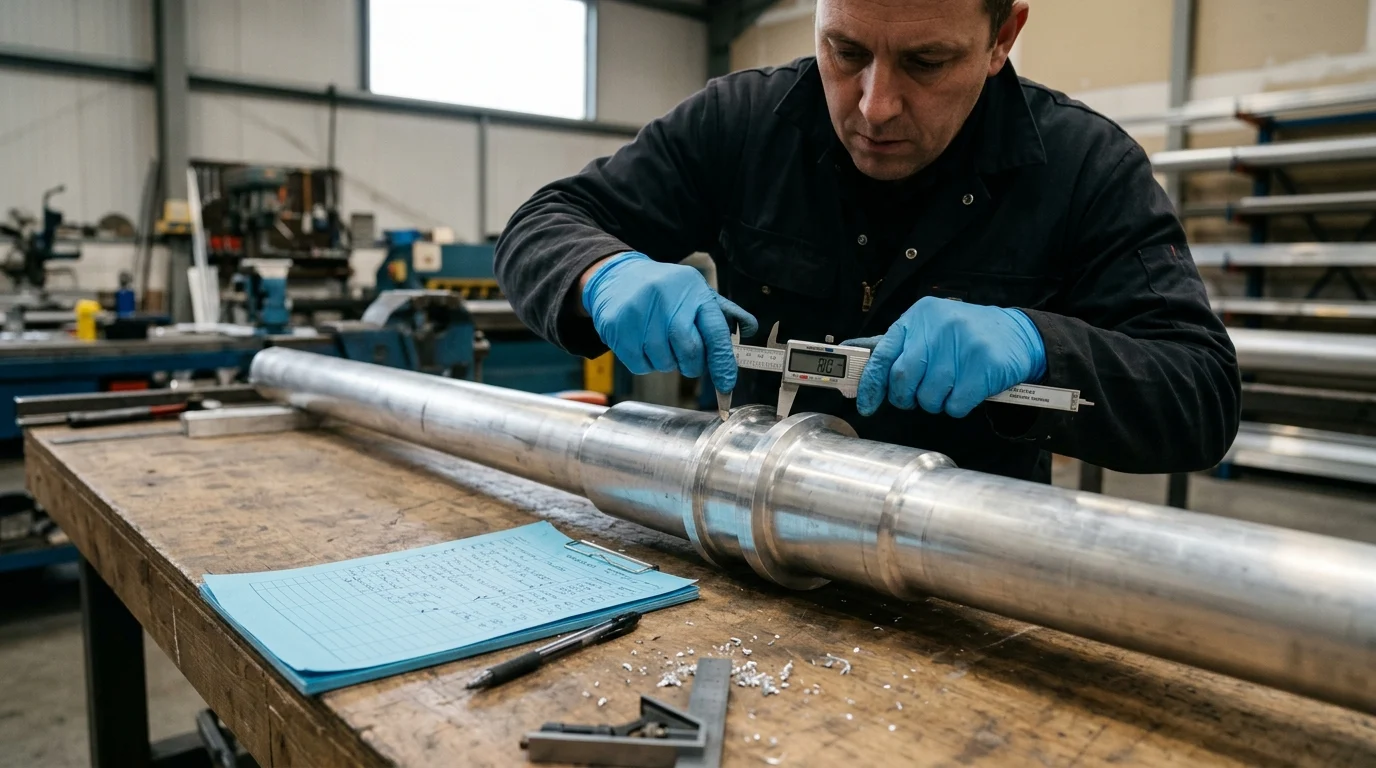
The fundamental mechanics of aluminium pole spinning and welding dictate divergent material behaviors, dimensional accuracies, and structural outcomes. Evaluating these technical parameters is essential for ensuring the final product meets stringent engineering specifications.
Differences in process, equipment, and material behavior
Aluminium pole spinning is a cold-working process that plastically deforms a rotating tubular blank. As the CNC roller applies localized pressure, the aluminium flows along the mandrel. This severe deformation alters the microstructural grain alignment, frequently resulting in work-hardening. For common alloys like 6061-T6 or 6063-T6, the spinning process can increase localized yield strength by 10% to 15% in the deformed zones, creating a highly rigid, tapered structure without introducing thermal stress.
Welding operates on the opposite principle, utilizing localized fusion to join discrete components. Whether utilizing TIG (Tungsten Inert Gas) or MIG (Metal Inert Gas) techniques, the intense heat input fundamentally alters the temper of the aluminium. The creation of a Heat-Affected Zone (HAZ) adjacent to the weld seam can reduce the local yield strength by 30% to 40%. To mitigate this structural degradation and restore the T6 temper, welded assemblies often require post-weld artificial aging or complete solution heat treatment, adding significant cycle time and energy costs to the manufacturing process.
Comparison of tolerances, strength, and finish
Dimensional control and aesthetic output vary drastically between the two methods. Spun poles boast superior concentricity, often achieving diametrical tolerances of ±0.5mm along the entire length of the taper. The absence of a longitudinal seam eliminates weak points and guarantees a uniform surface finish that is highly receptive to architectural coatings.
Welded poles, while capable of achieving heavy-duty structural requirements, struggle with thermal distortion. The localized heat input can cause warping, requiring mechanical straightening post-welding. Additionally, the weld seam presents an aesthetic and physical irregularity.
| Performance Metric | Aluminium Pole Spinning | Welded Aluminium Assembly |
|---|---|---|
| Yield Strength Impact | Up to +15% (Work-hardened) | -30% to -40% in HAZ (Pre-treatment) |
| Concentricity Tolerance | ±0.5mm to ±1.0mm | ±2.0mm to ±3.5mm (Post-weld distortion) |
| Surface Finish | Seamless, continuous taper | Visible seam, requires grinding |
| Optimal Wall Thickness | 2.5mm to 6.0mm | 4.0mm to 12.0+ mm |
When to Choose Spinning or Welding
Aligning the manufacturing process with the final deployment environment ensures both regulatory compliance and long-term structural integrity. The choice between spinning and welding is ultimately dictated by the specific application, environmental stressors, and the logistical realities of global infrastructure deployment.
Best-fit applications and compliance needs
Spun aluminium poles are the industry standard for architectural streetscapes, residential lighting, and smart-city infrastructure. Their seamless construction inherently lacks the fatigue stress concentrators associated with weld toes, making them exceptionally resilient to vortex shedding and dynamic wind loads. This seamless integrity is highly advantageous when seeking compliance with AASHTO LTS-6 structural specifications for highway signs and luminaires, particularly in high-wind velocity zones.
Welded construction becomes mandatory when structural demands exceed the physical limits of the spinning process. For high-mast lighting exceeding 25 to 30 meters in height, or stadium lighting structures requiring base wall thicknesses greater than 8mm to 10mm, spinning is no longer viable. These heavy-duty applications necessitate the welding of thick-walled extruded sections and heavy base plates to support massive luminaire arrays and withstand extreme bending moments.
Lifecycle, logistics, and final decision factors
Lifecycle durability is heavily influenced by corrosion resistance.
Key Takeaways
- The most important conclusions and rationale for Aluminium Pole Spinning
- Specs, compliance, and risk checks worth validating before you commit
- Practical next steps and caveats readers can apply immediately
Frequently Asked Questions
When is aluminium pole spinning more cost-effective than welding?
Spinning is usually better for repeat orders above about 300–500 poles, where tooling is spread across volume and labor per unit stays low.
Why do spun aluminium poles often have a better surface finish?
Spinning forms the pole from a seamless tube, so there is no longitudinal weld seam to grind, polish, or hide before anodizing or powder coating.
How does welding affect aluminium pole strength?
Welding creates a heat-affected zone that can reduce local yield strength, so engineered reinforcement or post-weld heat treatment may be needed.
Which process gives tighter tolerance on tapered aluminium poles?
Spinning typically delivers better concentricity and taper consistency, often around ±0.5 mm, which helps fit-out, coating quality, and visual alignment.
Can Morelux support custom-spun aluminum pole projects?
Yes. Morelux provides custom pole manufacturing, technical drawings, engineer support, and fast quotations to help infrastructure buyers compare spinning and welding options.