Introduction
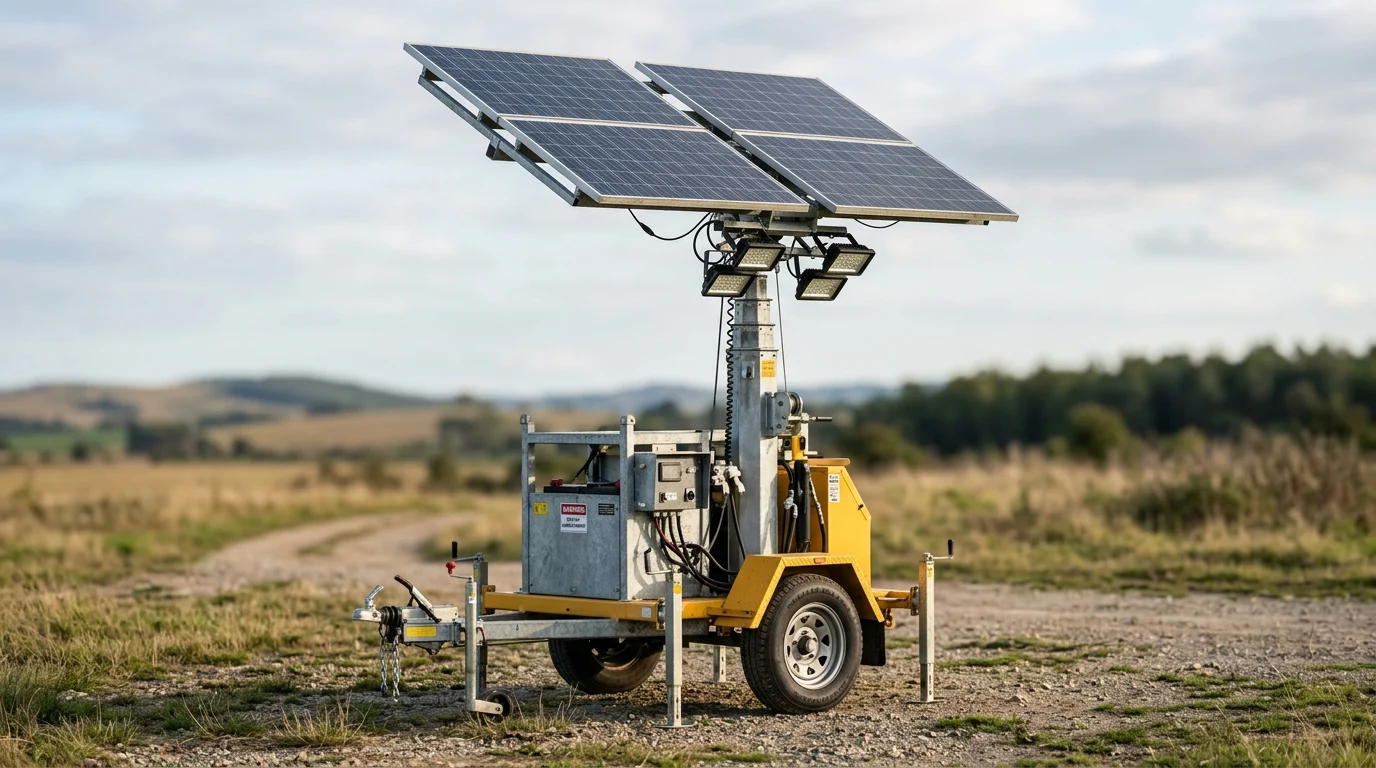
Temporary sites often need reliable lighting long before permanent power is available, and that is where a mobile solar lighting tower becomes especially practical. Instead of relying on fuel deliveries, engine maintenance, and noisy diesel generators, these units provide off-grid illumination through solar panels, battery storage, and efficient LED systems. This article explains where mobile solar lighting towers deliver the most value, from construction zones and roadworks to emergency response areas and event spaces. It also outlines the operational benefits that matter on short-term sites, including lower running costs, quieter performance, reduced emissions, and easier compliance with local environmental and noise requirements.
Why Mobile Solar Lighting Towers Are a Strategic Choice
The transition from conventional internal combustion engine (ICE) lighting to mobile solar lighting towers represents a fundamental shift in temporary site infrastructure. Historically, off-grid illumination relied heavily on diesel-powered units, which present significant operational liabilities through ongoing fuel consumption, maintenance overhead, and environmental non-compliance. By leveraging advanced photovoltaics and high-density energy storage, modern solar light towers offer a decentralized, decarbonized solution for temporary lighting.
How fuel costs, emissions goals, and noise limits drive adoption
Traditional diesel lighting towers consume approximately 1.5 to 2.0 liters of fuel per hour. Over a standard 10-hour nighttime shift, this equates to 15 to 20 liters daily, generating substantial operational expenditure (OPEX) and logistical friction associated with refueling schedules. Mobile solar lighting towers eliminate these direct fuel consumption variables entirely, decoupling site illumination from volatile fossil fuel markets.
Furthermore, tightening Tier 4 Final emission standards and urban noise ordinances are accelerating the obsolescence of diesel units. Solar variants operate silently at 0 decibels (dB), a critical advantage over diesel generators that typically produce 65 to 75 dB of continuous ambient noise. This zero acoustic footprint enables 24/7 operation in residential-adjacent zones, hospital vicinities, or ecologically sensitive areas without violating municipal noise curfews.
Which temporary site environments benefit most
Specific temporary site environments exhibit unique deployment profiles that maximize the return on investment (ROI) for solar lighting. Construction and infrastructure projects benefit from the autonomous nature of solar units, eliminating the need to dispatch refueling trucks across uneven terrain. In mining operations, the removal of flammable fuel storage directly mitigates localized fire risks.
Disaster relief and emergency response scenarios require rapid, self-sustaining illumination where local power grids and fuel supply chains are compromised. In these highly volatile environments, the ability to deploy independent microgrid lighting ensures immediate operational readiness.
| Deployment Environment | Primary Driver for Solar Adoption | Critical Operational Benefit |
|---|---|---|
| Urban Construction | Strict municipal noise ordinances (<60 dB) | Uninterrupted night-shift operations |
| Remote Mining | High fuel transport logistics and costs | Elimination of daily refueling runs |
| Disaster Relief | Disrupted local supply chains | Immediate, off-grid autonomy |
| Outdoor Events | Emissions and air quality standards | Zero particulate matter exhaust |
What Defines a High-Performance Mobile Solar Lighting Tower
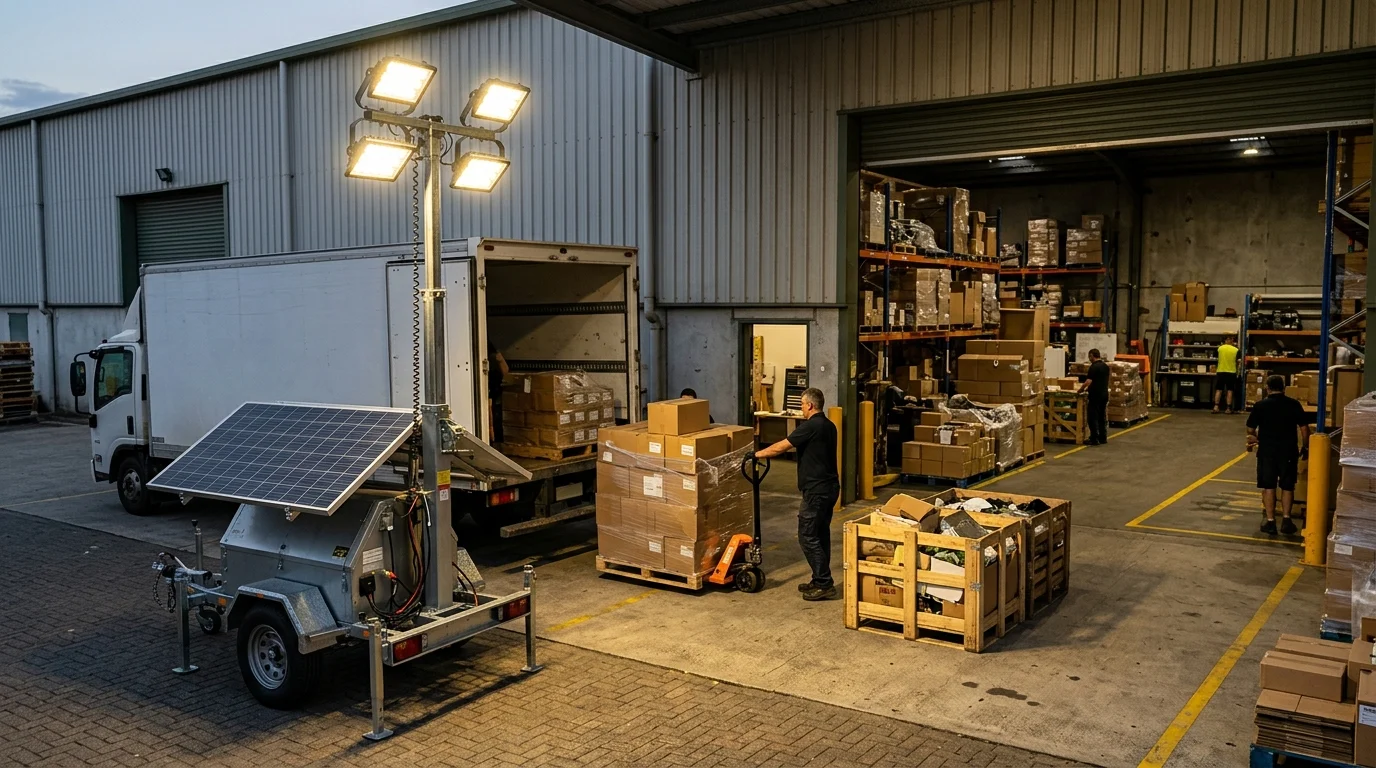
Evaluating a mobile solar lighting tower requires looking beyond superficial aesthetics to analyze the underlying power generation, storage, and illumination architecture. High-performance units are engineered as integrated microgrids, balancing energy capture with high-efficiency output to ensure reliability in demanding temporary environments.
Which specifications matter most
The primary metric for illumination efficacy is luminous flux, with industrial-grade solar towers typically delivering between 40,000 and 120,000 lumens. This output is supported by high-efficacy LED fixtures generating 150 to 180 lumens per watt, drastically reducing the electrical load compared to legacy metal halide bulbs. The physical mast must extend between 6 and 9 meters via hydraulic or pneumatic mechanisms to ensure adequate light dispersion and minimize glare for site workers.
Battery capacity forms the backbone of the system’s reliability, generally ranging from 400Ah to 1200Ah at 24V or 48V system architectures. To sustain this storage, top-tier units integrate monocrystalline solar panels with combined capacities spanning 1000W to 1800W. Maximum Power Point Tracking (MPPT) charge controllers are also mandatory specifications, operating at 95% to 98% efficiency to optimize energy harvest during suboptimal daylight conditions.
How to compare tower configurations
Comparing configurations requires assessing the specific technologies utilized within the energy storage and structural systems. Deep cycle Absorbent Glass Mat (AGM) batteries offer a lower initial capital expenditure but typically degrade after 500 to 800 charge cycles. Conversely, Lithium Iron Phosphate (LiFePO₄) battery architectures represent the current industry benchmark, offering over 3,000 cycles and 80% to 90% depth-of-discharge (DoD) capabilities, albeit at a higher initial premium.
Structurally, the chassis and mast must be rated for severe weather. High-performance units are certified to withstand wind speeds of 80 km/h to 100 km/h when fully deployed at maximum extension. Buyers must also compare enclosure materials; galvanized steel or marine-grade powder-coated aluminum enclosures provide essential resistance against corrosive environments, directly impacting the tower’s operational lifespan.
How to Assess Site Demands, Compliance, and Logistics
Successful deployment of mobile solar lighting towers relies heavily on preliminary site assessments. Project managers must evaluate environmental constraints, regulatory frameworks, and logistical hurdles to ensure continuous illumination without violating safety or transportation mandates.
Which operational variables determine fit
The most critical operational variable is the site’s solar insolation profile, measured in peak sun hours (PSH). A deployment location receiving an average of 3 PSH during winter months requires a significantly larger solar array and battery bank than an equatorial site averaging 6 PSH. Procurement teams must model these seasonal variations to prevent brownouts during critical night shifts.
System autonomy—defined as the number of consecutive days the tower can provide full illumination without solar recharge—must be calculated based on historical weather data. Industrial applications typically demand an autonomy threshold of 3 to 5 days. Furthermore, the required lighting footprint dictates the positioning and number of towers; a single 9-meter mast with four 300W LED fixtures can effectively illuminate approximately 3,000 to 4,000 square meters depending on the required lux levels.
Which compliance and risk factors to review
Regulatory compliance intersects with both site safety and transportation logistics. Occupational Safety and Health Administration (OSHA) standards, for example, mandate specific illumination levels, such as a minimum of 5 footcandles for general construction area lighting. Procurement engineers must verify via photometric plans that the selected solar towers can sustain these thresholds throughout the required 10- to 12-hour shift durations.
Logistically, the trailer chassis must comply with Department of Transportation (DOT) or equivalent regional highway standards. Key compliance factors include appropriate axle weight ratings (often exceeding 1,000 kg due to heavy battery banks), standardized hitch configurations such as a 50mm ball or pintle ring, and certified maximum towing speeds. Most industrial lighting trailers are restricted to a maximum towing speed of 80 km/h (50 mph) to prevent sway and rollover incidents during transit.
How to Evaluate Total Cost and Supplier Value
While the environmental and operational benefits of mobile solar lighting towers are compelling, the financial justification requires a comprehensive lifecycle cost analysis. Evaluating total cost of ownership (TCO) and vetting supplier credentials are indispensable steps in mitigating procurement risk.
Which cost drivers shape lifecycle value
The financial model for solar lighting pivots on a higher initial capital expenditure (CAPEX) offset by negligible operating expenses (OPEX). A commercial-grade mobile solar lighting tower may require a CAPEX of $8,000 to $15,000, compared to $5,000 to $8,000 for a comparable diesel unit. However, the elimination of diesel fuel, oil changes, filter replacements, and mechanical servicing rapidly alters the lifecycle value.
| Cost Component | Diesel Lighting Tower (Estimated) | Mobile Solar Lighting Tower (Estimated) |
|---|---|---|
| Initial CAPEX | $6,500 | $12,000 |
| Annual Fuel Cost | $8,500 (at 15L/day @ $1.50/L) | $0 |
| Annual Maintenance | $1,200 | $150 (Cleaning/Inspection) |
| 5-Year TCO | ~$55,000 | ~$12,750 |
This comparative analysis demonstrates how the lifecycle value of solar configurations significantly outperforms internal combustion alternatives. Despite the initial premium, the drastic reduction in cumulative OPEX drives high long-term asset profitability.
What supplier criteria reduce procurement risk
Supplier evaluation is critical to ensuring the longevity and performance of the capital asset. Procurement managers must establish strict criteria to minimize supply chain and operational risks. Minimum viable warranty terms should include 5 years on LED fixtures, 10 to 25 years on photovoltaic panel performance, and 3 to 5 years on lithium battery banks.
Suppliers must provide transparent Mean Time Between Failures (MTBF) data and hold ISO 9001 quality management certifications. Furthermore, evaluating the supplier’s production capacity and lead times is vital for large deployments. A standard 4- to 8-week delivery window for a minimum order quantity (MOQ) of 10 to 20 units is typical, and vetting this capability ensures that project timelines remain uncompromised during large-scale site mobilizations.
What Is the Best Deployment Decision Framework
Implementing a mobile solar lighting tower fleet requires a disciplined decision-making framework. By standardizing the evaluation process, project managers can align equipment specifications with overarching site objectives, ensuring optimal illumination and financial return.
Which step-by-step process supports selection
A robust selection process follows a sequential, data-driven methodology. Step one involves conducting a photometric audit to determine the precise lux or foot-candle requirements for the specific site tasks. Step two requires analyzing localized solar irradiation data—utilizing databases such as the National Renewable Energy Laboratory (NREL)—to establish the baseline energy generation potential for the specific geography.
Step three focuses on sizing the energy storage and generation components to meet the required autonomy days, factoring in winter solstice conditions where daylight hours drop below 10 hours. Finally, step four evaluates the physical chassis, ensuring the mast height, wind rating, and towing specifications align with the site’s topographical and logistical realities.
When a solar lighting tower is the right choice
A mobile solar lighting tower is the definitively correct choice when a project faces stringent environmental mandates, high fuel logistics costs, or strict noise ordinances. From a financial perspective, deployments presenting a payback period of 18 to 24 months strongly justify the immediate transition from diesel to solar.
When site autonomy, zero-emission targets, and long-term OPEX reduction are prioritized, solar lighting towers cease to be merely an alternative technology. They become a fundamental requirement for modern, compliant, and cost-effective temporary site management, driving both sustainability metrics and bottom-line project profitability.
Key Takeaways
- The most important conclusions and rationale for mobile solar lighting towers
- Specs, compliance, and risk checks worth validating before you commit
- Practical next steps and caveats readers can apply immediately
Frequently Asked Questions
Where are mobile solar lighting towers most useful on temporary sites?
They work best on construction projects, roadworks, mining areas, emergency response zones, and outdoor events where grid power, fuel access, noise control, or emissions limits are key concerns.
What specifications should buyers check first?
Focus on lumen output, mast height, battery capacity, solar panel wattage, MPPT controller, and wind rating. For temporary infrastructure, match runtime and coverage to your nightly operating hours and site size.
Are lithium batteries better than AGM for mobile solar lighting towers?
Usually yes. LiFePO4 batteries offer longer cycle life, deeper discharge, and lower replacement frequency. AGM can reduce upfront cost, but lithium is often the better long-term choice for frequent deployment.
Can Morelux support customized mobile solar lighting tower projects?
Yes. Morelux supports project buyers with custom pole solutions, technical drawings, engineer assistance, and fast quotes, helping teams align tower structures and specifications with site requirements.
How quickly can Morelux respond to sourcing inquiries?
Morelux emphasizes responsive B2B support and typically provides quotes within 24 hours. For faster evaluation, send your required mast height, lighting output, battery type, and project application details.