Introduction
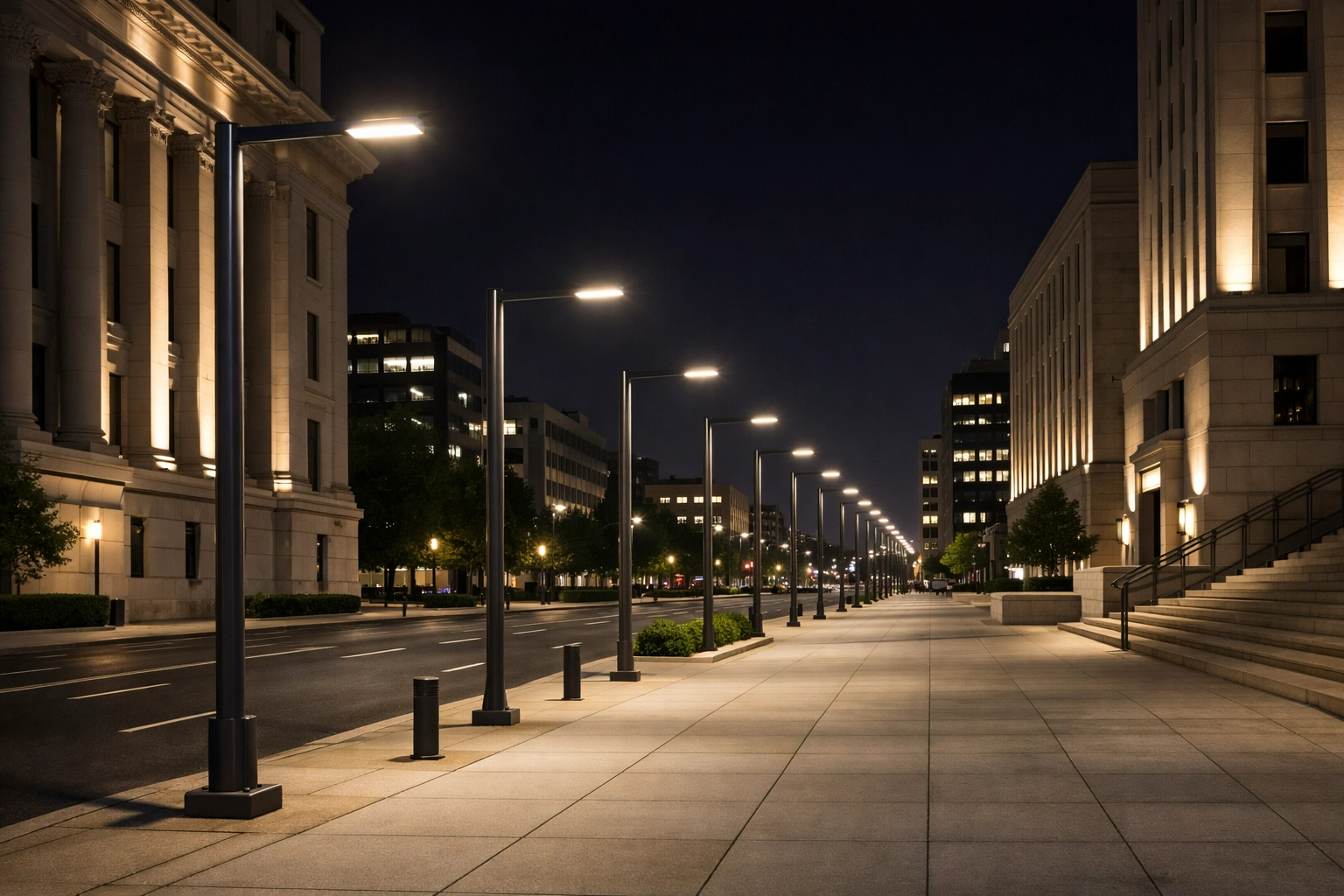
At tunnel portals, drivers must adjust in seconds from bright daylight to a much darker interior, and that visual shock can sharply reduce reaction time. This introduction explains why entrance lighting is a safety-critical part of tunnel design and how adaptive poles improve that transition. You will see how adjustable height, angle, and output help control luminance more precisely, reduce the black hole effect, and support better visibility in changing ambient conditions. It also sets up the broader discussion of how these systems can improve maintenance efficiency, equipment performance, and long-term infrastructure value.
Why Tunnel Entrance Lighting Matters for Safety and Asset Performance
Tunnel entrances represent one of the most critical transitional environments in highway infrastructure. As drivers approach a tunnel during daylight hours, they face a severe contrast between the bright exterior ambient light and the dark interior portal. This phenomenon, commonly referred to as the “black hole effect,” severely impairs visual acuity and reaction times. Statistical analyses of highway safety data reveal that accident rates at tunnel entrance zones are up to 2.5 times higher than on open roadway segments. Effective tunnel entrance lighting is therefore not merely a matter of illumination but a fundamental requirement for active traffic safety and collision avoidance.
To mitigate these risks, infrastructure engineers deploy specialized lighting systems designed to seamlessly step down luminance levels, allowing the human eye sufficient time to adapt. Traditionally, these systems relied on static fixtures. However, the integration of adaptive poles—structures capable of dynamic height, angle, and intensity adjustments—has revolutionized both the photometric performance and the asset management lifecycle of tunnel portals.
Adaptive pole benefits
Adaptive poles introduce mechanical and electronic flexibility into tunnel entrance lighting arrays. Unlike rigid structures, these systems utilize motorized or counterbalanced lowering mechanisms and adjustable mounting brackets. This design allows maintenance personnel to lower the luminaires to ground level, entirely eliminating the need for elevated bucket trucks. Consequently, highway operators can reduce maintenance-related lane closures and associated downtime by up to 40%.
Beyond maintenance, the structural adaptability ensures that luminaires can be precisely angled to match seasonal shifts in solar trajectory. By dynamically altering the pitch and yaw of the fixture heads, adaptive poles maximize the efficiency of the luminous flux directed at the threshold pavement, ensuring that the critical contrast ratios required for driver safety are maintained year-round without excessive energy consumption.
Glare control and visual adaptation
The primary physiological challenge at a tunnel portal is visual adaptation. A driver’s eyes may be adapted to an exterior luminance of 5,000 to 8,000 cd/m2 on a bright, sunny day. Upon entering the tunnel, the required interior luminance drops drastically, often reaching levels as low as 5 to 10 cd/m2. If the transition is too abrupt, the driver experiences momentary blindness, severely compromising their ability to detect stopped vehicles or debris.
Adaptive pole lighting systems address this by working in tandem with luminance cameras (L20 monitors) positioned ahead of the portal. By actively controlling the lighting angles and output intensities, these systems effectively combat solar glare and manage the step-down luminance curve. The adaptive geometry ensures that the light is projected exactly where the driver’s foveal vision requires it, smoothing the visual transition and significantly reducing the spatial threshold required for full dark adaptation.
Technical Definitions and Design Parameters
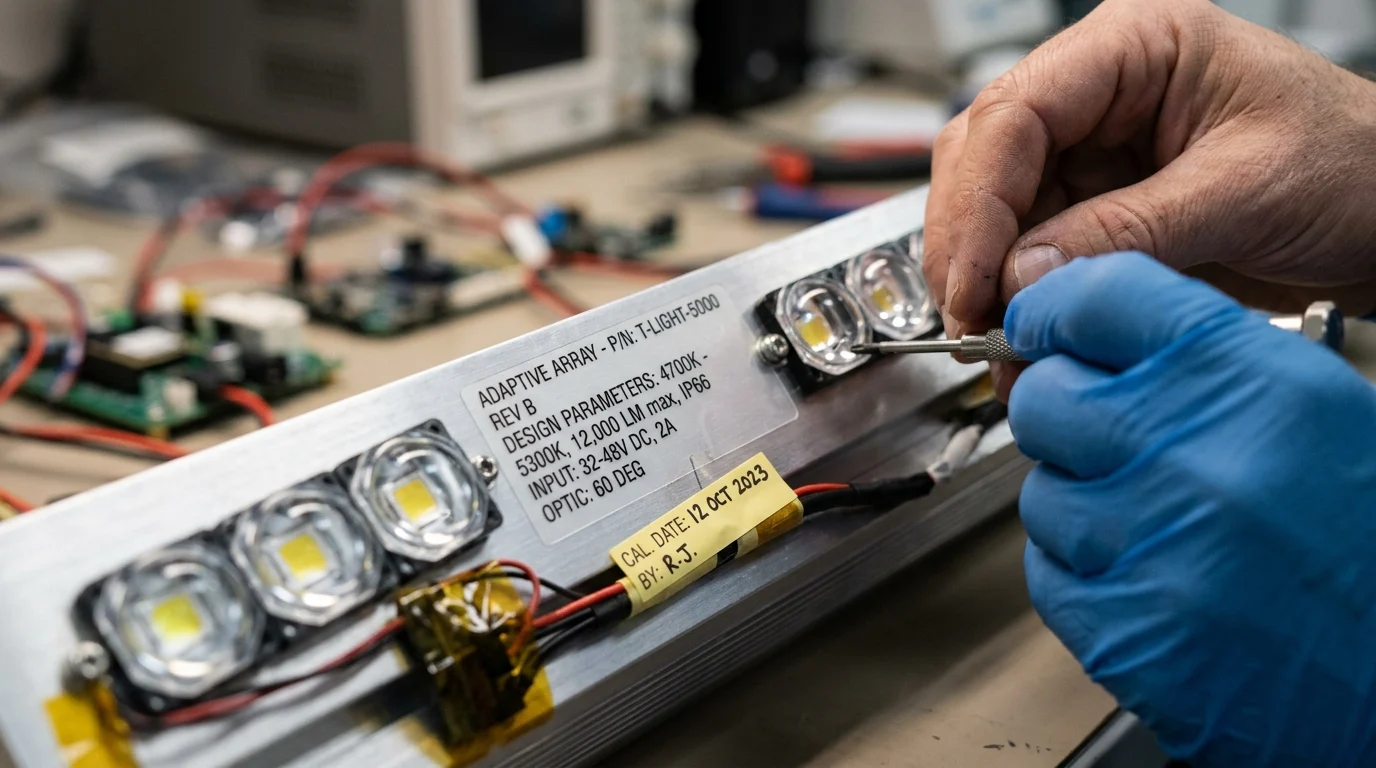
Designing an effective tunnel entrance lighting system requires a rigorous understanding of photometric parameters and spatial zoning. The baseline metric for tunnel lighting design is the L20 parameter, which represents the average luminance contained within a 20-degree conical field of view, centered on the driver’s line of sight, measured from a specific stopping sight distance (SSD) ahead of the portal. The L20 value dictates the baseline intensity required at the very beginning of the tunnel to prevent the black hole effect.
Tunnel lighting is sequentially divided into distinct zones, each with strict luminance targets relative to the exterior L20 measurement. The physical mounting infrastructure—specifically the choice between fixed and adaptive poles—plays a critical role in how accurately these theoretical targets translate into real-world pavement luminance.
Lighting zones and luminance targets
The lighting layout is engineered to match the physiological adaptation rate of the human eye at the posted speed limit. The threshold zone requires the highest energy output, directly counteracting the exterior brightness, while the transition zone gradually tapers the light levels down to the baseline interior requirements.
| Tunnel Zone | Typical Length | Luminance Target (Relative to Exterior L20) |
|---|---|---|
| Threshold Zone | Equal to Stopping Sight Distance (SSD) | 40% – 100% (depending on tunnel design) |
| Transition Zone | Calculated based on speed limit | Logarithmic decrease from Threshold to Interior |
| Interior Zone | Remainder of the enclosed tunnel | 1% – 5% (typically 1 to 10 cd/m2) |
| Exit Zone | Approximately 50 meters | Rising to 20% – 50% to prevent white-out glare |
Adaptive poles vs fixed mounting
Fixed mounting systems, commonly bolted directly to the tunnel facade or rigid masts, offer high structural simplicity but lack photometric flexibility. Once installed, any deviation from the optimal beam angle—due to subtle construction tolerances or shifting road surfaces—requires labor-intensive manual realignment using specialized access equipment.
Adaptive poles resolve this operational bottleneck by featuring variable geometry mounts. These structures allow for post-installation microadjustments of the luminaire beam angle, typically within a ±15 degree range on both the vertical and horizontal axes. This capability ensures that the L20 ratio remains highly optimized, compensating for complex portal topographies and allowing engineers to fine-tune the photometric distribution without interrupting traffic flow.
How to Evaluate Equipment and Controls
Procuring tunnel entrance lighting infrastructure requires a comprehensive evaluation of mechanical resilience, photometric performance, and lifecycle economics. Because tunnel portals act as wind tunnels and are exposed to highly corrosive exhaust fumes and de-icing chemicals, the specification of adaptive poles and their associated control nodes must exceed standard roadway lighting criteria.
A rigorous procurement framework must balance the upfront capital expenditure (CapEx) against long-term operational expenditure (OpEx) savings. Evaluating these systems involves analyzing material specifications, ingress protection, and the sophistication of the lowering or pivoting mechanisms that define the “adaptive” nature of the pole.
Key comparison criteria
When comparing equipment, structural integrity and environmental sealing are paramount. Adaptive poles must be engineered to withstand severe aerodynamic loads, often requiring wind load ratings exceeding 120 mph (193 km/h), particularly in mountainous or coastal tunnel locations. The luminaire housings and motorized control nodes must carry a minimum ingress protection rating of IP66 or IP67 to prevent water and fine particulate dust intrusion.
Furthermore, impact resistance is a critical criterion. Given their proximity to high-speed traffic lanes, the lower segments of the poles and accessible control boxes should feature an IK09 or IK10 impact resistance rating. Buyers must also evaluate the integration capabilities of the pole’s electronic components, ensuring compatibility with standard Intelligent Transportation Systems (ITS) protocols like DALI-2 or standard 0-10V dimming interfaces linked to Supervisory Control and Data Acquisition (SCADA) networks.
Cost, durability, and maintenance
The financial modeling for adaptive tunnel lighting reveals a distinct shift in cost distribution compared to legacy systems. While the initial CapEx for adaptive poles and their motorized lowering systems typically commands a 15% to 25% premium over static masts, the return on investment (ROI) is rapidly realized through drastically reduced maintenance costs and extended component lifespans.
| Evaluation Metric | Fixed Mounting Infrastructure | Adaptive Pole Systems | Lifecycle Impact |
|---|---|---|---|
| Initial CapEx | Baseline standard | +15% to +25% premium | Moderate upfront investment |
| Maintenance Access | Heavy reliance on bucket trucks | Ground-level lowering mechanisms | High OpEx savings; reduced lane closures |
| Beam Precision | Static post-installation | Dynamic/adjustable geometry (±15°) | Improved photometric compliance and safety |
| Design Lifespan | 15 – 20 years | 20+ years (with modular upgrades) | Higher long-term asset value |
High-quality adaptive poles constructed from marine-grade aluminum or heavily galvanized steel offer service lives exceeding 20 years, while the associated LED modules typically operate reliably for over 100,000 hours (L80B10). By eliminating the need for heavy lift equipment during routine cleanings, driver replacements, or sensor calibrations, the total cost of ownership reliably undercuts fixed infrastructure within the first five to seven years of operation.
Compliance, Installation, and Operations
Deploying adaptive poles at tunnel entrances requires strict adherence to international lighting standards and rigorous environmental testing protocols. Because tunnel lighting is a life-safety system, regulatory bodies mandate precise photometric performance and high availability. Navigating these requirements ensures that the installed infrastructure will perform reliably under the harshest operational conditions.
The transition from the design phase to active operation involves meticulous site assessment, structural validation, and a highly controlled commissioning process to synchronize the adaptive hardware with the tunnel’s central control systems.
Standards and environmental requirements
Compliance in tunnel lighting is heavily governed by standards such as the International Commission on Illumination’s CIE 88:2004 and the Illuminating Engineering Society’s ANSI/IES RP-22-11. These frameworks dictate the exact luminance curves and uniformity ratios required to prevent visual impairment at the portal.
Environmentally, adaptive poles and their mechanical actuators must survive severe degradation tests. Specifications typically demand salt spray resistance testing exceeding 1,000 hours to ensure resilience against winter road salts and coastal air. Additionally, because tunnel portals experience constant low-frequency vibrations from heavy goods vehicles (HGVs), the poles and luminaire brackets must pass rigorous 3G vibration testing (ANSI C136.31) to prevent metal fatigue and structural failure over time.
Site assessment and commissioning
Prior to installation, a comprehensive site assessment is mandatory to map the tunnel approach topography, solar angles, and existing ITS network architecture. Installation of adaptive poles requires precision civil engineering for the foundations, ensuring the lowering mechanisms have adequate clearance and operator safety zones.
The commissioning phase is highly technical. It involves calibrating the exterior L20 luminance cameras with the pole’s LED drivers to ensure real-time responsiveness. Engineers conduct acceptance testing by driving the approach at varying times of day, verifying that the actual pavement luminance deviates by less than 5% from the theoretical design targets. A standard 30-day burn-in period is typically enforced to monitor the system’s stability, actuator reliability, and SCADA reporting accuracy before the infrastructure is officially handed over to the highway authority.
Decision Framework for Adaptive Pole Investment
The decision to upgrade from static lighting to adaptive pole infrastructure represents a strategic shift from passive roadway assets to dynamic, intelligent safety systems. While the technical and operational benefits are clear, infrastructure planners must apply a rigorous decision framework to justify the investment. This involves analyzing traffic profiles, geographical constraints, and long-term maintenance budgets.
By identifying high-risk or high-maintenance portals, authorities can prioritize funding where adaptive systems will deliver the highest impact on both collision reduction and operational efficiency.
Best-fit use cases
Adaptive pole systems deliver the highest value in specific, high-stress environments. Tunnels located on high-speed rail or highway networks—where approach speeds exceed 80 km/h (50 mph)—are prime candidates, as the driver’s visual adaptation window is severely compressed. Similarly, tunnels with an East-West orientation suffer from extreme, direct solar glare during dawn and dusk, making the dynamic beam adjustments of adaptive poles highly beneficial.
Furthermore, adaptive systems are strongly recommended for routes with heavy goods vehicle (HGV) traffic exceeding 15% of total volume, as the vibration resilience and the necessity to avoid lane closures for maintenance become critical operational priorities. Remote or mountainous tunnel locations, where mobilizing specialized bucket trucks is logistically complex and cost-prohibitive, also represent ideal use cases for ground-serviceable adaptive poles.
Balancing safety, resilience, and cost
Ultimately, the investment in adaptive tunnel entrance lighting requires balancing immediate capital constraints against long-term safety and resilience metrics. The primary objective is risk mitigation; deploying these systems targets a reduction in entrance zone collision probability by greater than 30% through optimized visual transitions.
By adopting adaptive poles, transportation authorities future-proof their infrastructure. The ability to integrate with next-generation ITS networks, perform ground-level maintenance safely, and dynamically respond to ambient lighting conditions ensures that the tunnel portal remains safe, compliant, and economically viable throughout its multi-decade lifecycle.
Key Takeaways
- The most important conclusions and rationale for Tunnel Entrance Lighting
- Specs, compliance, and risk checks worth validating before you commit
- Practical next steps and caveats readers can apply immediately
Frequently Asked Questions
Why is tunnel entrance lighting so important?
It reduces the black hole effect at the portal, helping drivers see hazards sooner and lowering crash risk during the bright-to-dark transition.
How do adaptive poles improve tunnel entrance lighting performance?
They let luminaires be adjusted for height, angle, and output, so light reaches the threshold zone more accurately and adapts to changing daylight conditions.
Can adaptive poles reduce tunnel maintenance costs?
Yes. Lowering or service-friendly pole designs can speed maintenance, reduce lane closures, and improve access compared with fixed high-mount systems.
What design data is needed for a tunnel entrance lighting project?
Key inputs include tunnel speed, stopping sight distance, portal layout, L20 conditions, pole height limits, wind load, and required luminance zones.
Can Morelux provide custom poles for tunnel entrance projects?
Yes. Morelux supports customized steel and aluminum pole solutions with technical drawings, engineer support, and fast quotations for infrastructure buyers.