Introduction
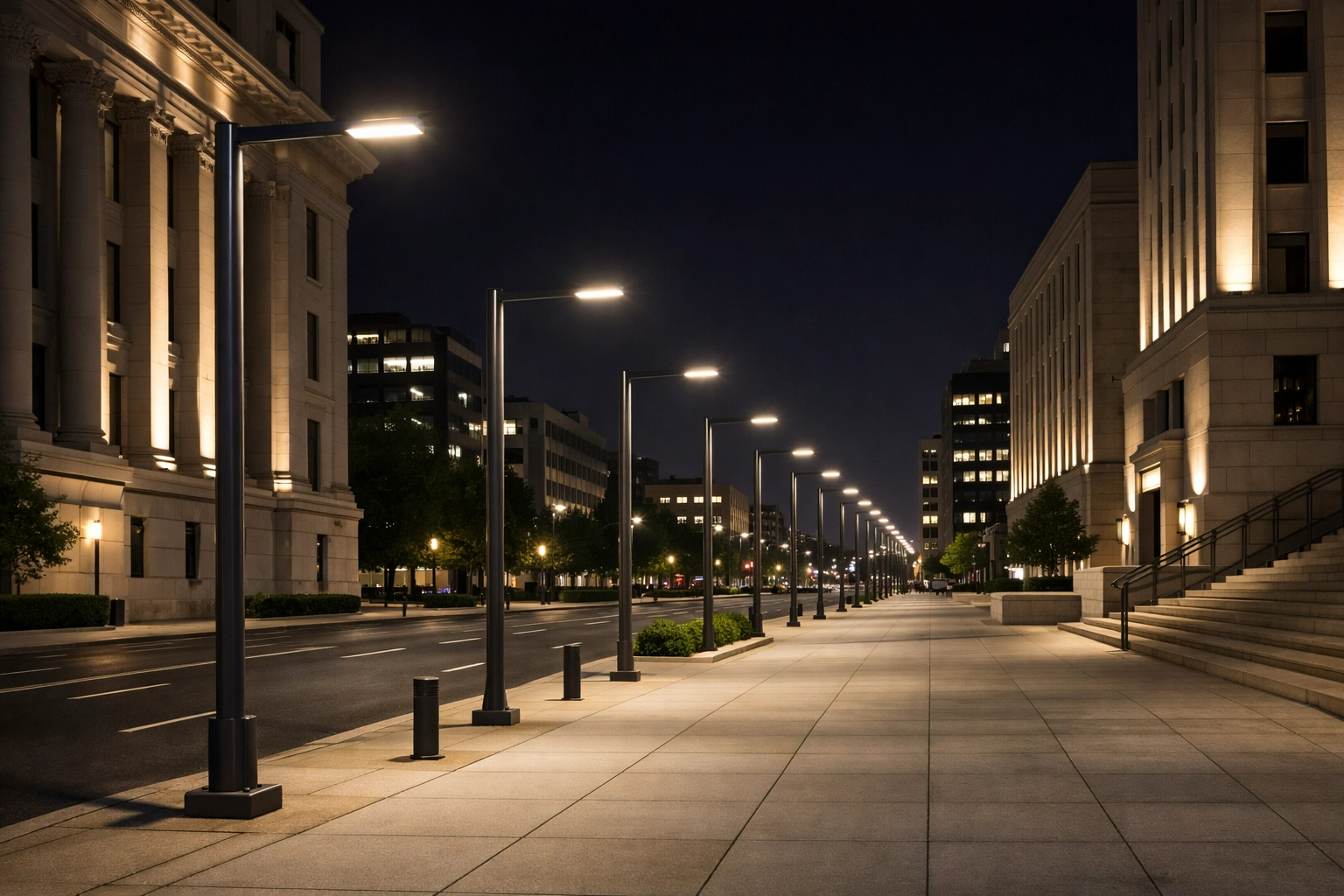
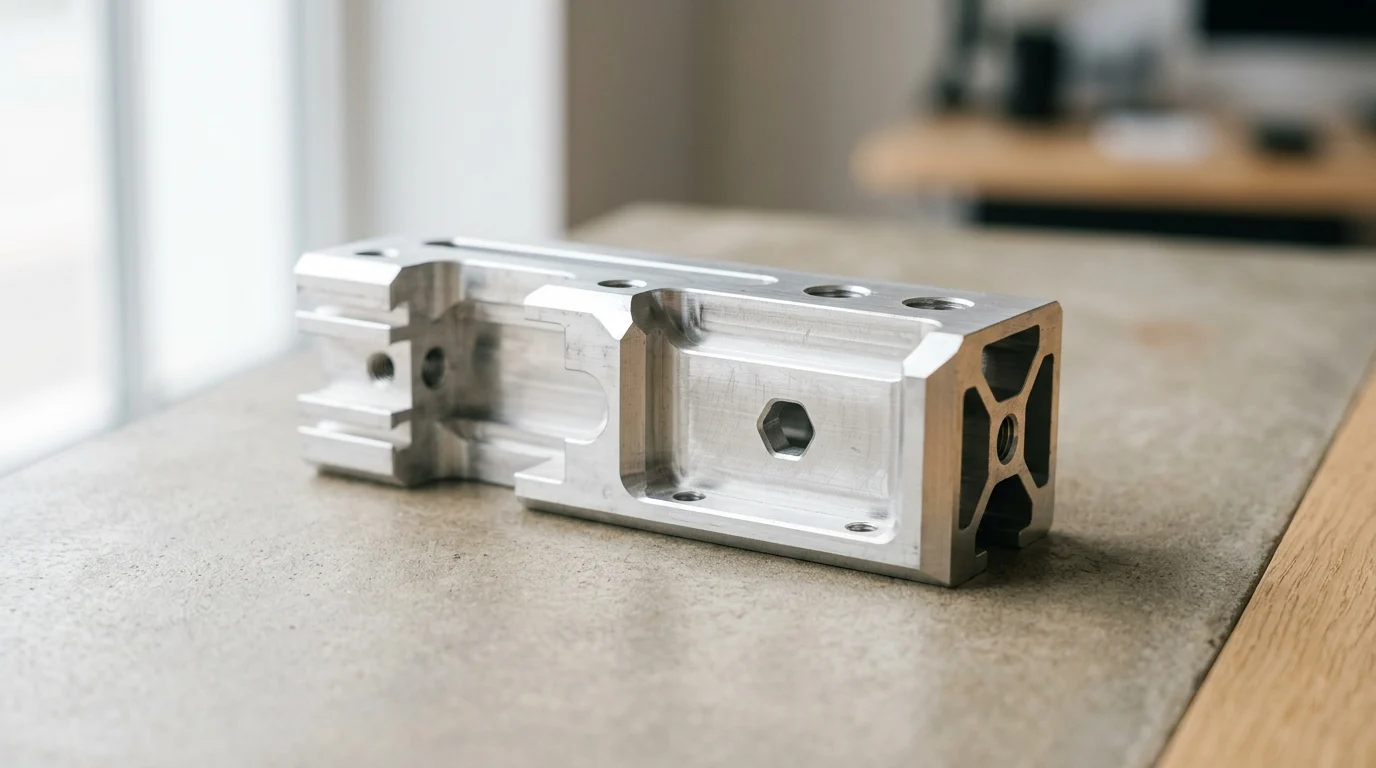
For poles made from 6063-T6 aluminum alloy, fatigue performance often matters more than headline tensile values because service loads are repetitive, not one-time events. Wind gusts, vortex shedding, and ongoing vibration can drive millions of stress cycles that gradually initiate and grow cracks, even when stresses remain well below static design limits. This article explains how fatigue strength is evaluated for 6063-T6, what typical high-cycle values mean in practical pole manufacturing, and which service conditions most strongly affect durability. It also sets up the key design implications engineers should consider when translating material data into reliable street lighting, traffic signals, and utility pole performance.
Why 6063-T6 Aluminum Alloy Fatigue Strength Matters
The deployment of 6063-T6 aluminum alloy in structural pole manufacturing—encompassing street lighting, traffic signal supports, and utility infrastructure—relies heavily on its optimal balance of extrudability, corrosion resistance, and mechanical performance. While static load capacity is a fundamental design parameter, the operational lifespan of these structures is predominantly governed by fatigue strength. Poles are continuously subjected to dynamic, cyclic loading environments that can initiate microscopic cracks, making high-cycle fatigue resistance a paramount engineering concern.
Key Service Conditions Affecting Fatigue Performance
Structural poles installed in open environments experience complex aerodynamic phenomena. The most critical service conditions include natural wind gusts, vortex shedding, and galloping, which induce high-frequency, low-amplitude cyclic stresses. Unlike ferrous metals, aluminum alloys do not possess a distinct endurance limit; their fatigue strength continuously decreases with an increasing number of load cycles. For architectural and structural applications, the high-cycle fatigue limit of 6063-T6 is conventionally evaluated at 500 million (5 x 10^8) cycles. Under standard testing, the unnotched fatigue strength of 6063-T6 at this cycle threshold is approximately 69 MPa (10,000 psi). If service stresses from continuous Aeolian vibrations—which frequently operate in the 10 Hz to 30 Hz frequency range—exceed this baseline limit, premature structural failure becomes highly probable.
How to Frame Fatigue Requirements
Establishing robust fatigue requirements demands adherence to specialized structural codes, such as the AASHTO Standard Specifications for Structural Supports. Engineers must calculate the allowable stress range for specific structural details rather than relying solely on the base material’s yield strength. Framing these requirements involves categorizing connection types—such as pole-to-baseplate welds or handhole reinforcements—into distinct fatigue categories (e.g., Category C, D, or E). For instance, a Category E detail, representing a transverse fillet-welded attachment, possesses an allowable stress range of roughly 13 MPa to 26 MPa under infinite life design criteria. Properly framing these specifications ensures that the dynamic response of the 6063-T6 pole remains within safe operational envelopes throughout a projected 50-year structural design life.
How Material, Design, and Fabrication Affect Fatigue Strength
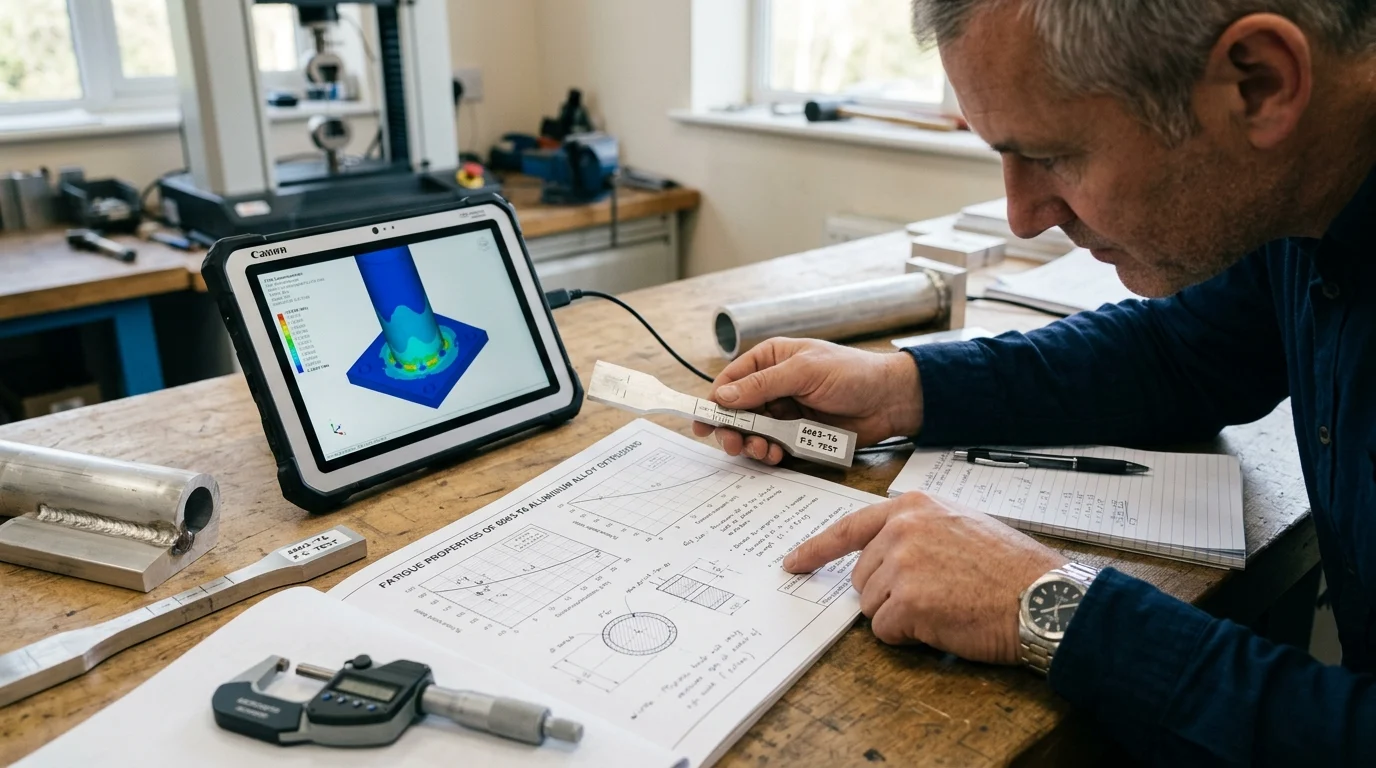
Achieving the desired fatigue lifespan in a 6063-T6 pole is not solely a function of the raw material selection. The final fatigue performance is heavily dictated by the intrinsic mechanical properties of the alloy, the geometric design of the extrusion profile, and the subsequent fabrication processes employed during final assembly.
Mechanical Properties and Fatigue Basics
The T6 temper designation indicates that the 6063 alloy has been solution heat-treated and artificially aged, maximizing its precipitation hardening capabilities. This thermal processing yields a minimum Ultimate Tensile Strength (UTS) of 215 MPa (30 ksi) and a minimum Yield Strength (YS) of 170 MPa (25 ksi). However, the fatigue ratio—defined as the fatigue strength divided by the ultimate tensile strength—for 6063-T6 typically rests between 0.30 and 0.35. This relatively low ratio means that while the alloy can withstand substantial static loads, repeated cyclic stresses require highly conservative safety margins.
| Mechanical Property | 6063-T6 Extrusion | 6061-T6 Extrusion | 6063-T4 Extrusion |
|---|---|---|---|
| Ultimate Tensile Strength (MPa) | 215 | 260 | 130 |
| Yield Strength (MPa) | 170 | 240 | 90 |
| Fatigue Strength @ 5×10^8 cycles (MPa) | 69 | 96 | 55 |
| Typical Elongation (%) | 8 | 10 | 14 |
Tradeoffs in Design and Processing
The most severe reduction in fatigue strength occurs during fabrication, specifically during fusion welding. The intense thermal input creates a Heat-Affected Zone (HAZ) that locally degrades the T6 temper, dropping the yield strength in the welded region to approximately 110 MPa (16 ksi). Designers must compensate for this localized weakness by increasing wall thickness at the base—often utilizing tapered extrusions scaling from 3.18 mm at the tip to 6.35 mm or greater at the baseplate junction. Furthermore, mechanical fasteners or friction stir welding (FSW) are increasingly evaluated as alternatives to traditional fusion welding to mitigate HAZ-induced fatigue degradation. Balancing the aesthetic requirement for seamless, fluted profiles against the necessity for robust, fatigue-resistant joints requires precise engineering optimization.
How to Specify, Test, and Select 6063-T6 for Fatigue Performance
Translating theoretical fatigue life into physical reliability requires rigorous procurement specifications, standardized testing methodologies, and informed material selection. Engineers must implement comprehensive quality control frameworks to verify that the delivered 6063-T6 extrusions meet critical microstructural and dimensional tolerances before installation.
Specification and Quality Control Steps
Material specifications must mandate compliance with ASTM B221 for aluminum alloy extruded bars, profiles, and tubes. Because fatigue cracks predominantly initiate at surface discontinuities, quality control must enforce strict surface finish tolerances. Extrusions should be specified with a maximum surface roughness (Ra) of 3.2 micrometers; rougher surfaces act as microscopic stress concentrators that drastically accelerate crack initiation under cyclic loading. Additionally, non-destructive evaluation (NDE) protocols, such as ultrasonic testing (UT) or eddy current inspection, should be mandated for critical batches to detect subsurface inclusions or extrusion seams. Maintaining strict control over iron (maximum 0.35%) and silicon (0.20% to 0.60%) impurity limits during the billet casting phase is also essential to prevent the formation of brittle intermetallic phases that compromise cyclic fatigue resistance.
Decision Guidance for Material Selection
When selecting an alloy for pole manufacturing, engineers frequently weigh 6063-T6 against structural alternatives like 6061-T6 or 6005A-T61. While 6061-T6 offers roughly 30% higher baseline yield strength, 6063-T6 remains the industry standard for complex architectural geometries due to its superior extrudability and excellent anodizing response. If the structural pole requires intricate fluting or internal webbing to increase the moment of inertia without adding excessive mass, 6063-T6 is the optimal choice. However, if the pole is destined for high-wind coastal environments where extreme cyclic loading and heavy luminaire payloads (exceeding 50 kg) are present, upgrading to 6005A-T61 might be necessary to achieve higher fatigue thresholds while maintaining acceptable extrudability. Ultimately, material selection must align the required extrusion complexity, surface finish requirements, and the calculated stress ranges of the specific installation environment.
Key Takeaways
- The most important conclusions and rationale for 6063-T6 Aluminium Alloy
- Specs, compliance, and risk checks worth validating before you commit
- Practical next steps and caveats readers can apply immediately
Frequently Asked Questions
What fatigue strength should be used for 6063-T6 aluminum poles?
For un-notched 6063-T6, a common reference is about 69 MPa at 5×10^8 cycles. Pole design should still use code-based allowable stress ranges for the actual detail.
Why is fatigue more critical than yield strength in pole manufacturing?
Poles face repeated wind-induced stress, not just one-time loads. Fatigue usually controls service life because aluminum has no true endurance limit.
How does welding affect 6063-T6 pole fatigue performance?
Fusion welding weakens the heat-affected zone and reduces local strength. Use reinforced base details, controlled weld design, or consider alternatives like friction stir welding where feasible.
Can Morelux support custom 6063-T6 pole fatigue design for projects?
Yes. Morelux provides engineer support, technical drawings, and customized pole solutions to help buyers match fatigue requirements, geometry, and fabrication details to project conditions.
What should buyers ask for when sourcing 6063-T6 poles?
Request alloy and temper confirmation; fatigue-relevant detail design; welding or joint specifications; wall-thickness schedule; and testing or calculation support. Fast quote and drawing review can shorten procurement time.