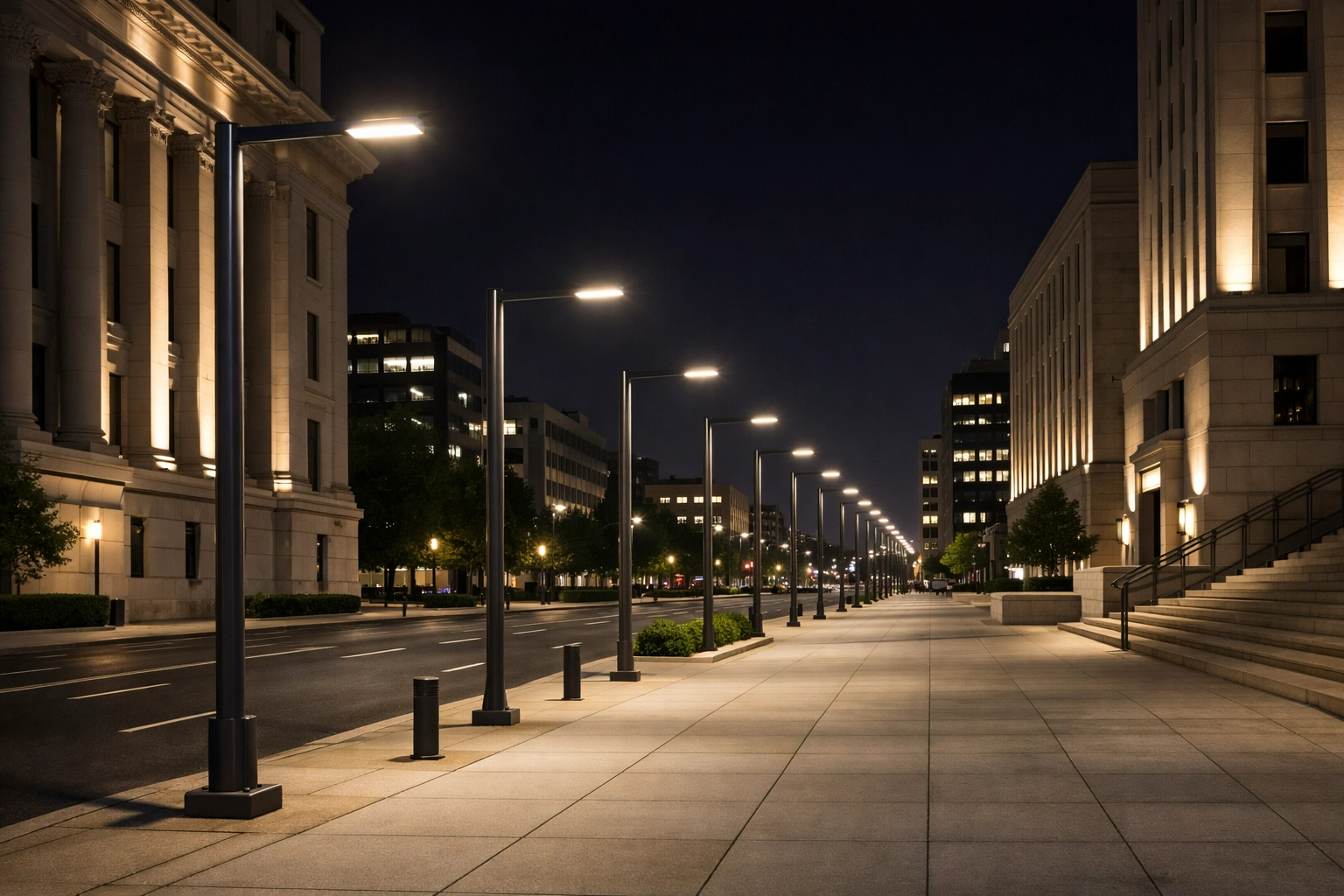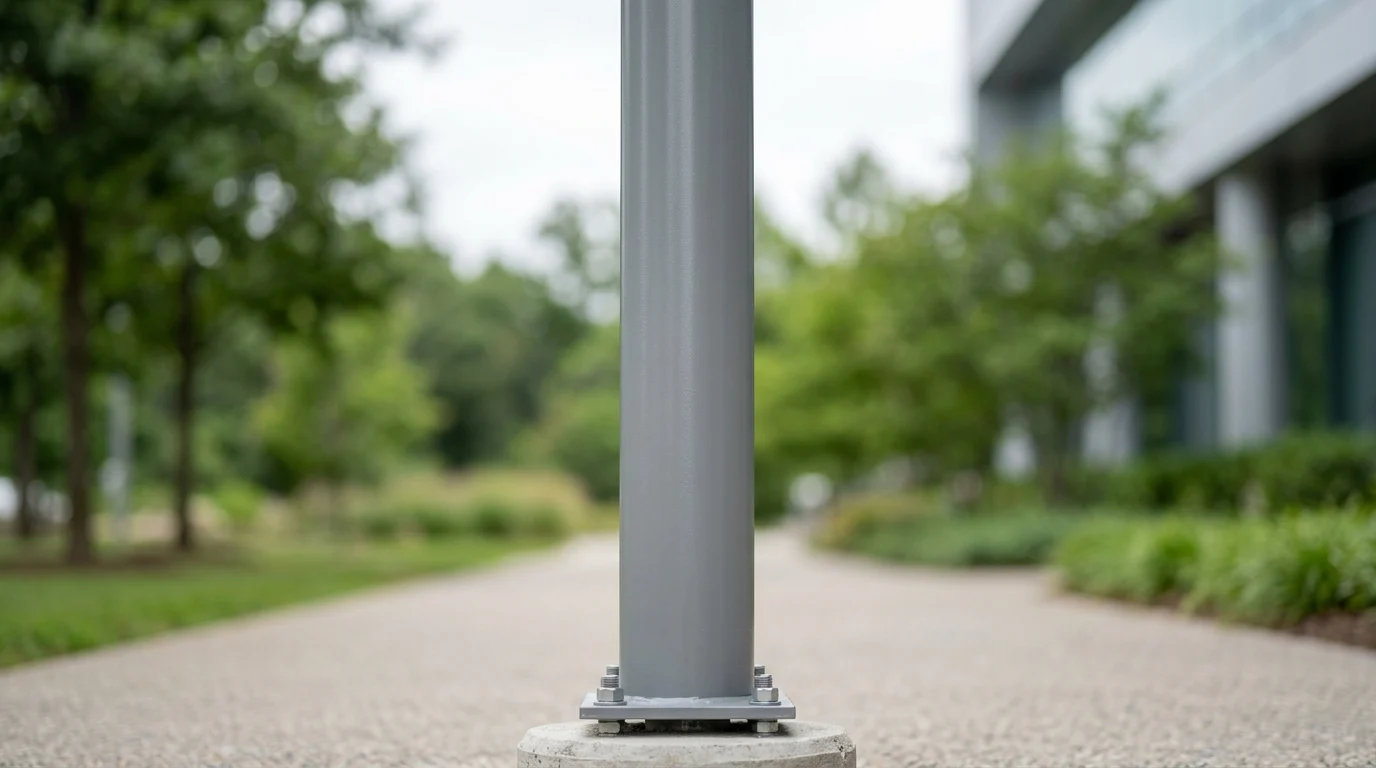
Introduction
For poles exposed to years of sun, moisture, pollution, and temperature swings, the choice of coating affects both appearance and maintenance costs. This comparison looks at how PVDF and powder coating perform under real weathering conditions, with attention to color retention, gloss loss, chalking, corrosion protection, and long-term durability. Readers will see where PVDF’s fluoropolymer chemistry gives it an edge, where powder coating may still be suitable, and how each option aligns with different project priorities. With that context, the discussion can move from general claims to the performance factors that matter most in field service.
Why PVDF Coating for Poles Matters
Specifying the optimal protective finish for infrastructure is critical to minimizing lifecycle maintenance costs and preserving aesthetic value. PVDF coating for poles stands out as the premier liquid architectural finish, engineered specifically to withstand severe environmental degradation where standard paints fail rapidly. Composed of polyvinylidene fluoride, this high-performance fluoropolymer is recognized industry-wide for its exceptional color retention and resistance to weathering. To meet the stringent AAMA 2605 specification—the highest standard for architectural coatings—these formulations must contain a minimum of 70% fluoropolymer resin by weight. This rigorous formulation standard ensures that municipal lighting, utility structures, and high-mast signage can endure decades of exposure without requiring costly field remediation.
Key performance benefits
The primary advantage of PVDF lies in its carbon-fluorine bond, one of the strongest chemical bonds available in commercial polymers. This dense molecular structure provides unparalleled resistance to ultraviolet (UV) radiation, effectively neutralizing the photo-oxidation process that causes lesser coatings to chalk, fade, and eventually delaminate. Standard factory application requires a minimum dry film thickness (DFT) of 1.2 to 2.0 mils, typically applied over a high-performance, corrosion-resistant epoxy or chrome-based primer. The resulting barrier offers exceptional chemical resistance against airborne pollutants, acid rain, and alkaline materials. Because the resin is inherently inert, it prevents environmental contaminants from penetrating the substrate, thereby maintaining structural integrity and vibrant aesthetic appeal for up to 30 years in the field.
Best-fit environments
Infrastructure deployed in aggressive, high-corrosion climates demands the advanced protective capabilities of PVDF. It is the definitive choice for coastal deployments classified under ISO 9223 as C5-M (very high marine corrosivity), where persistent salt-laden air rapidly deteriorates standard commercial finishes. PVDF coating for poles routinely passes rigorous accelerated weathering protocols, including 4,000 hours of continuous salt spray exposure (ASTM B117) and 4,000 hours of humidity resistance (ASTM D2247) without exhibiting significant blistering, creepage, or loss of adhesion. Furthermore, installations in high-UV index regions, such as the American Sun Belt or desert environments, rely heavily on PVDF to prevent the rapid thermal and photodegradation that routinely destroys standard polyester powder coats within just a few years of deployment.
PVDF vs. Powder Coating for Poles

The technical debate between liquid PVDF and electrostatic powder coating hinges on balancing upfront application costs against long-term durability requirements. While standard TGIC polyester powder coatings dominate the general-purpose utility market, super-durable powder formulations have emerged to bridge the performance gap toward premium liquid coatings. However, fundamental chemical differences dictate their respective limits in field deployments, making direct comparisons essential for accurate specification.
| Feature | PVDF (70% Resin) | Super Durable Powder (Polyester) |
|---|---|---|
| Industry Standard | AAMA 2605 | AAMA 2604 |
| South Florida Weathering | 10 years (min. 50% gloss retention) | 5 years (min. 30% gloss retention) |
| Application Method | Liquid (Multi-coat) | Electrostatic Dry Powder (Single/Dual) |
| VOC Emissions | High (Requires abatement) | Zero / Near-Zero |
| Estimated Cost Premium | Base + 30-50% | Base (Standard baseline) |
Weathering and durability comparison
Weathering performance is definitively quantified through rigorous South Florida exposure testing, which subjects panels to intense UV radiation, high humidity, and salt air. PVDF coating for poles achieves full AAMA 2605 compliance, demanding that the finish retains at least 50% of its original gloss and exhibits a maximum color change of just 5 Delta E units after ten continuous years of exposure. In stark contrast, super-durable powder coatings typically max out at AAMA 2604 compliance. This lower tier requires only five years of exposure testing with a significantly less stringent 30% gloss retention threshold. Over a 20-year lifecycle, powder-coated poles often exhibit noticeable chalking and color shifting, whereas PVDF maintains a factory-fresh architectural finish.
Material and cost trade-offs
The superior weathering performance of PVDF requires a more complex, multi-stage application process. It mandates a specialized primer, a color topcoat, and sometimes a clear topcoat, followed by high-temperature curing cycles. This complexity drives up the initial finishing cost by 30% to 50% compared to single-coat powder systems. Furthermore, liquid PVDF contains volatile organic compounds (VOCs), often requiring thermal oxidizers at the application facility to meet EPA emission thresholds. Conversely, powder coating boasts up to 98% transfer efficiency through reclamation and emits zero VOCs, making it a highly economical and environmentally compliant choice. However, powder coatings tend to be more brittle; PVDF’s slight flexibility offers a mechanical advantage in resisting microcracking when tall high-mast poles deflect under heavy wind loads.
How to Choose the Right Coating
Selecting the optimal coating system requires specifiers, civil engineers, and original equipment manufacturers (OEMs) to conduct a thorough lifecycle cost analysis. The decision matrix must elevate total cost of ownership (TCO) above mere initial procurement expenditures, especially for large-scale municipal lighting upgrades or Department of Transportation (DOT) infrastructure contracts where maintenance budgets are strictly constrained.
Evaluation steps for specifiers and OEMs
The evaluation process begins by mapping the specific installation site to its primary environmental stressors. Specifiers must categorize the microclimate using ISO 9223 standards, identifying whether the pole will face C2 (low corrosivity, rural areas) or C5 (very high corrosivity, heavy industrial zones). Next, project engineers should define the required aesthetic and structural lifespan. If the structural design life of a steel pole is 30 years, selecting a coating with a 7-to-10-year aesthetic failure point necessitates factoring in the labor and logistical costs of field repainting. Field remediation requires specialized boom lifts, environmental containment, and traffic lane closures. Consequently, repainting a degraded 30-foot light pole can easily exceed $1,500 to $2,000 per unit, rapidly eclipsing the initial 30-50% factory premium paid for a high-performance PVDF finish.
When to select PVDF or powder coating
Powder coating remains the pragmatic, cost-effective specification for commercial parking lots, residential subdivisions, and interior industrial applications where UV exposure is moderate and the environmental corrosivity class is C3 or lower.
Key Takeaways
- The most important conclusions and rationale for PVDF Coating for Poles
- Specs, compliance, and risk checks worth validating before you commit
- Practical next steps and caveats readers can apply immediately
Frequently Asked Questions
When should I specify PVDF coating for poles instead of powder coating?
Choose PVDF for coastal, high-UV, or prestige projects where color retention and low maintenance matter over 20–30 years. Powder coating suits lower-exposure, budget-driven installations.
How does PVDF perform better in weathering tests?
PVDF meets AAMA 2605 and is tested for 10 years of South Florida exposure with stronger gloss and color retention. Super-durable powder usually aligns with AAMA 2604 and shorter performance thresholds.
Is PVDF coating worth the higher upfront cost?
Often yes for infrastructure with difficult access or long service life. Higher initial coating cost can reduce repainting, maintenance visits, and appearance issues over the project lifecycle.
Can Morelux support custom pole projects with PVDF coating?
Yes. Morelux supports custom steel and aluminum pole projects with engineering input, technical drawings, coating options, and fast quotations for infrastructure and commercial buyers.
What information should I send for a fast PVDF pole quote?
Share pole type, height, material, wind load, base plate or embed details, project location, color requirement, and quantity. This helps Morelux provide a quicker, more accurate quote and drawing support.