Introduction
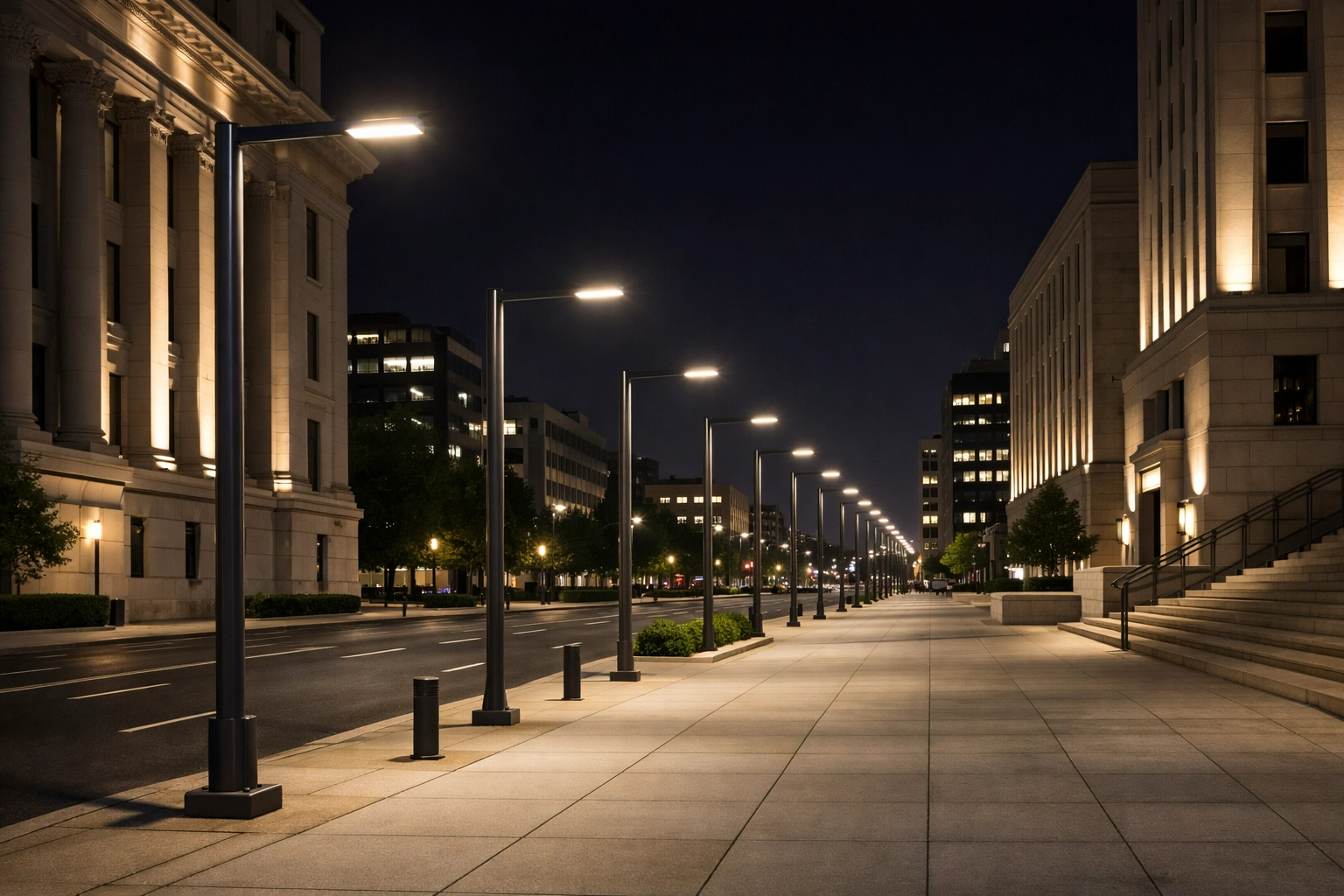
Park lighting choices shape more than nighttime visibility: they affect installation cost, maintenance demands, resilience during outages, and the overall environmental footprint of public spaces. When comparing a solar garden light pole with conventional grid streetlights, the right answer depends on how the park is used, how reliable local power infrastructure is, and what long-term operating model the site can support. This article explains how solar garden light poles work, where they outperform grid-connected systems, and which technical and planning factors matter most when selecting lighting for pathways, gathering areas, and landscape-focused park environments.
Solar Garden Light Poles vs. Grid Streetlights
Municipalities and landscape architects increasingly face a critical infrastructure decision when illuminating public green spaces: choosing between traditional grid-tied streetlights and decentralized solar garden light poles. This choice dictates not only upfront capital expenditures but also long-term operational resilience and ecological impact.
As urban parks evolve into smart, sustainable environments, their lighting systems must meet stringent criteria for energy efficiency, minimal ecological disruption, and reliable illumination.
Defining a solar garden light pole
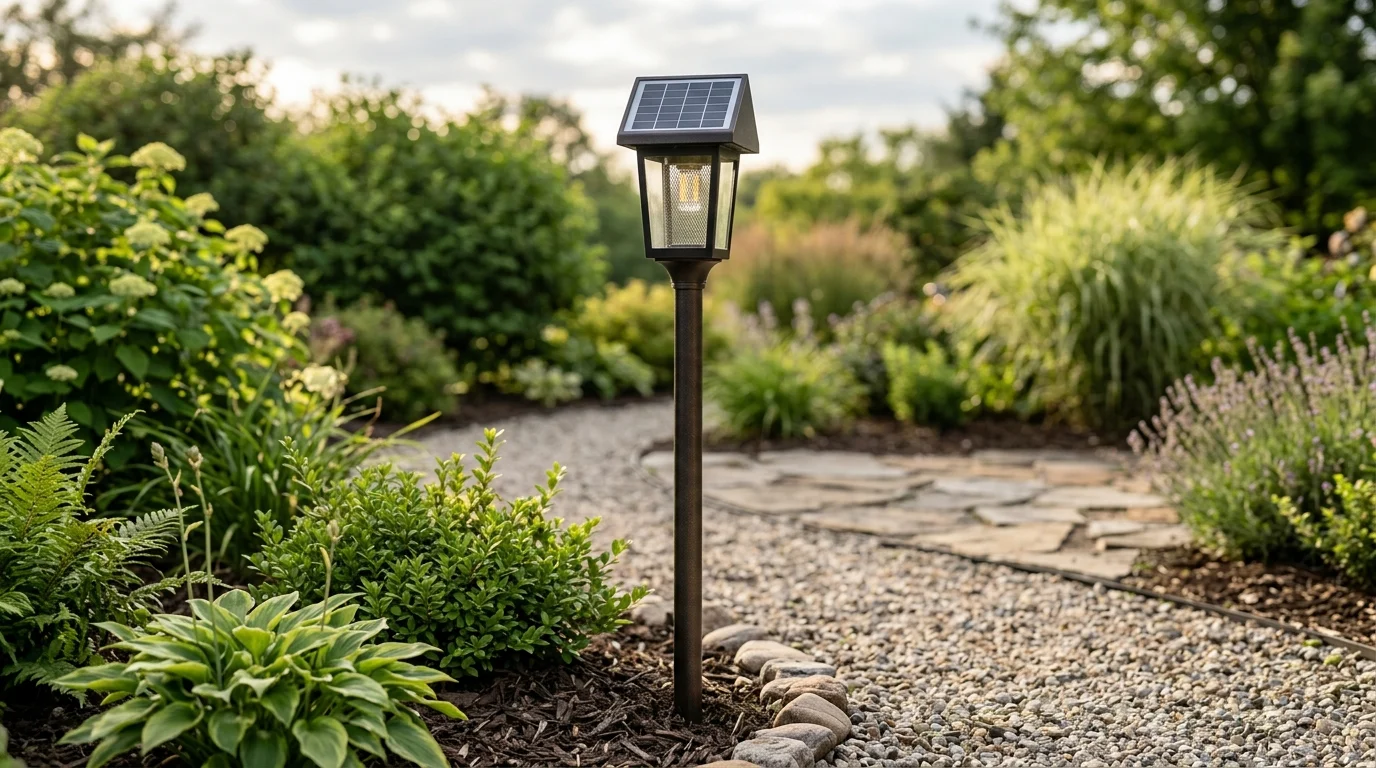
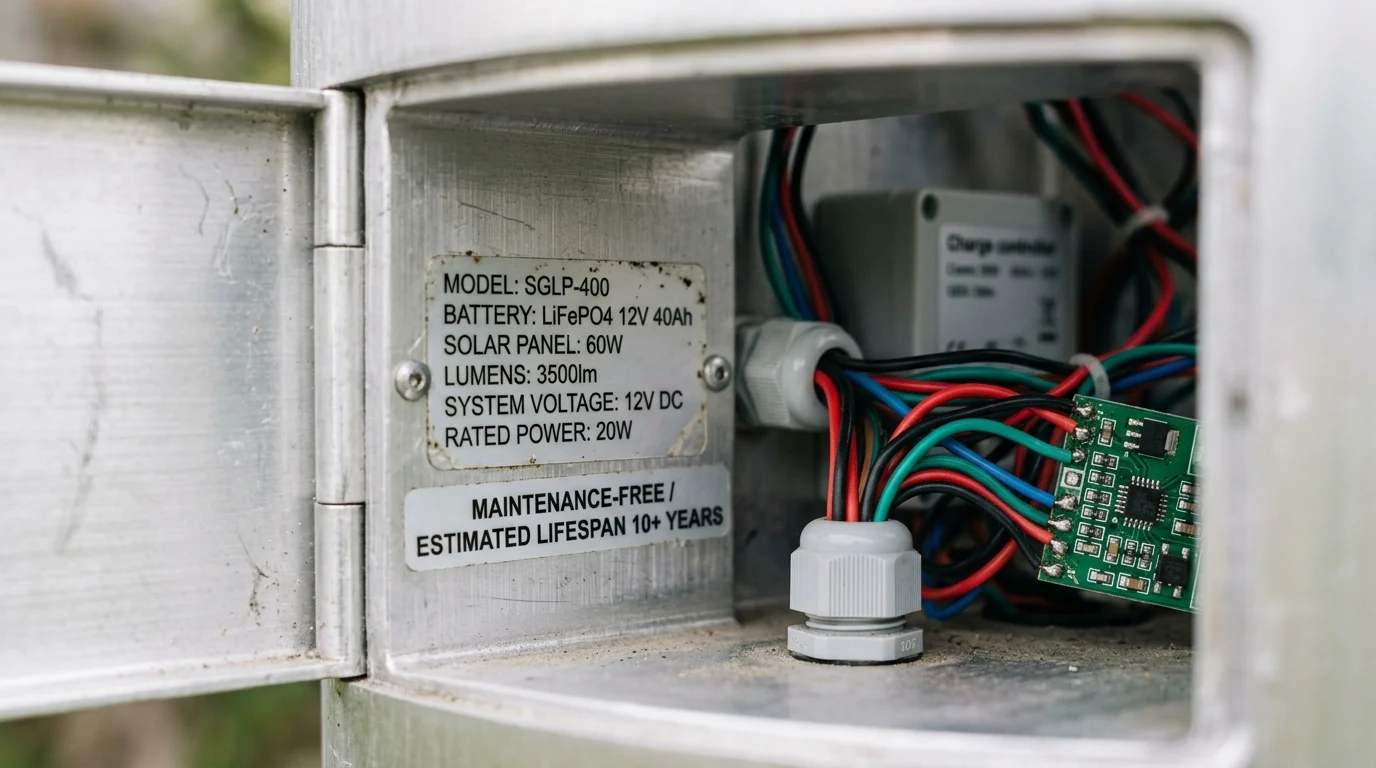
A commercial-grade solar garden light pole is an autonomous illumination asset that integrates a photovoltaic array, an energy storage system, a charge controller, and a high-efficacy LED luminaire. Modern iterations typically utilize monocrystalline solar panels with conversion efficiencies exceeding 21%, paired with deep-cycle lithium iron phosphate (LiFePO₄) batteries capable of operating efficiently in temperatures ranging from -20°C to 60°C.
These poles generally range from 3 to 6 meters in height and are optimized specifically for pedestrian pathways and gathering spaces rather than high-speed vehicular roadways. Advanced models incorporate Maximum Power Point Tracking (MPPT) controllers to maximize energy harvesting even during suboptimal weather conditions, frequently integrating IoT sensors for remote performance monitoring.
Key park-use factors to assess
Evaluating illumination infrastructure for parks requires analyzing specific environmental and usage variables. Canopy shading is a primary constraint; solar arrays require unhindered direct sunlight to achieve optimal charge cycles, necessitating careful pole placement away from mature trees.
Additionally, public park fixtures demand high durability against environmental degradation and vandalism. Specifications typically require an impact protection rating of IK08 or higher, alongside an ingress protection rating of IP65 to withstand dust and heavy rain. System autonomy is another critical metric; baseline municipal specifications usually demand 3 to 5 days of backup battery capacity to ensure uninterrupted operation during prolonged overcast periods or winter months.
Technical and Cost Comparison
A rigorous comparison between solar and grid-tied lighting architectures reveals divergent profiles in both infrastructure deployment and lifecycle economics.
While grid-tied systems rely on centralized municipal power distribution networks, solar alternatives operate as highly localized, independent microgrids. This architectural difference fundamentally shifts the financial burden from extensive civil engineering works during initial installation to periodic component lifecycle management during the system’s operational lifespan.
Performance and infrastructure differences
Grid-tied streetlights deliver theoretically unlimited power capacity, supporting high-wattage luminaires (often 100W to 250W) suitable for expansive plazas or adjacent roadways. However, this necessitates extensive subterranean infrastructure, including trenching, conduit laying, and connection to local substations—processes that disrupt existing park landscapes and heavily inflate labor costs.
Conversely, a solar garden light pole typically utilizes lower-wattage, high-efficacy LEDs (15W to 60W) that yield over 150 lumens per watt, which is perfectly adequate for pedestrian safety. The infrastructure requirement is minimal, consisting solely of a localized concrete footing. This eliminates trenching costs, which can easily range from $15 to $40 per linear foot depending on soil composition and hardscape interference.
What a comparison table should include:
To facilitate objective procurement decisions, project managers must utilize a comprehensive evaluation matrix that contrasts capital expenditures against long-term operational costs. Key comparative vectors include infrastructure disruption, energy consumption, and component lifespan.
| Parameter | Solar Garden Light Pole | Grid-Tied Streetlight |
|---|---|---|
| Initial Installation Cost | Moderate to High (fixture) + Low (labor) | Low (fixture) + High (trenching/wiring) |
| Trenching Required | None (0 linear feet) | Yes (Extensive) |
| Energy Cost (OpEx) | $0 / kWh | Prevailing municipal grid rates |
| Maintenance Cycle | Battery replacement every 5-8 years | Centralized grid maintenance, rare fixture failure |
| Typical Efficacy | >150 lm/W (optimized for low power) | 100-130 lm/W |
| Lifecycle Degradation | The battery retains ~80% capacity after 2000 cycles | Minimal degradation of power supply |
When Solar Garden Light Poles Are the Better Choice
Determining the optimal lighting technology requires moving beyond simple cost-per-fixture metrics to encompass holistic site conditions, ecological mandates, and long-term financial modeling.
For many modern park developments, decentralized solar infrastructure represents the most logical deployment strategy when specific environmental and economic thresholds are met.
A practical evaluation process
Procurement engineers must initiate the evaluation process with a rigorous solar site assessment. This involves calculating the regional Peak Sun Hours (PSH); locations averaging greater than 3.5 PSH per day are generally highly viable for solar garden light pole deployments.
Subsequently, geotechnical surveys should inform the cost-benefit analysis of trenching. If a park features shallow bedrock, extensive root systems of protected flora, or challenging topography, the civil engineering costs for grid-tied conduits escalate exponentially, immediately tipping the financial scale toward off-grid solar solutions. Furthermore, evaluating the required lux levels for pedestrian safety—typically 5 to 15 lux for park pathways—confirms whether a solar LED configuration can satisfy local compliance standards. Dark sky compliance is also critical, with solar fixtures often utilizing 3000K color temperatures to minimize blue light pollution.
Best-fit scenarios for parks
Solar garden light poles excel in specific deployment scenarios, notably in environmentally sensitive ecological reserves where trenching would irreversibly disrupt local flora and fauna. They are equally advantageous in retrofit projects for established public parks, allowing municipalities to upgrade illumination without destroying existing hardscapes or closing the facility for extended civil works.
Remote trail segments and expansive peripheral park boundaries, where grid extensions prove cost-prohibitive, also represent ideal use cases. In these optimal scenarios, the complete elimination of trenching and cabling costs, combined with zero ongoing electricity expenditures, often results in a compelling return on investment (ROI) timeframe of 24 to 36 months compared to traditional grid-tied alternatives.
Key Takeaways
- The most important conclusions and rationale for solar garden light pole
- Specs, compliance, and risk checks worth validating before you commit
- Practical next steps and caveats readers can apply immediately
Frequently Asked Questions
When is a solar garden light pole better than a grid streetlight for parks?
Choose solar when the park has good sun exposure, limited access to grid power, or high trenching costs. It is especially practical for pathways, gardens, and remote zones where fast installation and low operating cost matter.
What specifications should buyers check for a park solar garden light pole?
Focus on panel efficiency, LiFePO4 battery type, 3–5 days autonomy, IP65 protection, IK08 impact resistance, pole height, and LED wattage. These factors directly affect reliability, safety, and maintenance cycles in public parks.
How does shading affect solar garden light pole performance?
Heavy tree canopy can reduce charging and shorten nightly runtime. Place poles in open-sun areas and review seasonal shade patterns before procurement to avoid underperforming systems in mature parks.
Can Morelux customize solar garden light poles for municipal park projects?
Yes. Morelux supports custom pole dimensions, materials, finishes, and project-based configurations, with technical drawings and engineer support to match park layouts, lighting targets, and local specification requirements.
How fast can project buyers get a quote and technical support from Morelux?
Morelux emphasizes responsive B2B service, including fast quotes within 24 hours and engineering assistance for drawings, pole selection, and manufacturing details to keep infrastructure sourcing on schedule.