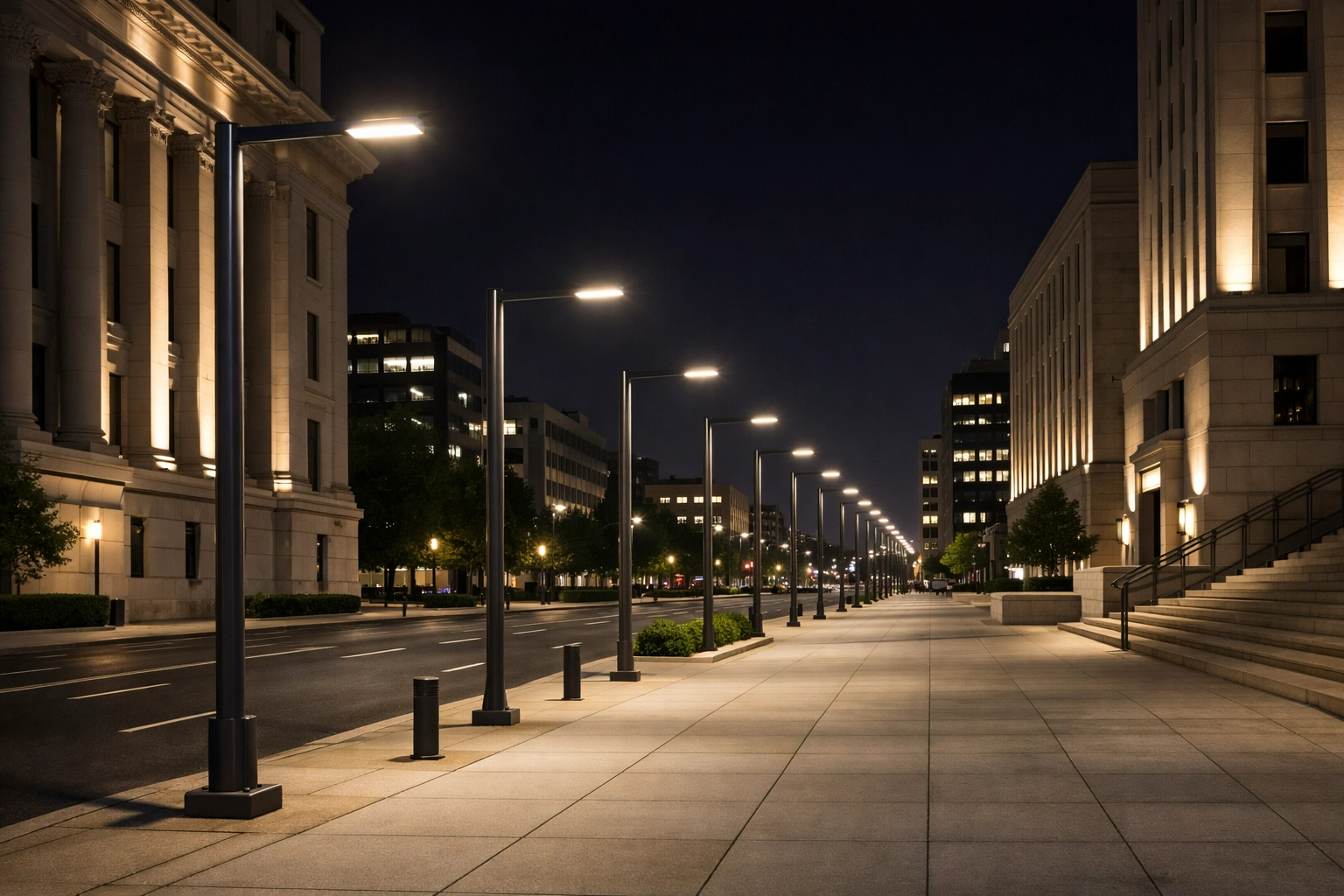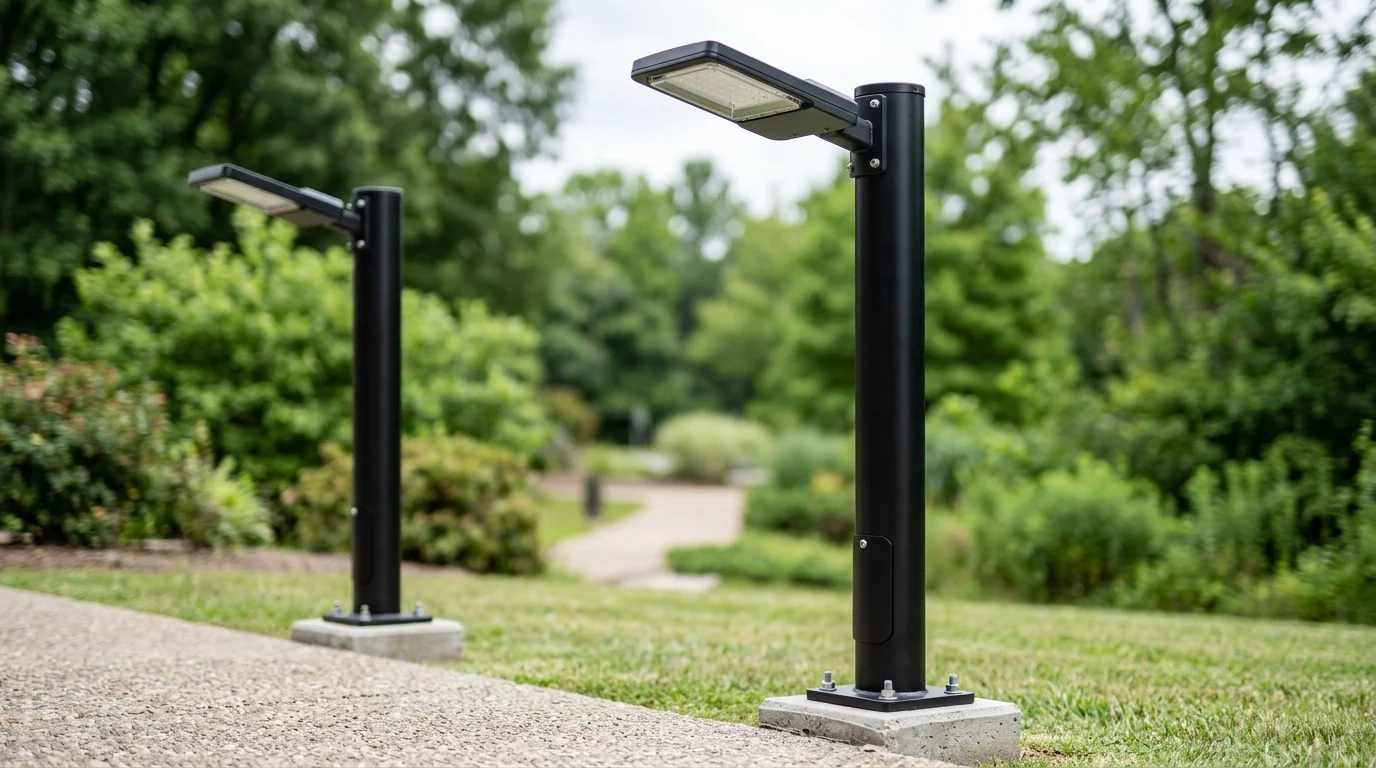
A well-placed porch light post does more than brighten an entry—it defines circulation, improves safety, and adds a visible architectural element before visitors reach the door. For homeowners, commercial sites, schools, and public facilities, the real decision is often whether a simple DIY solar post is sufficient or whether a professionally installed wired system is worth the higher cost. This guide compares practical placement rules, light coverage, safety targets, and cost drivers, from basic fixtures starting near $300 to line-voltage installations that can exceed $2,500 per post. It also highlights when custom pole manufacturing, engineering support, and dependable project quoting become essential.
Planning Standalone Light Posts for a Porch
Integrating standalone light posts into a porch landscape requires a strategic balance between architectural aesthetics and functional illumination. Unlike structural lighting attached directly to a building facade, these independent fixtures define spatial boundaries, guide pedestrian traffic, and serve as primary visual anchors for residential and commercial entryways. Proper placement typically dictates a setback of 4 to 6 feet from the porch steps, ensuring the light envelope adequately covers transition zones without causing harsh glare for individuals seated on the porch.
The decision to install standalone light posts involves evaluating both the physical environment and the overarching design intent. As a homeowner, you must assess spatial constraints, existing landscape features, and the desired lighting performance to ensure the installation yields a measurable improvement in both utility and property valuation.
Curb Appeal and Safety Benefits
The installation of standalone light posts significantly enhances both the curb appeal and the operational safety of a property. Architecturally, these fixtures introduce vertical symmetry and draw the eye toward the primary entryway, which can increase perceived property value in competitive real estate markets. The physical presence of a well-crafted post—whether rendered in cast aluminum, wrought iron, or composite materials—acts as a daytime design element that complements the structural styling of the porch.
From a safety perspective, standalone posts are critical for mitigating liability and preventing accidents. Optimal illumination for pedestrian walkways generally requires maintaining 1.5 to 2.0 foot-candles of light across the surface, as recommended by the Illuminating Engineering Society (IESNA). By achieving this threshold, you effectively eliminate dark zones, highlight elevation changes such as steps or uneven pavers, and provide illumination that may help deter trespassing and property crime.
Standalone Light Posts vs. Porch-Mounted Lighting
When you evaluate standalone light posts against traditional porch-mounted lighting, distinct differences in light distribution and installation complexity emerge. Porch-mounted fixtures, such as wall sconces or flush-mount ceiling lights, are inherently limited by the structure itself; they typically provide a 180-degree forward projection or a localized downward beam. This often leaves the perimeter of the front yard and the initial approach to the steps in shadow.
Conversely, standalone light posts deliver a 360-degree multi-directional light spread, pushing the illumination boundary further into the landscape. This omnidirectional capability bridges the gap between the street and the porch. However, this extended reach comes with increased infrastructural demands, requiring dedicated foundations, subsurface wiring, and precise site planning that porch-mounted fixtures entirely bypass.
DIY vs. Professional Installation Costs
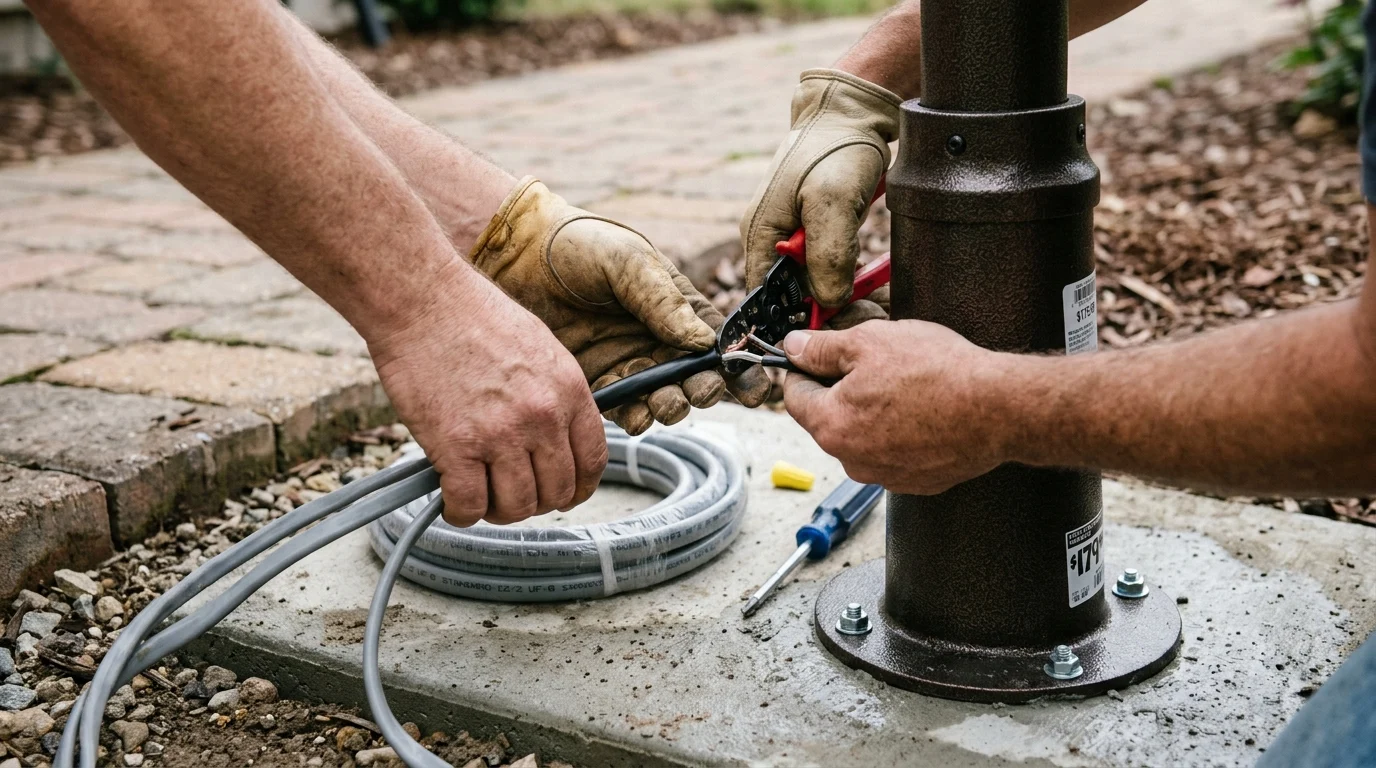
The financial investment required to install standalone light posts varies dramatically based on the chosen power source, site conditions, and the execution method. You must weigh the upfront capital required for materials against the long-term reliability of the installation. A basic DIY solar setup may require an outlay as low as $300, whereas a professionally installed, line-voltage system with extensive trenching can easily exceed $2,500 per post.
Key Cost Line Items to Compare
Comparing the costs of DIY execution versus professional installation requires analyzing both direct material expenses and indirect labor or overhead costs. Professionals bring efficiency, code compliance, and warranty backing, but charge premium labor rates. DIY projects eliminate labor costs but introduce risks regarding electrical safety and potential rework. The table below outlines estimated costs for a baseline hardwired installation, assuming you are using manual labor and already own basic tools.
| Cost Category | DIY Installation (Estimated) | Professional Installation (Estimated) |
|---|---|---|
| Labor Rate | $0 (Sweat equity) | $75 – $150 per hour |
| Trenching | $0 (Manual labor) | $4 – $12 per linear foot |
| Electrical Setup | $50 – $150 (Materials only) | $300 – $800 (Electrician fees) |
| Permits & Insp. | $50 – $100 | $100 – $250 (Handled by contractor) |
| Total per Post | $400 – $800 | $1,200 – $2,800+ |
Fixture, Pole, Base, and Trenching Costs
The physical components of the light post represent a significant portion of the project budget. High-quality fixtures and poles manufactured from extruded aluminum or weather-resistant composites typically range from $150 to $600. The base foundation, which requires concrete footings, anchor bolts, and forms, adds another $50 to $150 in raw materials.
Trenching is often the most variable cost driver in a line-voltage installation. Digging a trench manually saves money but requires immense physical effort, particularly in rocky or clay-heavy soils. Renting a mechanical trencher costs approximately $150 to $250 per day. Opting for this rental pushes your DIY cost higher, bringing it closer to the professional trenching rate of $4 to $12 per linear foot, depending on the terrain complexity.
Hidden Costs: Permits, Tools, and Repairs
Budget overruns frequently occur due to hidden costs overlooked during the initial planning phase. Electrical permits are mandatory for new line-voltage circuits and typically cost between $50 and $200, depending on the municipality. Additionally, you may need to purchase or rent specialized tools, such as conduit benders, wire strippers, and post-hole augers, which can add $100 to $300 to the project total.
Landscape remediation is another easily ignored expense. Trenching inherently destroys turf, severs irrigation lines, and disrupts hardscaping. Repairing a 50-foot trench line with new sod, topsoil, and potential irrigation splicing can add $200 to $500 in post-installation recovery costs. Professionals often sub-contract this repair or include rudimentary backfilling, but full aesthetic restoration usually requires additional capital regardless of who performs the initial installation.
Key Technical Specifications
Specifying the correct technical parameters for standalone light posts ensures the system performs reliably while meeting the aesthetic and functional needs of the porch environment. You must evaluate light output, electrical setups, and environmental protection ratings. Selecting higher-end specifications generally increases material costs and may push a simple DIY project into the realm of professional installation. For instance, any fixture deployed in an exposed outdoor setting should carry a minimum ingress protection rating of IP65 to guarantee defense against dust and low-pressure water jets.
Height, Lumens, Beam Spread, and Color Temperature
The physical dimensions and light output characteristics dictate the efficacy of the post. Standard residential light posts range from 6 to 8 feet in height, which prevents the light source from sitting directly at eye level, thereby reducing glare. For optimal porch illumination, fixtures should output between 300 and 800 lumens per post, providing sufficient brightness without washing out the architectural features of the home.
Beam spread and color temperature further refine the visual experience. Opting for commercial-grade fixtures with precise beam control will increase upfront material costs but provide superior illumination. A wide beam spread (e.g., 120 degrees) is ideal for illuminating broad walkways, while a narrower focus might be used to highlight specific landscape elements near the porch. Color temperature should generally fall between 2700K and 3000K; this warm-white spectrum mimics traditional incandescent lighting, creating an inviting residential atmosphere while minimizing blue-light pollution that can disrupt local wildlife.
Solar, Low-Voltage, and Line-Voltage Options
Selecting the electrical topology is the most consequential technical decision, impacting both installation complexity and long-term reliability.
| Power Option | Voltage | Installation Complexity | Typical Lumen Output | Best Use Case |
|---|---|---|---|---|
| Line-Voltage | 120V | High (Requires deep trenching, permits) | 800 – 2000+ | Primary security lighting, permanent architectural integration. |
| Low-Voltage | 12V / 24V | Medium (Requires a transformer and shallow trench) | 300 – 800 | Accent lighting, DIY-friendly landscape integration. |
| Solar | N/A | Low (No wiring required) | 100 – 300 | Remote locations, areas with 6-8 hours of direct sunlight. |
Line-voltage systems offer the highest reliability and brightness but demand rigorous code compliance. Low-voltage systems utilize a step-down transformer, making them safer and easier to install with shallower burial requirements. Solar options provide ultimate flexibility and zero operational energy costs. However, it is critical to note that solar posts may not provide reliable illumination in heavily shaded porch environments. Furthermore, solar battery capacity degrades significantly in cold weather, meaning winter performance may be unreliable even with adequate daytime sun exposure.
Smart Controls, Photocells, Motion Sensors, and Timers
Modern standalone light posts frequently incorporate smart controls and sensors to optimize energy consumption and enhance convenience. Integrating these smart controls adds $50 to $150 to the initial material costs but reduces long-term energy expenses. Photocells (dusk-to-dawn sensors) are standard inclusions, automatically engaging the circuit when ambient light drops below a specific lux threshold. This ensures the porch area is never dark upon arrival.
For heightened security and energy efficiency, Passive Infrared (PIR) motion sensors can be integrated. A quality PIR sensor features a 120-degree to 180-degree detection radius and can trigger the light to jump from a dim resting state to full brightness when movement is detected within 30 feet. Additionally, astronomical timers and smart-home relays allow you to program specific operational schedules aligned with local sunset and sunrise times, manageable directly via smartphone applications.
Code, Safety, and Site Conditions
Navigating the regulatory and environmental requirements is non-negotiable when installing permanent standalone light posts near your porch. Failure to adhere to local building codes or properly assess site conditions can result in system failure, electrical hazards, or costly mandate-driven removals. A thorough site analysis ensures the infrastructure can withstand both underground conditions and severe weather.
Permits, GFCI Protection, and Electrical Codes
Compliance with the National Electrical Code (NEC) is paramount for line-voltage installations. NEC Article 300 dictates that direct-burial UF-B (Underground Feeder) cable must be buried at a minimum depth of 24 inches to prevent accidental severing during routine landscaping. If the wiring is routed through rigid PVC conduit, the burial depth requirement is reduced to 18 inches, or 6 inches if using rigid metal conduit.
Furthermore, outdoor electrical circuits must feature Ground Fault Circuit Interrupter (GFCI) protection. Whether implemented at the main breaker panel or via a GFCI receptacle upstream of the light post, this protection is critical for interrupting power within milliseconds if a ground fault is detected, thereby preventing lethal shocks in wet outdoor environments. Standard installations typically require a dedicated 15-amp or 20-amp circuit.
Soil, Frost Depth, Drainage, and Foundation Factors
The longevity of a standalone light post relies heavily on its foundation, which is dictated by local soil mechanics and frost depth. In northern climates, ground moisture freezes and expands during winter, causing frost heave that can push improperly anchored posts out of alignment. To counteract this, concrete footings must extend 6 to 12 inches below the local frost line, which can require excavating to depths of 36 to 42 inches.
Soil composition and drainage also play critical roles. Heavy clay soils retain water, increasing the risk of frost heave and accelerating the corrosion of subterranean metal components. Implementing a drainage layer of crushed gravel at the base of the footing, combined with utilizing Sonotube concrete forms, ensures the structural integrity of the post remains uncompromised over its typically expected 15-to-20-year lifespan.
Regional Considerations for Porch Projects
Regional environmental factors heavily influence material selection and structural engineering for porch lighting projects. In coastal environments, the high concentration of airborne salinity rapidly degrades standard steel or powder-coated iron. Projects within 5 miles of the coast require marine-grade 316 stainless steel, extruded aluminum, or UV-stabilized poly-composite fixtures to resist galvanic corrosion.
Similarly, high-wind zones, such as hurricane-prone coastal regions or tornado alleys, require fixtures and poles with certified wind-load ratings. Municipalities in these areas often mandate that standalone posts withstand sustained winds of 110 mph to 130 mph. This necessitates thicker-gauge pole walls, reinforced concrete footings, and specialized anchor bolts to prevent the post from becoming a hazardous projectile during severe weather events.
Choosing DIY or Professional Help
Determining whether to tackle a standalone light post installation as a DIY project or to outsource it to a professional hinges on an honest assessment of the project scope, your technical proficiency, and the chosen voltage system.
Key Takeaways
- Place standalone light posts about 4 to 6 feet from porch steps to improve transition-zone visibility without creating uncomfortable glare.
- Plan for 1.5 to 2.0 foot-candles on pedestrian walkways to reduce dark spots around steps, pavers, and porch approaches.
- A basic DIY solar light post may cost around $300, while a professionally installed line-voltage system with trenching can exceed $2,500 per post.
- Choose standalone posts when you need broader 360-degree illumination beyond the reach of porch-mounted sconces or ceiling fixtures.
- Hire a licensed professional for wired installations that require trenching, dedicated foundations, permits, or electrical code compliance.
- For commercial or municipal porch and entry projects, request technical drawings, material options, and fast project quotes before finalizing pole specifications.
Frequently Asked Questions
How far should a standalone light post be from porch steps?
A typical setback is 4 to 6 feet from the porch steps. This helps illuminate the transition area clearly while reducing glare for people seated on the porch.
Is DIY installation cheaper than hiring a professional?
Yes, especially for basic solar posts, which may start around $300. Professionally installed line-voltage posts can exceed $2,500 per post when trenching, wiring, permits, and foundations are required.
When is professional installation recommended?
Use a professional when the project involves line-voltage wiring, trenching, concrete foundations, code compliance, or multiple posts. This improves safety, reliability, and long-term performance.
What light level is recommended for porch walkways?
Pedestrian walkways generally perform well at 1.5 to 2.0 footcandles, a range often referenced for safe visibility around steps, pavers, and entry transitions.
How do standalone posts differ from porch-mounted lights?
Porch-mounted fixtures usually project light outward or downward from the structure, while standalone posts provide broader 360-degree illumination that can cover walkways, yards, and approach zones.