
Introduction
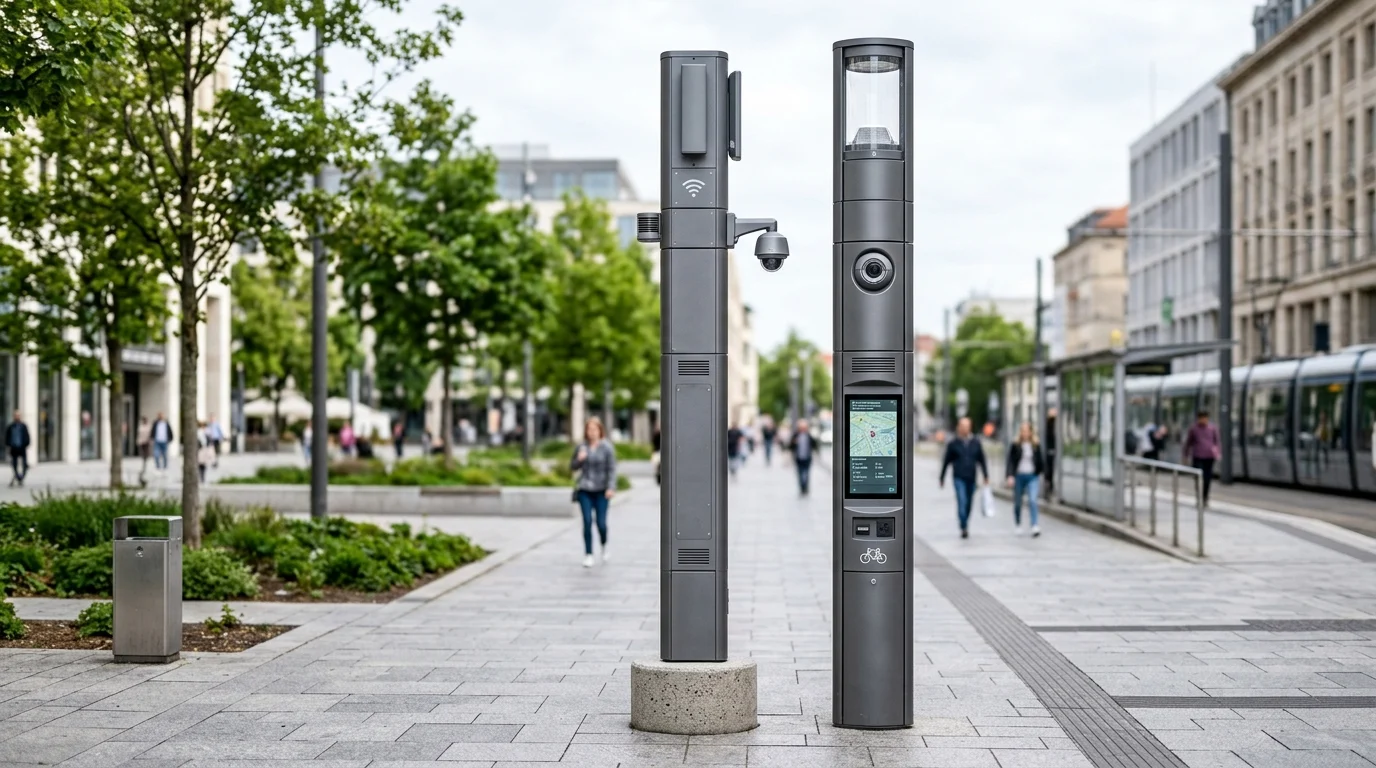
Cities are asking more of every curbside asset as connectivity, sensing, lighting, mobility, and public safety systems compete for limited street space. Modular smart poles address that pressure by combining multiple technologies in a single upgradeable structure, giving planners a cleaner way to expand services without multiplying street furniture. This article explains why that modular approach matters for scalable urban planning, where it delivers practical value, and how it can support both operational efficiency and long-term infrastructure strategy. From densifying 5G networks to integrating sensors and charging equipment, the discussion sets up how smart poles can move from isolated hardware to a flexible platform for city growth.
Why Modular Smart Poles Matter for Cities
If you’ve walked down a busy city block recently, you’ve probably noticed the sheer amount of hardware bolted onto light poles. This includes 5G nodes, traffic cameras, environmental sensors, and EV chargers, all fighting for prime real estate. As urban planners and technologists, we’re realizing that the old way of piecemeal street-level infrastructure just isn’t cutting it anymore.
Key urban pressures driving adoption
We are facing a massive densification problem in our urban cores. Take 5G networks, for example. To provide reliable millimeter-wave coverage, telecom operators need to deploy small cells every 150 to 200 meters. When you multiply that by the demand for public Wi-Fi, air quality monitors, and smart traffic systems, our sidewalks are turning into cluttered obstacle courses. Modular smart poles solve this by consolidating these standalone systems into a single, highly organized footprint.
How to position smart poles as strategic infrastructure
City planners must stop looking at streetlights as mere illumination tools and start viewing them as strategic, revenue-generating real estate. By installing modular smart poles, municipalities can lease out specific ‘slots’ or ‘bays’ to private telecom companies or sensor operators. This shifts the infrastructure from a sunk cost to a multi-tenant utility that can actually pay for itself over its operational lifespan.
What Modular Smart Poles Are and How They Work
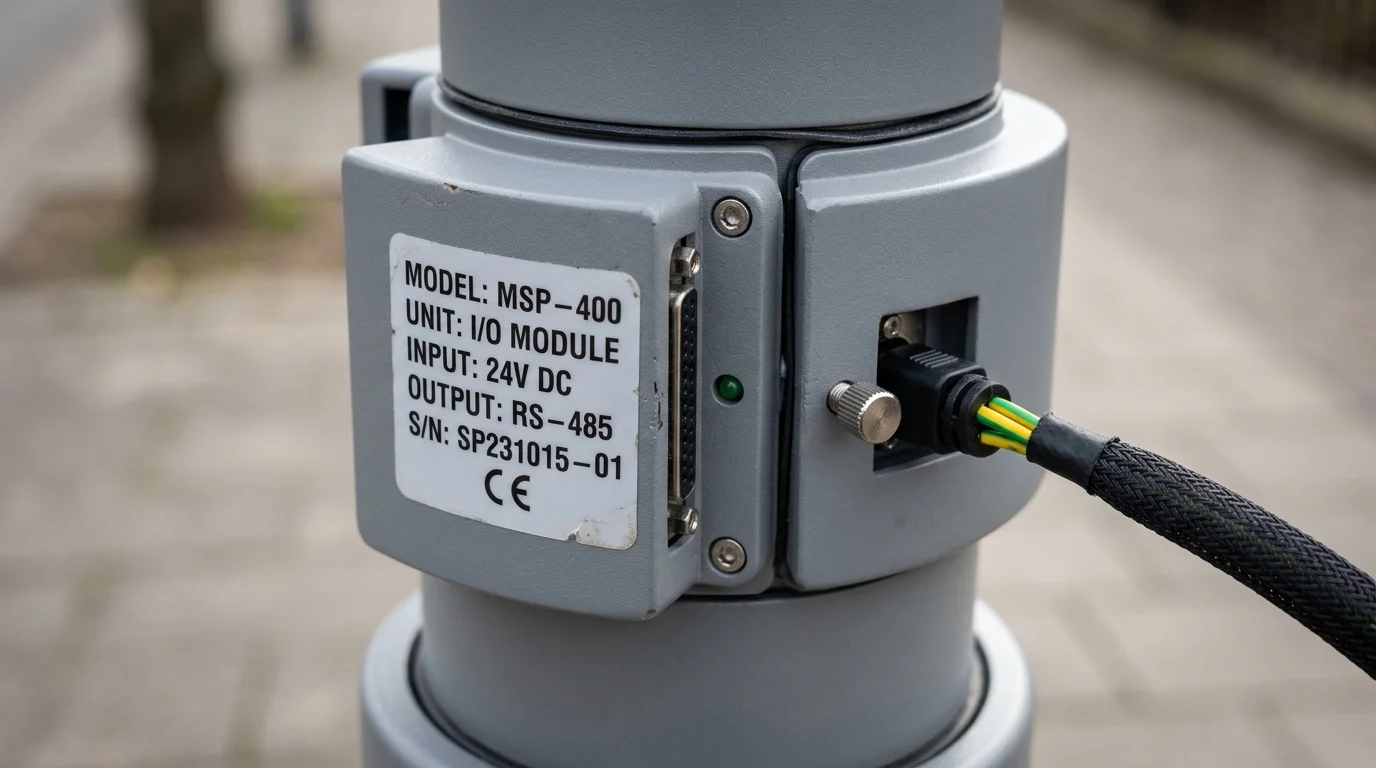
So, what exactly makes a pole ‘modular’? Unlike traditional streetlights that are basically hollow steel tubes with a lamp on top, a modular smart pole is engineered more like a vertical server rack. It’s built from the ground up to house active electronics safely, manage heat, and route power and data efficiently.
Core system layers and components
At the foundational level, these poles consist of three core layers: the structural skeleton, the power and data backbone, and the plug-and-play payload modules. The backbone is critical here. Base power capacities ranging from 3kW to 5kW are ideal, ensuring the pole can handle high-draw equipment like Level 2 EV chargers alongside continuous-draw telecom gear without tripping breakers or requiring immediate electrical retrofits.
How modular design supports upgrades and replacement
The real advantage of true modular design is that 10 years from now, you won’t need to dig up the sidewalk or replace the actual pole to upgrade your tech. Because the pole uses standardized mounting rails (like internal DIN rails) and entirely separate conduits for power and fiber optic lines, upgrading a 2024 camera to a 2034 AI vision sensor is just a matter of swapping a cartridge. The physical steel structure and the underground foundation stay perfectly intact for decades, while the ‘smart’ components evolve seamlessly with the times.
Modular vs Conventional Smart Poles
It’s easy to look at the upfront price tag of a modular system and get cold feet. However, comparing a modular smart pole to a conventional streetlight is like comparing a modern smartphone to a rotary dialer. Let’s break down the actual lifecycle economics and operational realities.
Lifecycle cost and upgradeability
From a CapEx perspective, cities will spend more on day one. But the long-term math heavily favors the modular approach.
| Metric | Conventional Smart Pole | Modular Smart Pole |
|---|---|---|
| Initial CapEx | Base cost benchmark | 20% – 30% higher upfront |
| Hardware Upgrade Cost | Requires new pole or heavy retrofits | 60% lower (module swap only) |
| Structure Lifespan | 15 – 20 years | 30+ years |
| Future-proofing | Low (welded/fixed mounts) | High (plug-and-play slots) |
When we factor in the eliminated labor and materials costs of future upgrades, the ROI on modular poles usually flips positive within the first five to seven years.
Operational flexibility and maintenance
Operationally, modularity changes the game for maintenance crews. If a conventional pole’s integrated sensor fails, it often requires dispatching a bucket truck, blocking a traffic lane for four hours, and paying specialized technicians to cut, splice, and re-weld enclosures. With a modular pole, a standard maintenance worker can swap out a defective module at the base or lower-tier slots in about 15 minutes. This drastically reduces downtime, lowers maintenance overhead, and keeps network reliability exceptionally high.
Technical, Procurement, and Compliance Priorities
You can’t just order these out of a catalog and hope for the best. Procuring modular smart poles requires tight alignment between IT, public works, and legal teams. Missing a single specification can derail an entire deployment.
Essential technical specifications
First, technical specifications must be precise. Cities need to ensure the structural integrity can handle the added weight and wind load of future modules.
| Component | Key Specification | Why It Matters |
|---|---|---|
| Enclosures | IP66 or IP67 rating | Prevents water and dust ingress in sensitive electronics |
| Wind Resistance | Up to 150 mph | Ensures stability when fully loaded with heavy telecom gear |
| Thermal Management | Active/Passive cooling | Prevents 5G radios from overheating during summer peaks |
Don’t compromise on these numbers. Ensuring IP66 ratings for the individual module bays is the only way to protect sensitive IoT investments.
Standards, permitting, and cybersecurity
Then there’s the red tape. You’ll need to navigate local permitting, which often dictates pole height, color, and aesthetic requirements. More importantly, because these poles act as active network nodes, cybersecurity is non-negotiable. Deployments should mandate ISO 27001 compliance for the central data management platform and end-to-end encryption for any telemetry data moving from the pole to the city’s cloud.
Pilot and rollout planning
Never roll out a city-wide deployment on day one. Cities should plan a localized pilot—usually around 30 to 50 poles in a high-traffic commercial district. Run this pilot for at least six months through different weather conditions to stress-test the power draw, data backhaul reliability, and maintenance workflows before committing to a multi-million-dollar master contract.
When Cities Should Deploy Modular Smart Poles

So, when is the right time to pull the trigger? While highly effective, modular smart poles aren’t necessary for every quiet suburban cul-de-sac. They must be deployed strategically where they deliver maximum impact.
Best-fit use cases
The best-fit use cases are high-density downtown corridors, new transit-oriented developments, and smart university campuses. The perfect trigger for deployment is when existing lighting infrastructure reaches its 20 to 25-year end-of-life. If crews have to rip up the pavement to replace rusting steel anyway, that is the exact moment to upgrade to a modular smart pole system. Trenching accounts for a massive chunk of civil works costs, so it is essential to do it once and do it right.
Phasing and contract strategy
Finally, let’s talk about contract strategy. Because of the upfront costs, cities successfully use Public-Private Partnerships (PPPs). In these models, a telecom provider or a private infrastructure fund covers the CapEx of the poles in exchange for a 15 to 20-year master lease agreement for the 5G and fiber rights. Phasing the rollout alongside scheduled road diets or utility upgrades will keep municipal budgets intact while steadily modernizing the city’s digital foundation.
Key Takeaways
- The most important conclusions and rationale for Modular Smart Poles
- Specs, compliance, and risk checks worth validating before you commit
- Practical next steps and caveats readers can apply immediately
Frequently Asked Questions
What makes a smart pole modular?
A modular smart pole uses standardized bays, rails, and separate power/data pathways so devices like cameras, 5G radios, sensors, and chargers can be added or swapped without replacing the whole pole.
Why are modular smart poles better for dense city streets?
They consolidate multiple systems into one organized footprint, reducing sidewalk clutter while supporting 5G, Wi-Fi, traffic monitoring, lighting, and environmental sensing from a single structure.
How do modular smart poles lower long-term costs?
Although upfront costs are typically 20%–30% higher, future upgrades are often about 60% cheaper because crews replace modules instead of poles, foundations, or major wiring.
Can modular smart poles support EV charging and telecom equipment together?
Yes. Designs with a 3kW to 5kW power backbone can handle mixed loads such as Level 2 EV charging, lighting, sensors, and small-cell telecom equipment when properly engineered.
Where can cities or contractors source modular smart poles?
Manufacturers such as Morelux Lamp can help with modular pole solutions, including integrated lighting structures designed for scalable urban deployments and future equipment upgrades.