Introduction
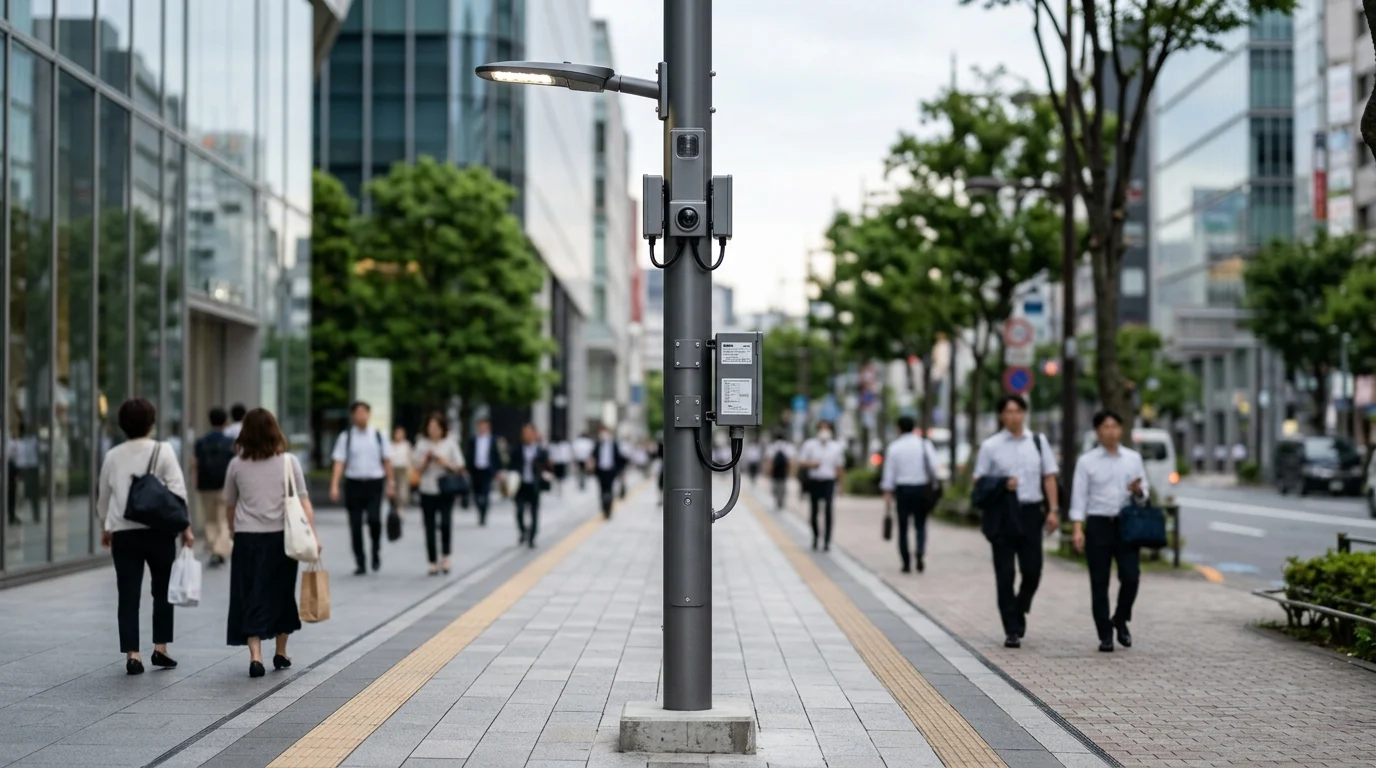
As cities expand smart lighting into a platform for sensors, connectivity, and energy services, interoperability becomes the difference between scalable infrastructure and costly lock-in. This article explains the standards that let light poles from different manufacturers work under a common management system, why those protocols matter for procurement and maintenance, and how they support future upgrades such as EV charging, environmental monitoring, and edge communications.
Why Smart City Light Pole Interoperability Standards Matter
The transformation of municipal infrastructure relies heavily on the deployment of multi-functional urban assets. In this context, adhering to global smart city light pole interoperability standards has emerged as a critical technical prerequisite, serving as the key to breaking down brand barriers. Historically, early adopters of intelligent street lighting and urban sensing networks found themselves locked into proprietary ecosystems. This vendor lock-in severely limited future scalability and inflated long-term maintenance budgets.
By adopting universal protocols and physical interfaces, municipalities can decouple hardware from software, ensuring that a central management system (CMS) can communicate seamlessly with nodes from diverse manufacturers. Industry data indicates that cities deploying strictly interoperable architectures can reduce overall operational expenditures by 30% to 40% over a decade, primarily by enabling competitive bidding for subsequent network expansions and hardware replacements.
Key benefits for cities, utilities, and integrators
For municipalities and utility operators, standardization translates directly into streamlined integration and unified grid management. When light poles utilize standardized communication protocols, integrators can mix and match best-in-class components—such as environmental sensors, EV charging modules, and 5G micro-cells—without requiring custom middleware. This modularity routinely reduces initial deployment and installation time by up to 25%, as plug-and-play interfaces eliminate complex on-site wiring and software provisioning.
System integrators benefit from a drastically simplified supply chain. Instead of maintaining distinct inventories for different proprietary networks, they can source universally compatible gateways and controllers. This flexibility accelerates project delivery and allows integrators to offer highly customized, scalable solutions that meet precise local requirements without assuming the burden of protocol translation.
Main commercial and operational risks
The absence of interoperability introduces severe commercial and operational vulnerabilities, most notably the risk of stranded assets. The physical infrastructure of a smart pole typically boasts a structural lifecycle of 15 to 20 years. In stark contrast, the attached digital components—such as edge computing modules and optical sensors—follow a rapid IT lifecycle of 3 to 5 years.
If a proprietary vendor ceases operations or discontinues a specific product line, network operators face the catastrophic cost of replacing entire luminaire assemblies rather than executing a simple node swap. Furthermore, proprietary networks often lack transparent security patching mechanisms, leaving critical urban infrastructure exposed to evolving cyber threats. Mandating open standards mitigates these lifecycle mismatches, ensuring that hardware can be incrementally upgraded as technology advances.
Core Smart City Light Pole Interoperability Standards
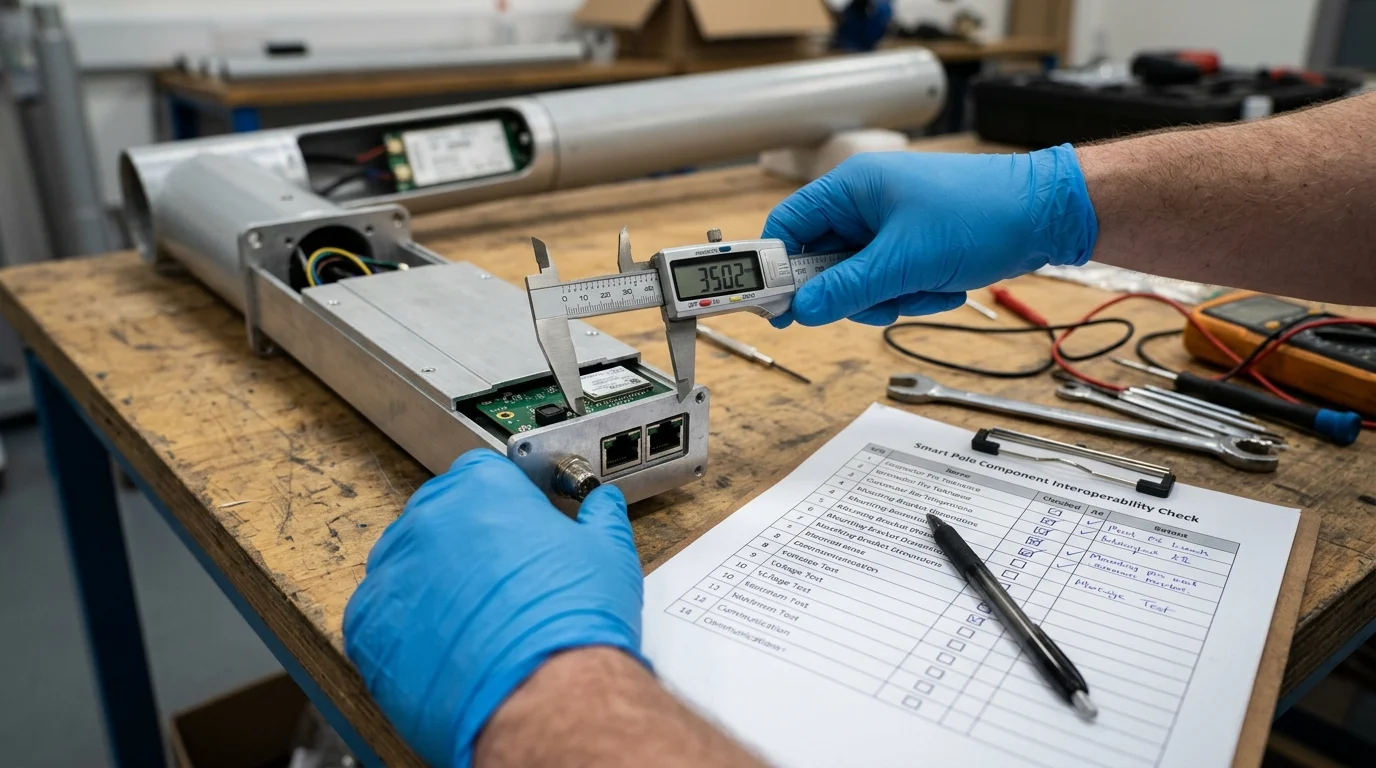
A robust interoperability framework relies on a stack of complementary standards governing everything from the physical socket to cloud-level data exchange. Navigating this landscape requires a precise understanding of which consortiums and protocols govern specific layers of the smart pole architecture.
Standards for interfaces, connectivity, control, power, and cybersecurity
At the physical and electrical layer, Zhaga Book 18 and NEMA ANSI C136.41 dictate the mechanical receptacle specifications for mounting sensor nodes onto luminaires. Internally, the DALI-2 and D4i standards govern intra-luminaire communication and power distribution. D4i, specifically, standardizes the storage of critical asset data and guarantees standard power delivery (typically 24V DC providing up to 3W average power) to luminaire-mounted sensors.
For network and Central Management System (CMS) integration, the TALQ Consortium provides a globally accepted RESTful JSON API protocol. TALQ acts as a bridge, allowing a single smart city dashboard to monitor and control heterogeneous gateway networks. On the cybersecurity front, interoperable networks rely on established IT protocols, utilizing IEEE 802.1x for device authentication and TLS 1.2/1.3 for encrypting data in transit.
| Standard / Protocol | Architecture Layer | Primary Function | Key Specification / Output |
|---|---|---|---|
| Zhaga Book 18 | Physical / Mechanical | Standardized socket for external nodes | 4-pin receptacle, IP66 rating typical |
| D4i (DALI Alliance) | Electrical / Intra-node | Power delivery and asset data storage | 24V DC, 3W average / 6W peak power |
| TALQ Consortium | Application / CMS | Gateway-to-CMS communication | RESTful JSON API, bi-directional control |
| uCIFI | Data Model / Network | Unified device data structures | LwM2M-based, agnostic to LPWAN transport |
How to compare standards and compliance options
Comparing standards requires differentiating between marketing claims of “compatibility” and rigorous, third-party “certification.” True interoperability is only guaranteed when components pass formal conformity tests administered by the respective standard alliances.
For example, a luminaire claiming “DALI compatibility” may still exhibit proprietary data formatting, whereas a strictly “D4i certified” luminaire guarantees standardized energy reporting and diagnostic data structures. Engineers should cross-reference hardware capabilities against unified data models, such as those provided by the uCIFI Alliance, which define standard attributes for streetlights, water meters, and waste bins across any LPWAN transport layer. Evaluating these compliance options ensures that network operators do not inadvertently introduce localized proprietary bottlenecks within a broader open architecture.
How Buyers Can Apply Interoperability Standards

Translating technical standards into actionable procurement strategies is the final hurdle for network operators. Buyers must embed stringent interoperability requirements directly into Requests for Proposals (RFPs) and tender documents to ensure long-term architectural flexibility.
Practical specification and procurement steps
Practical specification begins with eliminating ambiguous language. Phrases such as “open architecture” or “API-accessible” are insufficient and frequently lead to costly integration disputes. Instead, procurement documents must mandate specific conformance levels, such as requiring all luminaires to feature a Zhaga Book 18 receptacle and integrated D4i LED drivers.
At the software level, buyers should specify that the proposed CMS must be TALQ version 2.x certified, demanding proof of bi-directional control capabilities for external gateways. Furthermore, tenders should establish maximum acceptable latency thresholds for control commands (e.g., under 200 milliseconds for localized dimming adjustments) and mandate that all device data payloads adhere to standardized LwM2M object registries. By hardcoding these technical prerequisites, municipalities systematically filter out vendors relying on closed ecosystems.
How to evaluate compliance evidence and total cost
Evaluating compliance evidence requires rigorous due diligence during the vendor selection phase to accurately assess the total cost of ownership and ensure long-term
Key Takeaways
- The most important conclusions and rationale for Global Smart City Light Pole Interoperability Standards: Key to Breaking Down Brand Barriers
- Specs, compliance, and risk checks worth validating before you commit
- Practical next steps and caveats readers can apply immediately
Frequently Asked Questions
What do smart city light pole interoperability standards actually do?
They define common physical, electrical, and data interfaces so poles, sensors, and software from different brands can work together. This reduces vendor lock-in and makes future upgrades easier.
Which standards are most important for smart pole compatibility?
Key ones include Zhaga Book 18 for sockets, D4i and DALI-2 for power and internal control, TALQ for CMS communication, and IEEE 802.1x/TLS for security.
Why should cities choose interoperable smart poles instead of proprietary systems?
Interoperable systems lower long-term costs, simplify replacements, and let cities mix vendors over time. They also reduce the risk of stranded assets if one supplier stops support.
How do interoperability standards help project buyers and integrators?
They speed up installation, cut custom integration work, and simplify sourcing. Integrators can use plug-and-play components and competitive bidding for expansions.
What should buyers verify before ordering smart pole hardware?
Check exact standard compliance, IP rating, power output, CMS protocol support, and cybersecurity features. Ask for technical drawings and compatibility details before purchase.