Introduction
Modern lighting projects are under pressure to finish faster, use fewer crews, and maintain reliable long-term performance. That has pushed foundation design beyond traditional cast-in-place concrete toward direct burial and prefabricated options that can shorten installation windows and simplify site logistics. This article compares the two approaches through the lens of efficiency, examining how each affects labor, scheduling, structural behavior, and compliance. By the end, readers will have a clear framework for judging which foundation system delivers the best balance of speed, cost, and durability for different project conditions.
Why Innovation in Light Pole Foundation Engineering Matters
The evolution of light pole foundation engineering represents a critical shift in urban infrastructure deployment. Historically dominated by cast-in-place concrete, the industry is increasingly adopting direct burial and prefabricated foundation systems to mitigate labor shortages, compress project schedules, and enhance structural reliability. This transition is not merely a change in materials but a fundamental optimization of site logistics and lifecycle asset management.
How do direct burial and prefabricated foundations change installation?
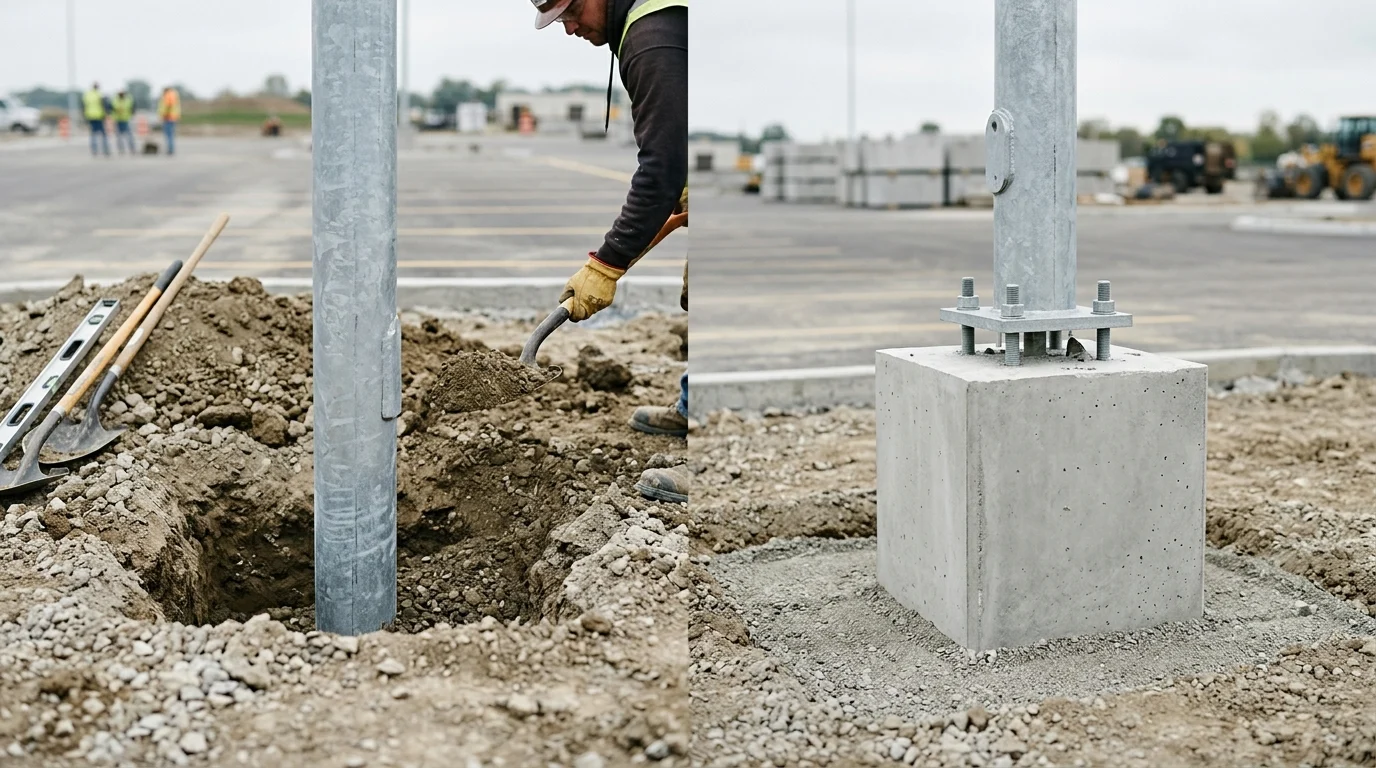
Direct burial and prefabricated systems fundamentally alter the installation workflow by eliminating the concrete curing phase. Traditional cast-in-place foundations require a 7- to 28-day curing period before poles can be safely mounted, creating significant schedule lag. In contrast, prefabricated precast concrete bases, helical steel piles, and direct burial composite poles allow for immediate loading.
This continuous workflow can reduce overall installation timelines by up to 75%, enabling crews to augur, set, and wire multiple poles in a single shift rather than demobilizing and returning weeks later.
Which performance, cost, and compliance factors define efficiency?
Evaluating the efficiency of these systems requires a rigorous analysis of performance, cost, and compliance metrics. Structural efficiency is dictated by the foundation’s ability to resist overturning moments under extreme weather conditions. Engineers must ensure compliance with strict standards, such as the AASHTO LTS-6 specifications, which mandate stability in wind zones exceeding 120 mph.
From a cost perspective, efficiency is measured by the reduction in heavy equipment mobilization and skilled labor hours. Furthermore, geotechnical compliance demands that these modern foundations perform reliably in soils with minimum bearing capacities of 1,500 psf, necessitating careful integration of site data into the specification process.
How Direct Burial and Prefabricated Foundations Compare in Practice
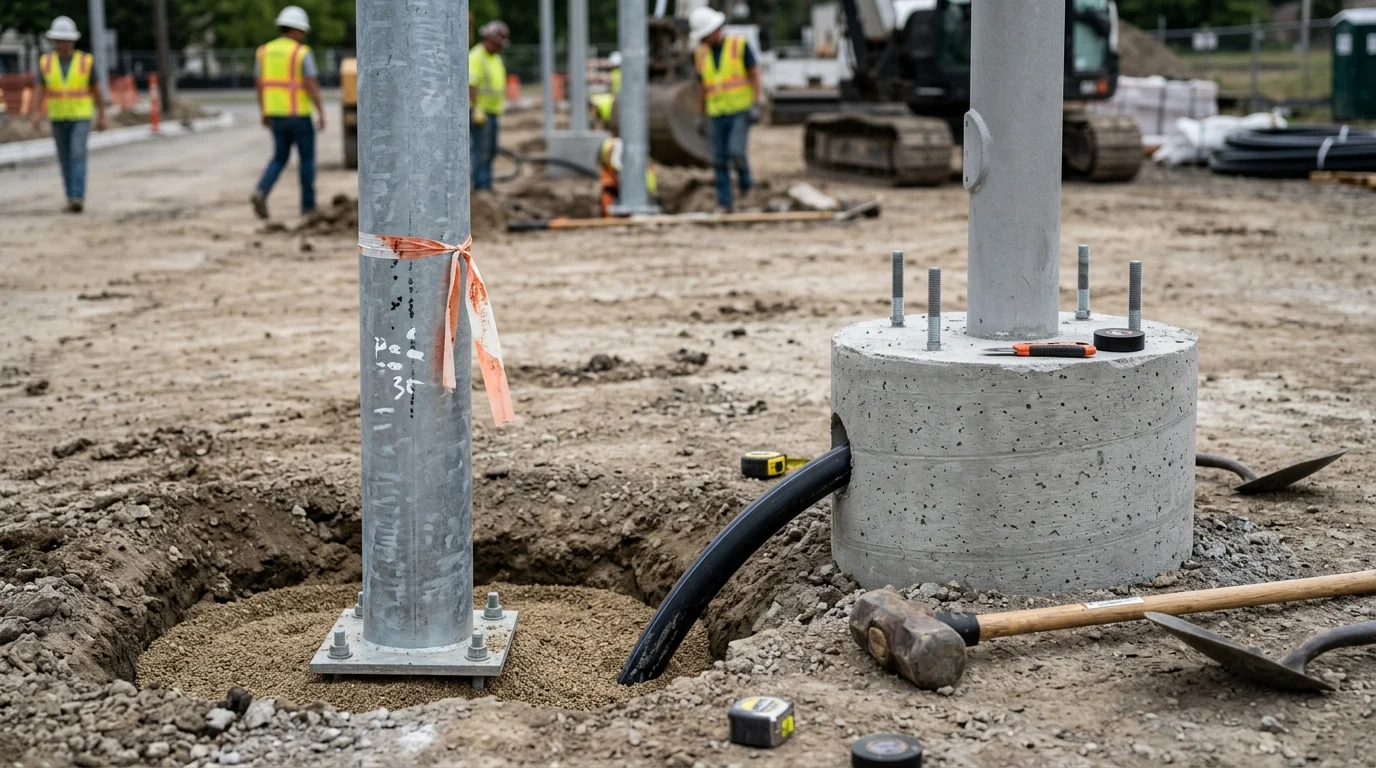
Transitioning from theoretical advantages to field execution reveals nuanced operational differences between direct burial and prefabricated foundations. While both methods bypass the limitations of wet concrete, their structural mechanics and site compatibility vary significantly. Understanding these operational distinctions is critical for matching the foundation technology to the specific geotechnical realities of a project.
What are the key comparison points for structural performance?
Structural performance hinges on how each foundation type transfers loads to the surrounding soil. Direct burial systems rely on deep embedment—typically 10% of the pole height plus two feet—utilizing highly compacted backfill to distribute lateral forces. Prefabricated bases, whether precast concrete or helical steel, feature a base plate and anchor bolt system (often utilizing a standard 11- to 15-inch bolt circle diameter) to secure the pole.
| Foundation Type | Typical Installation Time | Expected Lifespan | Optimal Soil Bearing Capacity |
|---|---|---|---|
| Direct Burial (Composite/Wood) | 30–45 minutes | 30–40 years | > 2,000 psf |
| Precast Concrete Base | 45–60 minutes | 50+ years | > 1,500 psf |
| Helical Steel Foundation | 15–30 minutes | 40–50 years | 1,000–3,000 psf |
This comparative data highlights that while helical systems offer the fastest installation, precast concrete provides maximum longevity, and direct burial remains highly efficient in soils with strong lateral support.
Which site and climate conditions favor each foundation type?
Site and climate variables dictate the viability of each foundation approach. Direct burial is highly effective in cohesive soils with low water tables, where the augered hole remains stable during placement. However, in regions with frost lines exceeding 36 inches, frost heave can compromise direct burial stability unless specialized backfills, such as expanding polyurethane foam, are deployed.
Prefabricated foundations excel in challenging environments. Helical piles are particularly advantageous in high-water-table or contaminated soils, as they generate zero spoils during installation, eliminating the need for expensive hazardous soil removal. Precast concrete is preferred in highly corrosive soils, provided the concrete mix features a low water-to-cement ratio (typically < 0.40) to resist sulfate attack.
Decision Criteria for Specification, Procurement, and Installation
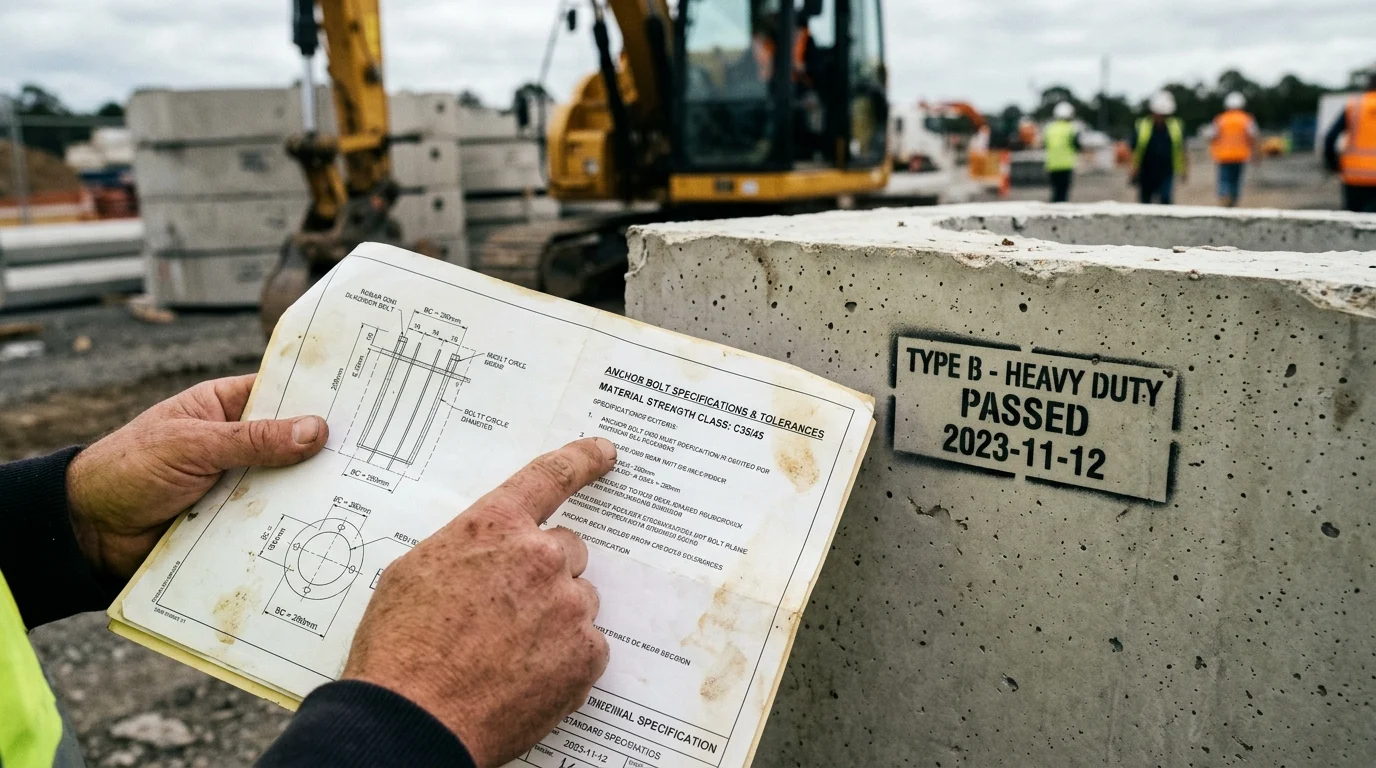
The final selection between direct burial and prefabricated foundations extends beyond structural engineering; it is deeply embedded in procurement strategy and project risk management. Project managers must balance upfront material premiums against long-term operational savings and logistical constraints.
How should project teams evaluate lifecycle cost, logistics, and risk?
Evaluating lifecycle cost requires a holistic view of CapEx and OpEx. Prefabricated systems, particularly precast concrete and helical piles, often carry a material cost premium of 20% to 35% over traditional direct-burial poles. However, this upfront expense is rapidly offset by reducing site labor hours by up to 60%.
Logistics also plays a pivotal role in risk assessment. Precast concrete bases are exceptionally heavy, frequently exceeding 2,000 pounds per unit, which necessitates heavy-duty lifting equipment and increases freight costs. Conversely, direct burial fiberglass poles and lightweight helical anchors reduce freight tonnage and allow for mobilization using standard skid-steers, significantly lowering logistical risks in remote or restricted-access sites.
What practical steps support specification and installation?
Successful specification and installation rely on precise, data-driven execution. The critical first step is conducting a thorough geotechnical survey to confirm soil cohesion, groundwater levels, and bearing capacities. For direct burial, specifications must dictate backfill requirements; crushed stone must typically achieve a 95% standard Proctor density to guarantee lateral stability.
For prefabricated systems, precision in manufacturing is paramount. Project teams must verify that the anchor bolt projection and bolt-circle diameter (BCD) precisely match the luminaire base plates, as a deviation of even 0.25 inches can halt installation. Implementing standardized checklists for torque verification on helical piles and plumb alignment for precast bases ensures that the installed infrastructure meets both design intent and long-term safety standards.
Key Takeaways
- The most important conclusions and rationale for Innovation in Light Pole Foundation Engineering: Efficiency Comparison of Direct Burial and Prefabricated Foundations
- Specs, compliance, and risk checks worth validating before you commit
- Practical next steps and caveats readers can apply immediately
Frequently Asked Questions
What is the main advantage of direct burial foundations?
They install quickly and avoid concrete curing, which can cut project time and labor needs. They work best in stable soils with strong lateral support.
When are prefabricated foundations the better choice?
Use them in high-water-table, contaminated, or logistically difficult sites. Helical piles and precast bases reduce spoil handling and speed installation.
How fast can these foundation systems be installed?
Direct burial typically takes 30–45 minutes per pole, precast bases 45–60 minutes, and helical steel foundations 15–30 minutes.
What soil conditions affect foundation selection?
Soil bearing capacity, moisture, and frost depth matter most. Direct burial needs cohesive soils, while helical systems handle a wider range of conditions.
How can Morelux help with light pole foundation projects?
Morelux can provide customized pole solutions, technical drawings, engineering support, and fast quotes to help match the right foundation system to your project.