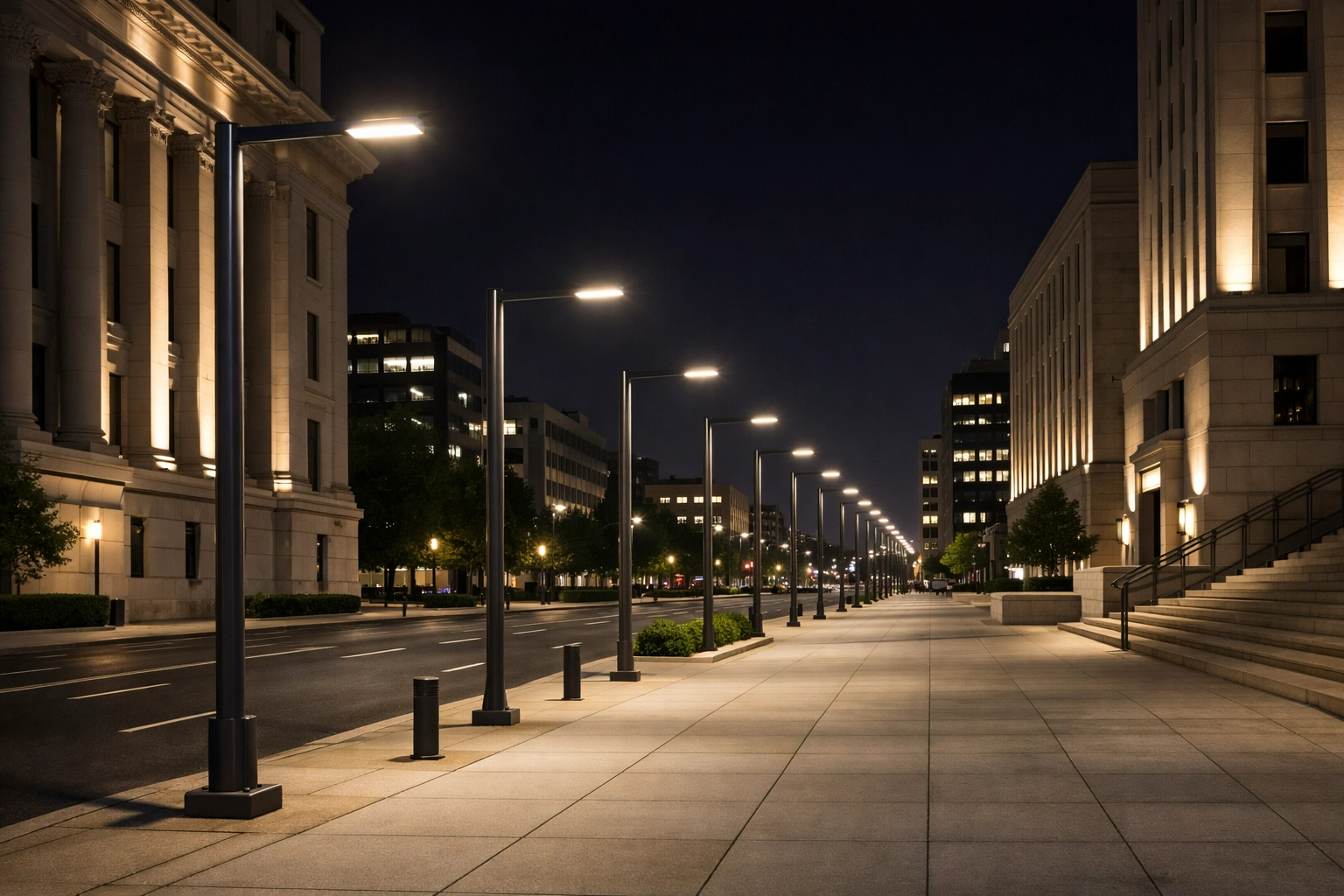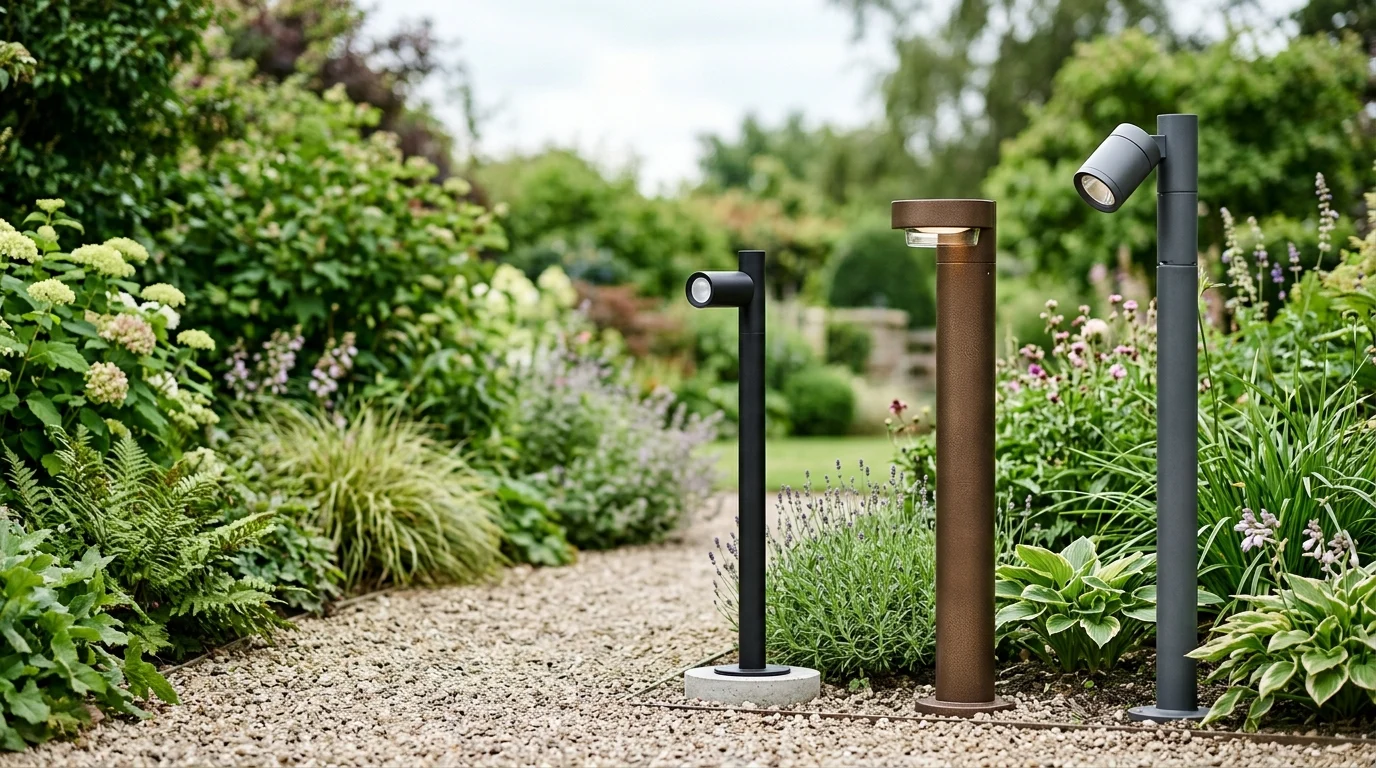
Choosing lighting poles for parks and landscaped spaces affects far more than fixture support. Pole height, material, mounting style, and finish all influence light distribution, pedestrian comfort, long-term durability, maintenance demands, and the overall character of the site. Because poles represent a meaningful share of project cost, poor selection can lead to uneven illumination, corrosion issues, structural risks, or avoidable replacement expense. This article explains the main factors behind sound garden lighting pole selection, including performance, safety, aesthetics, and lifecycle value, so readers can better match pole specifications to pathways, open areas, and broader landscape design goals.
Why garden lighting pole selection matters for park performance
Optimizing garden lighting pole selection is a critical phase in landscape architecture, serving as the physical bridge between photometric design and site aesthetics. Far from being mere structural supports, these poles dictate the distribution of light, influence pedestrian behavior, and must withstand decades of environmental exposure.
From a commercial perspective, garden and park lighting infrastructure represents a substantial capital investment. Poles typically account for 15% to 25% of the total landscape electrical budget. Selecting the wrong specification can result in accelerated corrosion, structural failure under wind load, or excessive maintenance costs that rapidly erode initial procurement savings.
Safety, visual hierarchy, and maintenance
Pedestrian safety relies heavily on illumination uniformity, which is directly governed by pole placement and height. To eliminate hazardous dark spots, park pathways generally require an average maintained horizontal illuminance of 5 to 10 lux. Achieving this without introducing blinding glare requires poles that position the light source outside pedestrians’ direct line of sight while maintaining a tight distribution pattern.
Beyond pure safety, lighting poles establish a visual hierarchy within the landscape. Taller poles signal primary thoroughfares, while shorter bollards or mid-height poles indicate secondary paths or gathering spaces. Maintenance considerations must also be engineered into the selection. Access panels for electrical connections must be positioned high enough to deter casual vandalism—typically at least 0.5 meters above grade—yet remain accessible for technicians without specialized lift equipment.
Project variables to define first
Before specifying hardware, landscape architects and engineers must lock in foundational project variables. The primary constraint is the local climatic zone, which dictates the required corrosion protection class. For example, parks located within 5 kilometers of a coastline typically require C5-M (marine) grade corrosion resistance to survive airborne salinity.
Soil conditions also play a decisive role in pole selection. The soil bearing capacity, measured in kilopascals (kPa), determines the foundation design. Baseline assumptions often start at 100 kPa for standard soils, but softer park terrains may require deeper concrete footings or helical piles to counteract the overturning moment generated by wind loads on the pole and luminaire.
Technical criteria for garden lighting pole selection
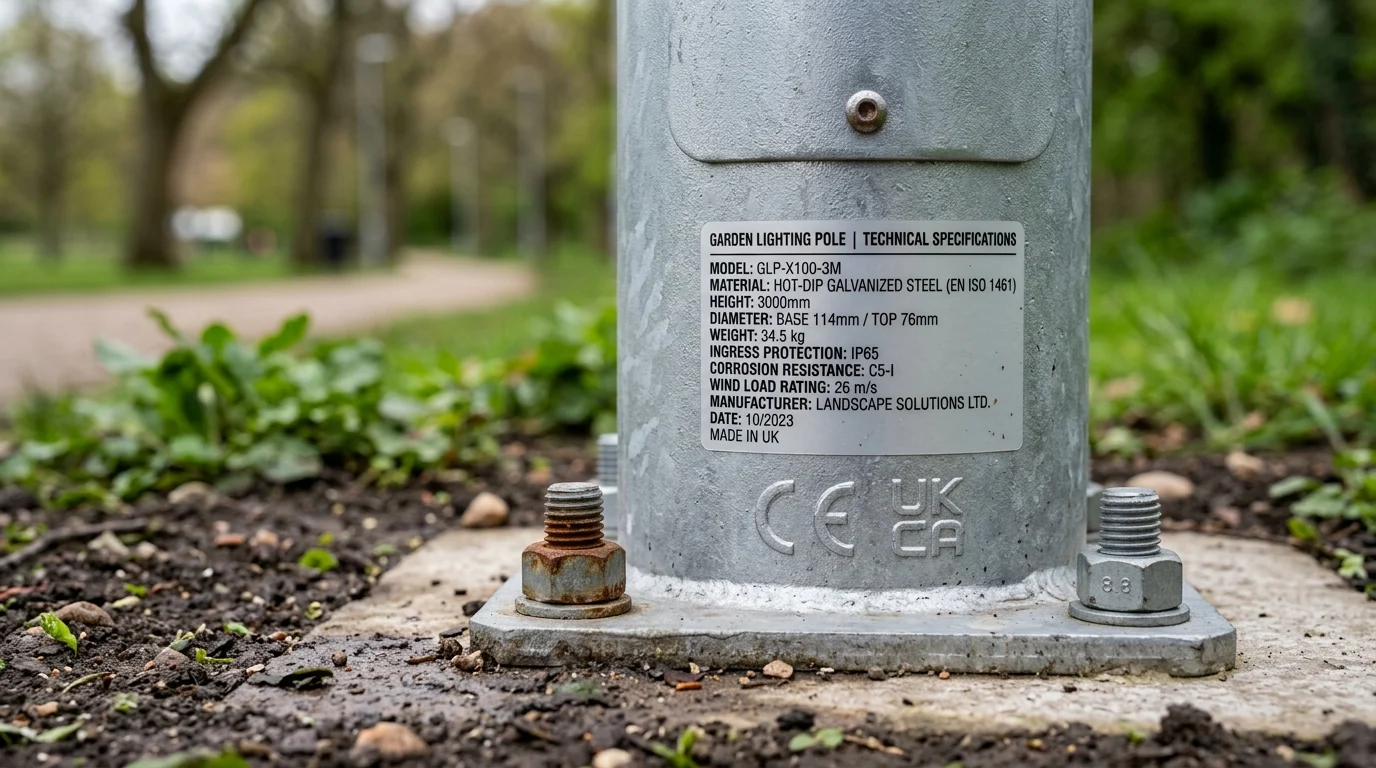
Translating an aesthetic vision into physical infrastructure requires strict adherence to engineering criteria. Procurement teams must evaluate lighting poles based on a rigid set of dimensional, material, and compatibility specifications to ensure long-term viability.
Pole height, spacing, outreach, and foundation loads
Standard garden and pedestrian lighting poles typically range from 3.0 to 5.0 meters in overall height. This height band effectively balances pedestrian scale with photometric coverage. The spacing-to-height ratio is a critical metric, usually targeted at 3:1 or 4:1 to maintain uniformity without over-lighting the space.
Outreach arms, if utilized, alter the center of gravity and the Effective Projected Area (EPA). Engineers must calculate the overturning moment at the base, ensuring the foundation design can handle the combined dead load of the assembly and the dynamic load of wind shear. Foundation bolt circles must be precisely specified to match the base plate dimensions.
Material, finish, and corrosion resistance
Material selection directly dictates the maintenance schedule and service life of the lighting installation. The three primary contenders in commercial landscape lighting are extruded aluminum, hot-dip galvanized steel, and pultruded fiberglass.
| Material Type | Typical Service Life | Yield Strength (MPa) | Corrosion Resistance | Relative Cost Index |
|---|---|---|---|---|
| Extruded Aluminum (6061-T6) | 25+ Years | 240 – 275 | Excellent (Natural Oxide) | 1.4x |
| Hot-Dip Galvanized Steel | 15 – 20 Years | 250 – 350 | Good (Requires Coating) | 1.0x (Baseline) |
| Pultruded Fiberglass | 30+ Years | 200 – 300 | Superior (Non-metallic) | 1.6x |
For steel poles, compliance with the ISO 1461 hot-dip galvanization standard is mandatory, requiring a minimum zinc coating thickness of 85 microns. Powder coating over galvanized steel (often termed a duplex system) provides a secondary barrier against UV degradation and moisture ingress.
Luminaire compatibility, cable routing, and access
Seamless integration between the pole and the luminaire demands exact dimensional matching. The industry standard relies on tenon outer diameters (OD) of 60mm or 76mm, though custom slip-fitter dimensions are occasionally required for specialized architectural fixtures.
Internal cable routing must be smooth and free of sharp burrs that could strip wire insulation during installation. Access doors should feature a minimum ingress protection rating of IP65 to protect terminal blocks and fuses from heavy rain and irrigation sprinkler systems.
How buyers should compare garden lighting pole options
Procurement teams must evaluate competing proposals using a normalized matrix. Comparing lighting poles requires looking past superficial aesthetics to assess structural integrity, standardized ratings, and total lifecycle value.
Comparison criteria for decorative and standard poles
The choice between standard tubular poles and highly decorative assemblies significantly impacts both upfront capital expenditure and long-term maintenance. Standard cylindrical or square extruded poles offer streamlined manufacturing, shorter lead times, and ease of cleaning.
Conversely, decorative poles featuring cast-aluminum bases, fluted shafts, and ornate finials align well with historical or high-end landscape designs. However, these decorative elements can carry a 40% to 60% price premium over standard profiles. Buyers must also consider that intricate castings are more prone to accumulating dirt and biological growth in damp park environments, potentially increasing the frequency of required power-washing.
Structural standards, wind-load ratings, and ingress protection
Wind load capacity is the paramount structural metric for any freestanding pole. Buyers must ensure that the pole and luminaire combination complies with structural standards such as AASHTO LTS-6. In hurricane-prone or high-wind regions, poles must be certified to withstand 3-second gust base wind speeds of 120 mph to 150 mph.
The Effective Projected Area (EPA) rating of the pole must safely exceed the EPA of the chosen luminaire. Additionally, the structural base and access compartments must maintain strict Ingress Protection (IP) and Impact Protection (IK) ratings. A minimum of IK08 is recommended for park environments to resist vandalism and accidental impacts from landscaping equipment.
Sourcing, installation, and logistics risks to manage
Even perfectly specified lighting poles can fail to deliver if supply chain, manufacturing, and installation logistics are mismanaged. Buyers must proactively mitigate risks associated with vendor capabilities, site coordination, and freight handling.
Assessing manufacturer capability and fabrication quality
Evaluating a manufacturer requires looking beyond product catalogs to their actual fabrication and quality assurance processes. Buyers should verify adherence to recognized welding codes, such as AWS D1.1 for steel or D1.2 for aluminum, to prevent catastrophic failure at the base plate weld.
Commercial realities also dictate sourcing constraints. Minimum Order Quantities (MOQs) for custom RAL powder-coated poles generally hover between 20 and 50 units. When assessing a vendor, buyers should demand strict quality control metrics; acceptable defect rates (such as coating inclusions or dimensional deviations) should be contractually capped at less than 1%.
Site conditions, anchor bolt coordination, and transport
Installation delays frequently stem from a disconnect between the pole manufacturer and the site contractor. The most common point of failure is anchor bolt misalignment. To mitigate this, buyers must insist that the vendor supplies rigid, CNC-cut templates rather than relying on paper patterns.
| Logistics Risk Factor | Typical Impact/Delay | Mitigation Strategy | Cost Implication |
|---|---|---|---|
| Anchor Bolt Misalignment | 2-4 days per foundation | Mandate CNC-cut steel templates from the vendor. | $50-$100 per template |
| Freight Damage (Scratches) | 1-3 weeks for recoating | Specify foam wrapping and wooden crating | Adds 5-8% to freight cost |
| Oversized Transport | 10-15 days securing permits | Keep pole lengths under 6.0m or use multi-piece slip-fit designs | Variable depending on route |
Transporting poles requires specialized logistics. Poles exceeding 6.0 meters in length often incur premium freight charges and require dedicated flatbed transport. Careful specification of packaging is essential, as deep scratches penetrating the galvanization or powder coat layer during transit will immediately void corrosion warranties.
Making a defensible final decision
Finalizing the selection requires synthesizing photometric requirements, structural limits, and budgetary realities. A defensible procurement decision relies on a structured, data-driven methodology rather than aesthetic preference alone.
Step-by-step evaluation process
A systematic evaluation process prevents costly late-stage revisions. Step one involves finalizing the 3D photometric simulation, which dictates the exact pole height and spacing needed to achieve a uniformity ratio (Eavg/Emin) of at least 3:1 or 4:1. Step two is the structural calculation, utilizing the luminaire’s EPA to determine the required pole wall thickness and base diameter.
Step three narrows down the material and finish based on the site’s corrosivity category. Finally, step four involves vendor qualification, where procurement teams assess lead times (typically 6 to 10 weeks for commercial orders), warranty terms, and compliance with local municipal electrical codes.
Balancing price, durability, appearance, and service life
Total Cost of Ownership (TCO) must drive the final commercial decision. Evaluating poles purely on the initial unit price is a common procurement error. A hot-dip galvanized steel pole might offer a 20% lower initial purchase price compared to an extruded marine-grade aluminum pole.
However, when factoring in the costs of repainting rust spots or replacing compromised units over a 20-year horizon, the aluminum variant often yields a significantly lower TCO. By balancing initial capital expenditure against documented durability, precise structural ratings, and expected maintenance intervals, buyers can specify garden lighting poles that deliver reliable, safe, and visually appealing performance for decades.
Key Takeaways
- The most important conclusions and rationale for garden lighting pole selection
- Specs, compliance, and risk checks worth validating before you commit
- Practical next steps and caveats readers can apply immediately
Frequently Asked Questions
What pole height is best for park paths?
For most pedestrian paths, 3 to 5 meters is the practical range. It helps achieve even light coverage, supports visual comfort, and fits typical park-scale luminaires without making the space feel overlit.
Which pole material is better for parks: aluminum or galvanized steel?
Aluminum offers strong corrosion resistance and lower maintenance, while galvanized steel is often more cost-effective. For coastal or high-moisture parks, aluminum or a duplex-coated galvanized steel pole is usually the safer choice.
How should pole spacing be planned in a landscape project?
A common starting point is a spacing-to-height ratio of 3:1 to 4:1. Final spacing should be confirmed by photometric calculations to avoid dark spots and excessive glare on walkways and gathering areas.
What corrosion protection should a park lighting pole have near the coast?
If the site is within about 5 km of the coastline, specify higher corrosion resistance, such as C5-M grade protection. For steel poles, request hot-dip galvanizing to ISO 1461 and consider powder coating for added durability.
Can Morelux support custom garden lighting pole projects?
Yes. Morelux provides customized aluminum and steel pole solutions, technical drawings, engineer support, and fast quotations, which helps project buyers align pole dimensions, finishes, and base details with park lighting requirements.