Introduction
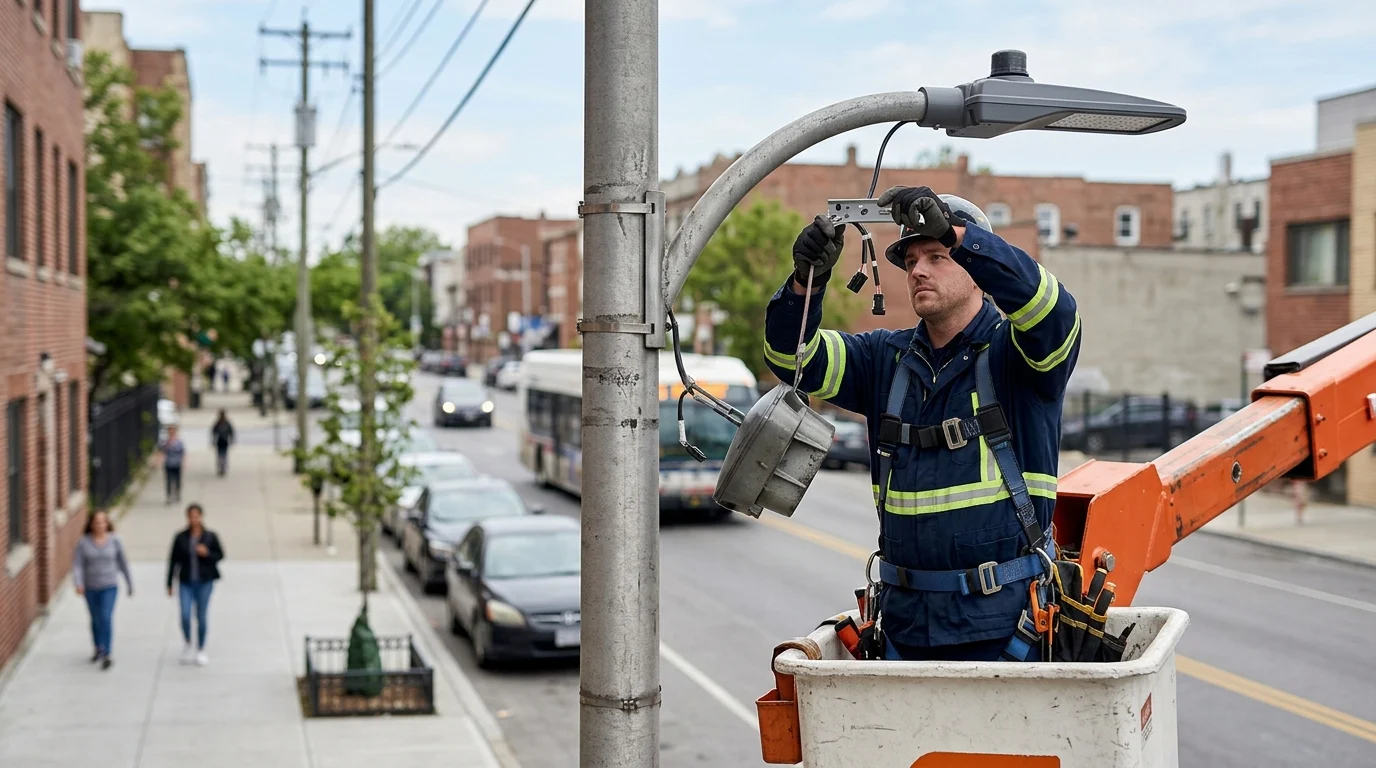
Cities expanding curbside EV charging are increasingly looking at street light pole conversion as a practical way to cut deployment costs and speed up rollout. Instead of building new charging pedestals from scratch, planners can reuse existing poles, wiring paths, and public right-of-way access, often avoiding much of the excavation and grid work that make urban projects expensive. This article explains where the savings come from, what technical and regulatory limits shape feasibility, and why pole-mounted charging is especially relevant in dense neighborhoods with limited off-street parking. It also sets up the tradeoffs cities and operators must weigh before treating converted lighting infrastructure as a scalable charging asset.
Why Street Light Pole Conversion Is Emerging as a Cost-Saving
As municipalities and utility providers race to scale urban charging infrastructure, street light pole conversion has emerged as a structurally and economically efficient alternative to purpose-built pedestals. With conventional DC fast charging installations routinely exceeding $100,000 per site due to extensive civil works and grid upgrades, leveraging existing municipal assets offers a rapid deployment pathway.
Pole conversions drastically reduce capital expenditure by bypassing the need for new grid interconnections and concrete foundations. By utilizing existing electrical conduits and mounting structures, operators can often bring the total hardware and installation cost down to a range of $2,000 to $5,000 per port. This economic advantage is forcing city planners to reevaluate their infrastructure portfolios and prioritize retrofits where technically feasible.
Urban charging gaps and grid constraints
In densely populated metropolitan areas, estimates indicate that between 40% and 60% of residents rely exclusively on on-street parking. This creates a critical gap in home-charging accessibility, often cited as the primary barrier to electric vehicle (EV) adoption in urban centers.
Addressing this deficit through conventional infrastructure is frequently hindered by severe grid constraints. Upgrading local distribution networks to support fleets of dedicated high-power EV pedestals is both costly and slow, often requiring transformer upgrades that can delay projects by years. Street light conversions circumvent this bottleneck by tapping into existing low-voltage circuits, transforming a ubiquitous but underutilized urban asset into a decentralized charging network.
Best-fit use cases for curbside charging
The operational profile of street light pole conversion aligns optimally with long-dwell curbside charging. Because these systems typically deliver Level 2 charging outputs ranging from 3.6 kW to 7.2 kW, they are best suited for residential streets and urban corridors where vehicles remain parked for 8 to 12 hours overnight.
These use cases do not require the rapid throughput of a DC fast charger. Instead, they provide a slow, steady energy replenishment that mimics the convenience of a private residential garage. Ideal locations include high-density apartment blocks, mixed-use zoning districts, and transit-adjacent curbsides where long-term parking is permitted and EV density is steadily increasing.
What Determines Whether a Street Light Pole Can Be Converted
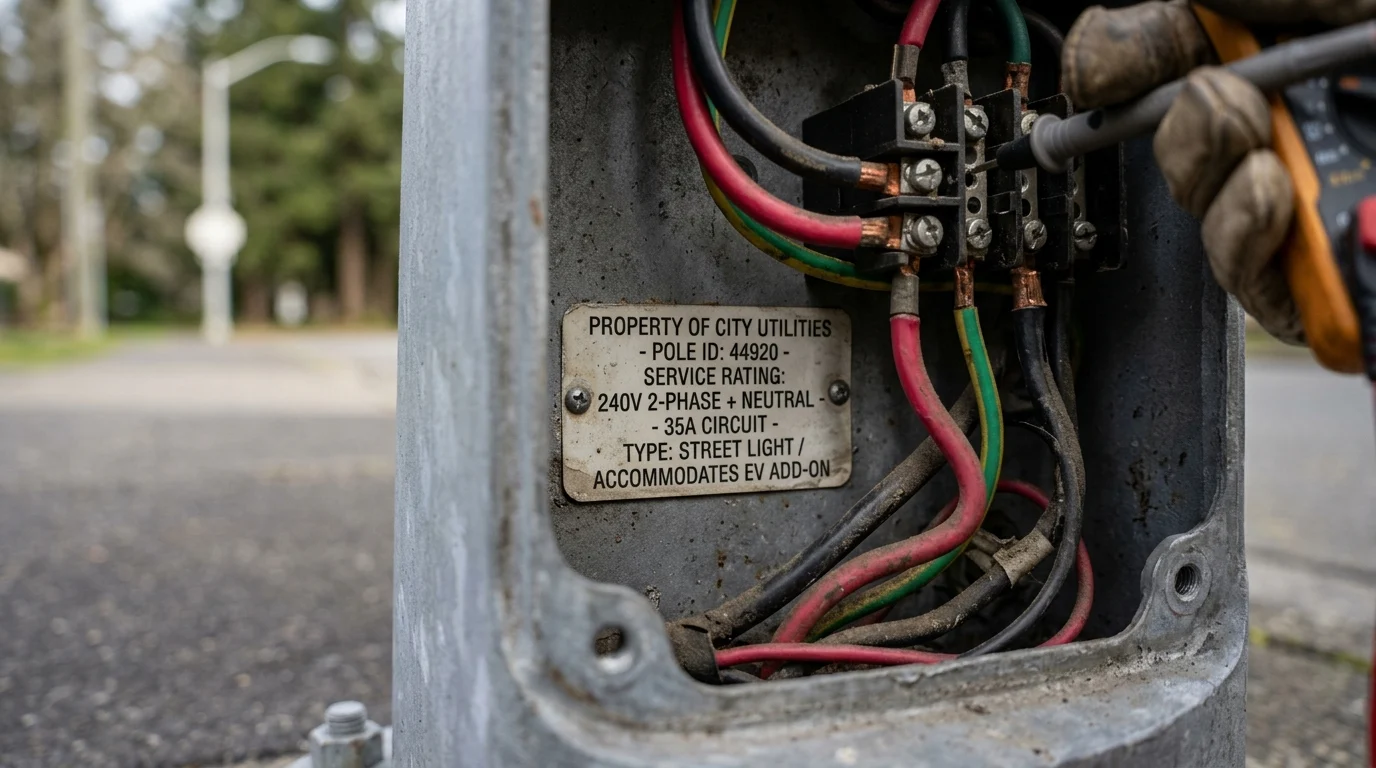
Not every luminaire is a viable candidate for EV charging integration. Evaluating a site requires assessing structural integrity, electrical headroom, and regulatory ownership models. From a structural standpoint, existing poles must possess a minimum 4-inch diameter to accommodate internal conduit routing and must meet local wind load ratings once the new charging hardware is attached.
Furthermore, the material of the pole—whether steel, aluminum, concrete, or fiberglass—dictates the specific mounting hardware and grounding techniques required to ensure long-term safety and stability.
Pole design, feeder capacity, and load management
The primary enabler for this technology is the widespread municipal transition from legacy High-Pressure Sodium (HPS) lighting to energy-efficient LEDs. A traditional HPS fixture draws between 150W and 400W, whereas modern LED replacements consume merely 50W to 100W. This delta frees up essential capacity on the circuit that can be repurposed for EV charging.
However, because street lighting circuits are typically daisy-chained across a city block, dynamic load management (DLM) software is absolutely critical. DLM algorithms monitor the total draw in real-time and safely distribute available amperage—often limited to 20A to 40A per circuit—across multiple active charging sessions. This ensures that the cumulative load never trips upstream breakers or compromises the primary function of the street lights.
Retrofit architectures and metering options
Engineers typically select between three retrofit architectures: socket-based solutions, integrated bollards, or smart cable systems. Socket-based retrofits attach directly to the pole exterior and require users to supply their own cables. This approach demands external metering that meets stringent regulatory standards, such as a 1% accuracy tolerance for revenue-grade billing.
Alternatively, smart cable architectures shift the metrology and billing hardware into the charging cable itself. This minimizes the physical footprint on the pole, significantly reducing the risk of vandalism and limiting the aesthetic impact on historic or highly regulated municipal districts. The choice of architecture ultimately dictates how sub-metering is integrated and how usage data is transmitted to the local utility.
How Streetlight Pole Conversion Compares with Conventional Urban Charging
Comparing street light pole conversion to conventional urban charging reveals stark contrasts in capital allocation and deployment velocity. The most significant financial differentiator is the elimination of civil engineering requirements.
Trenching for new electrical conduit averages $150 to $250 per linear foot in dense urban environments—a prohibitive cost that pole conversions bypass entirely by utilizing existing underground wiring. Understanding these trade-offs is essential for operators looking to maximize their infrastructure budgets.
Key cost drivers and trade-offs
The economics of curbside charging heavily favor retrofits over net-new builds when raw power output is not the primary objective. While conventional Level 2 pedestals offer higher power limits, their installation costs are severely inflated by the need for concrete pads, trenching, and new utility drops.
| Parameter | Street Light Conversion | Conventional Pedestal (L2) |
|---|---|---|
| Hardware & Installation Cost | $2,000 – $5,000 per port | $15,000 – $30,000 per port |
| Civil Works Requirement | Minimal (uses existing conduit) | High (trenching, new concrete pads) |
| Deployment Timeline | 1 – 2 months | 6 – 12 months |
| Typical Power Output | 3.6 kW – 7.2 kW | 7.2 kW – 19.2 kW |
| Footprint | Zero additional footprint | Requires dedicated sidewalk space |
As demonstrated, the reduced capital expenditure of street light conversions allows network operators to deploy three to five times as many charging ports for the same budget, effectively prioritizing network coverage over individual port speed.
Decision factors for comparing deployment options
When comparing these deployment options, municipal planners must weigh space constraints and right-of-way regulations. Conventional pedestals require dedicated concrete foundations that often impede pedestrian pathways, making them difficult to permit in narrow sidewalk zones.
Furthermore, grid interconnection delays for new dedicated services can range from 6 to 12 months. Tapping into existing municipal lighting circuits allows for operational readiness in as little as 1 to 2 months. Decision-makers must balance the need for rapid, high-density deployment against the slightly lower power output inherent to shared lighting circuits.
How to Reduce Risk in Street Light Pole Conversion Projects
Executing a successful street light pole conversion program requires navigating complex multi-jurisdictional frameworks. Mitigating risk hinges on rigorous hardware selection and clear legal agreements.
From an engineering perspective, hardware must focus on extreme environmental durability, requiring NEMA 4X or IP65 enclosure ratings to ensure resilience against urban pollution, extreme weather, and vandalism. Beyond the hardware, aligning the varying interests of public and private entities is the most critical factor in preventing project stalls.
Stakeholder coordination and project roles
The primary administrative hurdle in these projects is the ‘split incentive’ dilemma stemming from fragmented asset ownership. In many jurisdictions, the municipality owns the physical pole, the utility owns the electrical circuit and luminaire, and a third-party Charge Point Operator (CPO) manages the EV charging network.
Establishing clear service level agreements (SLAs) and revenue-sharing models early in the project lifecycle is essential. Stakeholders must clearly define who is responsible for routine maintenance, liability in the event of hardware failure, and how electricity costs are cleanly separated from municipal street lighting bills.
Compliance, safety, and accessibility requirements
Regulatory compliance dictates strict adherence to both electrical and accessibility standards. Under NEC Article 625, EV charging equipment must incorporate specific grounding, fault protection, and ventilation mechanisms, which can be challenging to retrofit into older metal poles.
From an accessibility standpoint, hardware must comply with the Americans with Disabilities Act (ADA). This requires that user interfaces and plug holsters be mounted at an operable height between 36 and 48 inches above the finished grade. Additionally, charging cables must require less than 5 lbs of force to connect and disconnect, ensuring operability for physically impaired users.
Procurement and pilot design best practices
Procurement strategies should prioritize phased integration rather than immediate mass deployment. Best practices dictate launching a localized pilot program of 10 to 50 units before committing to a city-wide contract.
This initial phase allows operators to validate cellular connectivity for billing systems in urban canyons, test dynamic load management software under real-world conditions, and establish maintenance protocols capable of sustaining a target hardware uptime of greater than 97%. Only after these operational metrics are verified should procurement scale to the thousands of units.
When Street Light Pole Conversion Delivers the Most Value
The strategic value of street light pole conversion is maximized when deployed as a complementary layer within a broader urban mobility ecosystem. These systems are not intended to replace high-speed charging hubs, but rather to saturate residential areas with accessible, low-cost energy.
Financial modeling indicates that these installations can achieve a return on investment (ROI) within 3 to 5 years, provided they maintain a daily utilization rate of 15% to 20%. Achieving this metric requires highly targeted deployment strategies based on demographic and geographic data.
Deployment scenarios that justify conversion
These retrofits deliver the highest economic and social value in high-density residential zones lacking off-street parking, as well as in mixed-use commercial districts that experience sustained overnight parking.
By targeting areas with high EV adoption trajectories but low private driveway access, municipalities can ensure equitable infrastructure distribution. This data-driven approach guarantees the baseline utilization rates necessary to attract private CPO investment and operational partnerships.
Criteria for phased rollout and portfolio planning
Scaling a street light conversion program requires a structured portfolio approach, allowing municipalities to manage capital risk while steadily expanding network density.
| Rollout Phase | Target Volume | Key Success Metrics | Estimated Timeline |
|---|---|---|---|
| Phase 1: Pilot | 10 – 50 units | >97% uptime, user billing validation | Months 1 – 6 |
| Phase 2: Expansion | 100 – 500 units | 15%-20% utilization, DLM stability | Months 7 – 18 |
| Phase 3: City-Wide | 1,000+ units | ROI trajectory, grid load balancing | Months 19 – 36 |
By adhering to these criteria for phased rollout, urban planners can continuously refine their technical specifications and user engagement strategies. This ensures that long-term deployments remain resilient, financially viable, and perfectly aligned with the evolving demands of the urban EV driver.
Key Takeaways
- The most important conclusions and rationale for street light pole conversion
- Specs, compliance, and risk checks worth validating before you commit
- Practical next steps and caveats readers can apply immediately
Frequently Asked Questions
How much can street light pole conversion reduce EV charging costs?
It can cut per-port costs to about $2,000–$5,000 by reusing existing poles, conduits, and power feeds instead of building new foundations and grid connections.
Which street light poles are usually suitable for EV charging conversion?
Best candidates have sound structural condition, at least a 4-inch diameter, compliant wind-load performance, and enough spare electrical capacity after LED lighting upgrades.
What charging speed is typical for converted street light poles?
Most conversions support Level 2 charging around 3.6–7.2 kW, making them practical for overnight curbside parking and other long-dwell urban use cases.
Why is dynamic load management important in street light pole conversion?
Street lighting circuits often share limited capacity. Dynamic load management balances charging demand in real time so breakers are not overloaded and lighting service remains reliable.
Can Morelux support customized street light pole conversion projects?
Yes. Morelux can provide custom steel or aluminum pole solutions, technical drawings, engineer support, and fast quotes for municipal and infrastructure charging projects.