Market Opportunity and Use Cases
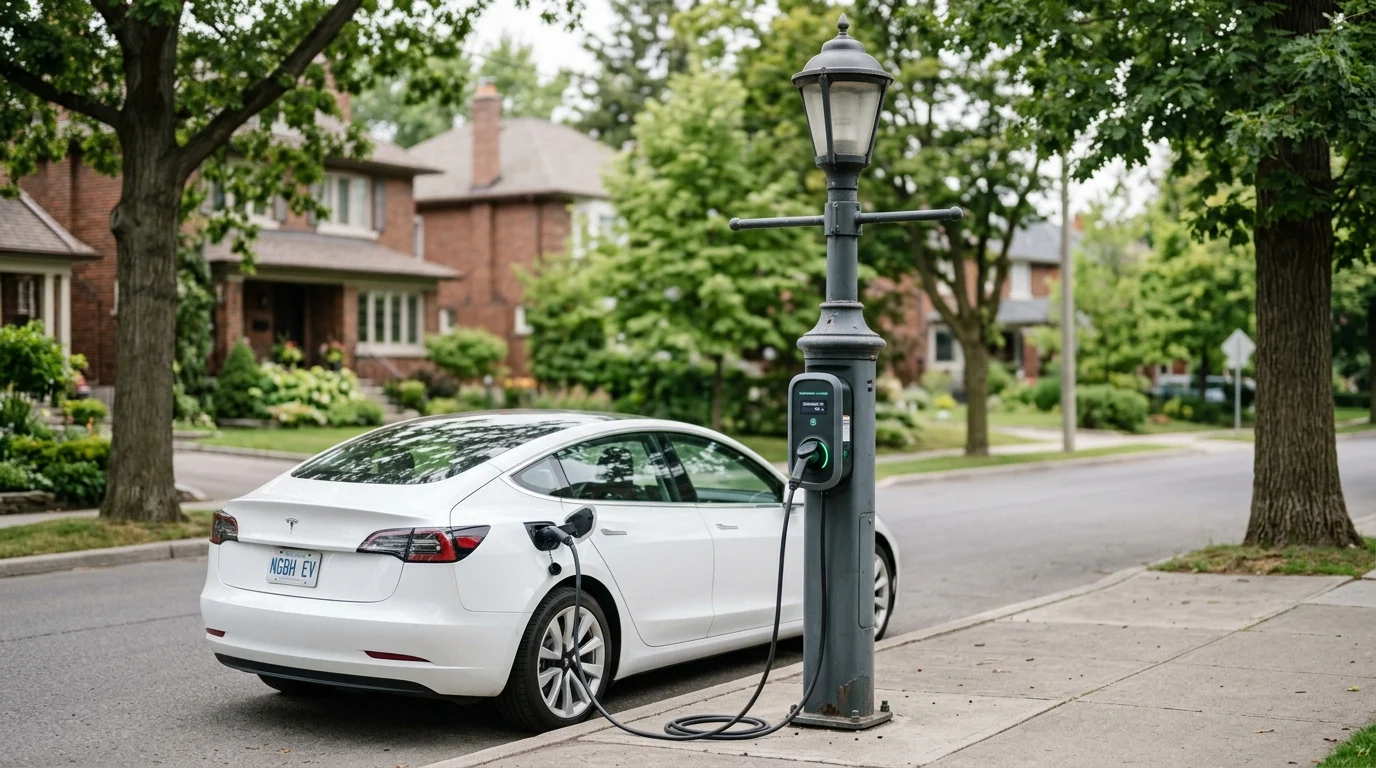
The integration of electric vehicle (EV) charging infrastructure into existing street light poles represents a strategic inflection point for urban electrification. As municipalities and commercial developers seek to expand public charging networks without adding to spatial constraints, utilizing existing right-of-way assets eliminates the need for extensive civil engineering. Retrofitting street lights with EV charging capabilities can reduce installation and trenching costs by 40% to 60% compared to deploying standalone pedestal chargers. For B2B wholesale buyers, electrical distributors, and urban infrastructure contractors, this convergence of smart city lighting and e-mobility opens a highly scalable procurement category.
Buyer Profiles and Commercial Scenarios
Primary procurement profiles for pole-mounted EV chargers include municipal transit authorities, utility companies, and commercial real estate developers managing high-density residential zones. The dominant commercial scenario addresses the “garage-orphaned” EV owner—urban residents lacking dedicated off-street parking. In these environments, buyers typically initiate procurement in pilot phases of 50 to 100 units to test grid resilience and user adoption rates. Furthermore, public-private partnerships (PPPs) frequently drive these initiatives, requiring hardware that seamlessly integrates with municipal billing systems and existing urban aesthetics.
Channel Opportunities for Distributors
For electrical equipment distributors, street pole EV charging integration offers lucrative bundling opportunities. Distributors can move beyond low-margin standalone hardware by packaging charging modules with smart LED luminaire upgrades, IoT environmental sensors, and local load management software. This multi-tiered product offering allows distributors to capture blended hardware margins ranging from 15% to 25%, while positioning themselves as comprehensive smart city solution providers. Value-added services, such as pre-configuring Open Charge Point Protocol (OCPP) backends prior to site delivery, further differentiate distributors in a competitive supply chain.
Technical, Compliance, and Cost Evaluation

Evaluating pole-mounted EV charging hardware requires a rigorous assessment of electrical compatibility, structural load limitations, and total cost of ownership. Because street lighting circuits were not originally designed for sustained high-amperage loads, technical due diligence is paramount to ensure safe and compliant integration without triggering localized grid overloads.
Key Specifications and Standards
Pole-integrated chargers predominantly operate as AC Level 2 units, engineered to match the existing electrical infrastructure of municipal lighting. Key specifications require dynamic load balancing capabilities and output configurations typically ranging from 3.6 kW to 7.2 kW. Voltage compatibility is critical; units must often accommodate 120V, 240V, or 277V inputs depending on regional lighting grid standards. From a durability standpoint, B2B buyers must mandate IP65 or IP67 ingress protection against severe weather, alongside IK10 impact resistance ratings to withstand urban vandalism. Additionally, hardware must be universally compatible with OCPP 1.6J or the newer 2.0.1 standard to guarantee interoperability with third-party network management platforms.
Procurement Comparison Criteria
When comparing procurement options, buyers must weigh the upfront capital expenditure (CAPEX) against installation efficiencies and footprint reduction. Minimum Order Quantities (MOQs) for custom-branded or color-matched enclosures typically start between 20 and 50 units.
| Criteria | Standalone Pedestal AC Charger | Pole-Integrated AC Retrofit |
|---|---|---|
| Average Installation Time | 2 to 4 days (includes trenching) | 2 to 4 hours |
| Civil Engineering Cost | High (concrete pouring, trenching) | Minimal (utilizes existing conduit) |
| Footprint / Spatial Impact | Moderate (requires dedicated space) | Zero (vertical integration) |
| Typical Output Capacity | 7.2 kW to 22 kW | 3.6 kW to 7.2 kW |
| Grid Infrastructure Upgrades | Often required | Rarely required (uses spare capacity) |
Procurement teams must utilize these metrics to justify the initial unit costs of pole-mounted systems, which can carry a 10% to 15% premium over standard wall-box units but yield substantially lower total installed costs.
Sourcing, Deployment, and Scale-Up
Transitioning from isolated pilot projects to city-wide deployments demands a highly resilient supply chain and a structured approach to vendor management. Sourcing integrated charging infrastructure involves vetting manufacturers that possess dual competencies in high-voltage power electronics and ruggedized municipal hardware.
Risk Reduction in Vendor Selection and Rollout
Mitigating risk during vendor selection requires strict adherence to international manufacturing standards. Importers and procurement officers should require ISO 9001 and IATF 16949 certifications from prospective factory partners. Given the exorbitant cost of dispatching maintenance crews to public rights-of-way, hardware defect rates must be contractually guaranteed at under 0.5%. Furthermore, buyers must account for global supply chain fluctuations; average lead times for commercial volumes of specialized pole-mounted units currently range from 8 to 12 weeks. Contracting with vendors who maintain localized inventory hubs or offer modular component replacements can significantly reduce downtime and warranty servicing costs.
Decision Framework for Expansion
A robust decision framework for scaling up involves comprehensive grid capacity analysis and phased deployment scheduling. Procurement teams must collaborate with local utilities to map available circuit capacities across targeted lighting networks, ensuring that adding EV loads will not necessitate premature transformer upgrades. Expansion decisions should be data-driven, leveraging utilization metrics from pilot phases—such as average session duration and kilowatt-hours dispensed per day—to dictate the geographic pacing of subsequent rollouts. Ultimately, successfully scaling pole-integrated EV charging networks hinges on securing reliable hardware pipelines, establishing predictable landed costs, and deploying modular systems that can adapt to future advancements in vehicle-to-grid (V2G) technologies.
Key Takeaways
- Wholesale sourcing and supply-chain implications for EV charging integration: Turning street light poles into neighborhood charging stations.
- Specifications, compliance, and commercial terms buyers should validate
- Actionable recommendations for distributors and procurement teams
Frequently Asked Questions
Why use street light poles for neighborhood EV charging?
They cut trenching and footprint needs by using existing right-of-way assets, often reducing installation costs by 40% to 60% versus standalone chargers.
What charger power is typical for pole-integrated projects?
Most projects use AC Level 2 chargers rated around 3.6 kW to 7.2 kW, which fits many municipal lighting circuits and urban curbside use cases.
What specifications should buyers check before sourcing pole-mounted EV chargers?
Confirm voltage compatibility, dynamic load balancing, IP65 or IP67 protection, IK10 impact resistance, and OCPP 1.6J or 2.0.1 support for backend interoperability.
Can Morelux support custom street light poles for EV charging projects?
Yes. Morelux provides customized steel and aluminum pole solutions, technical drawings, engineer support, and manufacturing for infrastructure buyers needing integrated pole designs.
What is a practical starting order for a pilot deployment?
Many buyers begin with 50 to 100 units for field testing, while custom-branded or color-matched hardware often starts with MOQs of about 20 to 50 units.