
Introduction
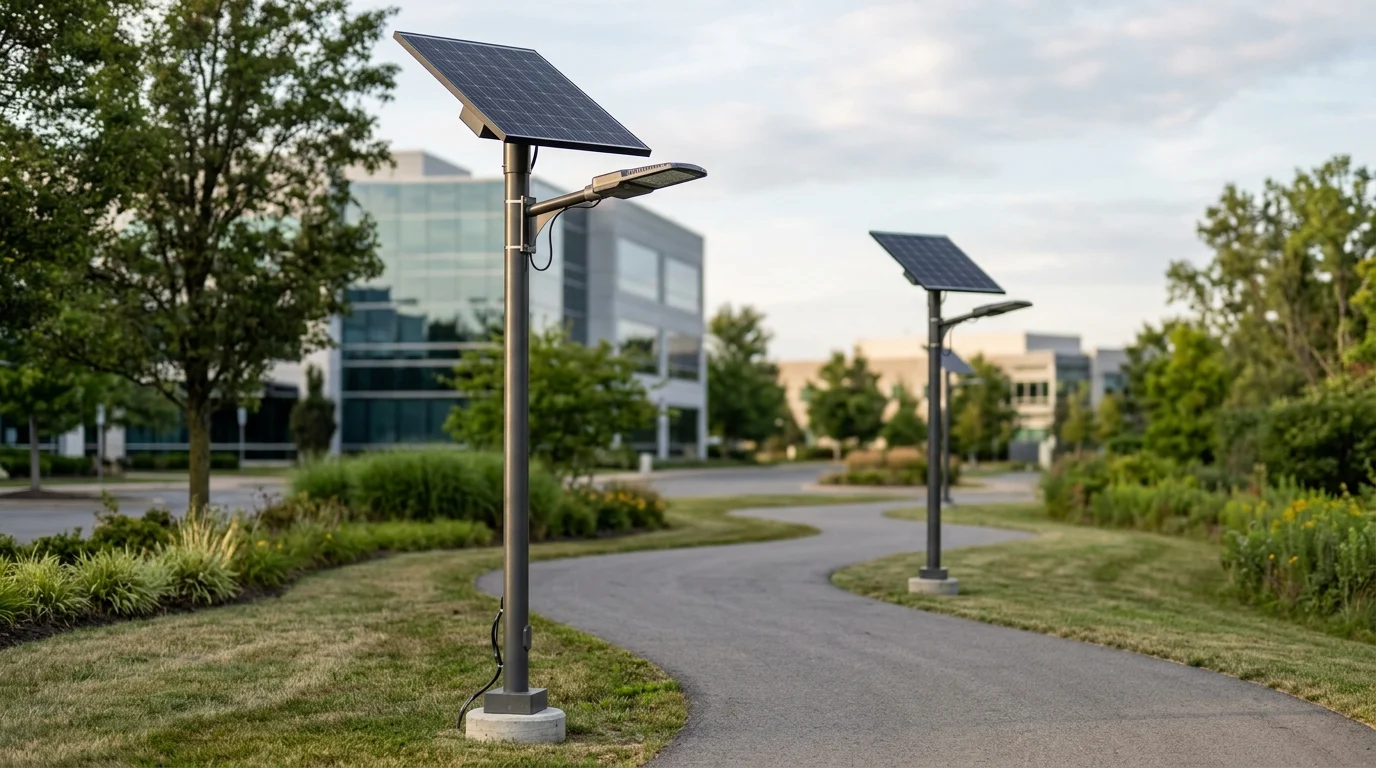
Remote sites often need reliable lighting long before grid access becomes practical or affordable. Solar light poles address that gap by combining generation, storage, and illumination in a self-contained system that can be installed without trenching or utility extension. This article explains why they are a strong fit for off-grid roads, industrial sites, and community infrastructure, with attention to cost savings, deployment speed, operating conditions, and design considerations that affect performance. It also helps clarify where standalone solar poles deliver the most value and what decision-makers should evaluate before specifying them for remote-area projects.
Why Solar Light Poles Are a Strategic Off-Grid Lighting Option
Decentralized illumination has become a critical requirement for remote and off-grid developments. Solar light poles eliminate dependency on centralized power grids, offering a self-sustaining lighting solution engineered to operate autonomously in isolated environments. For project developers and municipalities, these systems transform non-viable lighting requirements into financially feasible deployments.
How they reduce trenching and grid extension costs
Traditional grid-tied lighting in remote areas demands extensive subterranean infrastructure. The financial burden of trenching, backfilling, and laying copper conduit frequently renders grid extensions cost-prohibitive. Industry estimates place commercial trenching costs between $25 and $50 per linear foot, heavily dependent on terrain constraints such as bedrock or remote access limitations. By deploying standalone solar light poles, Engineering, Procurement, and Construction (EPC) firms bypass these foundational expenses entirely. A project requiring one mile of lighting infrastructure can avoid upwards of $130,000 to $260,000 in trenching costs alone, dramatically accelerating the path to project viability while preserving the surrounding topsoil and ecological integrity.
Best-fit projects and operating conditions
Standalone lighting infrastructure excels in isolated environments such as mining camps, rural highway intersections, tribal lands, and remote logistics hubs. Optimal operating conditions depend heavily on localized solar irradiance, typically requiring a minimum of 3.5 Peak Sun Hours (PSH) per day to ensure reliable year-round operation. Furthermore, thermal management dictates system viability in extreme climates. Modern solar light poles frequently utilize Lithium Iron Phosphate (LiFePO4) battery architectures, which sustain operational integrity across a temperature band of -20°C to 60°C. Deployments in regions experiencing prolonged sub-zero temperatures or extensive cloud cover necessitate precise sizing adjustments, scaling photovoltaic (PV) arrays and battery capacities to prevent deep discharge events.
What Buyers Should Compare When Evaluating Solar Light Poles
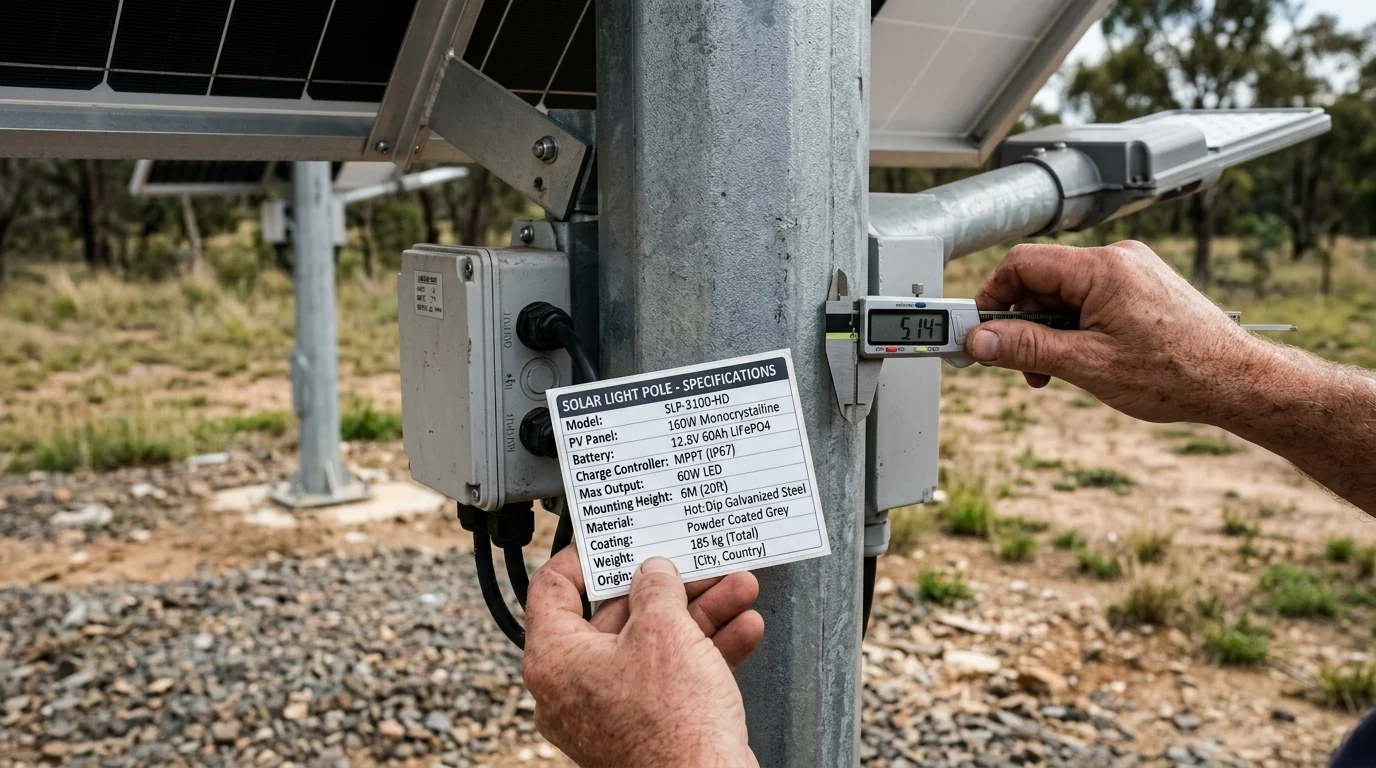
Evaluating off-grid illumination requires a rigorous analysis of component specifications and overarching commercial drivers. Procurement teams must look beyond aesthetic parameters, focusing on the interdependent metrics that guarantee sustained autonomy and photometric compliance.
Key specifications that affect real-world performance
The operational baseline of any solar light pole is dictated by its luminous efficacy, photovoltaic generation capacity, and energy storage density. High-performance fixtures must deliver a minimum efficacy of 150 to 170 lumens per watt (lm/W) to maximize battery yield. Photovoltaic modules typically range from 50W to 300W, depending on the required lumen output and geographic location. Crucially, the system must be engineered for appropriate days of autonomy—the number of consecutive nights the pole can provide illumination without solar recharge. Expertly specified systems mandate 3 to 5 days of autonomy, requiring battery capacities scaled between 40Ah and 120Ah at 12V or 24V configurations to ensure uninterrupted performance during extended inclement weather.
Commercial factors and comparison criteria
Commercial viability hinges on a Total Cost of Ownership (TCO) analysis rather than solely comparing initial capital expenditures. While the upfront cost of a commercial-grade solar light pole spans $1,500 to $4,000 per unit, the elimination of grid connection fees, trenching, and ongoing utility tariffs rapidly amortizes the premium.
| Comparison Metric | Traditional Grid-Tied Pole | Off-Grid Solar Light Pole |
|---|---|---|
| Upfront Hardware Cost | $400 – $1,000 | $1,500 – $4,000 |
| Installation & Trenching | $5,000+ per pole equivalent | $300 – $800 per pole |
| Ongoing Energy Cost | Standard utility rates | $0.00 |
| Deployment Timeline | Weeks to months | Days |
Beyond direct financial metrics, buyers must evaluate supply chain lead times and warranty structures. Tier-1 manufacturers typically offer 10-year warranties on the PV modules and structural columns, alongside 5-year guarantees on the LiFePO₄ energy storage systems, ensuring long-term asset reliability.
How to Source, Deploy, and Select Solar Light Poles
Transitioning from specification to deployment requires strict adherence to logistical and engineering protocols. Successful integration of off-grid lighting into remote infrastructure demands a systematic approach to sourcing, site preparation, and final commissioning.
Practical steps for procurement and deployment
Procurement professionals must navigate global supply chains to secure reliable components, often facing Minimum Order Quantities (MOQs) ranging from 20 to 50 units for direct-from-factory container shipments. Consolidating orders optimizes freight costs, particularly for 40-foot High Cube containers utilized in international transit. On-site deployment begins with comprehensive geotechnical surveys to design appropriate concrete foundations. Because the integrated solar panels act as structural sails, the pole assemblies must be engineered to withstand rigorous wind load ratings, frequently mandated between 110 mph and 150 mph per AASHTO standards. Installation crews can typically erect 10 to 15 pre-assembled solar light poles per day, assuming foundational curing is complete, drastically reducing site labor hours compared to traditional high-voltage wiring.
Decision criteria for owners, EPCs, and municipalities
For municipalities, EPCs, and facility owners, final selection criteria must synthesize environmental compliance, operational risk, and long-term maintenance requirements. Ingress Protection is non-negotiable; all sensitive electronics, controllers, and battery enclosures must carry a minimum IP65 rating, with IP67 preferred for coastal or highly corrosive environments. Furthermore, ecological considerations frequently dictate the choice of optics. Many jurisdictions now require Dark Sky compliance, mandating zero up-light (U0 rating in the BUG classification system) and color temperatures below 3000K to minimize light pollution and disruption to local nocturnal wildlife. By strictly enforcing these technical and environmental thresholds during the procurement phase, stakeholders ensure that the deployed solar light poles deliver resilient, zero-carbon illumination tailored to the unique demands of remote infrastructure.
Key Takeaways
- The most important conclusions and rationale for Solar Light Poles
- Specs, compliance, and risk checks worth validating before you commit
- Practical next steps and caveats readers can apply immediately
Frequently Asked Questions
When are solar light poles the best choice for off-grid projects?
They fit remote roads, mining camps, rural intersections, schools, and logistics sites where grid extension is costly or slow.
How much trenching cost can solar light poles avoid?
For a one-mile lighting run, standalone solar poles can avoid roughly $130,000 to $260,000 in trenching costs, depending on terrain and access.
What specifications should buyers compare first?
Check lumens per watt, solar panel wattage, battery capacity, and 3 to 5 days of autonomy. These directly affect nighttime reliability.
Can Morelux customize solar light poles for project requirements?
Yes. Morelux supports customized pole solutions with technical drawings, engineer input, and manufacturing for infrastructure and commercial projects.
What support can buyers expect from Morelux during sourcing?
Project buyers can request fast quotes, engineering support, and dependable communication to speed specification review, approval, and procurement.