Introduction
Preserving the visual character of a historic district often depends on details that modern infrastructure can easily disrupt. Antique style aluminium poles are designed to solve that tension by reproducing period ornamentation while improving durability, weight, and maintenance performance compared with traditional cast iron. This article examines how these poles are manufactured, from decorative forming and casting methods to material selection and finishing, and explains why they are increasingly specified for heritage streetscapes. Readers will gain a clear view of how manufacturers balance architectural authenticity with present-day structural, corrosion, and installation requirements.
Strategic Value of Antique-Style Aluminium Poles
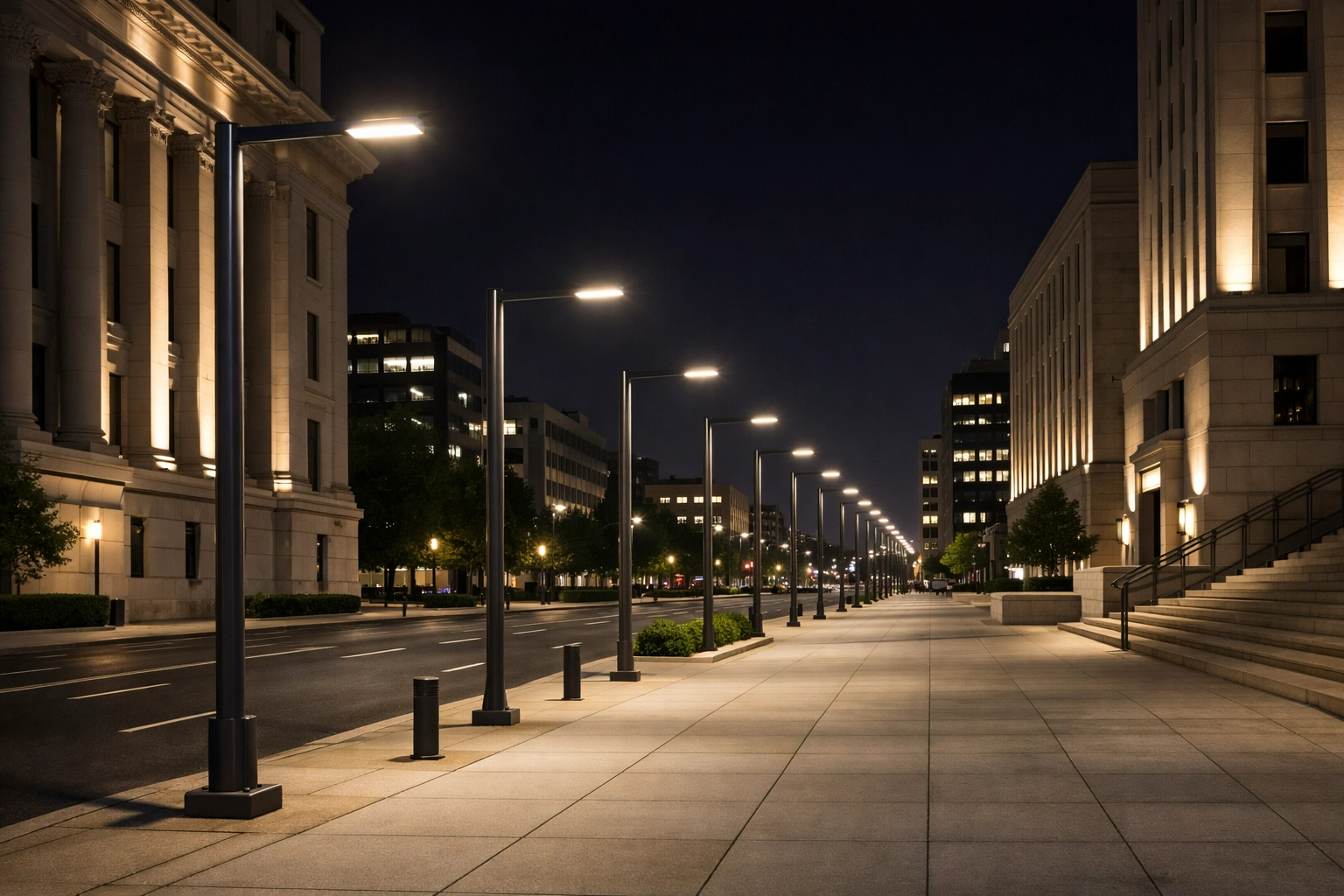
Historic districts present a unique urban design challenge, requiring infrastructure that preserves architectural heritage while meeting contemporary operational and safety standards. The adoption of the antique-style aluminum pole has become a definitive solution for municipalities, landscape architects, and urban developers navigating this complex intersection. By transitioning away from traditional heavy cast iron, urban planners can leverage advanced metallurgy to achieve precise historical replication without the associated weight, installation difficulties, and rapid degradation penalties.
Balancing heritage aesthetics with modern performance
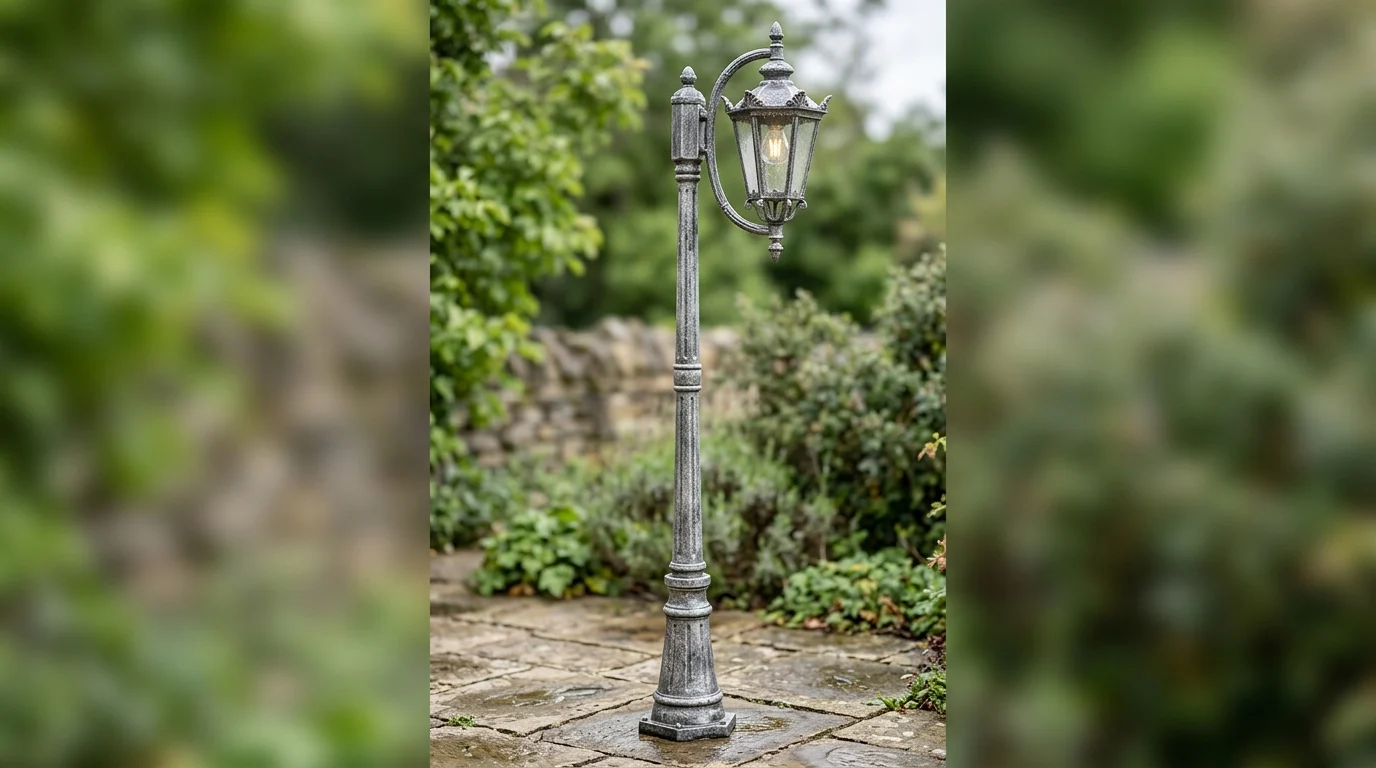
Replicating the intricate detailing of turn-of-the-century luminaires demands advanced manufacturing capabilities. Foundries utilize precision sand casting and permanent mold casting to recreate ornate fluted bases, decorative transitional collars, and complex botanical finials reminiscent of Victorian or Art Deco eras. Unlike historic cast iron, which is highly susceptible to galvanic corrosion, rust, and scaling when exposed to the elements, cast and extruded aluminum assemblies offer superior long-term weather resistance. An antique-style aluminum pole typically weighs 60% to 70% less than its cast iron equivalent. This drastic reduction in mass significantly lowers the dead load imposed on aging pedestrian bridges, elevated walkways, and delicate historic hardscapes, extending the lifespan of the surrounding civil infrastructure.
Project drivers for custom antique-style poles
The primary catalyst for specifying custom antique-style poles is the optimization of total cost of ownership (TCO) alongside technological modernization. Municipalities report that reduced installation weight translates directly to smaller crane requirements, lighter freight loads, and up to a 30% reduction in labor hours per foundation site. Furthermore, these hollow extruded structures serve as critical, unobtrusive conduits for smart city initiatives. A standard 4-inch to 6-inch diameter shaft can discreetly house IoT environmental sensors, public Wi-Fi routers, and small-cell 5G transceivers. This internal capacity ensures that strict heritage preservation guidelines do not impede the deployment of modern digital utilities, allowing historic downtowns to remain technologically competitive.
Technical and Compliance Requirements
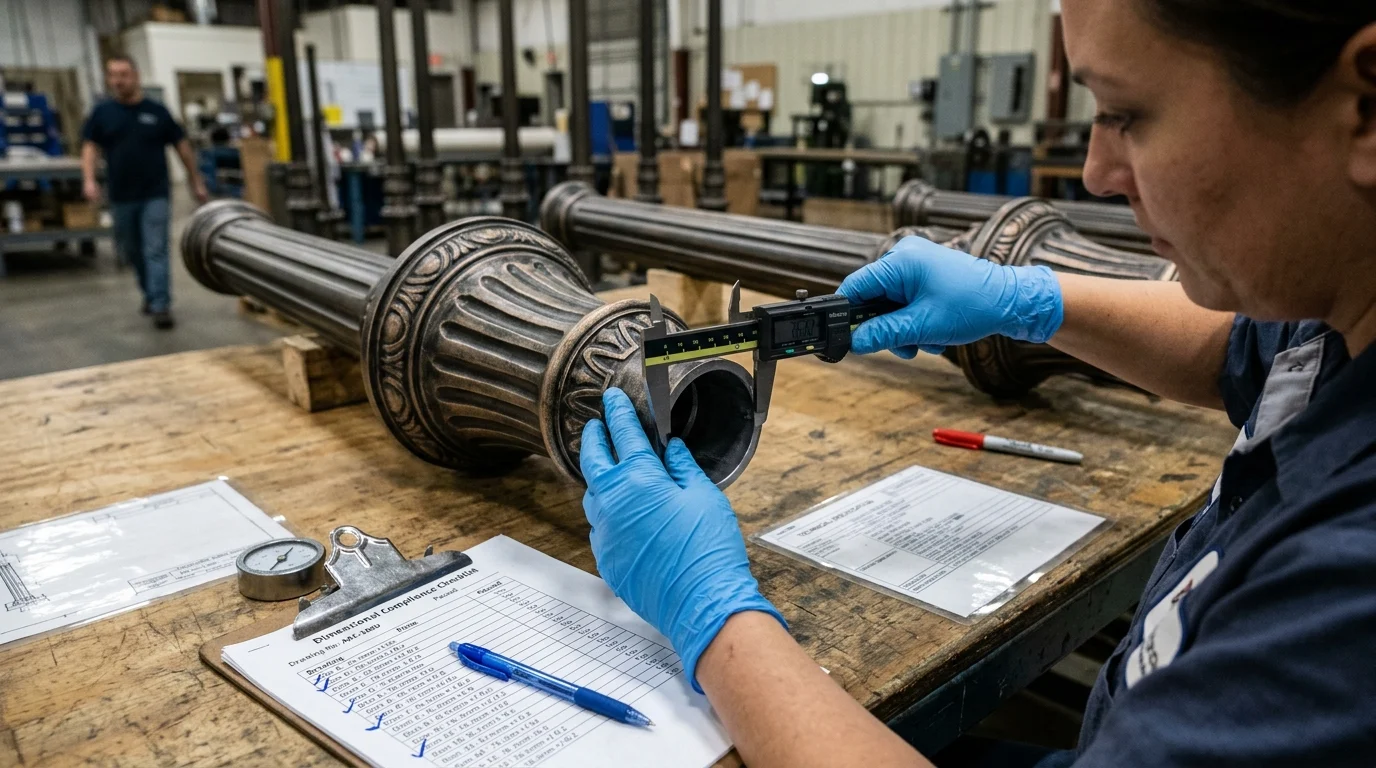
Engineering an antique-style aluminum pole requires rigorous adherence to both metallurgical specifications and structural safety codes. While the exterior faithfully mimics 19th-century gas lamps, the internal framework must satisfy stringent modern highway, environmental, and pedestrian mandates.
Design, materials, manufacturing, and finishing specifications
High-performance poles typically utilize an extruded 6061-T6 or 6063-T6 aluminum alloy for the main shaft, providing exceptional yield strength—frequently exceeding 30,000 psi—while maintaining a flawless, seamless profile. The decorative bases, access doors, and transitional collars are generally cast from A356-T6 aluminum, an alloy offering excellent fluidity for capturing intricate mold details without sacrificing structural integrity. Surface finishing is equally critical to the pole’s lifecycle; architectural-grade powder coating must comply with strict AAMA 2604 or AAMA 2605 specifications. This standard necessitates a multi-stage chemical pretreatment process followed by a thermosetting polyester or fluoropolymer powder application. The finish is baked to a uniform thickness of 2.5 to 4.0 mils, ensuring the pole can withstand over 3,000 hours of rigorous salt spray testing and resist severe UV degradation.
Structural, corrosion, and safety compliance considerations
Structural integrity is governed by strict civil engineering standards, most notably the AASHTO LTS-6 (Structural Supports for Highway Signs, Luminaires, and Traffic Signals). Engineers must meticulously calculate the Effective Projected Area (EPA) of both the pole shaft and the attached luminaire to ensure the assembly can withstand localized wind load requirements. In coastal historic districts, these codes frequently mandate structural survival in 120 mph to 150 mph hurricane wind zones.
| Component | Preferred Alloy | Minimum Yield Strength | Fabrication Method |
|---|---|---|---|
| Main Shaft | 6061-T6 / 6063-T6 | 30,000 – 35,000 psi | Seamless Extrusion |
| Decorative Base | A356-T6 | 20,000 – 24,000 psi | Sand / Permanent Mold Casting |
| Access Doors | 356.0 | 15,000 psi | Die Casting |
Additionally, pedestrian and vehicular safety protocols dictate the inclusion of breakaway couplings or frangible cast bases in specific traffic corridors. These safety mechanisms are engineered to fracture precisely at a predetermined impact threshold, typically absorbing less than 400 pound-seconds of momentum, thereby minimizing occupant injury during high-speed vehicular collisions while preserving the structural integrity of the luminaire head.
Supplier Evaluation and Procurement
Procuring custom municipal lighting infrastructure demands a comprehensive evaluation of a manufacturer’s tooling capabilities, supply chain resilience, and quality assurance frameworks. Selecting the appropriate foundry and extrusion partner mitigates the risks of project delays, budget overruns, and premature structural failures.
Comparing suppliers, costs, and qualification criteria
When evaluating suppliers, procurement teams must analyze both upfront capital expenditures and manufacturing tolerances. The unit cost for a commercial-grade antique-style aluminum pole generally ranges from $800 to $2,500, a price band heavily dependent on overall mounting height, wall thickness (which typically ranges from 0.125 to 0.250 inches), and the complexity of the custom cast ornamentation. Specialized foundries often impose Minimum Order Quantities (MOQs) of 20 to 50 units for entirely custom molds, though standard historical patterns may be available with significantly lower thresholds. Supplier qualification criteria should strictly mandate ISO 9001 certification, comprehensive material mill test reports (MTRs), and a documented manufacturing defect rate of less than 1.5% across large production batches.
Procurement steps for municipalities and lighting designers
The procurement lifecycle for municipal lighting projects requires meticulous phased planning and robust logistics management. From initial specification to on-site delivery, manufacturing lead times typically span 12 to 16 weeks. The process commences with the review of detailed CAD submittals and photometric analyses, followed by the approval of a physical prototype or a rigorous first-article inspection (FAI) to verify cast details, weld integrity, and finish quality. Lighting designers and city engineers must also proactively coordinate anchor bolt delivery schedules. Shipping the bolt templates and anchoring hardware 3 to 4 weeks prior to the poles allows civil contractors ample time to pour and cure the concrete foundations. Furthermore, protective packaging protocols—such as custom foam crating—must be specified to prevent abrasive damage to the AAMA-rated finish during transit, ensuring immediate, flawless installation upon the arrival of the pole assemblies.
Key Takeaways
- The most important conclusions and rationale for the antique-style aluminum pole
- Specs, compliance, and risk checks worth validating before you commit
- Practical next steps and caveats readers can apply immediately
Frequently Asked Questions
Why choose an antique-style aluminum pole over cast iron?
Aluminum delivers a historic appearance with 60%–70% less weight, easier installation, lower freight cost, and better corrosion resistance for long-term municipal use.
Can Morelux customize poles for historic district projects?
Yes. Morelux supports custom dimensions, decorative details, finishes, and internal layouts, with engineer support, technical drawings, and fast project quotations.
What materials are commonly used in antique-style aluminum pole manufacturing?
Main shafts typically use 6061-T6 or 6063-T6 aluminum, while decorative bases and collars often use cast A356-T6 for detailed heritage styling and structural reliability.
What standards should an antique-style aluminum pole meet?
Most projects require AASHTO structural compliance and AAMA 2604 or 2605 finishing standards, plus wind-load verification based on local site conditions.
Can these poles hide modern smart city equipment?
Yes. Hollow aluminum shafts can house wiring, sensors, Wi-Fi devices, or small-cell equipment while preserving the traditional streetscape appearance.