Introduction
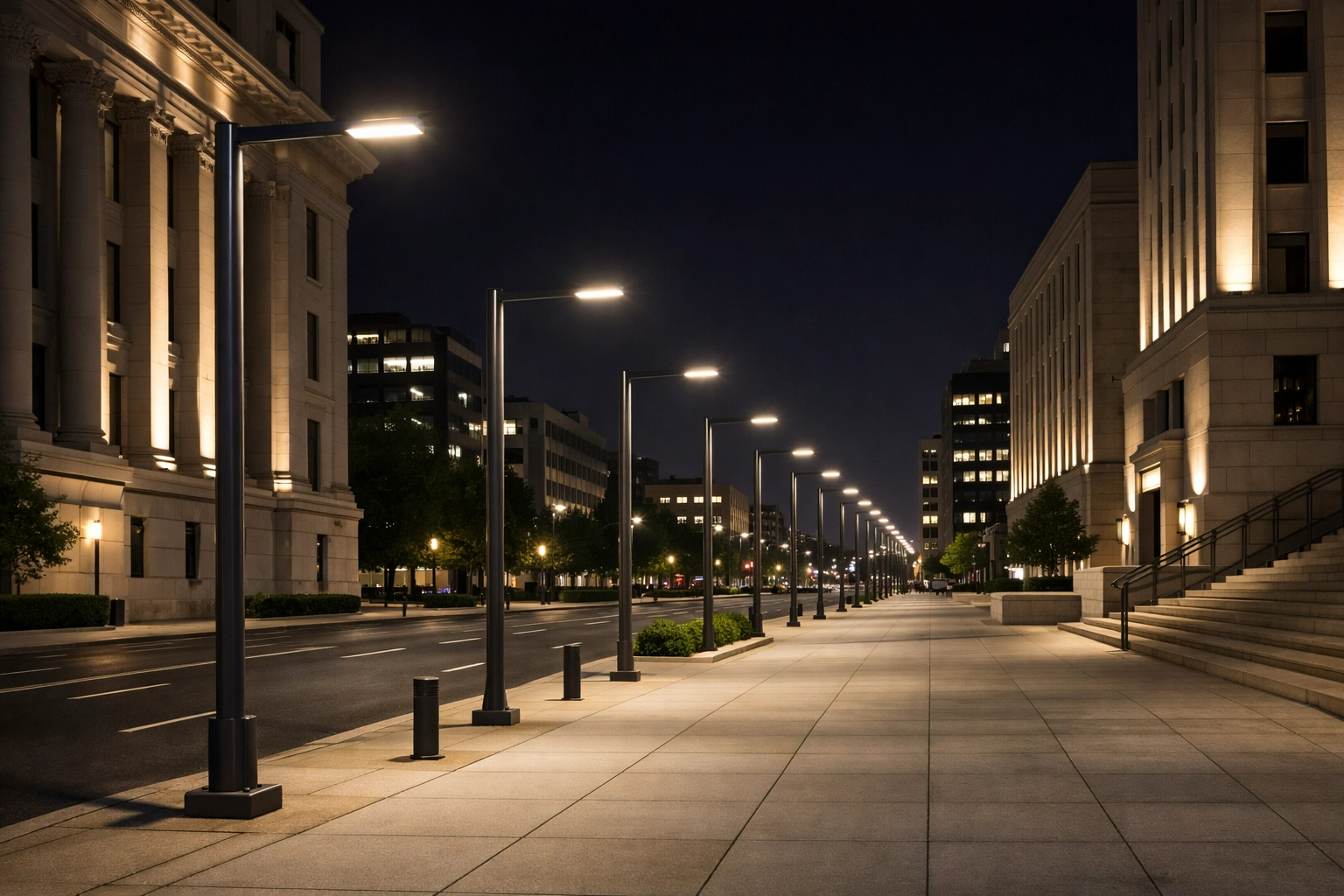
Aluminum light poles have become more than support structures; they are now design elements that help shape the look and feel of contemporary spaces. Their clean profiles, lightweight strength, and ease of customization make them well suited to minimalist architecture, where simplicity and visual continuity matter. At the same time, aluminum’s flexibility allows architects to tailor forms, finishes, and proportions to match nearby buildings and public settings. This article examines how these poles contribute to modern architectural aesthetics and why custom design plays such an important role in creating cohesive urban environments.
Architectural Impact of Aluminum Light Poles
Urban planners and architectural designers increasingly leverage aluminum light poles as integral components of the modern streetscape. Moving beyond mere utilitarian infrastructure, these structures now define the visual cadence of commercial plazas, high-end residential developments, and municipal centers. The inherent malleability of aluminum supports the precise geometric forms demanded by contemporary minimalist design paradigms, allowing lighting infrastructure to actively contribute to the overarching architectural narrative.
Design role in modern architecture
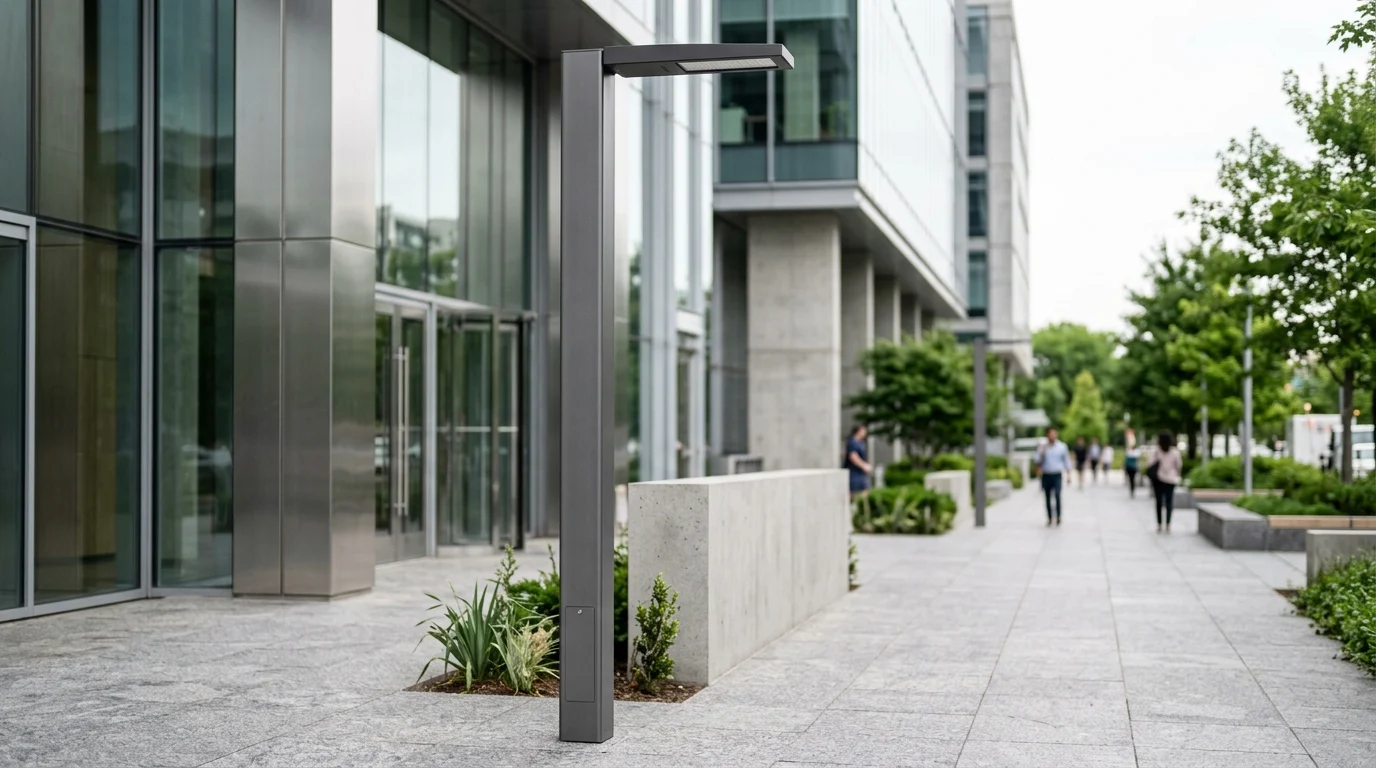
In modern architecture, lighting infrastructure must seamlessly integrate with the surrounding built environment. Aluminum extrusion processes enable the manufacturing of highly customized profiles, ranging from sharp-edged square and rectangular cross-sections to elegantly tapered and fluted cylinders. This manufacturing flexibility allows architects to specify poles that echo the structural lines of adjacent glass-and-steel facades.
Furthermore, the absence of bulky weld seams—often unavoidable in fabricated steel alternatives—preserves the uninterrupted, clean lines essential to minimalist aesthetics. By utilizing internal structural sleeves and flush-mounted handhole covers, engineers ensure the luminaire and the pole read as a single, cohesive sculptural element rather than an assemblage of industrial parts.
Visual and performance considerations
The visual longevity of architectural lighting relies heavily on advanced surface treatments. While aluminum naturally forms a protective oxide layer, architectural applications typically require high-performance powder coating or anodizing to meet stringent aesthetic demands. Specifications frequently mandate finishes compliant with AAMA 2604 or AAMA 2605 standards, which dictate strict performance criteria for UV resistance and protection against environmental degradation.
Achieving these standards typically requires a minimum coating thickness of 3.0 mils, providing designers with reliable 10- to 20-year color retention warranties. These finishes not only deliver precise color matching—from deep architectural bronzes to stark matte blacks—but also prevent the unsightly sub-surface blistering and rust weeping common with compromised ferrous metals, ensuring the installation maintains its day-one visual impact over decades.
Technical and Compliance Factors
While aesthetic versatility drives initial material selection, the structural integrity and long-term viability of lighting installations depend on rigorous engineering. Aluminum offers an exceptional strength-to-weight ratio, fundamentally altering the logistics of site installation while meeting aggressive structural performance criteria dictated by regional building codes and environmental stressors.
Comparison with steel and concrete poles
Evaluating structural materials requires analyzing both physical properties and lifecycle maintenance. Aluminum poles typically weigh 30% to 40% as much as their steel counterparts and a fraction of precast concrete alternatives. This mass reduction drastically lowers freight costs and often eliminates the need for heavy crane equipment during site erection, allowing smaller crews to execute installations safely and efficiently.
| Material | Approx. Weight (20ft pole) | Corrosion Resistance | Typical Lifespan (Years) |
|---|---|---|---|
| Aluminum | 60 – 80 lbs | Excellent (Natural Oxide) | 50+ |
| Carbon Steel | 180-220 lbs | Poor (Requires Coating) | 20 – 30 |
| Precast Concrete | 800 – 1,200 lbs | Good (Susceptible to spalling) | 40+ |
Unlike concrete, which is prone to freeze-thaw spalling, or steel, which requires continuous barrier protection to halt oxidation, aluminum remains structurally stable even if its aesthetic coating is scratched. This resilience makes it highly advantageous in high-traffic pedestrian zones.
Engineering specifications and code requirements
Lighting structures must be engineered to withstand complex dynamic loads, particularly wind-induced vibration. Specification engineers typically design aluminum poles in accordance with the AASHTO LTS-6 standard for structural supports. Calculations rely heavily on the Effective Projected Area (EPA) of the attached luminaire and the geographic wind zone, which frequently spans 90 mph to 150 mph basic wind speeds in coastal regions.
To achieve the necessary rigidity, manufacturers predominantly utilize 6063-T6 or 6061-T6 aluminum alloys. The 6063-T6 alloy, for instance, provides an ultimate tensile strength of 30,000 psi and a yield strength of 25,000 psi. This delivers sufficient elasticity to absorb wind-induced fatigue loads without catastrophic deformation, all while maintaining the precise tolerances required for flush-fitting architectural access doors and concealed base plate covers.
Specification and Sourcing Decisions
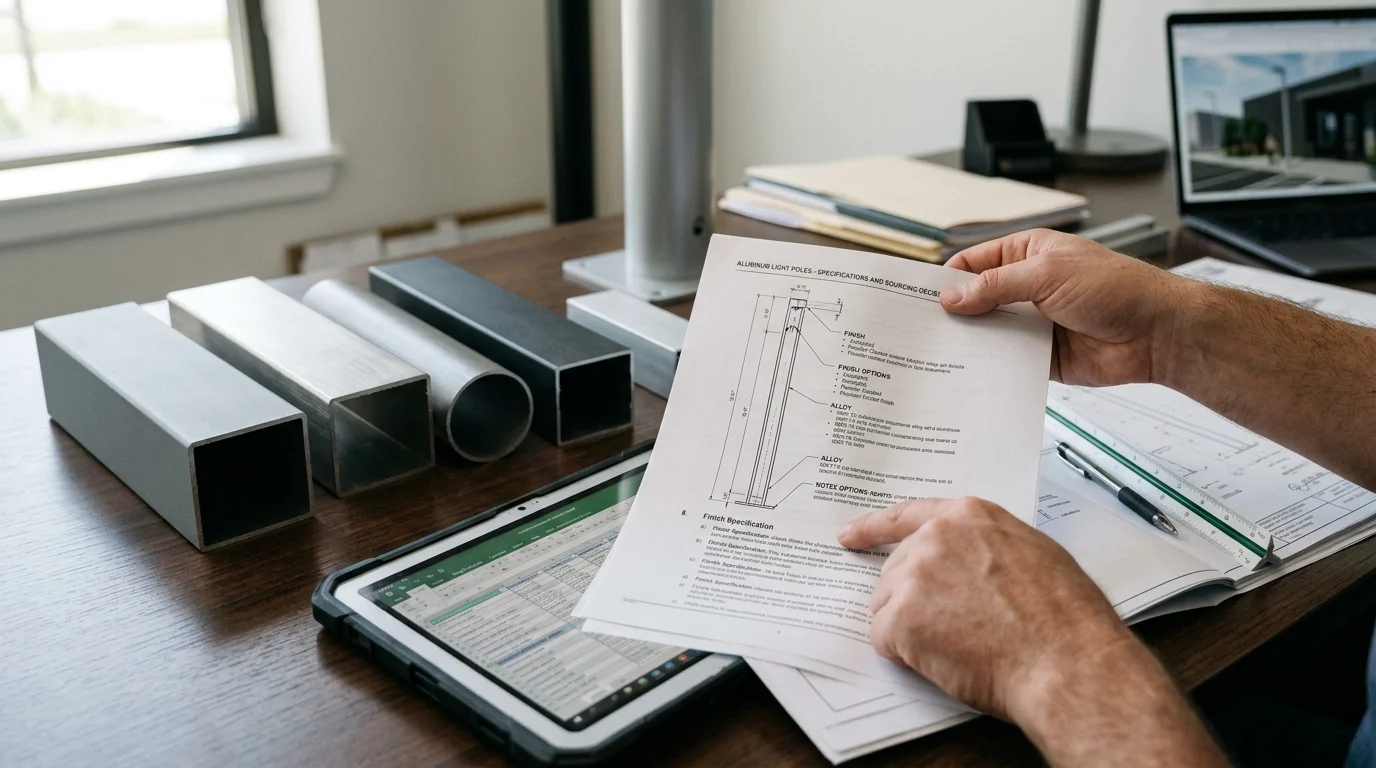
Successfully integrating custom aluminum light poles into a large-scale project requires strategic alignment between architectural intent, engineering specifications, and supply chain realities. Procurement professionals must navigate a complex matrix of lead times, tooling costs, and lifecycle analyses to ensure both project feasibility and long-term value.
Procurement and specification best practices
Sourcing customized aluminum profiles demands careful schedule management. While standard round or square poles may be available off-the-shelf, custom architectural extrusions typically require 8 to 12 weeks for die creation, extrusion, finishing, and final assembly. Early engagement with manufacturers is critical to avoid project delays.
Furthermore, specifying bespoke cross-sections introduces minimum order quantity (MOQ) thresholds. Extrusion mills generally require an MOQ ranging from 1,000 to 2,500 pounds of raw aluminum per custom profile to justify the tooling and setup costs. Procurement teams must consolidate orders across project phases to meet these thresholds efficiently. Additionally, they must ensure that anchor bolts and base templates are sequenced for delivery weeks ahead of the poles to facilitate uninterrupted concrete foundation pouring.
Balancing aesthetics, cost, and durability
Value engineering often scrutinizes the initial capital expenditure of lighting infrastructure. Aluminum light poles generally command a 20% to 35% cost premium over standard powder-coated carbon steel at the time of purchase. However, specifying professionals must conduct a comprehensive lifecycle cost analysis to justify this premium to developers and municipalities.
The elimination of routine maintenance—specifically the costly labor and materials required for field-repainting steel poles every 7 to 10 years to mitigate rust—results in a substantially lower total cost of ownership. Additionally, the inherent scrap value of aluminum at the end of its 50-year service life provides a measurable financial return. This high end-of-life recovery rate also aligns seamlessly with sustainable building certifications like LEED, promoting the specification of highly recyclable architectural materials in modern urban development.
Key Takeaways
- The most important conclusions and rationale for The Role of Aluminum Light Poles in Modern Architectural Aesthetics: Minimalism and Customized Design
- Specs, compliance, and risk checks worth validating before you commit
- Practical next steps and caveats readers can apply immediately
Frequently Asked Questions
Why are aluminum light poles popular in modern architecture?
They support clean, minimalist forms and can be extruded into custom shapes that match facades and site design.
Can aluminum poles be customized for specific projects?
Yes. Morelux can tailor profiles, heights, finishes, access doors, and mounting details for project requirements.
How do aluminum light poles compare with steel poles?
Aluminum is much lighter, resists corrosion naturally, and often reduces freight and installation costs.
What surface finishes are best for architectural aluminum poles?
Powder coating or anodizing is common, especially AAMA 2604/2605 finishes for durable color and UV resistance.
Does Morelux provide engineering support and fast quotes for pole sourcing?
Yes. Morelux offers technical drawings and engineering support and typically responds with quotes within 24 hours.