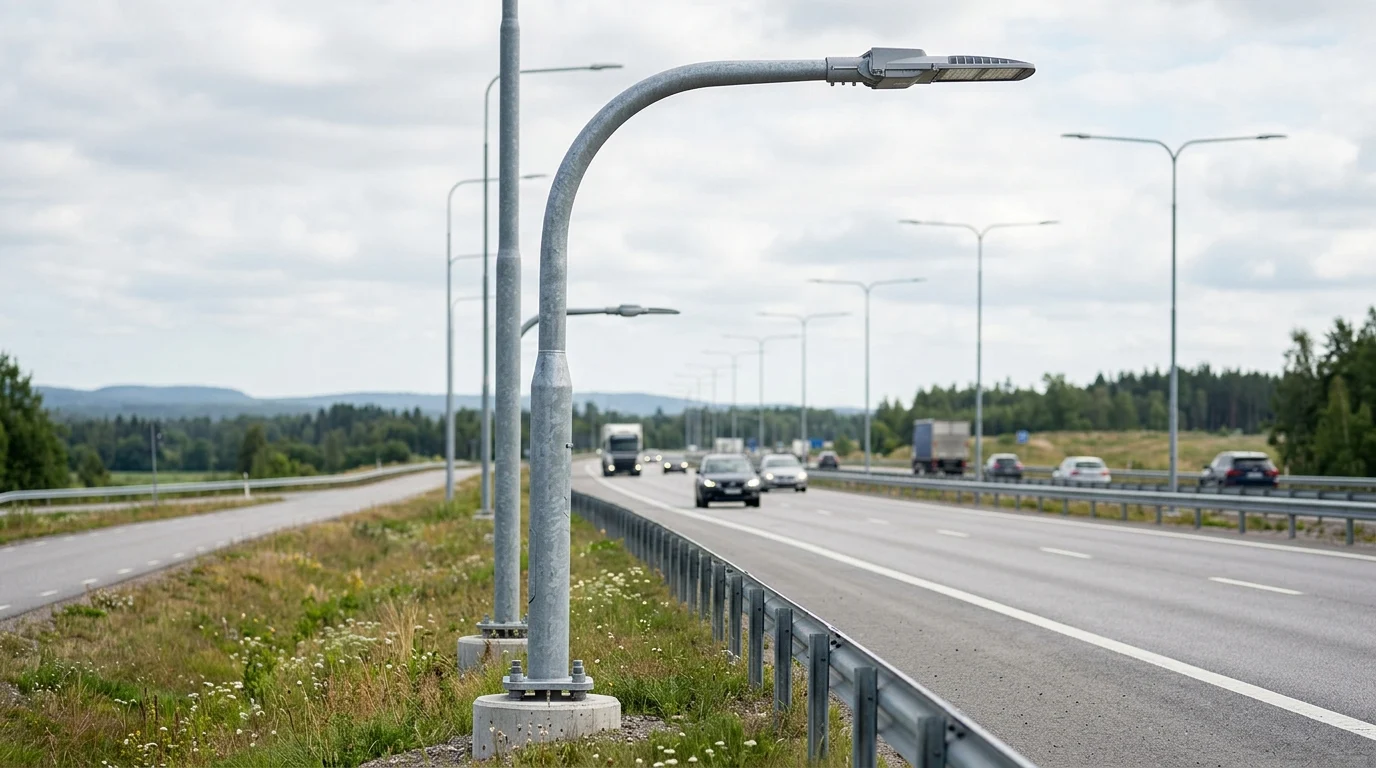
A highway lighting pole is only as reliable as the foundation beneath it. For DOTs, municipalities, and infrastructure buyers, the choice between cast-in-place concrete and bolted base systems affects far more than installation preference—it can influence project cost, lane closure duration, geotechnical risk, and decades of maintenance exposure. Foundations may represent 20% to 35% of total lighting installation costs, so small specification decisions can scale quickly across long corridors. This article compares the structural logic, construction workflow, and practical trade-offs of each base type, helping engineers and procurement teams make data-aware decisions for safer, more durable roadway lighting projects.
Why Compare Highway Lighting Pole Foundation Options
The selection of foundation systems for highway lighting poles is a critical engineering decision that dictates not only initial capital expenditures but also long-term structural resilience. While the luminaire and pole often command immediate visual attention, the subsurface foundation anchors the system against dynamic environmental loads and accounts for approximately 20% to 35% of total lighting installation costs. Comparing cast-in-place concrete foundations with bolted base alternatives allows departments of transportation (DOTs) and civil engineers to optimize project budgets, mitigate geotechnical risks, and streamline construction schedules.
Why Foundation Choice Affects Long-Term Performance
The foundation serves as the primary load transfer mechanism between the lighting structure and the surrounding soil matrix. A suboptimal foundation choice directly compromises long-term performance by increasing susceptibility to settlement, anchor bolt fatigue, and catastrophic failure under extreme wind events. Modern highway infrastructure requires compliance with the American Association of State Highway and Transportation Officials (AASHTO) standards, which typically mandate a 50-year minimum design life for structural supports. Ensuring that the foundation methodology aligns with this lifecycle requirement is essential to minimize maintenance interventions and prevent premature material degradation, such as concrete spalling or anchor bolt corrosion.
When Owners Should Evaluate Base Alternatives
Owners and specifying engineers should formally evaluate alternative base designs during the preliminary engineering phase, particularly for large-scale infrastructure corridors involving more than 50 lighting assemblies. Triggers for evaluating alternatives include projects located in constrained urban environments where extended traffic lane closures are cost-prohibitive, corridors with highly variable soil profiles, and regions subject to aggressive freeze-thaw cycles. Additionally, when retrofitting existing highway segments, evaluating bolted base systems against traditional cast-in-place methods can reveal significant operational advantages, particularly if existing underground utilities complicate deep excavation.
Cast-in-Place vs Bolted Base Fundamentals
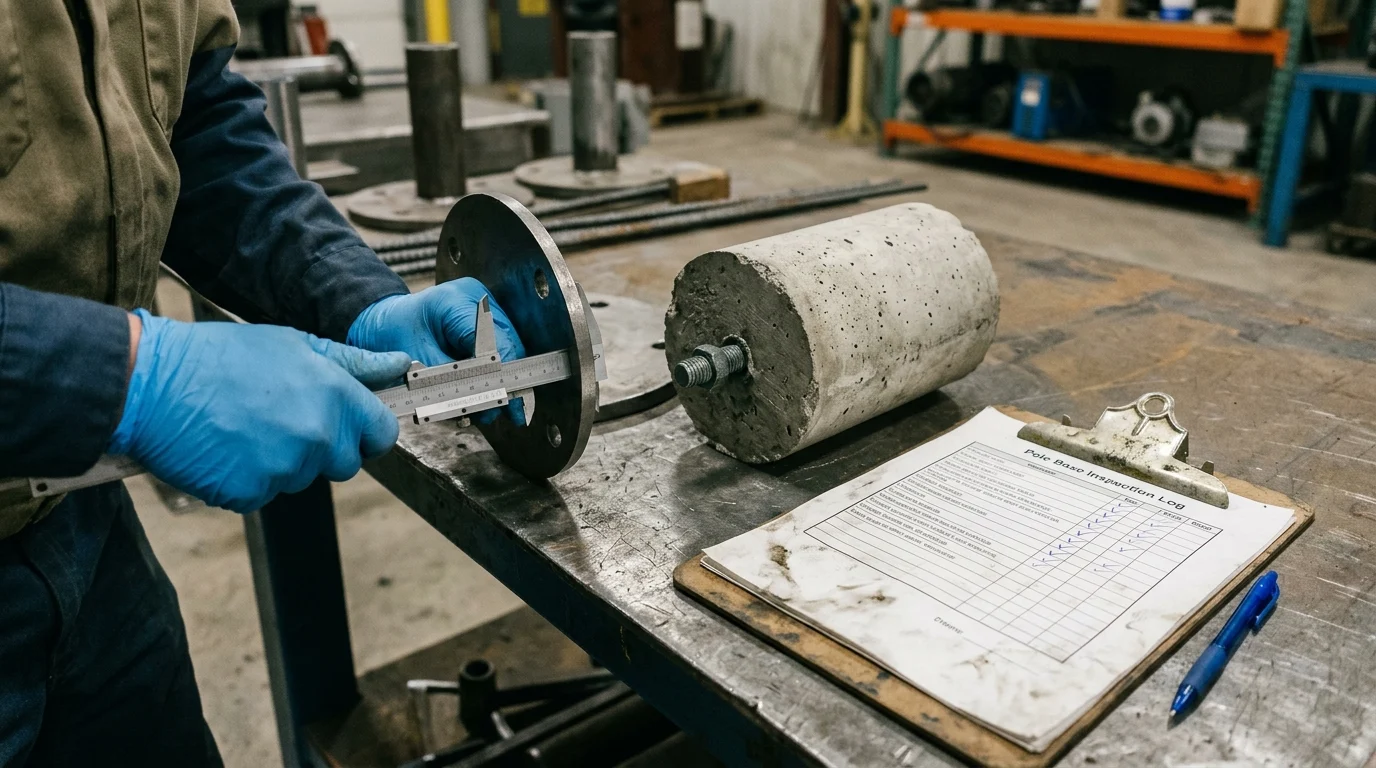
Understanding the mechanical and procedural differences between cast-in-place and bolted base systems is foundational to specifying the correct highway lighting pole support. Both methodologies aim to achieve rigid fixation and transfer moment loads safely into the earth, but they rely on fundamentally different construction paradigms and material assemblies.
What Cast-in-Place Foundations Are
Cast-in-place foundations are the traditional standard for highway lighting, typically constructed as drilled concrete shafts. The process involves augering a cylindrical hole into the subgrade, inserting a prefabricated steel reinforcement cage, and positioning an anchor bolt template. Wet concrete, typically specified with a minimum 28-day compressive strength of 3,000 to 4,000 psi, is then poured into the excavation. The anchor bolts are embedded directly into the curing concrete, creating a monolithic structure once fully hydrated. This method provides immense mass and allows for highly customized shaft diameters and depths tailored to specific site conditions.
What Bolted Base Systems Are
Bolted base systems encompass a variety of prefabricated or mechanically driven foundation technologies that eliminate the need for wet concrete curing in the field. These include precast concrete bases, steel helical piles, and driven steel pipe foundations. In these systems, the foundation unit is mechanically installed into the soil—either by torquing, driving, or direct burial—and features a standardized steel mounting flange at grade level. The highway lighting pole is then secured to this flange using high-strength structural fasteners, frequently specified as ASTM F1554 Grade 55 or Grade 105 anchor bolts. Because the primary structural components are manufactured in controlled factory environments, these systems offer high dimensional consistency and immediate load-bearing capacity upon installation.
Structural Performance and Durability
The structural performance of a highway lighting pole foundation is evaluated by its capacity to resist overturning moments, shear forces, and axial loads under extreme environmental conditions. Both cast-in-place and bolted base systems must be engineered to satisfy rigorous durability criteria over their service lives.
Load Cases, Soil Conditions, and Wind Zones
Structural design is governed by the AASHTO LRFD Specifications for Structural Supports for Highway Signs, Luminaires, and Traffic Signals (LTS-6 or later). Foundations must withstand design wind speeds that vary regionally from 90 mph in inland areas to over 150 mph in coastal hurricane zones. Cast-in-place shafts rely on lateral soil bearing pressure and the sheer mass of the concrete to resist these overturning moments, making them highly effective in cohesive soils with a minimum bearing capacity of 1,500 psf. Bolted base systems, particularly helical piles, derive their capacity from the torque-to-capacity ratio generated during installation, requiring careful geotechnical analysis to ensure the helices anchor sufficiently into dense, load-bearing soil strata.
Corrosion Protection and Fatigue Resistance
Durability in highway environments necessitates robust defense against de-icing salts, moisture ingress, and cyclic aerodynamic loading. Cast-in-place foundations primarily face risks associated with concrete cracking, rebar corrosion, and anchor bolt fatigue at the concrete interface. To mitigate this, engineers often specify epoxy-coated reinforcement and require a minimum concrete cover of 3 inches. Bolted base systems, which are largely metallic, rely heavily on hot-dip galvanization per ASTM A123 to provide barrier and sacrificial corrosion protection. Additionally, the bolted connections must be meticulously designed to resist fatigue induced by vortex shedding and natural wind gusts, often utilizing specialized locking hardware or precise tensioning protocols.
Structural Comparison Criteria
To synthesize the structural and durability trade-offs, engineers must weigh the inherent properties of each foundation type against site-specific demands.
| Performance Criteria | Cast-in-Place Concrete | Bolted Base Systems (Precast/Steel) |
|---|---|---|
| Overturning Resistance | Excellent (relies on mass and shaft depth) | Very Good (relies on soil embedment/helices) |
| Material Consistency | Variable (dependent on field mixing/curing) | High (factory-controlled manufacturing) |
| Corrosion Vulnerability | Rebar/bolt interface; freeze-thaw spalling | Soil-to-steel interface; relies on galvanization |
| Fatigue Performance | High mass dampens vibration effectively | Requires strict bolt tensioning to prevent loosening |
Installation, Logistics, and Quality Control
Beyond structural design, the logistical realities of highway construction heavily influence foundation selection. Field execution involves coordinating heavy machinery, managing lane closures, and ensuring strict adherence to quality assurance protocols, all of which present distinct challenges for different foundation types.
Quality Control for Cast-in-Place Foundations
Quality assurance for cast-in-place foundations requires rigorous field testing and continuous inspection. Inspectors must verify concrete slump, perform air entrainment tests, and cast cylinders for 7-day and 28-day compressive strength verification. Crucially, the placement of the anchor bolt circle must be perfectly aligned before the concrete sets. Industry standards typically demand tight tolerances, often requiring anchor bolts to be positioned within +/- 0.25 inches of the specified template. Any shifting of the cage or template during the concrete pour can result in misaligned bolts, necessitating costly and complex remedial drilling or custom adapter plates.
Quality Control for Bolted Base Systems
Quality control for bolted base systems shifts predominantly from the construction site to the manufacturing facility. Because the piles or precast units are fabricated under controlled conditions, material strength and flange dimensions are guaranteed prior to delivery. In the field, quality assurance focuses on the installation process. For helical and driven piles, engineers monitor installation torque and depth to verify load capacity. A typical requirement might dictate achieving a continuous installation torque of 2,000 to 4,000 ft-lbs to guarantee the required axial and lateral capacities. Once installed, the primary field QC task is verifying the proper tensioning of the superstructure bolts, often requiring a calibrated wrench to achieve 200 to 300 ft-lbs of torque depending on the specification.
Traffic Control, Access, Curing, and Rework
The most profound logistical differences emerge in schedule management and traffic control. Cast-in-place foundations require a multi-step mobilization process: excavation, rebar/bolt placement, concrete pouring, and a mandatory curing period. Concrete typically requires 7 to 14 days of curing before it achieves sufficient strength to support the lighting pole superstructure. This delay forces construction crews to demobilize and return later, extending the duration of traffic control measures. Conversely, bolted base systems offer immediate load-bearing capabilities. A crew can drive a steel foundation, bolt the highway lighting pole to the base, and wire the luminaire in a single shift. This single-mobilization approach significantly reduces the overhead costs associated with prolonged lane closures and minimizes the risk of rework due to weather events interrupting concrete pours.
Selection Guidance for Agencies and Engineers
Selecting the optimal foundation for highway lighting poles requires a holistic evaluation of structural demands, geotechnical realities, and project economics. There is no universally superior option; rather, agencies and engineers must align the foundation methodology with the specific constraints of the infrastructure program.
When Cast-in-Place Foundations Are Preferred
Cast-in-place foundations remain the preferred solution for extreme load cases and challenging subsurface obstructions. They are virtually mandatory for high-mast lighting installations exceeding 100 feet in height, where the overturning moments are massive and require deep, large-diameter drilled shafts for stability. Additionally, in geotechnical environments dominated by shallow bedrock, large cobbles, or dense glacial till, driving or screwing a prefabricated base is often impossible. In these scenarios, augering a shaft and pouring concrete in place is the most reliable method to achieve the necessary foundation depth and structural integration.
When Bolted Base Systems Are Preferred
Bolted base systems are highly favored for standard continuous highway lighting projects utilizing standard 30-foot to 50-foot poles. They are particularly advantageous for projects operating under compressed schedules or those executed during winter months, where cold temperatures make concrete pouring and curing logistically complex and expensive. Furthermore, in remote locations where transporting ready-mix concrete is unfeasible or prohibitively expensive, transporting prefabricated steel or precast bases provides a highly efficient alternative. Departments of transportation also prefer these systems in high-traffic urban corridors where minimizing lane closure time equates to significant savings in public disruption and traffic control expenditures.
Decision Matrix for Cost, Schedule, and Risk
To standardize the selection process, civil engineers and procurement officials frequently utilize a decision matrix to evaluate the trade-offs. By scoring these parameters, project managers can identify the system that minimizes total installed cost while mitigating schedule risks.
| Decision Parameter | Cast-in-Place Concrete | Bolted Base Systems |
|---|---|---|
| Initial Material Cost | Lower (basic raw materials) | Higher (prefabricated steel/concrete) |
| Installation Speed | Slow (requires 7-14 day curing) | Fast (immediate load-bearing capacity) |
| Traffic Control Costs | High (multiple site mobilizations) | Low (single-shift installation) |
| Soil Adaptability | Excellent (can bore through rock) | Limited (refusal in rocky/dense soils) |
| Winter Constructability | Poor (requires heating/blanketing) | Excellent (unaffected by temperature) |
By carefully analyzing these variables, infrastructure owners can frequently achieve a 15% to 20% reduction in overall lifecycle costs simply by specifying the foundation methodology best suited to their specific corridor conditions.
Key Takeaways
- Evaluate cast-in-place and bolted base options during preliminary engineering, especially for corridors with more than 50 lighting assemblies.
- Account for foundation costs early because they can represent approximately 20% to 35% of total highway lighting installation expenses.
- Choose cast-in-place drilled shafts when site-specific soil conditions require customized depth, diameter, and high structural mass.
- Consider bolted base systems for urban retrofits, utility-constrained sites, or projects where reducing lane closures and curing delays is critical.
- Design foundations to support long-term AASHTO performance expectations, including resistance to settlement, wind loading, anchor fatigue, and corrosion.
Frequently Asked Questions
Which foundation type is faster to install for highway lighting poles?
Bolted base systems are typically faster because they use precast, driven, or helical components and avoid field concrete curing. This can reduce lane closure time and help projects stay on schedule.
When is a cast-in-place foundation the better choice?
Cast-in-place concrete is often preferred when soil conditions require custom shaft depth or diameter, or when a project needs the mass and rigidity of a drilled concrete foundation.
How much of the installation cost can the foundation represent?
The foundation can account for about 20% to 35% of total highway lighting installation costs, making early comparison of base options important for budget control.
Why should foundation options be reviewed during preliminary engineering?
Early review helps engineers account for soil variability, utility conflicts, traffic control costs, freeze-thaw exposure, and long-term maintenance before drawings and procurement are finalized.
Do highway lighting pole foundations need to meet AASHTO requirements?
Yes. Highway lighting support structures are commonly designed to AASHTO requirements, including long service-life expectations and resistance to wind, fatigue, corrosion, and settlement risks.