Introduction
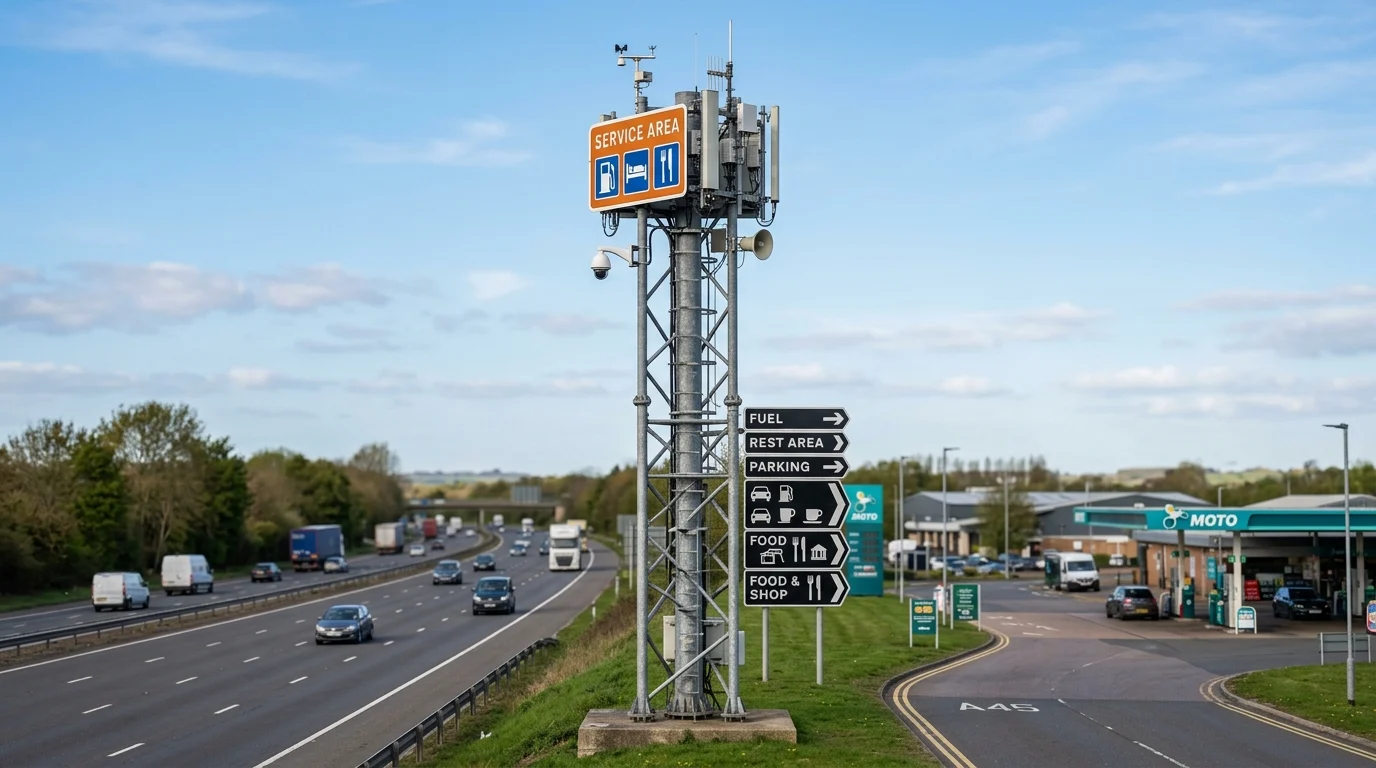
As highway service areas evolve into energy and connectivity hubs, the supporting pole has become far more than a lighting structure. It can combine EV charging equipment, Wi-Fi and telecom hardware, lighting, and smart monitoring in a single installation, reducing duplicated infrastructure and making better use of constrained roadside space. This article explains why that integration matters, how it improves deployment efficiency and user experience, and what operators and planners should evaluate when using a highway service area pole as a practical foundation for modern mobility services.
Why Highway Service Area Poles Are Strategic Infrastructure
The transformation of highway service areas into multi-functional mobility hubs relies heavily on the consolidation of physical infrastructure. The highway service area pole has emerged as a critical architectural node, transitioning from a single-purpose lighting mast to a highly integrated structural asset.
By combining electric vehicle supply equipment (EVSE), high-bandwidth telecommunications, and high-efficiency illumination, these poles eliminate redundant civil works and optimize limited commercial real estate. Treating these structures as strategic assets allows facility operators to meet modern regulatory demands while unlocking new revenue streams through enhanced connectivity and charging services.
How electrification and connectivity are changing service areas
The simultaneous rise of heavy-duty fleet electrification and autonomous commercial transport necessitates continuous, high-speed data transmission alongside megawatt-level power availability. Modern service areas are no longer just rest stops; they are critical data and energy nodes.
To support this shift, smart poles integrate 5G small cells requiring fiber backhaul with 1 to 2 Gbps throughput, alongside environmental sensors and Vehicle-to-Everything (V2X) communication modules. Embedding these technologies directly into the EV charging infrastructure creates a unified network node, reducing latency for connected vehicles and providing uninterrupted Wi-Fi coverage for transit passengers.
Which business goals matter for operators and public planners
For charge point operators (CPOs) and public transit planners, capital efficiency and footprint optimization are primary directives. Trenching and cabling represent a significant portion of EV infrastructure deployment costs, often disrupting existing highway operations.
Consolidating power distribution and data lines into a single vertical chassis can reduce underground trenching requirements by up to 40%. Furthermore, integrated poles improve site aesthetics and safety by minimizing ground-level obstructions and maximizing parking maneuverability.
| Infrastructure Approach | Civil Works Required | Footprint per Bay | Estimated Deployment Time |
|---|---|---|---|
| Disparate Systems | Separate trenching for light, comms, and EV | 3.5 sq. meters | 14-21 days |
| Integrated Smart Pole | Single consolidated trench | 1.2 sq meters | 5-8 days |
What Defines a Highway Service Area Pole for EV Charging
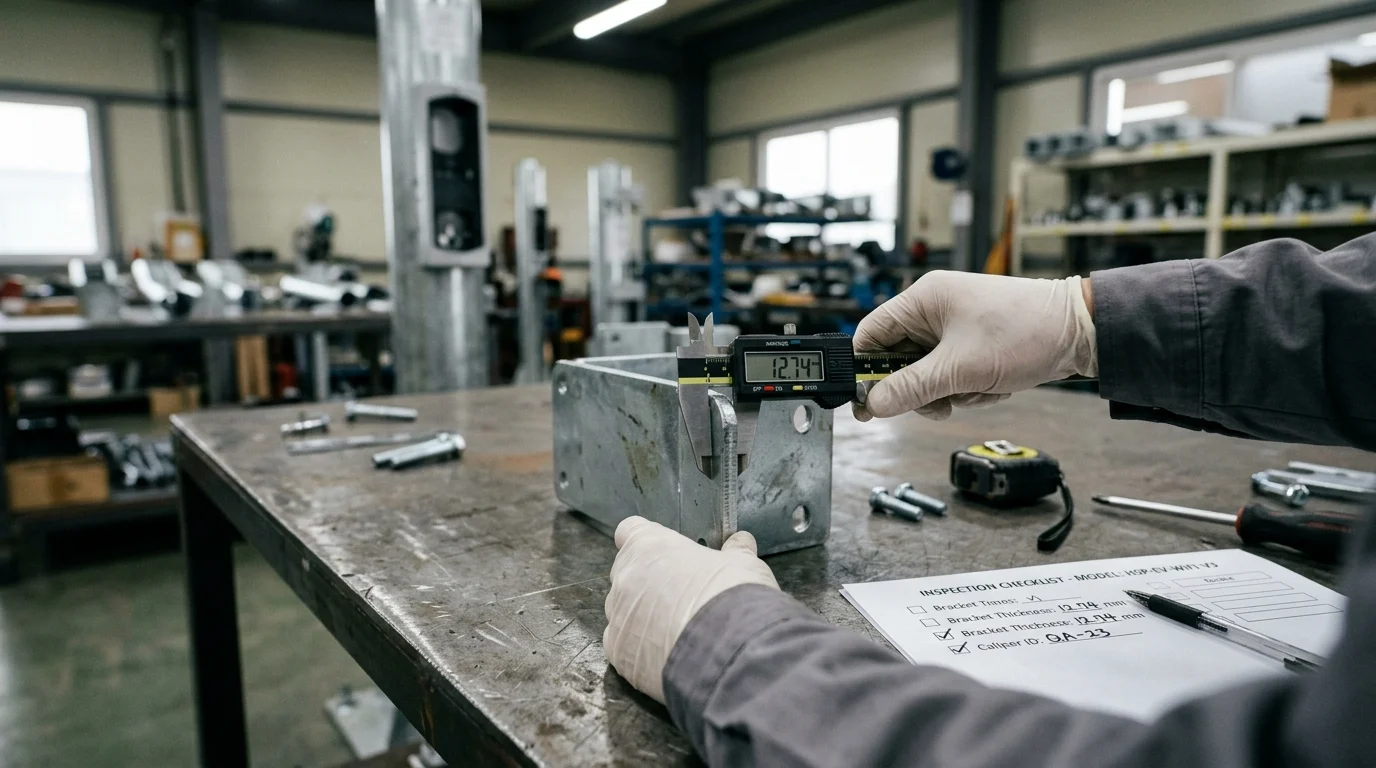
A highway service area pole designed for EV charging and Wi-Fi acts as a structural chassis housing high-voltage electrical distribution, delicate telecommunications equipment, and thermal management systems.
Unlike standard municipal lighting, these structures require specialized engineering to isolate electromagnetic interference (EMI) and manage the thermal load generated by integrated power electronics and high-frequency transceivers.
Which functions a highway service area pole should integrate
Beyond foundational LED illumination—typically utilizing 150W to 300W luminaires for high-mast visibility—these poles must seamlessly house Level 2 or DC fast charging interfaces. The physical integration requires dedicated internal raceways to separate high-voltage cables from communication lines.
Telecommunications integration involves mounting omnidirectional Wi-Fi access points, 5G micro base stations, and edge computing nodes. Supplementary functions often include high-definition CCTV for security monitoring, digital display screens for dynamic pricing or advertising, and public address systems for emergency broadcasting.
Which specifications most affect performance
Structural and environmental specifications dictate the operational reliability of the pole. Wind load resistance is paramount in open highway corridors; poles are typically engineered to withstand AASHTO specifications for 120 to 150 mph wind gusts, requiring reinforced base plates and thicker lower-shaft walls.
Material selection leans heavily toward galvanized steel (grades Q235 or Q345) or extruded aluminum alloy (6063-T6) for superior corrosion resistance against road salts. Environmental protection ratings are non-negotiable, requiring IP65 or IP66 for electronics enclosures to prevent water and dust ingress, alongside IK08 to IK10 impact resistance ratings to withstand vandalism or accidental vehicle contact.
How standard and custom designs compare
Standardized pole designs offer modularity through pre-cut access doors and fixed bracket heights, facilitating rapid deployment and predictable supply chains. These off-the-shelf solutions are ideal for rapid rollouts where hardware uniformity is prioritized.
Custom configurations, however, are often necessary to accommodate proprietary CPO hardware or specific regional utility requirements. Custom designs allow for specialized internal compartmentalization and unique architectural profiles, though they require longer engineering lead times and specific structural validations before mass production.
How to Evaluate Design, Compliance, and Cost
Evaluating the viability of a highway service area pole requires a rigorous analysis of structural integrity, electrical safety compliance, and long-term financial modeling.
Decision-makers must balance upfront capital expenditure against operational resilience, ensuring that the selected infrastructure meets stringent international codes while providing a measurable return on investment over its operational life.
Which codes and safety standards apply
Regulatory compliance dictates the fundamental architecture of integrated poles. Electrical systems must adhere strictly to NEC (National Electrical Code) or NFPA 70 standards in North America, while EV charging components must meet IEC 61851 or UL 2202 specifications to guarantee safe power delivery.
Grounding is exceptionally critical due to the convergence of telecommunications and high-voltage power. Grounding resistance must be maintained strictly below 4 ohms to protect sensitive 5G transceivers and Wi-Fi routers from grid power surges and lightning strikes.
What trade-offs matter between AC and DC configurations
The choice between alternating current (AC) and direct current (DC) charging drastically alters the pole’s physical dimensions and thermal management requirements. AC Level 2 charging (7.2 kW to 22 kW) requires minimal internal space and relies on the vehicle’s onboard inverter, allowing for a slimmer pole profile.
Integrating DC fast charging (50 kW to 150+ kW) necessitates housing massive rectifiers, active liquid cooling systems, and thicker gauge wiring, often pushing the base diameter far beyond standard dimensions.
| Specification | AC Level 2 Integrated Pole | DC Fast Charging Integrated Pole |
|---|---|---|
| Power Output | 7.2 kW – 22 kW | 50 kW – 150+ kW |
| Base Diameter | 150mm – 250mm | 400mm – 600mm+ |
| Cooling Requirement | Passive | Active (Fans / Liquid Cooling) |
| Primary Use Case | Long-dwell parking | Short-dwell transit |
How to assess lifecycle cost
Total Cost of Ownership (TCO) extends far beyond the initial hardware procurement. The initial capital expenditure (CAPEX) for a structurally sound, integrated smart pole can range from $2,500 to $8,000, heavily dependent on the level of technological integration and payload capacity.
However, operational expenditures (OPEX) are significantly optimized through integration. Consolidated servicing schedules—where lighting, telecommunications, and EV infrastructure are maintained simultaneously by cross-trained technicians—can reduce ongoing maintenance costs by 20% to 30% over the asset’s lifecycle.
What Determines Sourcing, Installation, and Logistics Success
The procurement and physical deployment of heavy, high-tech infrastructure involve stringent supply chain management and precise logistical orchestration.
Navigating the logistics of heavy steel structures equipped with sensitive electronics requires tight coordination between manufacturers, freight forwarders, and civil contractors to prevent costly delays at the installation site.
How to qualify manufacturers and integrators
Qualifying manufacturing partners requires evaluating their dual competency in structural steel fabrication and electrical integration. Integrators should ideally hold ISO 9001 for quality management and ISO 14001 for environmental standards.
Procurement teams must demand comprehensive factory acceptance testing (FAT) protocols. Defect rates for pre-wired harnesses and structural welds must remain below the industry benchmark of 1%. Proven track records in both municipal telecom deployments and CPO partnerships are vital indicators of vendor capability.
Which project steps reduce delays
Mitigating deployment delays relies heavily on decoupling civil works from hardware delivery. Standardized anchor bolt templates and foundational rebar cages should be shipped to the site weeks ahead of the main structural poles.
This staggered shipping schedule allows civil contractors to pour concrete foundations and observe the mandatory 28-day curing period without stalling the overall project timeline. Furthermore, specifying pre-assembled internal wiring harnesses at the factory eliminates complex, time-consuming cable splicing work in the field.
What factors drive lead times and packaging needs
Manufacturing lead times for standard integrated poles typically range from 6 to 12 weeks, extending significantly for custom architectural profiles or specialized alloy requests. Minimum Order Quantities (MOQs) for custom extrusions generally fall between 20 and 50 units.
Packaging is a critical logistical driver. Ocean freight necessitates heavy-duty steel crating and multi-layer bubble wrapping to protect specialized powder coatings from salt air corrosion and transit abrasions, ensuring the poles arrive ready for immediate erection.
Which Deployment Strategy Supports Long-Term Performance
A robust deployment strategy ensures that the highway service area pole remains functional and technologically relevant as electric vehicle adoption and data consumption scale over the next decade.
Strategic planning prevents premature asset stranding, maximizes infrastructure utilization, and ensures that the physical network can adapt to future technological iterations without requiring complete replacements.
How to match pole configurations to site needs
Site topography and traffic patterns dictate optimal pole configurations. High-traffic transit corridors demand high-mast lighting combined with high-capacity DC fast charging and 5G macro cells to service rapid-turnover commercial fleets efficiently.
Conversely, extended-stay rest areas or highway motels are better served by densely deployed Level 2 AC chargers paired with standard Wi-Fi access points. This configuration perfectly matches the longer vehicle dwell times and localized data needs of overnight travelers.
Which procurement and deployment model best supports scalability
Scalability is best achieved through a phased procurement model paired with “make-ready” deployment strategies. Installing poles with oversized internal conduits—such as 3-inch to 4-inch PVC piping—and blanked-off modular equipment bays allows operators to insert future hardware upgrades without initiating new civil works.
While the expected structural lifespan of a galvanized steel pole spans 20 to 25 years, active telecommunications and EVSE electronics typically require refreshing every 5 to 7 years. Mandating modular accessibility as a core design principle ensures that these upgrades remain cost-effective and operationally seamless.
Key Takeaways
- The most important conclusions and rationale for Highway Service Area Pole
- Specs, compliance, and risk checks worth validating before you commit
- Practical next steps and caveats readers can apply immediately
Frequently Asked Questions
What is a highway service area pole used for?
It combines lighting, EV charging, Wi-Fi, and often CCTV or displays into one structure, reducing trenching, saving space, and simplifying highway service area layouts.
Which materials are best for highway service area poles?
Galvanized steel like Q235/Q345 and aluminum 6063-T6 are common choices. They offer strong corrosion resistance, especially in highway environments exposed to weather and road salts.
What protection ratings should an EV charging and Wi-Fi pole meet?
Look for IP65 or IP66 enclosures for dust and water protection, plus IK08 to IK10 impact resistance. These ratings help protect electronics in public, high-traffic service areas.
Can Morelux customize highway service area poles for project requirements?
Yes. Morelux supports custom steel or aluminum pole solutions with technical drawings, engineer assistance, and manufacturing options for integrated charging, communications, and lighting functions.
How quickly can I get a quote for a custom highway service area pole?
Morelux typically provides fast 24-hour quotations for project buyers. Sharing load requirements, mounting details, and equipment layout helps speed up pricing and drawing support.