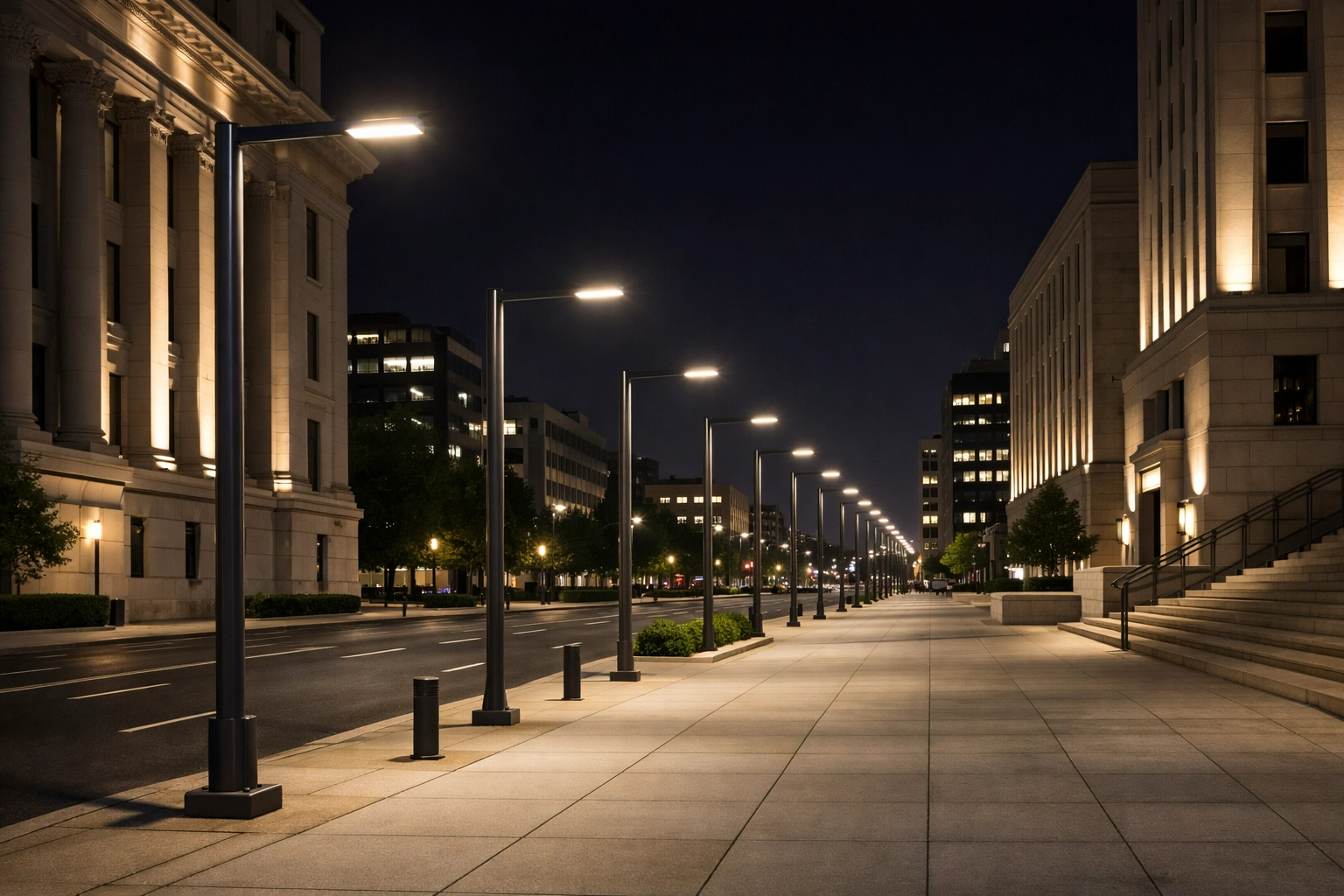
Introduction
Securing an industrial park perimeter requires more than fences and gate control; it depends on stable infrastructure that can support reliable, wide-area surveillance in demanding environments. This article explains what an industrial park security pole is, why it matters in layered perimeter protection, and how its design affects camera performance, sensor coverage, power routing, and resistance to tampering or weather. By the end, readers will have a practical understanding of how these poles contribute to intrusion detection, operational visibility, and long-term site security planning, setting up the key technical and deployment considerations covered next.
Why Industrial Park Security Poles Matter
Industrial parks represent complex security environments requiring robust, multi-layered perimeter defense mechanisms. While traditional fencing provides a basic physical boundary, modern threat landscapes demand integrated, active surveillance infrastructure. The industrial park security pole serves as the vital structural backbone for these advanced perimeter intrusion detection systems (PIDS). By elevating surveillance equipment above ground-level obstructions and potential tampering zones, these specialized structures enable continuous, high-fidelity monitoring of vast logistical yards, loading docks, and facility boundaries.
Definition and perimeter role
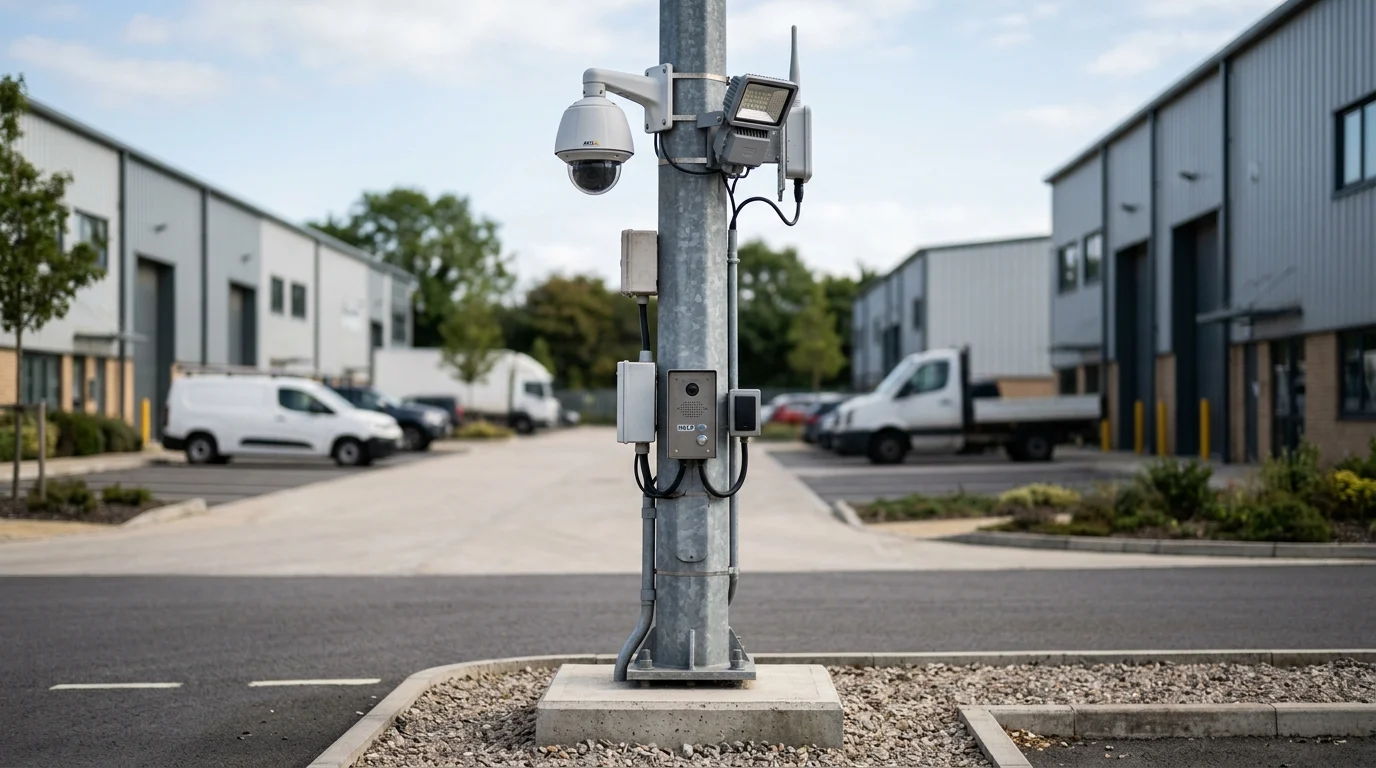
A security pole in this industrial context is an engineered vertical structure designed specifically to mount, power, and stabilize optical, thermal, and radar-based monitoring equipment. Unlike standard municipal lighting columns, dedicated security poles are manufactured to minimize deflection and micro-vibrations, ensuring high-resolution cameras and artificial intelligence-driven analytics sensors maintain an absolute fixed field of view. Deployments typically range from 4 to 12 meters in height, with the 6-meter variant serving as the industry standard for optimizing the line of sight across expansive manufacturing perimeters. These structures integrate internal cable management pathways, specialized anti-climb mechanisms, and weather-resistant base enclosures to protect critical power and fiber optic data conduits from both environmental degradation and deliberate sabotage.
Key risks in industrial parks
Industrial perimeters face multifaceted threats, including organized cargo theft, unauthorized personnel intrusion, and the targeted sabotage of critical utilities. A poorly secured perimeter can lead to millions of dollars in inventory loss, compromised intellectual property, and severe operational downtime. By deploying rigid security poles at calculated 50- to 100-meter intervals, facility managers establish continuous, overlapping zones of surveillance. This strategic placement eliminates blind spots and accelerates incident verification times, often decreasing the mean time to respond (MTTR) to a perimeter breach to under 90 seconds. Furthermore, elevating critical sensors mitigates the risk of vandalism, keeping high-value pan-tilt-zoom (PTZ) cameras and radar arrays safely out of reach from ground-level attacks.
Technical Specifications and Compliance
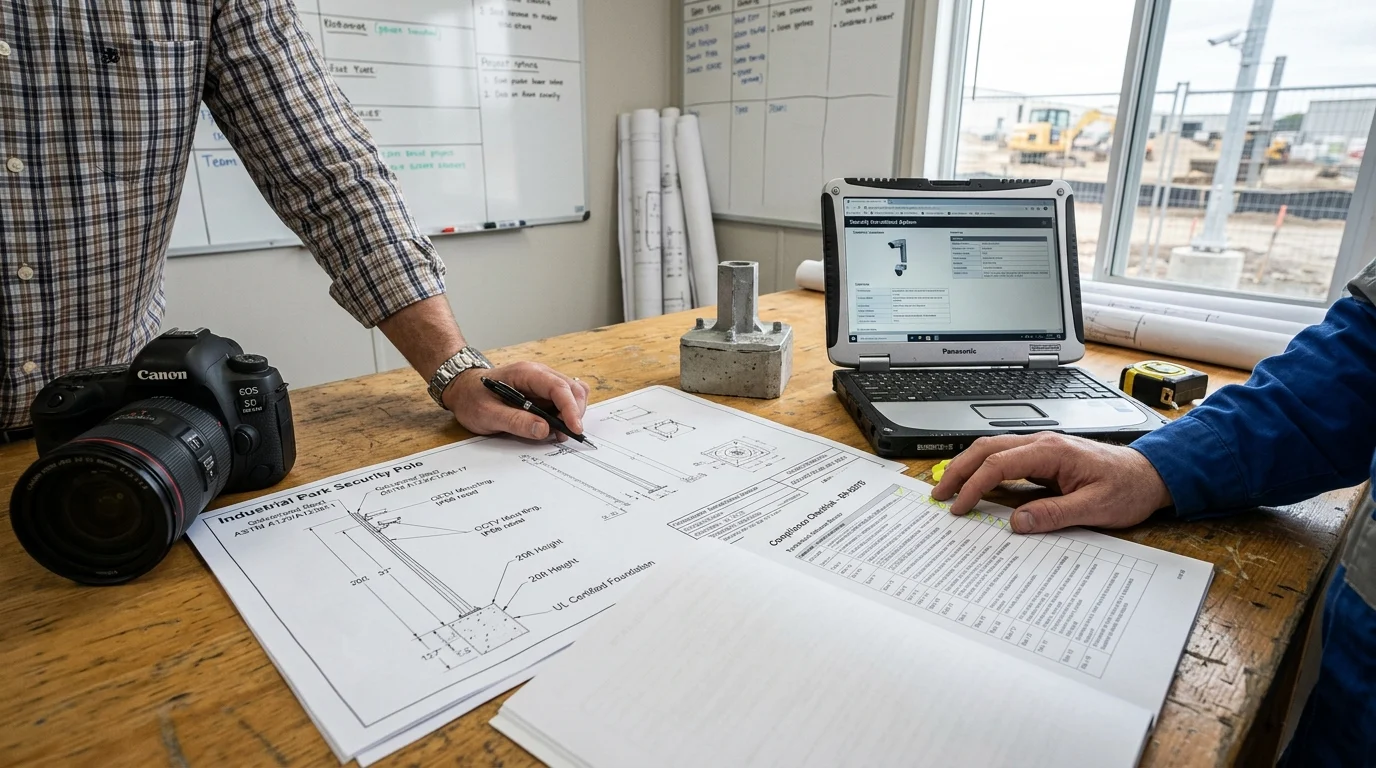
The efficacy of a sophisticated perimeter surveillance system is fundamentally tied to the structural integrity of its mounting hardware. Industrial park security poles must be meticulously engineered to withstand severe environmental stressors while maintaining absolute rigidity. Excessive oscillation compromises video analytics accuracy, triggering false alarms and rendering long-range thermal imaging completely ineffective during adverse weather conditions.
Critical design variables
Designing an optimal security pole requires carefully balancing material strength, aerodynamic profile, and payload capacity. The Effective Projected Area (EPA) of the mounted equipment dictates the required pole rigidity. For high-security industrial applications, poles are typically engineered to restrict camera deflection to less than 0.5 degrees under sustained wind loads of 120 mph (193 km/h). Material selection plays a critical role in achieving these exacting tolerances.
| Material | Typical Lifespan | Max Wind Load Capacity | Deflection Resistance | Weight Profile |
|---|---|---|---|---|
| Galvanized Steel | 25-30 years | >150 mph | Excellent | Heavy |
| Extruded Aluminum | 20-25 years | 120 mph | Good | Lightweight |
| Fiberglass/Composite | 30+ years | 100 mph | Moderate | Ultra-light |
Galvanized steel remains the dominant choice for heavy-duty industrial applications due to its superior stiffness and high EPA allowances. This rigidity allows a single mast to securely accommodate multiple PTZ cameras, infrared illuminators, and microwave communication dishes without succumbing to wind-induced harmonic resonance.
Testing, compliance, and quality assurance
Procurement specifications must mandate rigorous compliance with recognized structural, metallurgical, and electrical standards. Poles should be manufactured in strict accordance with AASHTO (American Association of State Highway and Transportation Officials) guidelines for structural supports. Quality assurance protocols must include non-destructive testing of weld seams and verification of the galvanization thickness, which should meet or exceed ASTM A123 standards requiring a minimum of 85 microns for standard steel profiles. Additionally, electrical enclosures and access handholes integrated into the pole base require NEMA 4X or IP66 ratings. These ratings ensure complete protection against high-pressure water ingress and the corrosive industrial airborne particulates frequently found in manufacturing and chemical processing parks.
Evaluation, Installation, and Selection
Strategic procurement of industrial park security poles demands a comprehensive evaluation of both the hardware specifications and the supplier’s logistical capabilities. A successful deployment seamlessly aligns the structural capacity of the pole with the precise topographical, environmental, and security requirements of the industrial facility.
Supplier comparison criteria
When evaluating pole manufacturers, security integrators must scrutinize production capacity, customization agility, and long-term quality guarantees. A premier supplier should confidently offer a minimum 10-year structural warranty and demonstrate the engineering capability to produce bespoke mounting brackets or custom base plates. Lead times remain a critical project metric; standard configurations should ideally ship within 4 to 6 weeks, whereas highly customized orders requiring specialized powder coating over galvanization might require 8 to 12 weeks. Assess the supplier’s capability to provide comprehensive documentation, including PE (Professional Engineer) stamped structural calculations tailored to the specific geographic wind zones of the installation site. Minimum order quantities (MOQs) should also be evaluated, as some manufacturers require batches of 10 to 20 units, which may not align with smaller, phased perimeter upgrade projects.
Decision steps for choosing the right option
The selection and final installation process must follow a rigorous, phased engineering methodology. The initial step involves conducting a geotechnical survey to determine soil bearing capacity, which directly dictates the foundation design. For a standard 8-meter steel security pole supporting a heavy camera payload, a concrete drilled pier foundation typically requires a depth of 1.5 to 2.5 meters, depending on local soil compaction and frost line depth. Next, civil engineers must map the subterranean conduit routing for fiber optic and high-voltage power lines to ensure seamless integration with the pole’s internal pathways. Finally, decision-makers must select appropriate physical deterrents—such as spiked anti-climb collars—and verify that the chosen pole configuration accommodates a 20% to 30% future payload expansion, ensuring the perimeter defense infrastructure remains highly scalable against evolving industrial threats.
Key Takeaways
- The most important conclusions and rationale for industrial park security poles
- Specs, compliance, and risk checks worth validating before you commit
- Practical next steps and caveats readers can apply immediately
Frequently Asked Questions
What height is best for an industrial park security pole?
For most perimeter projects, 6 meters is the common starting point. Final height should match camera range, fence layout, and blind-spot control across yards, gates, and loading zones.
Which material is better for perimeter security poles, steel or aluminum?
Galvanized steel is usually preferred for heavy sensor payloads and higher stiffness. Aluminum can work where lighter weight, corrosion resistance, and easier handling are more important.
What compliance points should buyers check before ordering security poles?
Confirm AASHTO structural design, ASTM A123 galvanizing, and NEMA 4X or IP66 enclosure protection. Also request weld inspection records and wind-load calculations for the mounted equipment.
Can Morelux customize industrial park security poles for project requirements?
Yes. Morelux supports custom pole dimensions, mounting brackets, base details, and finishes, with technical drawings, engineer support, and fast quotations for infrastructure and security projects.
What information helps speed up a quote for security pole sourcing?
Send pole height, material preference, wind speed, equipment payload, bracket layout, base plate or embed type, and project quantity. This helps Morelux prepare a faster, more accurate quotation and drawing set.