Introduction
In cold-region mining zones above 2,500 meters, solar pole systems must deliver dependable lighting and power where grid access is impractical and diesel logistics are costly. Performance in these settings is shaped by a demanding mix of thin-air UV exposure, subzero temperatures, snow loading, wind stress, and battery limitations that standard off-grid designs often cannot withstand. This article explains how altitude and cold affect photovoltaic output, energy storage, structural durability, and system autonomy, so readers can better evaluate design choices, operating risks, and the engineering features that determine whether a high-altitude solar pole will perform reliably in remote mining conditions.
Why High-Altitude Solar Pole Performance Matters in Cold Regions
Off-grid infrastructure in alpine and subarctic mining environments demands specialized engineering. A high-altitude solar pole must operate autonomously in zones where grid extension is economically or geographically unfeasible. Expanding traditional high-voltage electrical grids into mountainous terrain can cost upwards of $100,000 per kilometer, making localized solar generation the only viable financial option for remote outposts.
However, these environments impose a dual penalty: the thin atmosphere increases ultraviolet (UV) degradation on synthetic components, while extreme cold severely limits electrochemical energy storage performance, demanding a highly tailored engineering approach.
How are high-altitude solar pole systems defined?
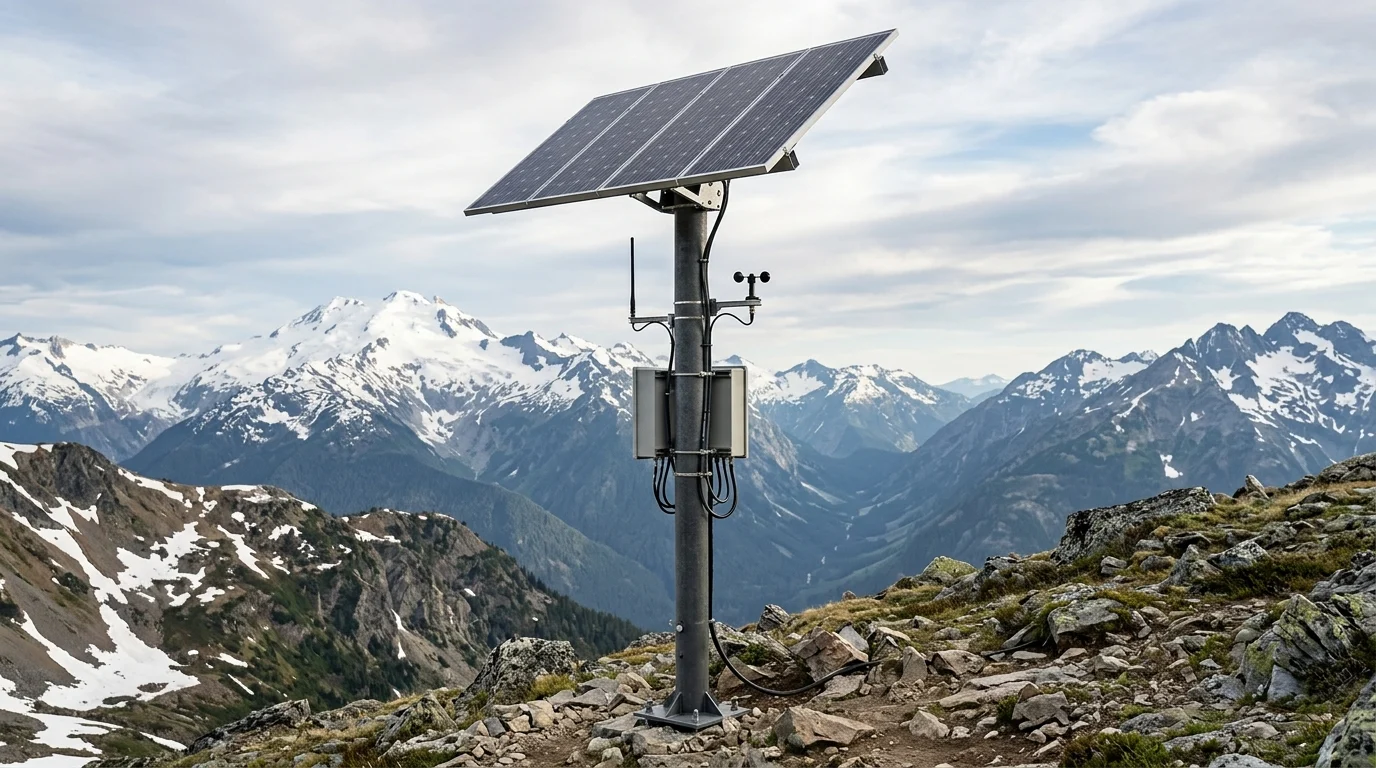
High-altitude solar pole systems are generally defined as autonomous vertical structures deployed at elevations exceeding 2,500 meters (8,200 feet) above sea level, frequently servicing copper, lithium, or gold extraction sites. Unlike standard municipal streetlights, these heavy-industrial assets integrate high-efficiency photovoltaic (PV) modules, advanced energy storage, and high-lumen LED luminaires or telemetry nodes into a single reinforced mast. They are purpose-built to sustain critical mining operations, including haul road illumination, perimeter security, and environmental monitoring, without any reliance on external power grids or diesel generators.
Which operating conditions affect performance most?
The harshest operating conditions stem from extreme ambient temperature fluctuations and intense solar irradiance. While high altitudes often benefit from clearer skies and up to 20% higher solar yield due to reduced atmospheric scattering, the extreme cold cripples standard energy storage mechanisms.
For example, standard Lithium Iron Phosphate (LiFePO₄) battery packs can lose up to 50% of their usable discharge capacity when temperatures plummet to -20°C. Furthermore, charge acceptance rates drop perilously close to zero near freezing. To combat this, industrial systems necessitate integrated thermal management protocols, such as 15W to 20W internal silicone heating pads, to maintain internal battery temperatures above the critical 0°C threshold during the charging cycle.
Design, Materials, and Installation Factors
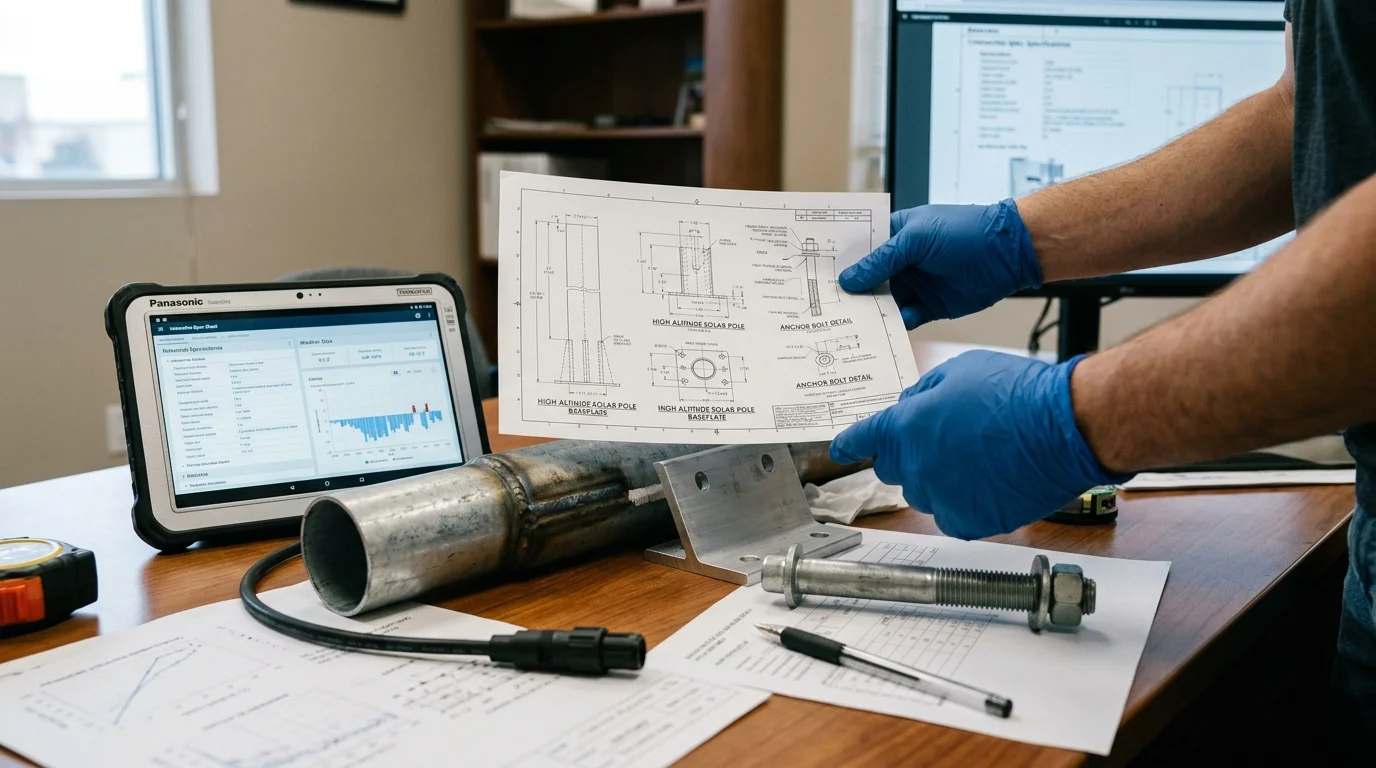
Achieving a 15-to-20-year operational lifespan in high-altitude mining zones requires meticulous attention to structural engineering and material selection. Equipment failures in these remote locations incur massive logistical penalties, meaning mechanical resilience is just as critical as electrical efficiency.
Engineers must account for dynamic environmental loads that would rapidly destroy commercial-grade lighting systems.
How do snow load, wind, frost heave, and battery limits affect design?
Alpine mining zones frequently experience violent wind gusts exceeding 130 km/h (80 mph), requiring poles to meet stringent wind-load ratings such as the AASHTO LTS-6 standard. Snow and ice accumulation on vertically or sharply angled PV panels must be minimized to prevent catastrophic yield reduction; thus, wrap-around cylindrical solar modules or steeply pitched top-of-pole mounts (angled at 45 to 60 degrees) are highly preferred.
Below ground, frost heave poses a severe structural threat. Moisture in the soil freezes and expands, generating enough upward force to unearth shallow foundations. To counteract this, concrete footings must extend 1.5 to 2.5 meters deep, anchoring well below the regional frost line. Concurrently, batteries are often deployed in insulated, subterranean enclosures at the base of the foundation to leverage geothermal stability, maintaining an operating baseline above -10°C even during extreme surface blizzards.
How do galvanized steel and aluminum compare?
Selecting the appropriate mast material involves balancing structural rigidity, corrosion resistance, and transport weight. The two dominant materials utilized in mining solar poles are hot-dip galvanized steel and extruded aluminum.
| Material | Typical Yield Strength | Corrosion Resistance | Weight Profile | Initial Cost Premium |
|---|---|---|---|---|
| Hot-Dip Galvanized Steel (Q235/Q345) | 235 – 345 MPa | Excellent (requires intact zinc coating) | Heavy (increases transport fuel costs) | Baseline |
| Extruded Aluminum (6063-T6) | ~214 MPa | Superior (naturally forms protective oxide layer) | Lightweight (up to 40% lighter than steel) | +30% to +40% |
While galvanized steel offers higher ultimate tensile strength suitable for massive multi-panel arrays, any superficial damage from flying mining debris can compromise its protective zinc coating, leading to rapid oxidation in damp snow. Aluminum, despite carrying a 30% to 40% cost premium, provides natural corrosion resistance and significantly reduces heavy-lifting requirements during manual installation on steep, inaccessible inclines where heavy machinery cannot operate safely.
How Mining Operators Should Evaluate Procurement
Procurement strategies for sub-arctic and high-altitude mining infrastructure must pivot from lowest capital expenditure (CAPEX) models to lowest total cost of ownership (TCO) frameworks.
The exorbitant cost of dispatching maintenance crews to elevations above 3,000 meters dictates that reliability, ease of deployment, and remote diagnostic capabilities take total precedence over initial hardware savings.
What steps improve sourcing, transport, and commissioning?
Logistics to remote mining zones, such as those in the Andes or the Canadian North, heavily influence product selection and project viability. Procuring modular, knock-down high altitude solar pole designs optimizes shipping volume, allowing logistics operators to fit up to 40% more units per standard 40-foot High Cube (40HQ) container compared to fully welded single-piece masts.
During commissioning, the harsh environment demands rapid assembly. Sub-zero temperatures severely compromise the manual dexterity of installation crews, increasing the risk of wiring faults. Therefore, systems must feature pre-wired, plug-and-play IP68-rated aviation connectors, eliminating the need for delicate on-site wire splicing and reducing the mechanical installation time per pole from several hours to under 45 minutes.
Which criteria guide vendor selection and compliance?
Vendor selection must be driven by empirical testing data and rigorous compliance with industrial standards rather than marketing claims. Procurement teams should demand third-party laboratory reports verifying Ingress Protection (IP66 minimum for luminaires, IP68 for subterranean battery boxes) and Impact Protection (IK08 to IK10 ratings to withstand flying gravel and heavy mining debris). Furthermore, electrical components must undergo cyclical temperature testing, demonstrating stable operation across a thermal gradient of -40°C to +50°C for a minimum of 500 operational cycles.
To secure the long-term investment, supply contracts should mandate stringent warranties, requiring at least a 5-year performance guarantee on lithium battery packs and a 20-year structural warranty on the pole assembly.
Key Takeaways
- The most important conclusions and rationale for High Altitude Solar Pole
- Specs, compliance, and risk checks worth validating before you commit
- Practical next steps and caveats readers can apply immediately
Frequently Asked Questions
Why are high altitude solar poles preferred in cold-region mining zones?
They provide off-grid lighting and monitoring where grid extension is too costly or impractical. In remote mines, a properly engineered solar pole reduces diesel dependence and supports reliable operation in harsh alpine conditions.
How does extreme cold affect a high altitude solar pole system?
Cold mainly reduces battery capacity and charging efficiency. For mining projects, specify insulated battery compartments and internal heaters to keep charging temperatures above 0°C and maintain winter autonomy.
Which pole material is better for high-altitude mining projects?
Galvanized steel suits heavy-duty structural loads, while aluminum lowers transport weight and improves corrosion resistance. Morelux can recommend the best option based on wind load, site access, and budget.
What installation details matter most in frost and high wind areas?
Use deeper foundations below the frost line, verify wind-load ratings, and choose panel angles that shed snow. These steps help prevent pole movement, low winter output, and premature structural failure.
Can Morelux provide custom high-altitude solar pole support for mining tenders?
Yes. Morelux supports project buyers with customized pole designs, technical drawings, engineer input, and fast quotations to match demanding mining, infrastructure, and cold-region site requirements.