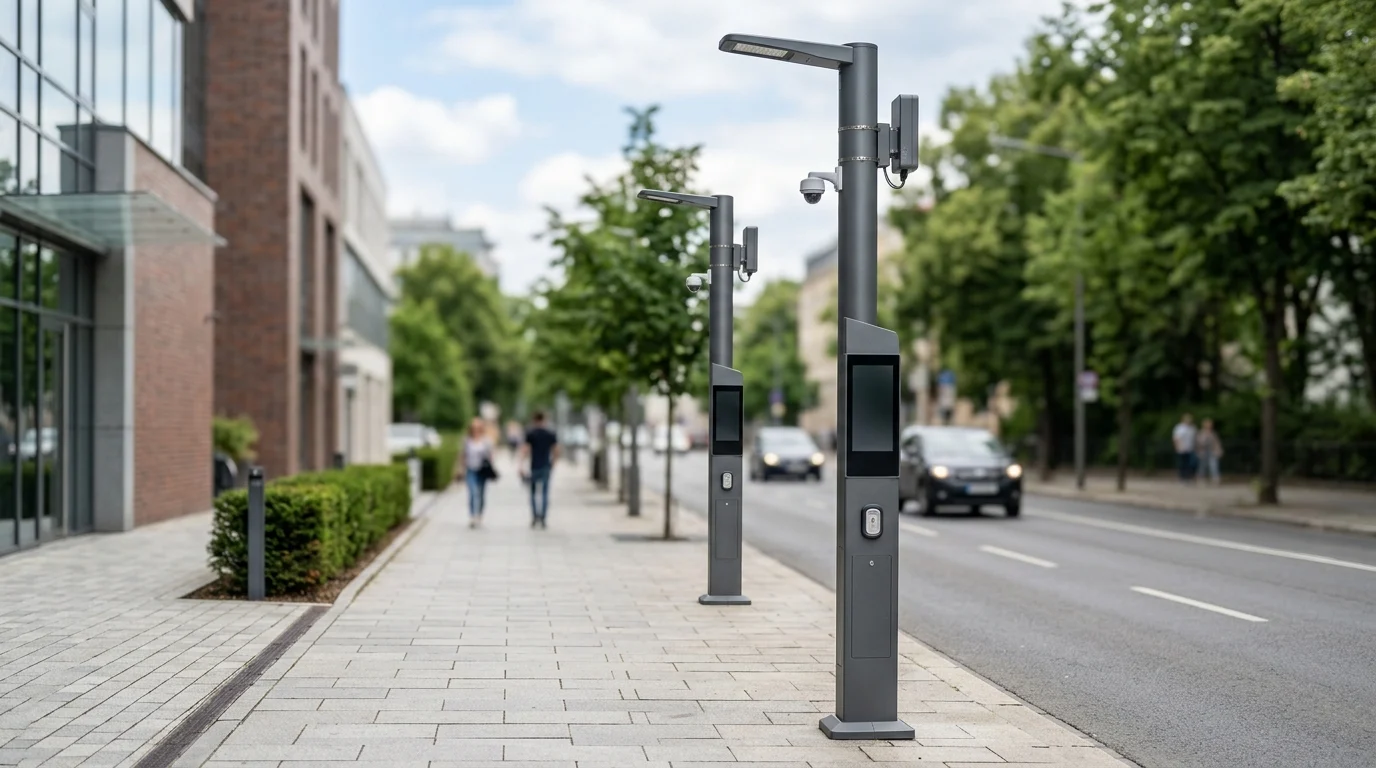
Cities are under pressure to expand connectivity, improve public services, and use space more efficiently without multiplying visible infrastructure. Multi-functional street poles address that challenge by combining lighting, sensors, communications equipment, cameras, and power distribution within a single structure. This article explains why these poles are becoming a practical foundation for smart city deployment, how they reduce street clutter while supporting data-driven operations, and what makes them more valuable than conventional lighting assets. From energy savings to telecom integration and modular design, the discussion that follows shows how one familiar element of the streetscape is evolving into a core platform for urban management.
Why multi-functional street poles are becoming core smart city infrastru
The transformation of municipal infrastructure is fundamentally altering how cities manage public space, utility distribution, and digital connectivity. Multi-functional street poles have emerged as the central nervous system of the modern smart city, replacing passive, single-purpose lighting structures with highly integrated, active digital assets. By consolidating essential urban services into a single vertical footprint, these structures reduce urban clutter while establishing a scalable foundation for advanced data collection and telecommunications.
Market analysis indicates that municipal dependency on intelligent infrastructure is accelerating, with smart pole deployments projected to achieve a compound annual growth rate (CAGR) exceeding 20% globally between 2024 and 2034. This shift is driven by the realization that standard streetlights—which account for 30% to 40% of a municipality’s total energy expenditure—can be converted from operational liabilities into revenue-generating assets via telecom leasing and data monetization.
How multi-functional poles change the role of public lighting assets
Historically, public lighting assets served a singular function: illuminating roadways and pedestrian paths to ensure safety. The introduction of multi-functional poles redefines this paradigm by transforming static poles into dynamic, multi-tenant real estate. Beyond housing high-efficiency LED luminaires, these structures act as vertical integration hubs equipped with modular compartments typically ranging from 15L to 50L in internal volume.
This architectural shift enables municipalities to lease physical space and power access to third-party operators. A single pole can concurrently host a telecommunications provider’s small cell base station, a mobility company’s electric vehicle (EV) charging interface, and a municipal environmental sensor suite. Consequently, the public lighting grid evolves into a dense, interconnected network capable of edge computing and real-time urban analytics.
Which urban pressures are driving adoption
Several acute urban pressures are accelerating the adoption of this integrated infrastructure. Foremost is the exponential demand for mobile broadband and the rollout of 5G networks. Unlike 4G macro-cells, 5G architectures utilize higher-frequency bands (such as 24 GHz to 39 GHz mmWave) that suffer from rapid signal attenuation, necessitating small cell densification at intervals of 150 to 300 meters. Street poles provide the optimal height (typically 6 to 12 meters), power availability, and geographic distribution for these nodes.
Additionally, the global push toward decarbonization and the subsequent rise in electric vehicle adoption present significant spatial challenges. Curbside EV charging requires dedicated power infrastructure that often clutters pedestrian walkways. Integrating Level 2 charging stations directly into existing lighting poles solves this spatial constraint while supporting zero-emission mandates. Finally, the growing necessity for hyper-local environmental monitoring—tracking particulate matter (PM2.5), nitrogen dioxide (NO2), and noise pollution—requires a dense grid of active sensors (often requiring ±5% to ±10% accuracy tolerances) that only a ubiquitous street-level asset can support.
What multi-functional street poles are and which specifications matter

A multi-functional street pole is a highly engineered, modular vertical structure designed to house diverse electrical, telecommunications, and IoT payloads while maintaining aesthetic and structural integrity. Unlike traditional hot-dip galvanized steel tubes, these advanced poles are typically constructed from extruded 6061-T6 aluminum or Q345 high-grade steel alloys featuring 4mm to 8mm wall thicknesses and internal segregation channels to separate high-voltage power from sensitive data cabling.
Understanding the technical specifications of these poles is critical for engineers and urban planners, as the structures must withstand significant environmental loads while providing continuous, regulated power to volatile technological payloads. Specifications must account for both current integration requirements and future hardware iterations.
Which systems are typically integrated into multi-functional poles
The payload of a multi-functional pole varies based on zoning and municipal objectives, but typical integrations span several distinct functional categories. Lighting systems are foundational, utilizing adaptive LED luminaires managed by central control systems via DALI 2.0 (Digital Addressable Lighting Interface) protocols. For telecommunications, poles frequently conceal 4G/5G macro or small cell antennas within RF-transparent radomes at the apex.
At the mid-section, security and surveillance modules are prevalent, including pan-tilt-zoom (PTZ) CCTV cameras, license plate recognition (LPR) systems, and public address (PA) speakers. The base of the pole is generally reserved for high-draw electrical interfaces.
To ensure compatibility and sufficient power provisioning, engineers evaluate payloads against standard consumption and protocol benchmarks:
| Subsystem Payload | Typical Power Draw | Standard Protocols / Interfaces |
|---|---|---|
| Adaptive LED Luminaire | 30W – 150W | DALI 2.0, Zhaga Book 18 |
| 5G Small Cell / Base Station | 200W – 1,000W | CPRI, eCPRI, Fiber Backhaul |
| PTZ CCTV & LPR Cameras | 15W – 60W | ONVIF, PoE+ (IEEE 802.3at) |
| EV Charging (Level 2) | 7.2kW – 22.0kW | OCPP 1.6J / 2.0.1, IEC 62196 |
| Environmental / Air Quality Sensors | 2W – 10W | LoRaWAN, NB-IoT, RS485 |
Additionally, integrated IoT gateways, Wi-Fi access points, and interactive digital signage or public information kiosks are often embedded at pedestrian height.
How to compare structural, electrical, and connectivity specifications
Evaluating multi-functional poles requires a rigorous comparison of structural, electrical, and connectivity parameters. Structurally, the pole must accommodate increased wind shear and weight. Engineers must verify wind load ratings—often required to exceed 120 mph (193 km/h) in coastal zones—and ensure the enclosure meets high ingress protection standards, typically IP65 or IP66, to safeguard internal electronics from dust and high-pressure water jets. Impact resistance is equally critical, with IK08 to IK10 ratings being standard for pedestrian-level compartments.
Electrically, the transition from passive lighting to active infrastructure demands a massive increase in power capacity. While a standard LED streetlight operates on less than 100 watts, a fully equipped smart pole with EV charging and 5G small cells may require a 100A service and 400V 3-phase power delivery. Connectivity specifications must mandate internal 12-core to 24-core single-mode fiber-optic cable routing capabilities, ensuring physical separation between communication lines and power distribution to prevent electromagnetic interference (EMI). Furthermore, standardization of mounting interfaces, such as Zhaga Book 18 or NEMA 7-pin sockets, is vital to ensure component interoperability.
How multi-functional street poles compare with conventional street light
The transition from conventional streetlights to multi-functional poles represents a fundamental shift from single-purpose operational expenditure to multi-purpose capital investment. Conventional lighting grids are optimized strictly for low initial costs and baseline illumination. In contrast, multi-functional poles operate as complex utility nodes, carrying a significantly higher initial capital expenditure (CapEx) but offering expansive capabilities that offset costs over the asset’s 20- to 25-year structural lifecycle.
To justify the investment, municipal stakeholders and private investors must systematically evaluate the differences in total footprint, functional capacity, and long-term financial performance. This requires moving beyond traditional metrics like lumens-per-watt to assess data yield, revenue generation, and spatial efficiency.
Which criteria best compare cost, performance, and footprint
When comparing the two infrastructures, spatial footprint and aesthetic impact are primary considerations. A conventional intersection might feature separate physical structures for a streetlight, a traffic camera, a telecom mast, and a standalone EV charger. A multi-functional pole consolidates these four to five distinct assets into a single vertical envelope, reducing total sidewalk footprint by up to 60% and minimizing associated civil works.
Cost and performance metrics also diverge sharply. A conventional pole demands a straightforward CapEx ranging from $1,000 to $3,000, functioning solely as a cost center. A multi-functional pole typically requires an upfront investment of $8,000 to $25,000 depending on the integrated payloads. However, performance is measured not just in energy efficiency, but in bandwidth provisioned, vehicles charged, and data packets routed. The ability to lease apex space to telecom operators or monetize EV charging can generate recurring annual revenue ranging from $1,200 to $4,000 per pole, radically altering the return on investment (ROI) timeline to an average of 4 to 7 years.
How to present a clear side-by-side comparison
To facilitate procurement decisions, engineering and financial teams rely on side-by-side matrices that quantify the operational and financial disparities between legacy and smart architectures.
| Specification / Metric | Conventional Street Lighting | Multi-Functional Street Pole |
|---|---|---|
| Primary Function | Illumination only | Lighting, Telecom, IoT, EV Charging |
| Typical CapEx per Unit | $1,000 – $3,000 | $8,000 – $25,000+ |
| Power Infrastructure | Low voltage (e.g., 120V/240V, <5A) | High capacity (e.g., 400V 3-phase, up to 100A) |
| Spatial Efficiency | High clutter (requires adjacent utility boxes) | High consolidation (internalizes utility hardware) |
| Revenue Generation | None (Operational cost center) | High (Telecom leasing, EV charging fees, Data) |
| Maintenance Approach | Reactive (Fix on failure) | Predictive (Remote monitoring, IoT telemetry) |
What compliance, procurement, and deployment challenges to plan for
Despite the clear advantages of multi-functional street poles, widespread deployment is frequently bottlenecked by systemic complexities. Transitioning a municipal lighting grid into an intelligent edge network involves intersecting domains of civil engineering, telecommunications law, public procurement, and cybersecurity.
Successful rollouts require meticulous planning to navigate fragmented municipal bureaucracies. Often, the transportation, IT, and public works departments operate in silos, creating friction when deploying an asset that spans all three jurisdictions. Anticipating these challenges is critical to preventing cost overruns and deployment stagnation.
Which codes, permitting, and cybersecurity requirements apply
Regulatory compliance is a multi-layered hurdle. Structurally, poles must adhere to regional transportation codes (such as AASHTO LTS-6 in North America or Eurocode 4 in Europe) which dictate wind loading, breakaway requirements for traffic safety, and foundational depth. Permitting represents a significant temporal risk; securing approvals from historical commissions, utility providers, and local zoning boards can extend deployment timelines by 6 to 18 months per district.
Simultaneously, the integration of data-gathering payloads introduces stringent cybersecurity and privacy mandates. Poles equipped with optical sensors and IoT gateways must comply with data protection frameworks like GDPR or CCPA. At the network level, securing the infrastructure against intrusion requires zero-trust architectures, AES-256 end-to-end encryption for all telemetry data, and compliance with standards such as ISO/IEC 27001. Vulnerable IoT nodes present physical access points to municipal networks, making hardware-level encryption and secure boot protocols mandatory.
What procurement steps support better vendor selection
Procurement of multi-functional poles cannot follow the traditional lowest-bidder commodity purchasing model. Because these assets have structural lifecycles exceeding 20 years, while internal technology payloads become obsolete in 3 to 5 years, vendor selection must prioritize modularity and interoperability. Procurement frameworks should require adherence to open standards, such as the TALQ Consortium for smart city device networks or uCIFI for universal data models.
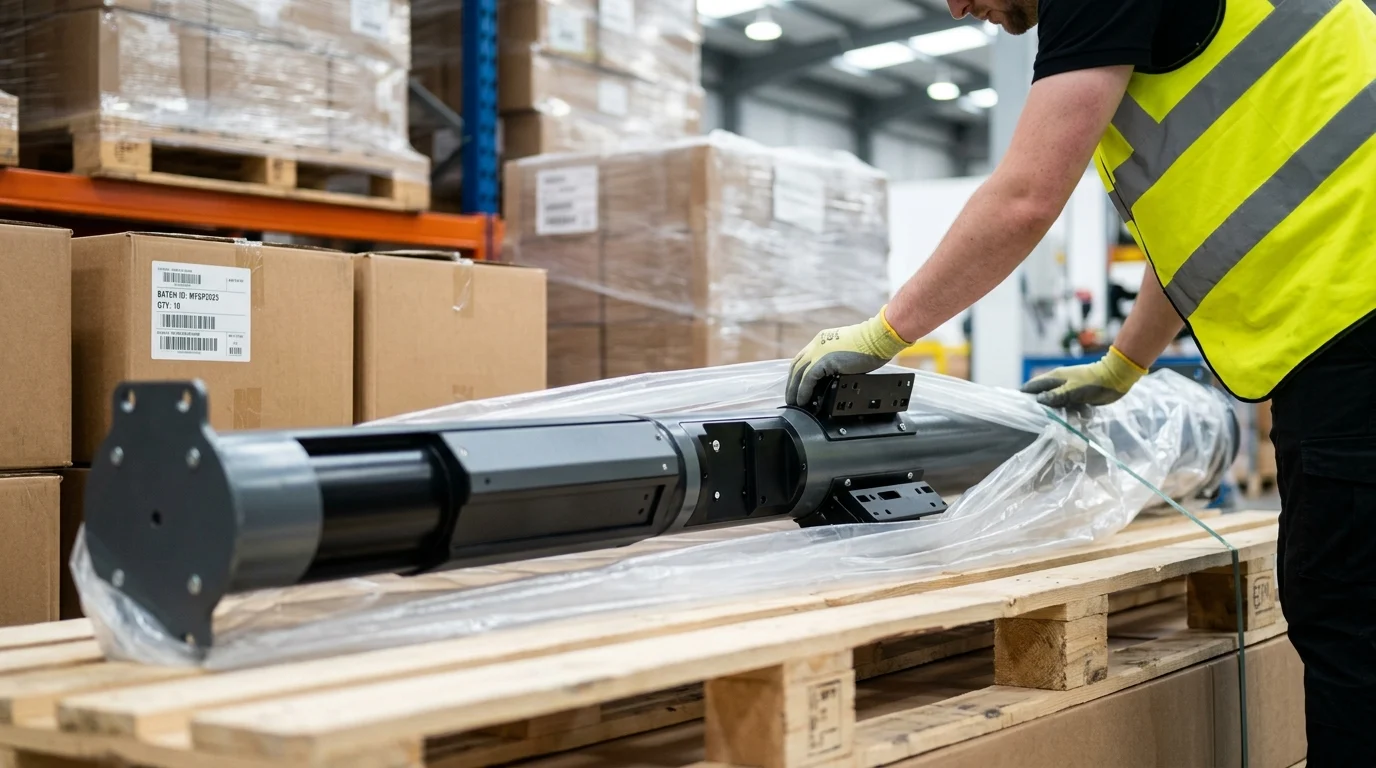
Municipalities must also structure requests for proposals (RFPs) to avoid vendor lock-in, factoring in hardware lead times of 12 to 24 weeks and Minimum Order Quantities (MOQs) typically ranging from 50 to 200 units for custom extrusions. This involves separating the procurement of the physical structure from the software management platform and the modular hardware payloads. Establishing public-private partnerships (PPPs) or concession agreements during the procurement phase can also offset high initial CapEx, allowing private telecom or energy operators to fund the infrastructure in exchange for long-term leasing rights.
How installation, maintenance, and total cost affect rollout
The total cost of ownership (TCO) extends far beyond the physical pole. Installation costs frequently dwarf the hardware CapEx, primarily due to the extensive civil works required. Upgrading a legacy lighting grid to support multi-functional poles often necessitates extensive trenching—costing between $50 and $150 per linear foot—to lay high-capacity fiber-optic backhauls and upgrade power lines to 400V 3-phase systems to support rapid EV charging.
Maintenance logistics also undergo a paradigm shift. While traditional streetlights require simple bucket-truck rollouts for bulb replacements, multi-functional poles house complex electronics requiring specialized IT and telecom technicians. However, the integration of remote telemetry allows for predictive maintenance, reducing diagnostic truck rolls by 30% to 50%. By monitoring internal temperatures, power fluctuations, and connectivity status in real-time, operators can dispatch crews only when necessary, thereby optimizing long-term operational expenditures (OpEx).
How to evaluate multi-functional street poles for scalable deployment
Transitioning an entire urban grid to multi-functional architecture in a single phase is financially and logistically prohibitive for most municipalities.
Key Takeaways
- The most important conclusions and rationale for multi-functional street poles
- Specs, compliance, and risk checks worth validating before you commit
- Practical next steps and caveats readers can apply immediately
Frequently Asked Questions
What can a multi-functional street pole integrate?
Typical integrations include LED lighting, 4G/5G small cells, CCTV, PA speakers, environmental sensors, and EV charging, depending on project goals and local utility capacity.
Why are multi-functional street poles important for smart cities?
They combine lighting, connectivity, monitoring, and charging in one structure, reducing street clutter, improving data coverage, and making public infrastructure easier to scale.
Which materials are best for multi-functional street poles?
6061-T6 aluminum and Q345 steel are common choices because they offer strong structural performance, corrosion resistance, and flexibility for custom smart pole designs.
Can Morelux customize smart poles for municipal or commercial projects?
Yes. Morelux provides customized aluminum and steel smart poles with technical drawings, engineer support, and manufacturing options matched to project requirements.
How quickly can Morelux provide a quote for a smart pole project?
Morelux emphasizes responsive B2B support and can provide fast quotations, often within 24 hours after receiving project specifications.