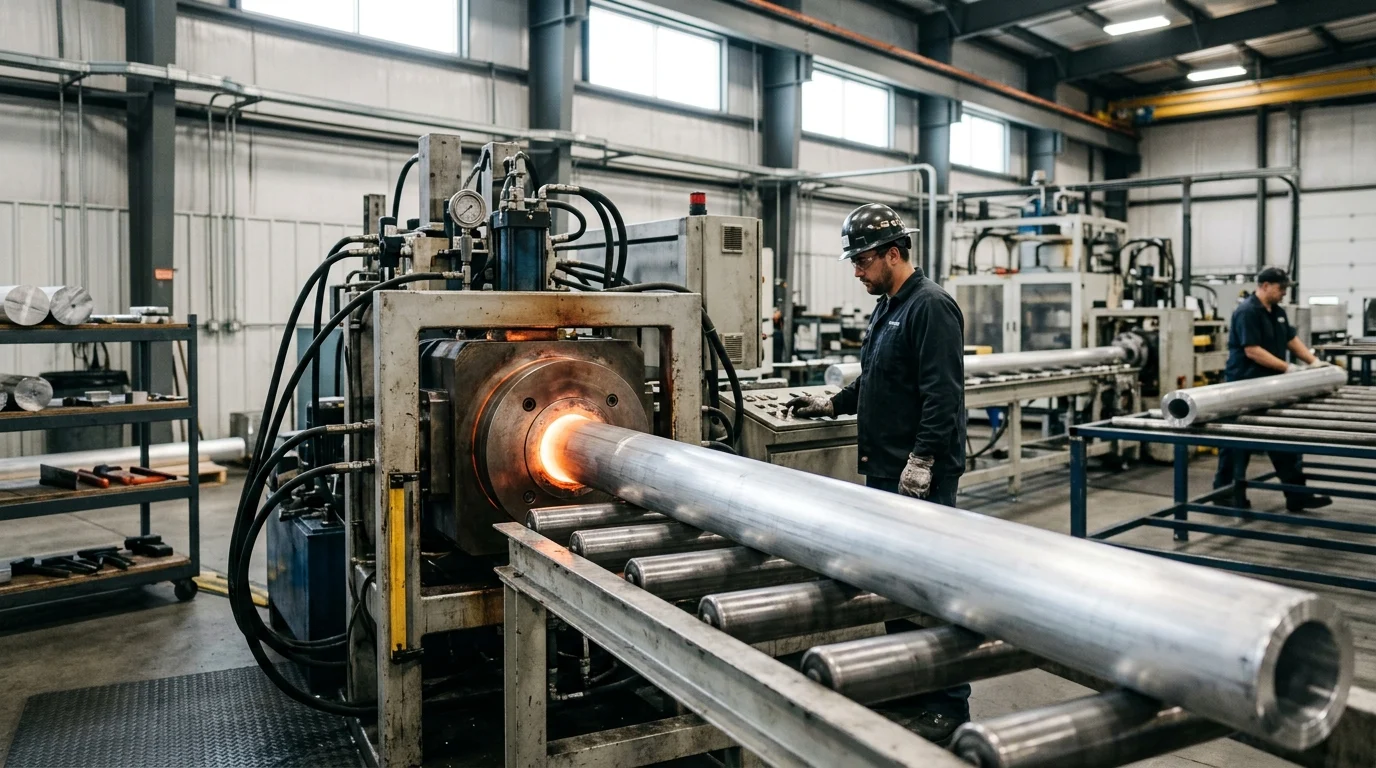
Choosing how an aluminum pole is made has a direct impact on strength, appearance, and long-term cost. Spun and welded production methods each shape the pole differently, affecting seam visibility, load capacity, corrosion performance, and the range of designs available for lighting, telecommunications, and other infrastructure uses. Understanding these differences helps specifiers and buyers match the fabrication process to the site conditions, wind loads, and project budget. The discussion below compares both methods so you can see where each one performs best and what tradeoffs matter most in practical applications.
Why aluminum pole production methods matter
The selection of manufacturing methods for aluminum poles fundamentally dictates the structural integrity, aesthetic quality, and lifecycle cost of the final installation. Whether deployed for municipal street lighting, high-mast stadium illumination, or telecommunications infrastructure, aluminum is heavily favored for its inherent corrosion resistance and high strength-to-weight ratio. However, transforming raw aluminum into a load-bearing vertical structure requires distinct fabrication pathways, primarily spinning and welding.
Engineers and procurement specialists must understand that the choice between spun and welded production is not merely a matter of vendor preference. The production method alters the metallurgical properties of the alloy, defines the geometric possibilities of the pole, and establishes strict boundaries on load capacities. Consequently, specifying the correct production method is a critical engineering decision.
Cost and performance impacts
The production method directly influences the aerodynamic behavior and load-bearing capacity of the pole under environmental stress. Aluminum poles are subjected to complex bending moments driven by wind loads acting on the Effective Projected Area (EPA) of attached luminaires or equipment. Spun poles, utilizing seamless extruded tubes, offer uniform stress distribution across their circular cross-sections, making them highly efficient for standard wind zones up to 130 mph.
Conversely, welded poles—often fabricated into multi-sided polygons—provide exceptional stiffness and a higher moment of inertia, which is mandatory for extreme structural demands. However, the introduction of a longitudinal weld seam alters the localized temper of the aluminum, creating a Heat-Affected Zone (HAZ). If not properly managed through post-weld heat treatment, the yield strength within the HAZ can drop by 30% to 40%, requiring thicker nominal wall dimensions to compensate, thereby driving up raw material costs.
Key factors for specifiers and buyers
For specifiers and buyers, the decision matrix must balance upfront capital expenditure against long-term maintenance and compliance requirements. Commercial buyers evaluate total cost of ownership (TCO), which includes the initial unit price, freight logistics, and the installation labor dictated by the pole’s total weight. Depending on the manufacturing method, wall thicknesses can vary from a lightweight 0.125 inches for decorative spun poles to over 0.500 inches for heavy-duty welded structures.
Furthermore, regulatory compliance plays a decisive role. Infrastructure projects frequently require adherence to the AASHTO LTS-6 (or newer) standard for structural supports. Specifiers must ensure that the chosen manufacturing method can reliably produce poles that meet stringent deflection limits and fatigue categories required by state Departments of Transportation (DOTs), particularly for structures supporting sensitive camera equipment or heavy traffic signals.
Spun vs. welded aluminum pole production methods
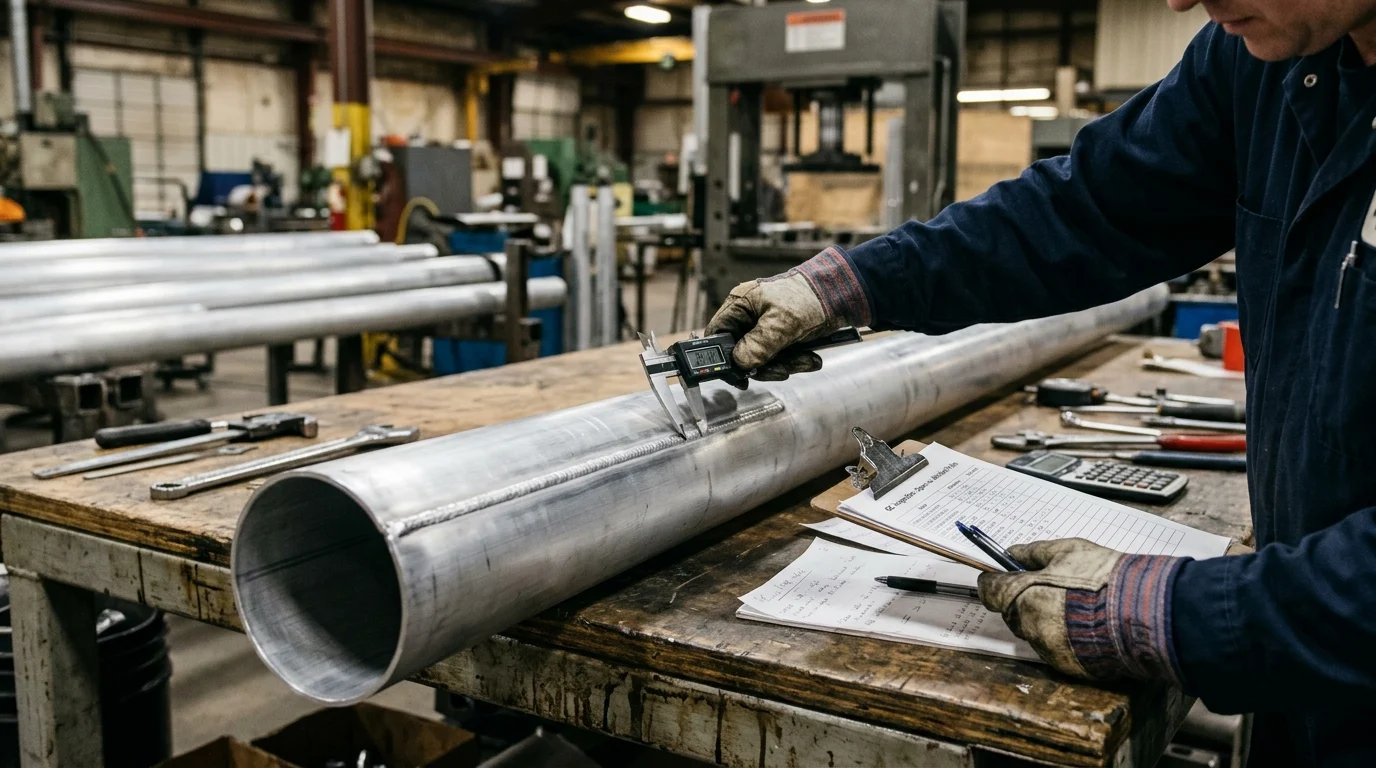
While both spun and welded aluminum poles serve similar infrastructural purposes, their fabrication processes utilize entirely different raw materials, heavy machinery, and metallurgical transformations. Understanding these mechanical processes is essential for evaluating vendor capabilities and matching the product to the project’s structural demands.
How spun pole manufacturing works
Spun aluminum pole manufacturing begins with a seamless extruded aluminum tube. The tube is mounted onto a heavy-duty CNC (Computer Numerical Control) spinning lathe. As the lathe rotates the tube at high speeds—typically between 400 and 800 RPM—a hardened steel roller applies immense localized pressure against the exterior of the aluminum. The roller travels longitudinally along the spinning tube, gradually compressing and yielding the metal against an internal mandrel.
This cold-working process tapers the pole from a larger base diameter to a smaller top diameter while simultaneously work-hardening the aluminum. Advanced CNC controls ensure precise wall thickness reduction, which must be tightly monitored to prevent structural thinning beyond a 10% to 15% tolerance. The result is a seamless, round-tapered pole with an exceptionally smooth surface finish and continuous grain flow.
How welded pole fabrication works
Welded pole fabrication, in contrast, originates from flat aluminum plate or sheet metal. The material is precision-cut using plasma or laser systems to form a trapezoidal blank. This blank is then transferred to a high-tonnage tandem press brake, which executes a series of longitudinal bends to form the flat sheet into a closed polygon—commonly an octagon or dodecagon—or rolled into a uniform cylinder.
Once shaped, the edges are joined via automated longitudinal seam welding, utilizing either Tungsten Inert Gas (TIG) or Metal Inert Gas (MIG) processes. High-speed automated welding tractors travel along the seam at precise travel speeds to ensure complete joint penetration. Because the heat of welding degrades the temper of the aluminum, manufacturers often utilize specific filler alloys and may subject the finished pole to artificial aging ovens to restore structural temper (e.g., returning a 6061 alloy to a T6 condition).
Alloys, dimensions, and design options
The choice of manufacturing method dictates the alloys available for use. Spun poles rely on highly extrudable alloys, predominantly 6063-T6 and 6061-T6, which offer excellent surface finish and formability. Welded poles frequently utilize marine-grade sheet alloys like 5052-H32 or 5086-H34, as well as 6061-T6 plate, which are chosen for their superior weldability and high base-metal strength.
| Characteristic | Spun Aluminum Poles | Welded Aluminum Poles |
|---|---|---|
| Base Material | Seamless extruded tube | Aluminum plate or sheet |
| Primary Alloys | 6063-T6, 6061-T6 | 5052-H32, 5086-H34, 6061-T6 |
| Maximum Height | Typically up to 40–50 ft | Exceeds 100+ ft (High-mast) |
| Cross-Section | Round, round-tapered | Square, polygonal (octagonal, etc.) |
Dimensional constraints also diverge significantly. Spun poles are generally limited by the length of the spinning lathe and the availability of seamless extruded tubes, capping out around 40 to 50 feet in height. Welded poles face virtually no height restrictions, as multiple polygonal sections can be slip-fitted together on-site, allowing for high-mast structures exceeding 100 feet in height with complex, high-capacity base plate designs.
Comparing spun and welded aluminum poles
When evaluating spun versus welded poles side-by-side, engineers must look beyond the basic geometry and assess how the distinct manufacturing footprints impact the pole’s long-term behavior in the field. These differences manifest sharply in fatigue resistance, aesthetic longevity, and the rigorousness of quality control required during fabrication.
Core differences in strength, finish, and design
The most prominent core difference lies in the structural continuity of the cross-section. Spun poles inherently lack a longitudinal seam, providing a continuous, uninterrupted grain structure. This seamlessness eliminates the stress concentrations typically associated with weld toes, granting spun poles superior performance in high-cycle fatigue environments, such as vortex shedding induced by steady, low-velocity winds. Aesthetically, the seamless round-tapered profile is highly prized in architectural streetscapes for its clean, classic appearance.
Welded poles, while possessing a visible longitudinal seam (unless aggressively ground flush and powder-coated), excel in absolute rigidity. By forming the aluminum into multi-sided polygons, manufacturers increase the moment of inertia without linearly increasing the wall thickness. This geometry makes welded poles exceptionally resistant to deflection under heavy loads. However, the presence of the weld seam means engineers must apply appropriate reduction factors for the HAZ when calculating the ultimate bending capacity.
Quality assurance, testing, and standards
Quality assurance protocols vary drastically between the two methods due to their respective failure modes. For welded aluminum poles, the integrity of the longitudinal seam is paramount. Facilities must adhere to the AWS D1.2 Structural Welding Code for Aluminum, which dictates strict Non-Destructive Testing (NDT) requirements. Depending on the specification, 10% to 100% of the weld seam may require ultrasonic or radiographic inspection to detect subsurface porosity or lack of fusion.
Quality control for spun poles focuses heavily on dimensional stability and material flow. Because the spinning process stretches the metal, technicians must utilize ultrasonic thickness gauges to ensure the final wall thickness does not fall below the engineered minimum—often strict thresholds like 0.125 or 0.156 inches. Furthermore, penetrant testing is frequently employed on the base-to-pole circumferential welds, as this connection represents the highest stress concentration on a spun pole structure.
Sourcing and production considerations
Procurement strategy in the aluminum pole industry is heavily influenced by the manufacturing method, as each process carries distinct implications for supply chain logistics, capital tooling requirements, and production lead times. Buyers must align their project schedules and volume requirements with the economic realities of spun versus welded fabrication.
Equipment, tooling, and volume effects
Spun pole manufacturing is characterized by high initial tooling costs but excellent economies of scale. The process requires specific hardened steel mandrels to match the exact taper and base diameter of the desired pole. Custom mandrels can incur tooling charges ranging from $5,000 to $12,000. Consequently, spun poles are most cost-effective when ordered in high volumes, typically requiring Minimum Order Quantities (MOQs) of 50 to 100 units to properly amortize the tooling investment.
Welded pole fabrication utilizes highly versatile equipment. A tandem press brake can form an infinite variety of polygonal tapers simply by adjusting the CNC back-gauging and tooling dies, requiring zero custom mandrels. This flexibility makes welded production highly suitable for custom, low-volume orders, prototype designs, or highly specific one-off structures where bespoke tooling costs would be prohibitive.
Cost drivers and lead times
Cost drivers for raw materials also diverge. Spun poles rely on large-diameter seamless extruded aluminum tubes, which command a significant price premium per pound compared to standard flat-rolled sheet or plate. The global supply chain for these specialized extrusions is narrower, making spun pole costs more susceptible to aluminum billet market fluctuations and extrusion mill capacities.
Lead times reflect these supply chain dynamics. Standard welded poles can often be fabricated in 4 to 6 weeks, provided the facility stocks standard aluminum plate. Spun pole lead times are heavily dependent on the availability of the extruded base tubes. If the extrusion must be custom-milled, spun pole lead times can easily extend to 8 to 12 weeks, a critical factor for fast-track infrastructure projects.
Process controls and defect reduction
Defect reduction requires distinct process controls for each method. In automated pole welding, the primary threats are hydrogen porosity and thermal distortion. Manufacturers mitigate these by utilizing highly controlled shielding gas mixtures (often argon/helium blends) and automated clamping fixtures that hold the polygonal shape rigid as the weld pool cools. A well-optimized automated welding line targets a defect rate of less than 1%.
For spun poles, process controls are centered on the metallurgical limits of the cold-working process. Pushing the lathe feed rate too aggressively can induce micro-cracking or catastrophic tearing of the aluminum tube. Facilities rely on advanced CNC programming to optimize the roller path and pressure, ensuring the material flows plastically without exceeding its elongation limits, thus maintaining a near-zero scrap rate during steady-state production.
Choosing the right method
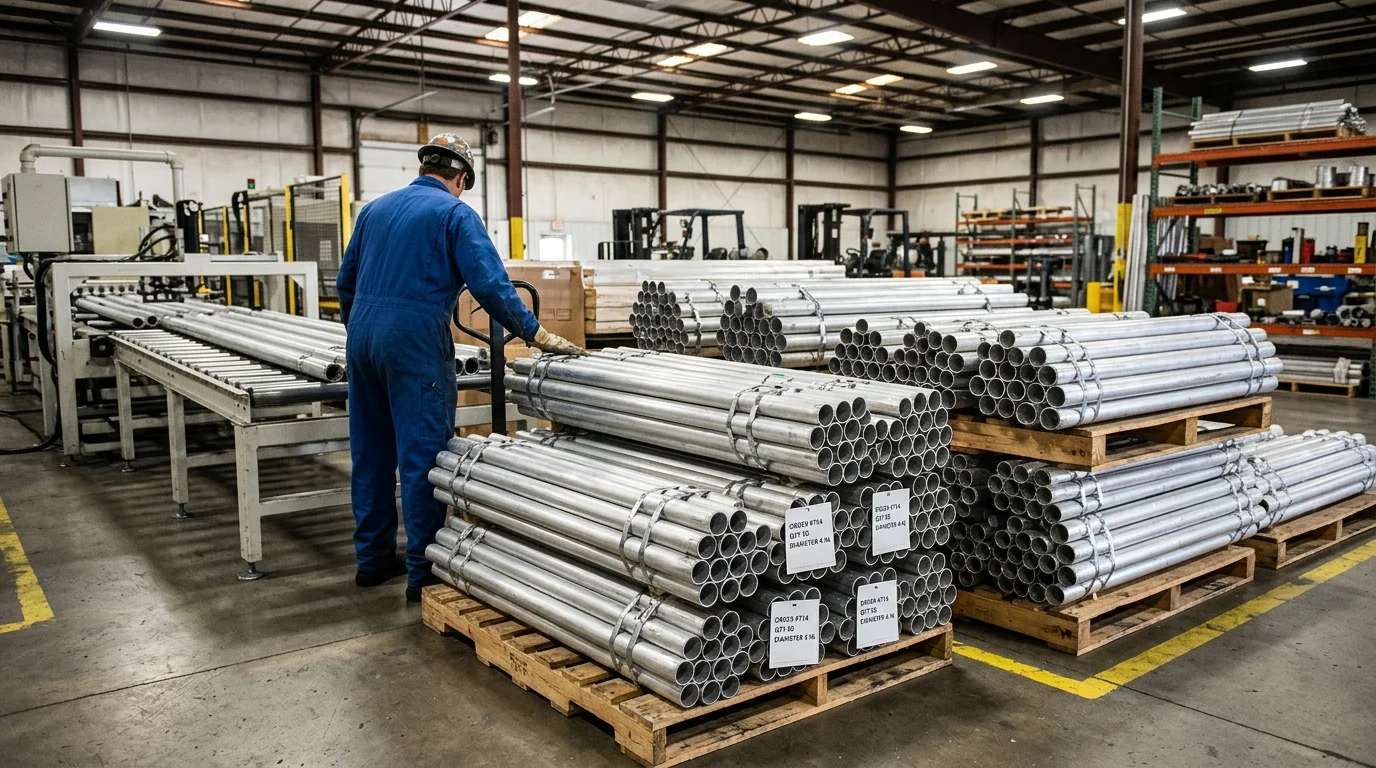
Selecting between spun and welded aluminum poles requires a holistic evaluation of the project’s structural demands, aesthetic expectations, and budgetary constraints. Neither method is universally superior; rather, each excels in specific infrastructural niches. Specifiers must translate their site-specific variables into precise manufacturing requirements.
When to specify spun vs. welded poles
Spun poles should be the default specification for municipal streetscapes, residential subdivisions, and decorative lighting applications where heights remain under 40 feet. In these environments, the seamless aesthetic is highly valued, and the structural loads from standard LED luminaires fall well within the capacity of a round-tapered 6063-T6 structure. Furthermore, the high volume of poles typically required for such developments makes the spun method highly cost-competitive.
Welded poles are mandatory for heavy-duty applications. When designing high-mast lighting exceeding 80 feet, sports stadium illumination, or structures supporting heavy telecommunications arrays, the high moment of inertia provided by a multi-sided welded polygon is non-negotiable. Additionally, for traffic camera poles where intelligent transportation systems (ITS) dictate strict deflection limits of less than 0.5 degrees under wind load, the rigidity of a welded structure is essential.
| Application Type | Recommended Method | Key Decision Driver | Typical Wall Thickness |
|---|---|---|---|
| Architectural Streetscapes | Spun | Seamless aesthetics, round taper | 0.125 in |
| Heavy-Duty / High-Mast | Welded | High moment of inertia, rigidity | 0.500+ in |
Key Takeaways
- The most important conclusions and rationale for aluminum pole production methods
- Specs, compliance, and risk checks worth validating before you commit
- Practical next steps and caveats readers can apply immediately
Frequently Asked Questions
When should I choose a spun aluminum pole?
Choose spun poles for standard lighting and decorative projects needing a smooth, seamless round taper, lower weight, and good wind performance up to typical design limits.
When is a welded aluminum pole the better option?
Use welded poles for higher loads, larger EPA equipment, traffic systems, or extreme wind zones where extra stiffness and custom polygon shapes are required.
How does the production method affect aluminum pole strength?
Spun poles keep a seamless wall with uniform stress flow. Welded poles can be very strong, but the weld heat-affected zone must be engineered properly, often with thicker walls.
Can Morelux provide custom drawings and fast quotes for spun or welded poles?
Yes. Morelux supports project buyers with custom pole solutions, technical drawings, engineer assistance, and 24-hour quote response for infrastructure and commercial projects.
What should buyers confirm before ordering aluminum poles?
Check wind speed, EPA, mounting height, arm load, finish, and required standards such as AASHTO or local DOT rules. This helps match the right spun or welded design.