Introduction
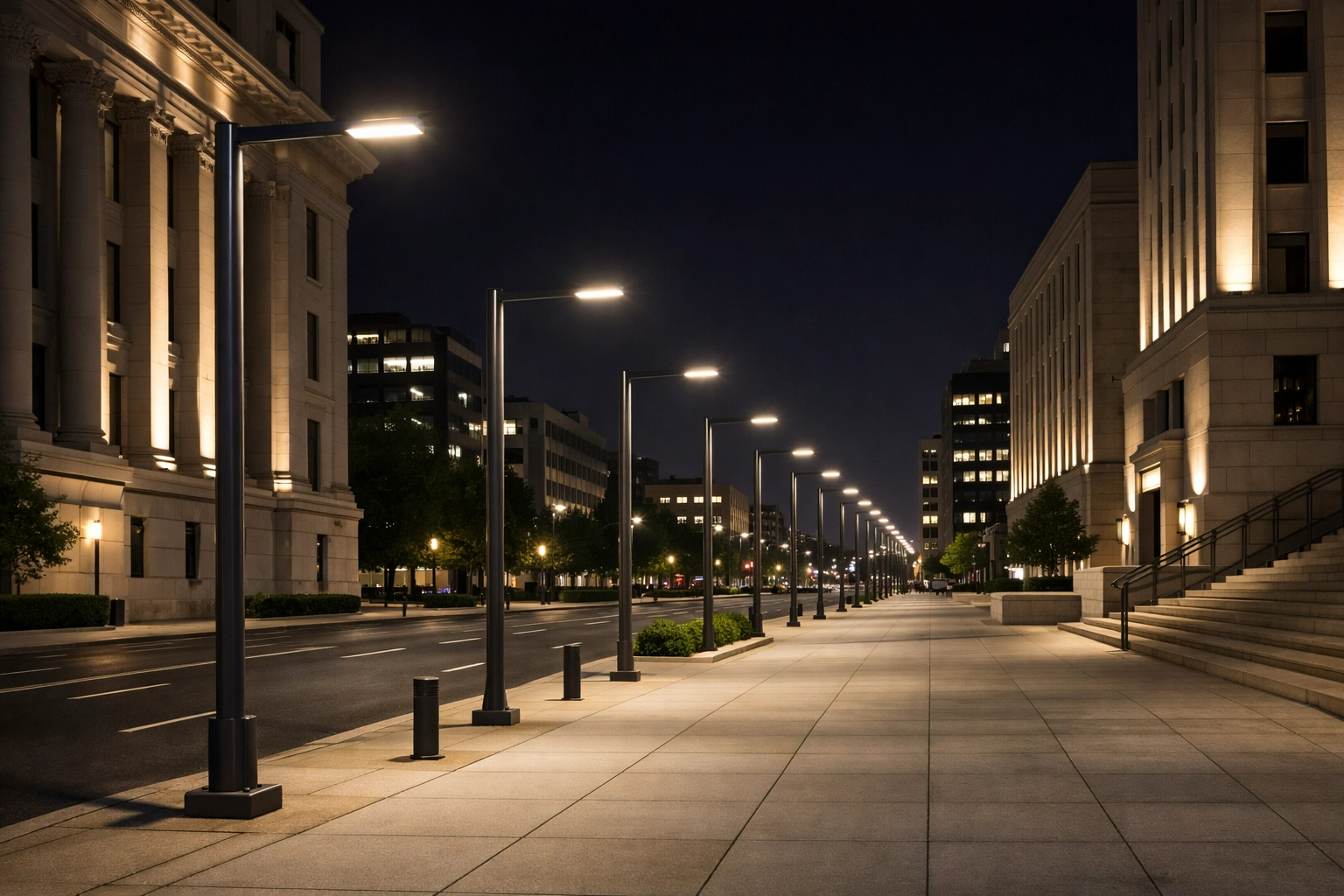
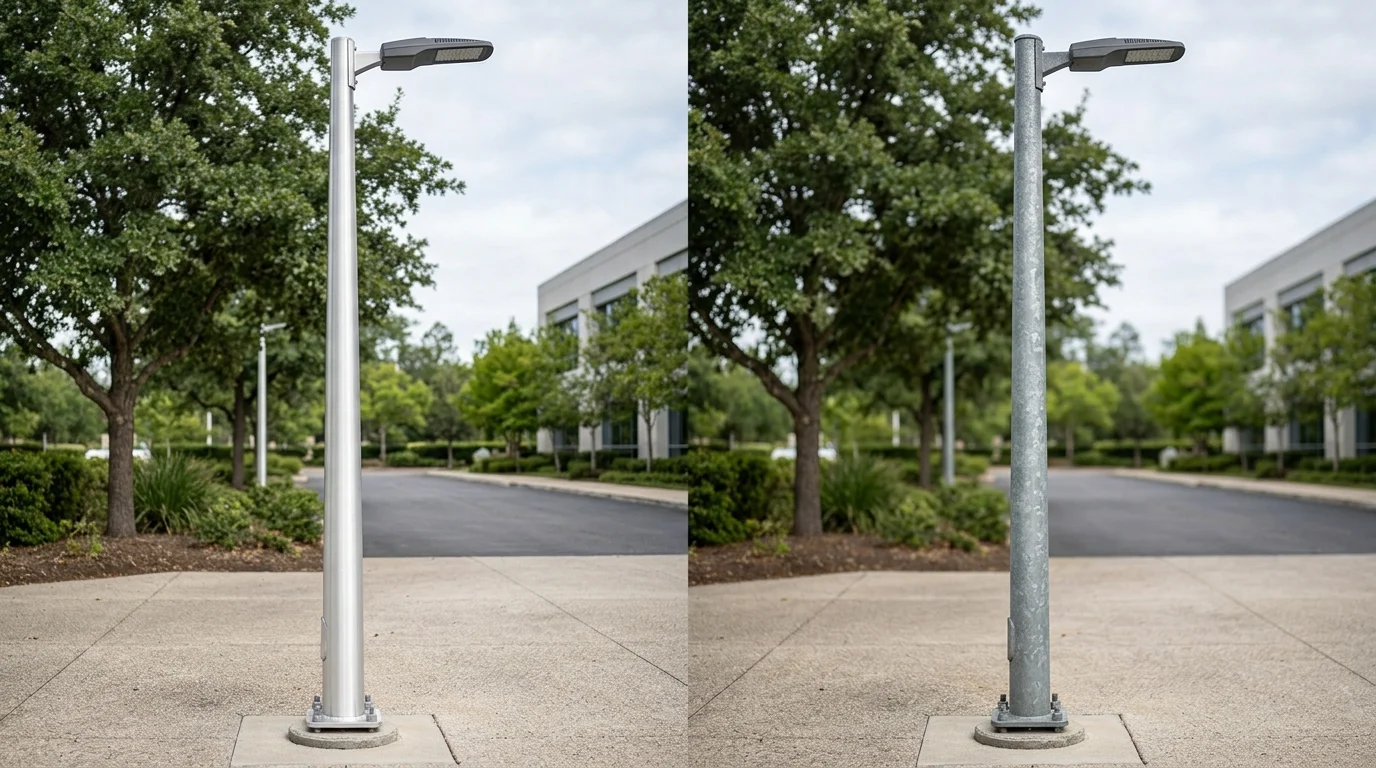
Choosing between aluminum and steel for an outdoor lighting pole affects far more than initial price. The material determines how well the pole handles corrosion, wind loading, weight limits, installation demands, and long-term maintenance in real site conditions. This comparison explains where aluminum offers clear advantages, where steel still makes sense, and how climate, exposure to salt or moisture, and project budget change the decision. By the end, readers will have a practical framework for selecting the better pole material for streetscapes, parking lots, campuses, and other exterior applications.
Why the aluminum lighting pole vs steel choice matters
Specifying outdoor lighting infrastructure requires balancing structural integrity, budget constraints, and environmental durability. The debate between aluminum and steel lighting poles is a fundamental engineering consideration for urban planners, facility managers, and electrical contractors. Both materials offer distinct metallurgical advantages, but selecting the wrong substrate can lead to premature structural failure, inflated maintenance budgets, or compromised site safety.
Lifecycle cost, corrosion exposure, and maintenance
Evaluating lifecycle cost extends far beyond the initial purchase order. While carbon steel often presents a lower upfront procurement cost, its susceptibility to oxidation demands rigorous ongoing maintenance. In harsh environments, such as coastal regions or areas with heavy winter de-icing salt usage, maintaining steel poles can inflate total lifecycle costs by 30% to 40% over a 20-year period due to necessary rust mitigation and repainting.
Conversely, aluminum forms a passivating oxide layer upon exposure to oxygen. This natural barrier prevents deep material degradation, allowing aluminum poles to routinely exceed a 50-year service life with near-zero structural maintenance. For long-term municipal and commercial installations, this lack of required upkeep significantly alters the return on investment.
Applications where material differences matter most
The operational environment dictates where these material differences become critical. Highway infrastructure and high-mast lighting applications frequently utilize high-yield steel to support massive luminaire arrays and withstand continuous aerodynamic vibrations. In these high-load scenarios, the raw strength of steel is indispensable.
However, in pedestrian-heavy urban streetscapes, waterfront developments, and residential subdivisions, the aesthetic longevity and corrosion resistance of aluminum take precedence. Furthermore, environments with high industrial chemical exposure often mandate aluminum to prevent the rapid degradation that would otherwise compromise a standard galvanized steel shaft within its first decade of deployment.
Material and performance differences between aluminum and steel poles
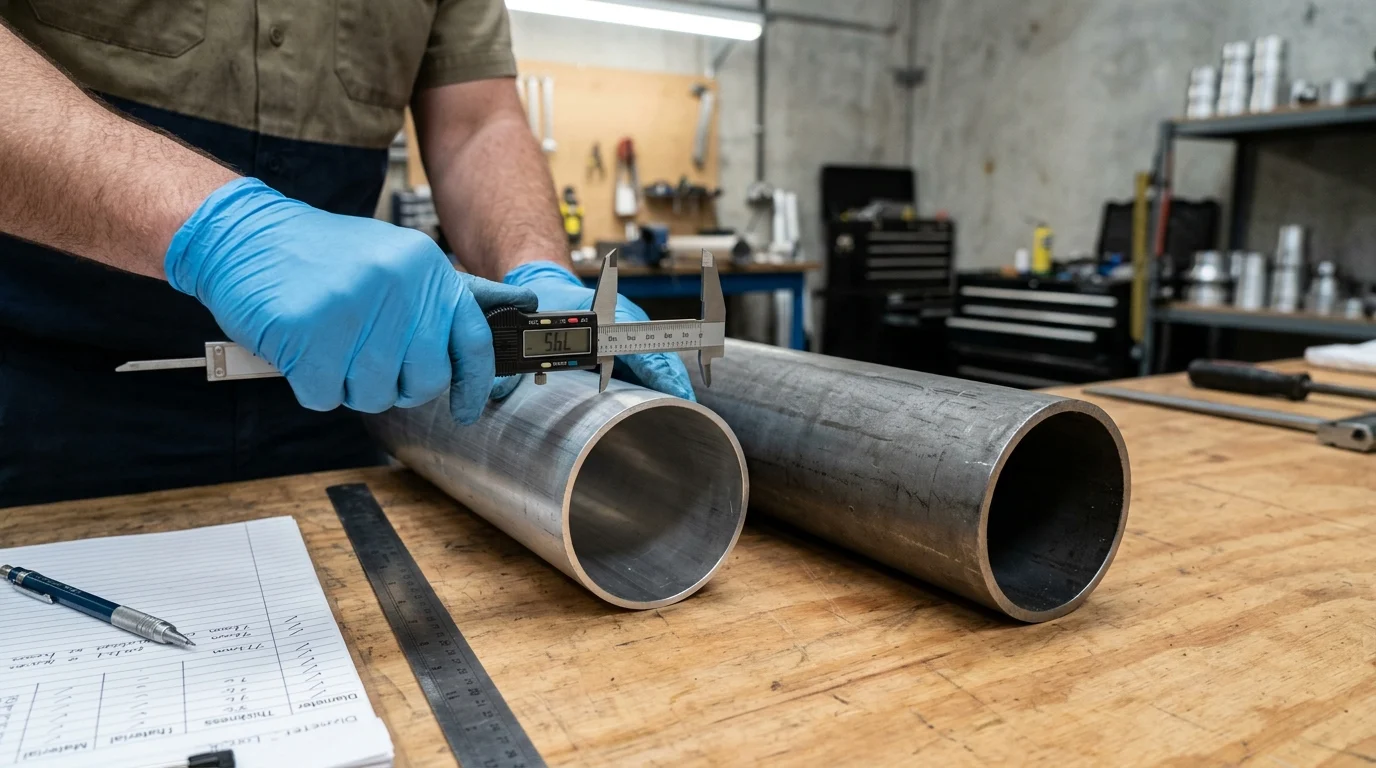
The fundamental metallurgical properties of aluminum and steel dictate their structural performance, aesthetic longevity, and load-bearing capacities. Specifiers must analyze these variables to ensure the selected shaft can support the required luminaire Effective Projected Area (EPA) under local environmental stresses.
Strength-to-weight ratio, structural design, and wind load
Steel is renowned for its exceptional strength and rigidity. A standard carbon steel pole fabricated from A595 Grade A material typically boasts a minimum yield strength of 55,000 psi, making it highly capable of supporting large, multi-fixture arrays in high-wind environments. This high modulus of elasticity minimizes deflection under heavy aerodynamic loads.
Aluminum, commonly utilized in the 6063-T6 alloy for lighting poles, offers a lower yield strength—typically ranging from 25,000 to 30,000 psi. However, aluminum weighs roughly one-third as much as steel. This highly favorable strength-to-weight ratio allows engineers to design aluminum poles with thicker wall sections (e.g., 0.188 inches or greater) to achieve the necessary EPA ratings without matching the prohibitive weight of a comparable steel structure.
Corrosion resistance, coatings, galvanizing, and finishes
Steel’s primary vulnerability is oxidation. To mitigate this, steel poles must undergo hot-dip galvanizing per ASTM A123 standards, which applies a 3-to-5 mil protective layer of zinc. While effective, this sacrificial coating eventually depletes, especially if physically scratched or exposed to high-salinity air. Additional powder coating over galvanizing is common but adds to the initial manufacturing cost.
Aluminum, by contrast, possesses intrinsic corrosion resistance. Even if an aluminum pole’s exterior powder coat or anodized finish is compromised, the exposed metal simply oxidizes at the surface level, arresting further corrosion. This makes aluminum highly resilient against aesthetic blistering and structural rust spalling, preserving both the appearance and the structural integrity of the pole over time.
Weight, strength, and finish comparison
The following table summarizes the comparative material properties of standard steel and aluminum lighting poles:
| Property | Carbon Steel (e.g., A595) | Aluminum (e.g., 6063-T6) |
|---|---|---|
| Density | 0.284 lbs/in³ | 0.098 lbs/in³ |
| Typical Yield Strength | 55,000 psi | 25,000 – 30,000 psi |
| Corrosion Resistance | Low (Requires Galvanizing) | High (Natural Oxide Layer) |
| Standard Coating | Hot-Dip Galvanized (ASTM A123) | Anodized or Powder Coated |
Cost, fabrication, and installation factors
Procurement and deployment logistics heavily influence the final project budget. Specifiers must account for the entire supply chain, from raw material fabrication to on-site erection, as the differences between steel and aluminum directly impact freight, labor, and equipment requirements.
Upfront price drivers
Raw material economics position steel as the more cost-effective option at the point of purchase. A standard 20-foot commercial steel lighting pole might range from $400 to $600, depending on the exact gauge and finish requirements. A structurally equivalent 20-foot aluminum pole typically commands a premium, ranging from $700 to over $1,000.
Fabrication methods also drive pricing. Aluminum poles are frequently extruded into seamless tubes, ensuring uniform wall thickness and excellent aesthetic quality. Steel poles, on the other hand, are typically brake-press formed and longitudinally welded. While welding is a highly efficient manufacturing process, it introduces a seam that must be carefully finished to prevent localized corrosion.
Freight, installation equipment, lead times, and field handling
The initial cost premium of aluminum is frequently offset during the freight and installation phases. A standard 20-foot steel pole can weigh upwards of 200 to 250 pounds, necessitating heavy-duty flatbed transport and motorized lifting equipment, such as cranes or bucket trucks, for safe on-site positioning.
In contrast, a comparable aluminum pole generally weighs between 70 and 90 pounds. This dramatic reduction in mass allows contractors to transport more units per truckload and often permits two workers to manually erect the poles without specialized hoisting machinery. Consequently, projects with restricted site access or high equipment rental costs often realize a lower total installed cost when utilizing aluminum.
Codes, site conditions, and operating risks
Regulatory compliance and site-specific environmental factors dictate the baseline specifications for lighting poles. Engineers must ensure that the selected material and structural design comply with local building codes to mitigate the risk of catastrophic failure under dynamic loads.
Wind zone, soil conditions, and foundation requirements
Foundation engineering and material selection are heavily influenced by local wind zones and soil conditions. Under the American Association of State Highway and Transportation Officials (AASHTO) LTS-6 specifications, lighting poles must be engineered to withstand specific wind loads, which can range from a baseline of 90 mph in inland regions to over 150 mph in hurricane-prone coastal zones.
Steel’s higher modulus of elasticity makes it the preferred choice for high-mast lighting in extreme wind zones, as it exhibits less deflection under heavy aerodynamic pressure. Regardless of the material chosen, the overturning moment generated by the pole and luminaire dictates the foundation design, frequently requiring 1-inch to 1.5-inch diameter anchor bolts embedded in deep reinforced concrete piers.
Structural codes and compliance considerations
Structural fatigue is a critical compliance consideration for both materials. Wind-induced vibrations, such as galloping and vortex shedding, subject lighting poles to millions of stress cycles over their operational lifespan. Steel poles are highly susceptible to fatigue cracking at the base plate weld if not properly designed with gussets or fatigue-resistant weld profiles.
Aluminum, while immune to cold-temperature brittleness, has a lower fatigue endurance limit than steel. Consequently, engineers must specify the correct temper and utilize internal vibration dampeners when deploying aluminum poles in open, high-wind corridors. Adhering to these engineering practices ensures compliance with rigorous AASHTO fatigue categories and prevents premature stress fractures.
How to choose between aluminum and steel lighting poles

Making the optimal selection between aluminum and steel lighting poles requires a systematic evaluation of site constraints, budget parameters, and desired aesthetic longevity. A rigorous specification process ensures that the final infrastructure aligns with both immediate project goals and long-term facility management strategies.
Step-by-step selection process for buyers and specifiers
Buyers and specifiers should follow a structured evaluation process. First, determine the site’s environmental profile, specifically identifying proximity to saltwater, industrial emissions, or heavy road-salt usage. Second, calculate the total Effective Projected Area (EPA) and weight of the intended luminaires and mounting brackets. Third, cross-reference these load requirements against local wind speed maps to establish the minimum structural baseline.
Finally, conduct a 15-to-20-year total cost of ownership (TCO) analysis, factoring in initial procurement, equipment rental for installation, and projected maintenance cycles. For many commercial projects, the ROI crossover point—where aluminum’s lower maintenance costs eclipse steel’s lower initial price—occurs around the 12-to-15-year mark.
| Application / Constraint | Recommended Material | Primary Justification |
|---|---|---|
| Coastal / High Salinity | Aluminum | Superior inherent corrosion resistance without relying on coatings. |
| Heavy Highway / High EPA | Steel | High modulus of elasticity handles heavy multi-fixture loads. |
| Restricted Access Sites | Aluminum | Lightweight nature permits manual installation without heavy cranes. |
| Strict Initial Budget | Steel | Lower raw material and fabrication costs per unit. |
When aluminum is the better choice and when steel
is
Ultimately, aluminum is the superior choice for coastal regions, decorative urban streetscapes, and pedestrian-heavy environments where aesthetic degradation is unacceptable and heavy lifting equipment is impractical. Its natural corrosion resistance guarantees decades of service with minimal upkeep.
Conversely, steel remains the undisputed standard for highway infrastructure, high-mast lighting, and large sports facilities. When the project demands maximum load-bearing capacity, extreme height, and strict adherence to a tight initial capital budget, the structural rigidity and economic efficiency of galvanized steel make it the most pragmatic engineering solution.
Key Takeaways
- The most important conclusions and rationale for aluminum lighting pole vs steel
- Specs, compliance, and risk checks worth validating before you commit
- Practical next steps and caveats readers can apply immediately
Frequently Asked Questions
Which lasts longer outdoors: aluminum lighting poles or steel poles?
Aluminum usually lasts longer in outdoor and coastal settings because it resists corrosion naturally. Steel can perform well, but it typically needs galvanizing, coating, and more maintenance over time.
Is aluminum or steel better for coastal or high-salt environments?
Aluminum is usually the safer choice for coastal roads, waterfronts, and de-icing salt areas. Its oxide layer helps prevent deep corrosion and reduces repainting or rust-related maintenance.
When should I choose steel instead of aluminum lighting poles?
Choose steel for high-mast, heavy fixture, or high-wind applications where maximum strength and stiffness are critical. It is often preferred when supporting larger EPA loads.
Does aluminum cost more than steel for lighting pole projects?
Aluminum often has a higher upfront price, but lower maintenance can reduce total lifecycle cost. For long-term municipal or commercial projects, it may be more economical overall.
Can Morelux help compare aluminum and steel poles for my project?
Yes. Morelux can provide fast quotes, technical drawings, and engineer support to match pole material, height, finish, and load requirements for your outdoor project.