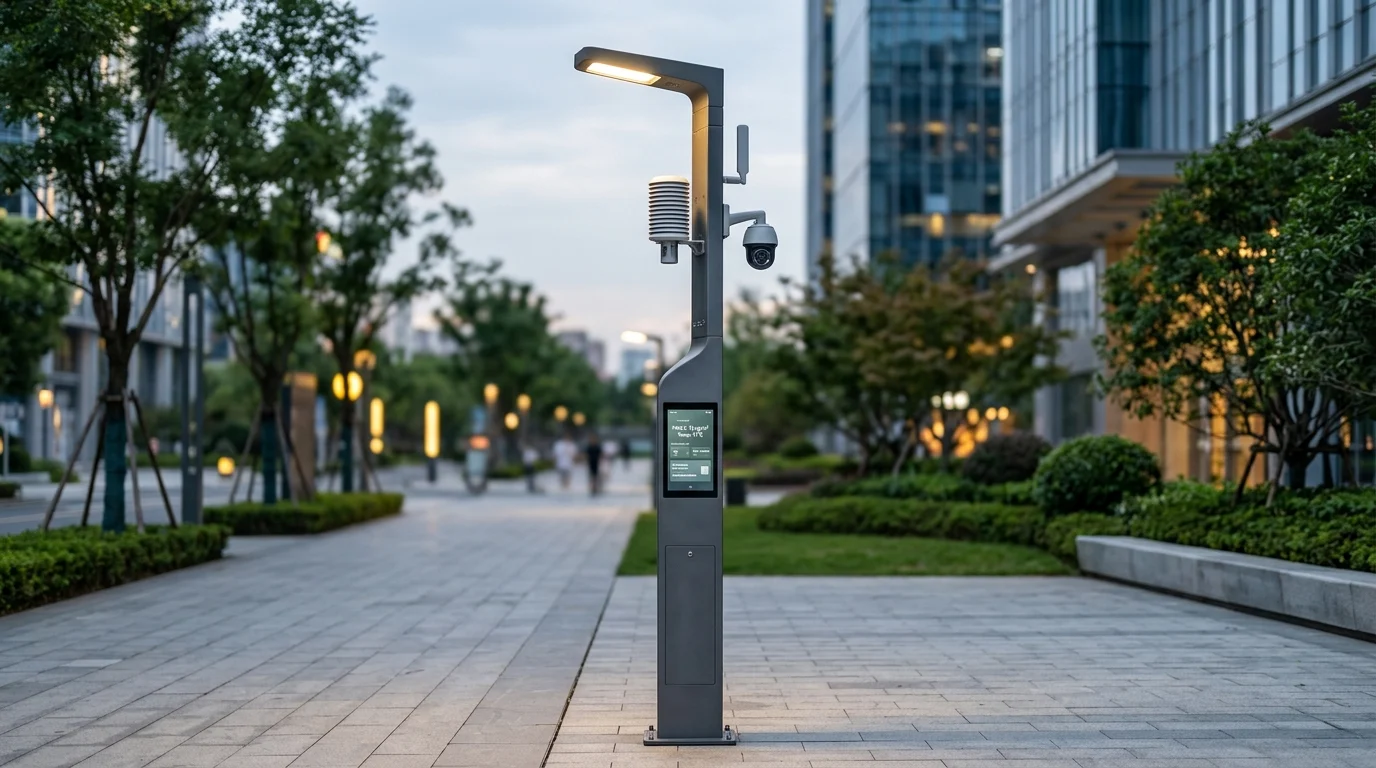
Across modern cities, streetlights are evolving into connected infrastructure that does far more than provide illumination. By combining LED lighting, sensors, communications hardware, and edge computing in one powered, widely distributed asset, smart lamp posts support real-time monitoring, energy optimization, traffic coordination, public safety, and environmental data collection. This article explains the main IoT applications built around smart lamp posts, why they are becoming a practical foundation for smart city systems, and how their placement and existing power access make them an efficient platform for deploying urban digital services at scale.
Why Smart Lamp Post IoT Applications Are Becoming Core Infrastructure
The global transition toward intelligent urban infrastructure has repositioned the humble streetlight from a single-purpose utility asset to a highly integrated digital node. With an estimated 300 million streetlights deployed globally, smart lamp post IoT applications have emerged as the foundational layer for smart city ecosystems. By leveraging existing grid power and strategic geographic distribution, these applications bypass the prohibitive costs of establishing new vertical real estate.
Rather than deploying isolated sensor networks, municipalities and infrastructure operators are utilizing lamp posts as continuous, powered mounting points. This convergence of lighting, edge computing, and telecommunications is fundamentally altering how cities manage assets, monitor environments, and deliver public services.
Public Service Alignment and Urban Needs
Urban centers face compounding pressures regarding traffic management, public safety, and environmental compliance. Smart lamp post IoT applications directly address these urban needs by providing a distributed, high-density sensor network capable of real-time data acquisition. By upgrading traditional fixtures to intelligent LED systems coupled with IoT controllers, cities routinely achieve a 50% to 70% reduction in base energy consumption.
Beyond illumination, the vertical positioning of these poles—typically 5 to 12 meters above ground—offers an optimal field of view for optical sensors and an ideal propagation height for radio frequency (RF) networks. This alignment ensures that public service teams, from emergency responders to sanitation departments, receive continuous, high-fidelity telemetry regarding micro-climate conditions, particulate matter concentrations, and localized flooding.
City-Level Value Drivers and Investment Rationale
From a capital expenditure standpoint, the investment rationale for smart lamp posts is anchored in infrastructure reuse. Establishing new standalone sensor poles in dense urban environments requires extensive civil works, with urban trenching costs frequently exceeding $1,000 to $1,500 per linear meter. Smart lamp posts circumvent these costs by utilizing existing right-of-way permissions and established electrical conduits.
City-level value drivers also extend to revenue generation and operational efficiency. By leasing pole space to telecommunications providers for 5G small cell deployments, municipalities can offset initial hardware costs. Furthermore, the transition to predictive maintenance—facilitated by IoT nodes reporting voltage anomalies or fixture degradation—dramatically reduces truck rolls, transforming a historically reactive maintenance budget into a predictable, optimized operational expense.
What Defines Smart Lamp Post IoT Applications
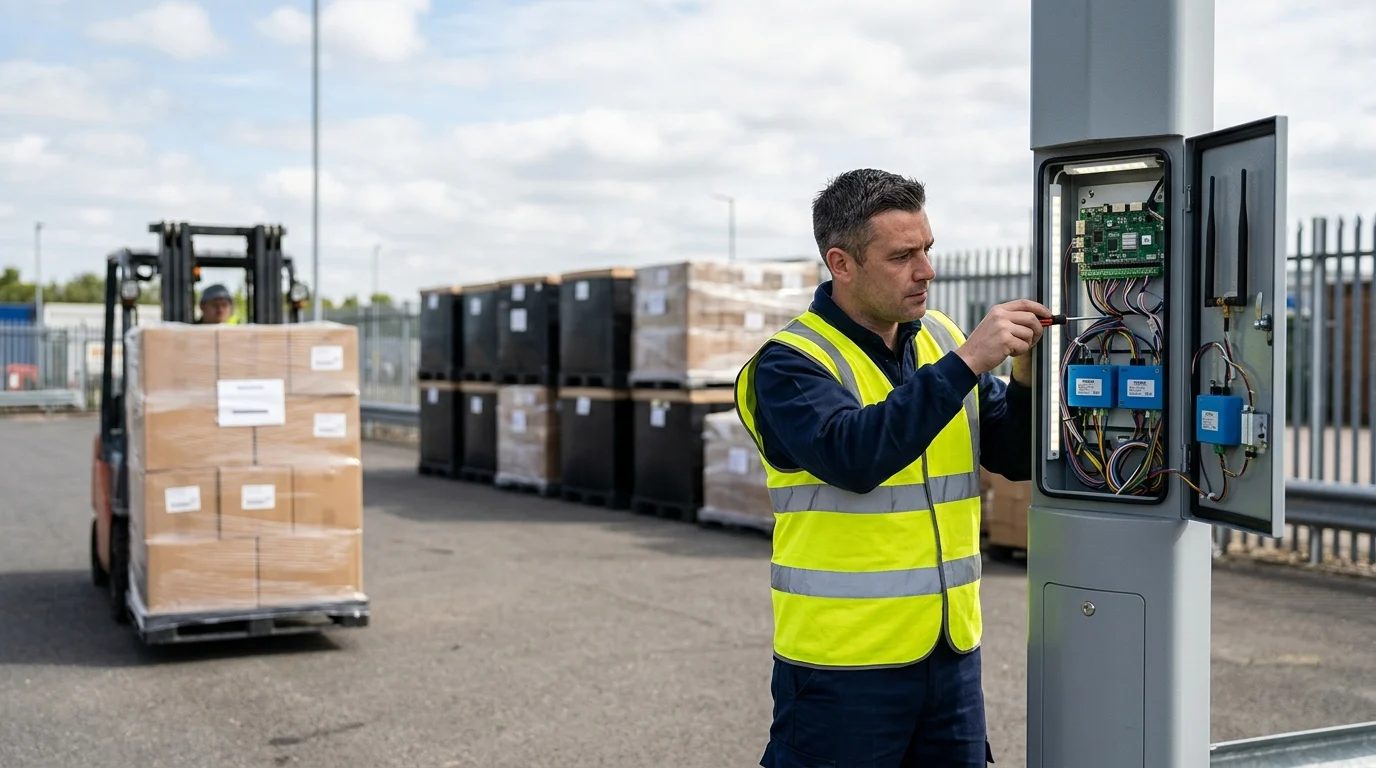
A true smart lamp post goes beyond basic photocell-based ambient light detection. It is defined by a modular, multi-tier architecture that integrates edge hardware, robust connectivity protocols, and centralized software management. Understanding these components is critical for evaluating the scalability and future-proofing potential of municipal IoT deployments.
Hardware, Connectivity, and Software Layers
The physical architecture of a smart lamp post relies on standardized interfaces, most notably the 7-pin NEMA receptacle or the 4-pin Zhaga Book 18 socket, which allow for plug-and-play IoT controllers. At the edge, these poles house microprocessors capable of executing local logic, such as dimming profiles based on pedestrian presence, without waiting for cloud-based commands.
Connectivity layers are typically bifurcated based on bandwidth requirements. Low-bandwidth telemetry, such as luminaire status or basic environmental data, operates efficiently over LPWAN protocols like LoRaWAN, NB-IoT, or LTE-M. Conversely, high-bandwidth applications, such as high-definition video analytics or 5G small cell backhaul, necessitate fiber-optic connections or high-capacity microwave links. The software layer binds these elements via a Central Management System (CMS), providing a unified dashboard for asset tracking, firmware updates, and API integrations.
Common Deployment Models and Capability Differences
Municipalities generally choose between two primary deployment models: retrofitting existing infrastructure or installing new, purpose-built smart poles. Retrofits involve attaching external IoT nodes and sensor arrays to legacy poles. This model is highly cost-effective and rapid to deploy but is often limited by the structural load capacity and aesthetic constraints of the existing asset.
Conversely, integrated smart poles are engineered from the ground up to house internal equipment. These models feature modular compartments for edge servers, concealed antennas, and integrated EV charging interfaces. While the upfront structural and installation costs are significantly higher, integrated poles offer superior thermal management for edge computing hardware and accommodate much higher bandwidth capacities.
Cost Drivers and Feature Comparison
Cost variables in smart lamp post deployments depend heavily on the integrated feature set, structural materials, and the required connectivity backhaul. Evaluating these drivers requires mapping the desired capabilities against both capital expenditures (CapEx) and long-term operational expenditures (OpEx).
| Deployment Tier | Typical Hardware Cost (Per Pole) | Primary Connectivity | Key Capabilities | Target Use Case |
|---|---|---|---|---|
| Basic Smart Lighting | $100 – $300 (Retrofit Node) | LoRaWAN / NB-IoT | Remote ON/OFF, Dimming, Energy Metering | Residential streets, basic energy savings |
| Advanced Multi-Sensor | $1,500 – $4,000 | 4G LTE / Wi-Fi | Environmental sensing, traffic counting, acoustic monitoring | Arterial roads, commercial districts |
| Integrated 5G Macro Pole | $10,000 – $25,000+ | Fiber Optic Backhaul | 5G Small Cell, Edge AI video analytics, EV Charging | High-density urban centers, smart plazas |
High-Impact Smart Lamp Post IoT Applications
Deploying IoT capabilities on lighting infrastructure unlocks a spectrum of applications that directly impact urban livability. The highest-impact use cases leverage the ubiquity of lamp posts to generate actionable insights, shifting city management from a reactive posture to a proactive, data-driven methodology.
Use Cases Across Lighting, Safety, and Monitoring
Core applications span three primary domains: adaptive lighting, public safety, and environmental monitoring. Adaptive lighting utilizes motion and thermal sensors to dynamically adjust illumination, increasing brightness to 100% when pedestrians or vehicles approach, and dimming to 20% during inactive periods, thereby maximizing energy savings without compromising safety.
In the safety and monitoring domains, acoustic sensors can triangulate anomalous sounds, such as vehicle collisions or gunshots, triggering automated alerts to emergency services with sub-200 millisecond latency. Simultaneously, environmental arrays mounted at optimal breathing heights (typically 3 to 4 meters) track PM2.5, NO2, and ambient temperature, enabling cities to issue localized air quality warnings and optimize traffic routing to reduce pollution pockets.
Standalone vs Integrated Deployment Trade-Offs
When deploying these applications, network architects must navigate the trade-offs between standalone sensors and integrated edge-processing platforms. Standalone deployments, where each sensor communicates directly to the cloud via its own cellular modem, simplify initial installation but rapidly inflate recurring data costs and create siloed data streams.
Integrated deployments utilize the lamp post as a localized gateway. Multiple sensors (optical, acoustic, environmental) feed into a single edge computer housed within the pole. This edge device processes raw data locally—for instance, counting vehicles from a video feed without transmitting the actual video—and only sends the lightweight metadata to the cloud. This approach drastically reduces bandwidth requirements and mitigates privacy concerns, though it requires a higher initial investment in edge computing hardware.
KPIs for Operational Performance
To quantify the success of smart lamp post IoT applications, municipalities must establish rigorous Key Performance Indicators (KPIs). These metrics bridge the gap between technical specifications and tangible operational outcomes, ensuring the deployment delivers on its promised Return on Investment (ROI).
| KPI Category | Metric | Target Benchmark | Business Impact |
|---|---|---|---|
| Network Reliability | System Uptime | > 99.9% | Ensures continuous public safety monitoring and lighting compliance |
| System Responsiveness | API Latency | < 500 ms | Enables real-time traffic control and emergency alert triggers |
| Operational Efficiency | Maintenance Truck Rolls | 30% – 40% Reduction | Lowers fleet fuel costs and optimizes technician labor hours |
| Data Accuracy | Sensor Calibration Drift | < 2% variance per annum | Guarantees reliable environmental data for regulatory reporting |
How Cities Should Evaluate Procurement and Compliance
Acquiring and deploying smart lamp post networks introduces unique procurement complexities. Because these assets sit at the intersection of civil engineering, electrical infrastructure, and enterprise IT, traditional municipal purchasing frameworks are often inadequate. A rigorous evaluation of specifications, standards, and vendor ecosystems is mandatory to prevent vendor lock-in and ensure long-term viability.
Specification and Integration Risk Reduction
Mitigating integration risk requires municipalities to demand open architectures and standardized Application Programming Interfaces (APIs). Procuring proprietary, closed-loop systems severely restricts a city’s ability to integrate future sensors or transition to different software providers. Specifications should mandate compliance with consortia standards, such as the TALQ Consortium protocol, which ensures interoperability between different smart city device networks and central management platforms.
Phased rollouts further reduce integration risk. Rather than executing a city-wide deployment simultaneously, infrastructure managers should mandate a multi-stage acceptance protocol. This involves validating the hardware’s mechanical fit, verifying the network payload delivery in a sandbox environment, and confirming data ingestion into the municipal data lake before authorizing mass deployment.
Cybersecurity, Privacy, Interoperability, and Electrical Standards
Compliance spans physical, electrical, and digital domains. Physically, external smart nodes must carry stringent environmental protections, typically requiring an IP66 rating against dust and water ingress, and an IK08 or IK10 rating for impact resistance to withstand vandalism and extreme weather.
Digitally, cybersecurity and privacy are paramount. Lamp posts equipped with optical sensors must adhere to regional privacy frameworks like GDPR or CCPA. This is achieved by mandating edge-based redaction, where faces and license plates are blurred at the hardware level before any data traverses the network. Furthermore, the entire IoT ecosystem must align with ISO/IEC 27001 standards for information security management, utilizing encrypted payloads and secure boot mechanisms to prevent malicious actors from hijacking critical infrastructure.
Vendor Selection and Total Cost of Ownership
Vendor selection must transcend the initial hardware quote and focus on Total Cost of Ownership (TCO) over a 10- to 15-year lifecycle. Evaluators must scrutinize the recurring OpEx, particularly the Software-as-a-Service (SaaS) licensing fees for the CMS, which typically range from $12 to $24 per node, per year.
Additionally, cities must assess the vendor’s financial stability and their commitment to long-term firmware support. A vendor offering aggressively priced hardware but lacking a transparent roadmap for over-the-air (OTA) security patches poses a severe operational risk. TCO models must also account for the cost of connectivity, replacement cycles for internal batteries in edge nodes, and the labor associated with periodic sensor recalibration.
Decision Framework for Scaling Smart Lamp Post IoT Applications
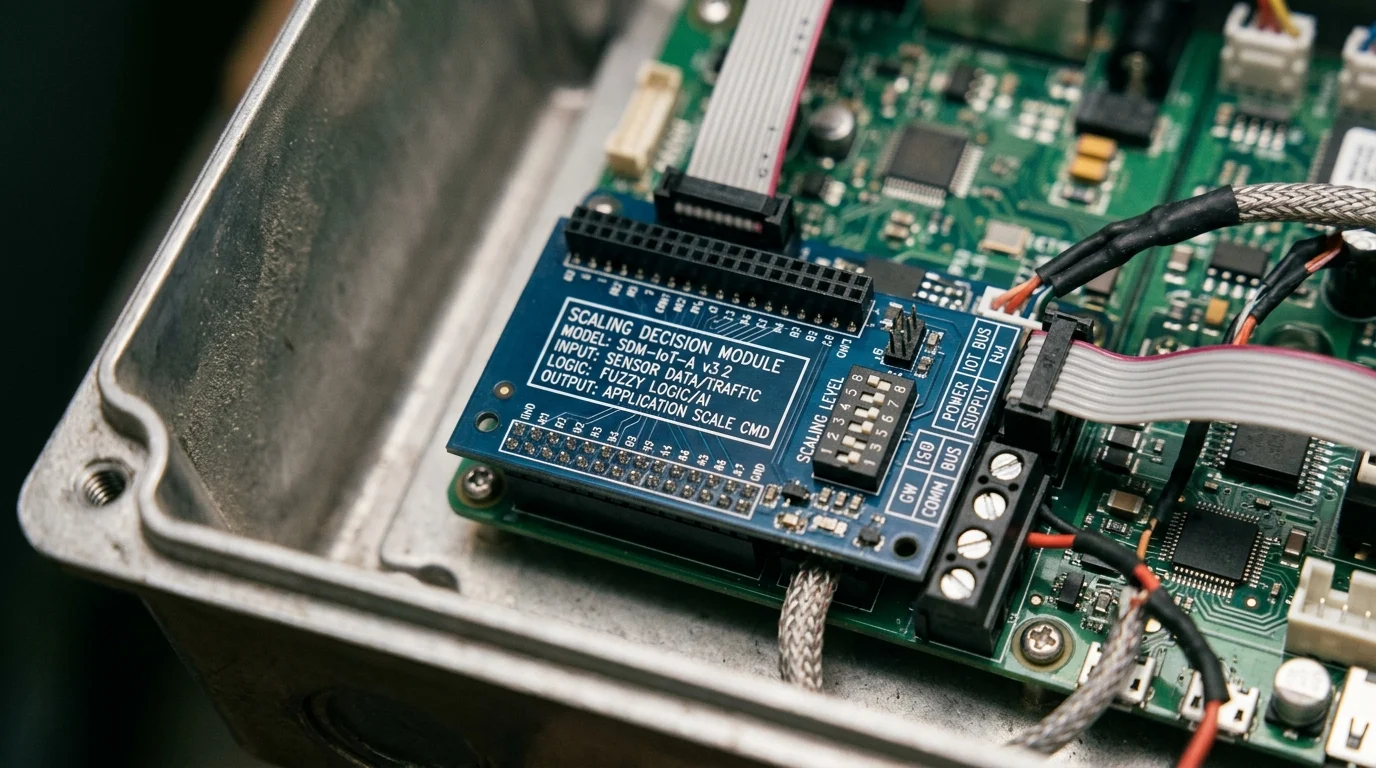
Transitioning from isolated proofs-of-concept to city-wide smart lamp post networks requires a structured decision framework. Scaling these deployments introduces compounding challenges in network architecture, cross-departmental governance, and sustainable funding. Success depends on aligning technical capabilities with viable, long-term operating models.
Pilot Scope and Network Architecture Priorities
A mathematically sound pilot typically encompasses 50 to 200 nodes, strategically distributed across diverse urban typologies—such as a commercial avenue, a residential neighborhood, and an industrial zone. This variance tests the network architecture against different RF interference profiles, physical obstructions, and operational stress limits, including temperature extremes from -40°C to +60°C.
During this phase, network architecture priorities must shift from simple connectivity to backhaul resilience. If a gateway goes offline, edge nodes must be capable of mesh routing or automated failover to redundant cellular networks. The pilot must conclusively validate the bandwidth consumption models; underestimating the data payload of high-frequency environmental telemetry or traffic metadata can lead to catastrophic network bottlenecks at scale.
Governance, Funding, and Operating Model Choices
Financing and governance ultimately dictate the pace and success of scaling operations. Traditional capital funding is increasingly being supplemented or replaced by Public-Private Partnerships (PPP) and Energy-as-a-Service (EaaS) models. In an EaaS framework, a private entity funds the LED and IoT upgrade, recouping their investment through a shared percentage of the guaranteed energy savings over a 10-year term.
Furthermore, municipalities can monetize their modernized infrastructure through shared revenue models. Leasing pole space and fiber backhaul to telecommunications operators for 5G densification can generate $500 to $2,000 per pole annually. To manage this complex ecosystem, cities must establish cross-functional governance committees—uniting IT, public works, and transportation departments—to ensure that the smart lamp post network remains a unified, secure, and financially self-sustaining asset.
Key Takeaways
- The most important conclusions and rationale for Smart lamp post IoT applications
- Specs, compliance, and risk checks worth validating before you commit
- Practical next steps and caveats readers can apply immediately
Frequently Asked Questions
What are the main IoT applications for smart lamp posts?
Common uses include adaptive LED lighting, traffic monitoring, air-quality sensing, CCTV, public Wi-Fi, EV charging, and 5G small cells on one pole network.
Should a city retrofit existing poles or install new smart poles?
Retrofits lower upfront cost and speed deployment. New smart poles are better for hidden equipment, higher loads, cleaner design, and future expansion.
Which connectivity options work best for smart lamp post IoT systems?
Use LoRaWAN, NB-IoT, or LTE-M for lighting and sensor data. Choose fiber or high-capacity wireless backhaul for video, edge computing, or 5G equipment.
How do smart lamp posts reduce municipal operating costs?
They cut lighting energy use through LED dimming and reduce maintenance truck rolls with remote fault alerts, asset monitoring, and predictive service scheduling.
Can Morelux support custom smart pole projects for city buyers?
Yes. Morelux provides customized steel or aluminum pole solutions, technical drawings, engineer support, fast quotes, and dependable manufacturing for infrastructure tenders.