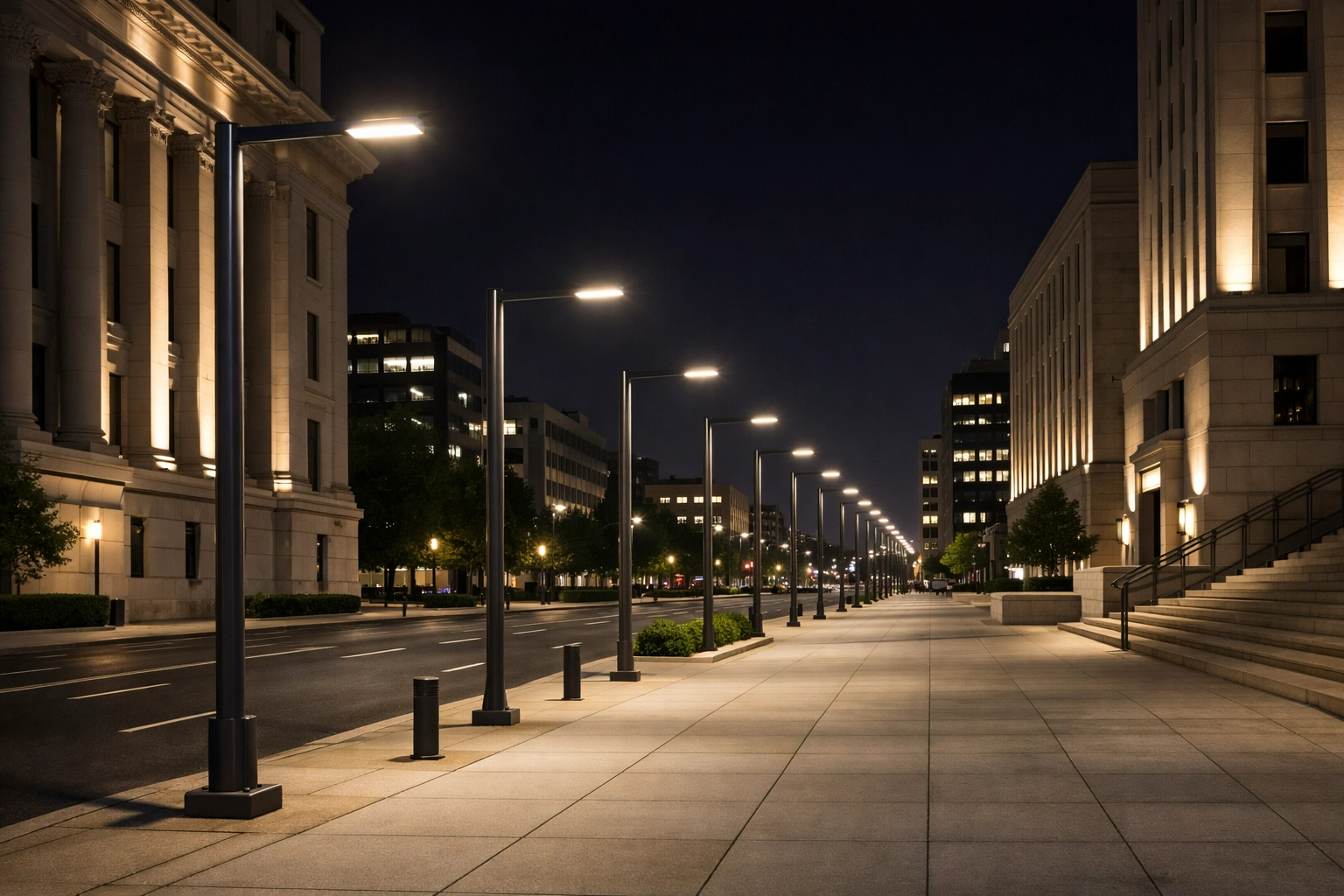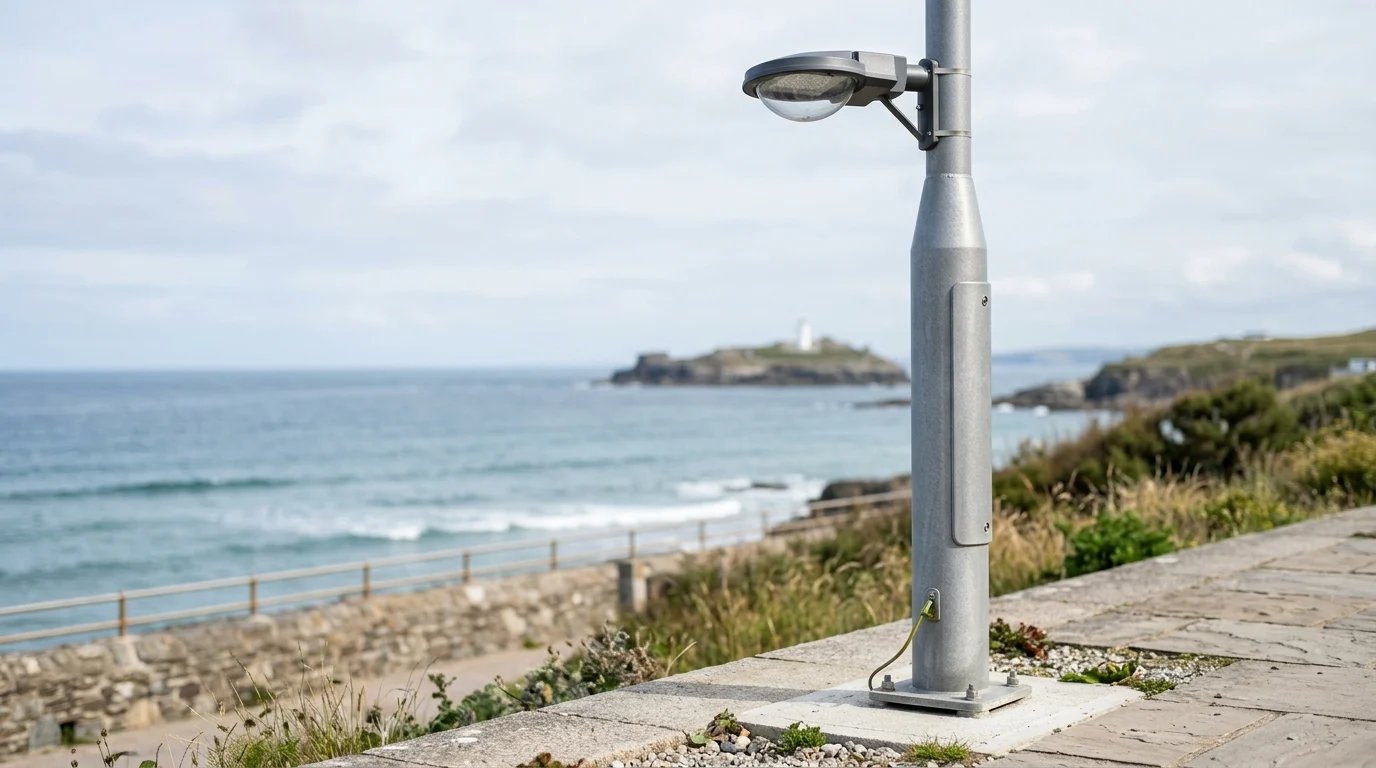
Coastal sites expose every lighting pole to a harsh mix of salt spray, humidity, wind, and UV radiation that can accelerate metal loss far beyond inland conditions. Without the right corrosion strategy, a coastal lighting pole may suffer early coating failure, structural weakening, higher maintenance costs, and shortened service life. This article explains why marine exposure is so aggressive, which materials and protective systems perform best, and how design details influence long-term durability. It also helps readers connect corrosion protection choices with safety, lifecycle cost, and expected performance, providing a clear foundation for the technical considerations that follow.
Why coastal lighting pole corrosion protection matters
Coastal environments present one of the most aggressive atmospheric challenges for infrastructure, making corrosion protection a critical priority for exterior lighting assets. In regions classified as C5-M (very high marine corrosion) under the ISO 9223 standard, unprotected carbon steel can exhibit corrosion rates ranging from 80 to 200 micrometers per year. This accelerated degradation rapidly compromises the structural integrity of lighting installations, transforming them from essential safety assets into severe liabilities.
Engineering a coastal lighting pole requires a fundamental shift from standard commercial designs. The combination of saline moisture, high-velocity winds, and intense ultraviolet radiation mandates specialized materials and coatings to ensure the installation reaches its intended 20- to 30-year design life.
Coastal exposure risks
The primary driver of degradation in coastal zones is the continuous deposition of airborne chlorides. Ocean spray and coastal fogs carry salt aerosols miles inland, leaving a highly conductive chloride film on metal surfaces. When combined with ambient humidity levels that frequently exceed 80%, this film creates an ideal electrolyte for electrochemical corrosion.
Furthermore, coastal installations are subjected to abrasive forces. Wind-blown sand acts as a natural sandblasting agent, steadily eroding standard paint finishes and exposing the vulnerable substrate beneath. UV degradation also plays a compounding role, breaking down the polymer chains in conventional architectural paints and causing chalking, which further reduces the coating’s ability to repel moisture.
High-impact failure modes
When corrosion protection fails, the resulting structural deficits manifest in several high-impact modes. The most critical failure point is typically the base plate and anchor bolt interface. Because moisture and salt accumulate at the base, galvanic and crevice corrosion can reduce the cross-sectional area of structural steel by over 50% within a decade if improperly protected.
Another severe failure mode is wind-induced fatigue exacerbated by internal corrosion. If saline moisture penetrates the pole’s interior through unsealed access doors or inadequate top caps, the pole will corrode from the inside out. In hurricane-prone coastal regions where wind loads frequently exceed 150 mph, this hidden loss of wall thickness inevitably leads to catastrophic pole snapping during extreme weather events.
Materials, coatings, and design details
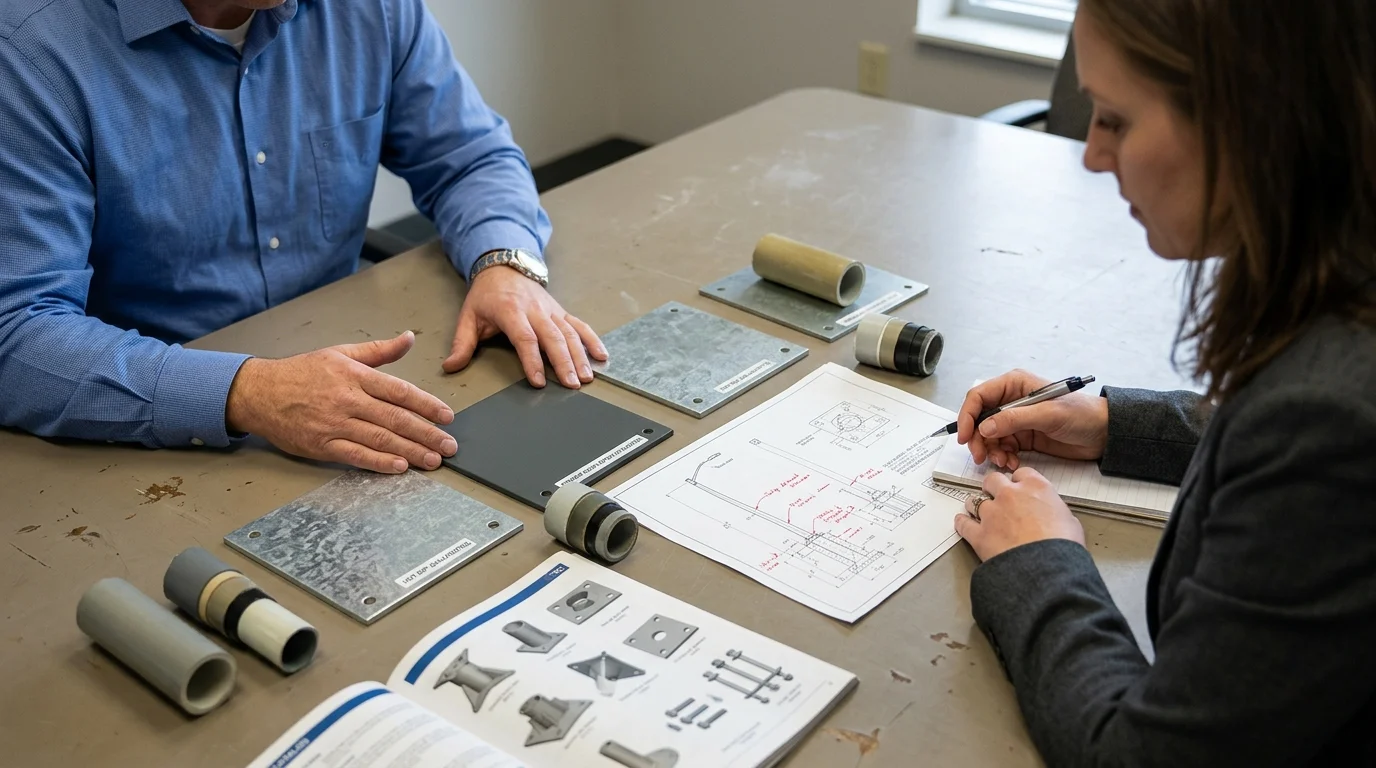
Mitigating marine corrosion requires a layered engineering approach, beginning with the core material and extending through specialized coatings and physical design characteristics. No single element can guarantee longevity; rather, it is the synergistic effect of substrate selection, multi-stage finishing, and smart structural detailing that yields a resilient coastal lighting pole.
Material selection
Selecting the base substrate is the foundational step in coastal lighting pole design. Standard carbon steel, even when painted, is generally unsuitable for direct coastal exposure. Engineers typically specify one of four primary materials for marine environments, each offering a distinct balance of durability and cost.
| Material Substrate | Base Corrosion Resistance | Typical Coastal Lifespan | Cost Premium (vs Standard Steel) |
|---|---|---|---|
| Marine-Grade Aluminum (6063-T6) | High | 20-30 Years | +40-60% |
| Stainless Steel (316L) | Very High | 30+ Years | +150-200% |
| Fiberglass / Composite | Supreme (Immune) | 30+ Years | +80-100% |
| HDG Steel (Special Coastal Spec) | Moderate (Sacrificial) | 15-20 Years | +20-30% |
Aluminum alloys like 6063-T6 or 5086 are highly favored because they form a naturally occurring aluminum oxide passivation layer that halts further oxidation. Fiberglass reinforced polymer (FRP) composites are increasingly specified for their absolute immunity to galvanic and chloride-induced corrosion.
Protective coating systems
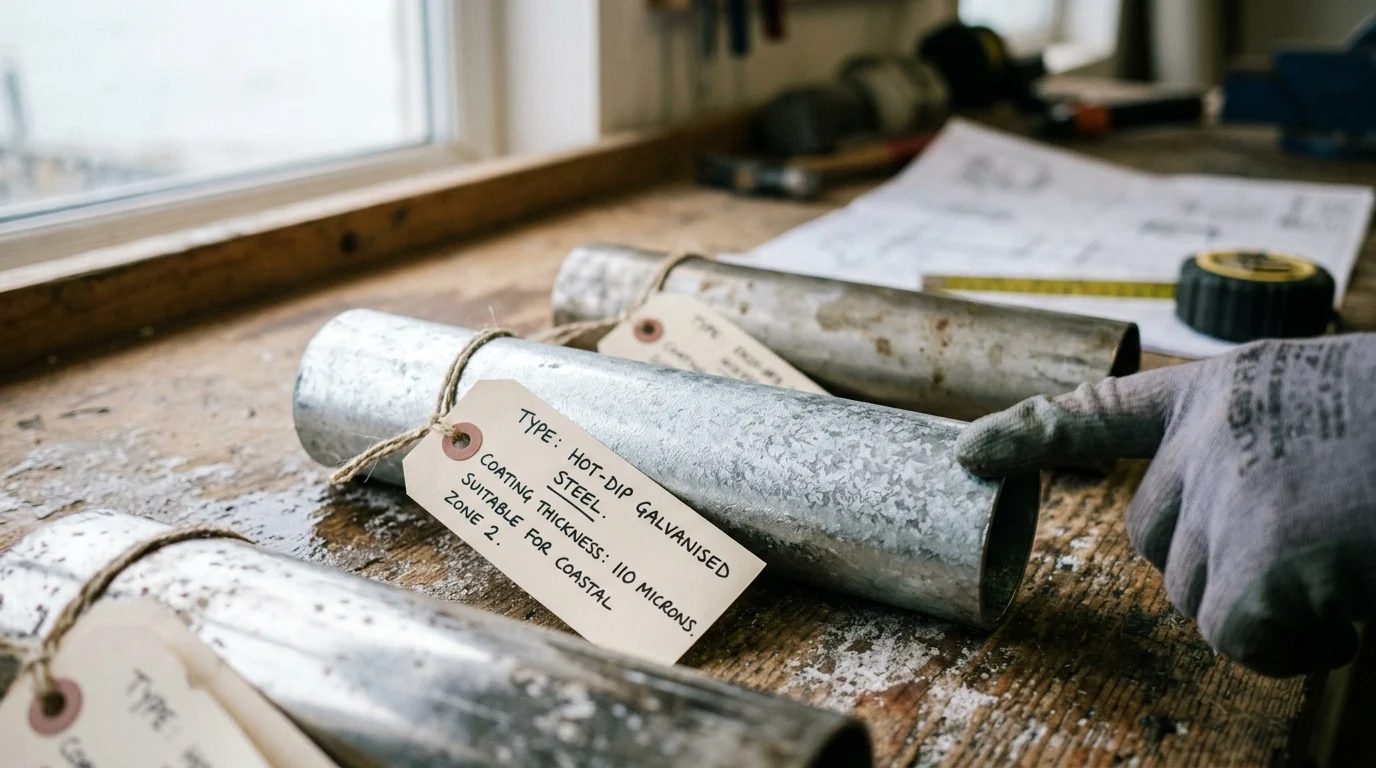
Even inherently resistant materials benefit from multi-layer protective coating systems. For steel poles, Hot-Dip Galvanizing (HDG) to ASTM A123 standards is mandatory, providing a sacrificial zinc layer with a minimum thickness of 85 microns. However, in C5-M zones, HDG alone is insufficient.
The industry standard for coastal applications is a duplex coating system. This involves a zinc-rich epoxy primer applied over the HDG or blasted substrate, followed by a durable polyurethane or fluoropolymer (PVDF) topcoat. For powder-coated finishes, marine-grade TGIC polyester powders applied at a minimum dry film thickness (DFT) of 4.0 to 6.0 mils are required to withstand continuous salt spray and UV exposure.
Corrosion-resistant structural details
Beyond materials and coatings, the physical geometry of the pole dictates its vulnerability. Corrosion-resistant design minimizes horizontal surfaces where salt and moisture can pool. Flush-welded joints are preferred over bolted connections, which create crevices that trap electrolytes.
Internal drainage is equally critical. Coastal poles must feature adequately sized weep holes at the base to allow internal condensation to escape. Additionally, using cast aluminum or composite base covers prevents the accumulation of wet debris around the anchor bolts, and dielectric separators must be utilized when joining dissimilar metals to prevent galvanic corrosion.
Specifications, testing, and compliance
Validating the durability of a coastal lighting pole requires adherence to strict industry testing protocols. Specifying engineers rely on standardized testing to ensure that the selected products will perform under the rigorous demands of marine environments. Compliance with these metrics separates true coastal-grade infrastructure from standard commercial products.
Applicable standards
Structural and environmental integrity is governed by an array of international standards. In North America, the AASHTO LTS-6 standard dictates the structural supports for highway signs, luminaires, and traffic signals, including fatigue design for wind loads. For coatings and materials, ISO 12944 outlines the corrosion protection of steel structures by protective paint systems, specifically classifying the C5-M category for offshore and coastal areas.
These standards provide the baseline engineering formulas and environmental classifications that manufacturers must use to calculate wall thickness, alloy temper, and coating specifications for a given coastal jurisdiction.
Testing and coating criteria
Coating efficacy is quantified through accelerated environmental testing. To qualify as a coastal-grade finish, the coating system must endure thousands of hours in extreme simulation chambers without exhibiting blistering, cracking, or red rust.
| Standard / Protocol | Testing Parameter | Minimum Coastal Requirement |
|---|---|---|
| ASTM B117 | Salt Spray (Fog) Exposure | 3,000 – 5,000 hours without failure |
| ASTM D3359 | Coating Adhesion (Cross-Hatch) | Rating of 4B or 5B |
| ASTM D2794 | Impact Resistance | 160 in-lbs minimum |
| ASTM G154 | UV Exposure (QUV) | 2,000 hours with < 30% gloss loss |
Surpassing the 3,000-hour mark in an ASTM B117 salt fog chamber is generally considered the entry-level threshold for coastal lighting applications, though premium duplex systems frequently exceed 5,000 hours.
Wind, foundation, and electrical requirements
Coastal sites frequently experience extreme weather events, necessitating stringent wind and foundation engineering. Poles must be rated for the local maximum wind speeds, which often range from 130 to 180 mph in hurricane coastal zones. This requires careful calculation of the Effective Projected Area (EPA) to ensure the pole can support the luminaire’s wind drag.
Electrical grounding in highly corrosive soils is another major compliance factor. Standard copper grounding lugs can react galvanically with aluminum or steel poles. Coastal specifications require tin-plated or stainless steel grounding provisions, coated with anti-oxidant compounds, to ensure the electrical fault path remains intact over the 30-year lifespan of the pole.
Comparing suppliers and total cost
Procuring infrastructure for marine environments shifts the financial focus from initial capital expenditure (CapEx) to the total cost of ownership (TCO). While standard commercial poles appear financially attractive upfront, their rapid degradation in coastal zones results in prohibitive maintenance and replacement costs. Comparing suppliers requires a holistic view of both manufacturing quality and lifecycle economics.
Supplier evaluation criteria
When evaluating manufacturers, infrastructure managers must scrutinize production capabilities and quality assurance protocols. A supplier’s ISO 9001 certification is a baseline, but specific expertise in marine-grade fabrication is essential. Buyers should require documentation of the manufacturer’s surface preparation processes—such as SSPC-SP 10 (Near-White Metal Blast Cleaning)—which is critical for coating adhesion.
Warranty terms are a primary differentiator. A standard lighting pole typically carries a 1- to 3-year finish warranty. In contrast, reputable coastal lighting pole suppliers offer specialized 10-year anti-corrosion warranties. Evaluating a supplier’s historical track record and requesting case studies of installations located within one mile of the ocean can validate their warranty claims.
Lifecycle cost comparison
A rigorous lifecycle cost analysis typically reveals that standard commercial poles are economically unviable in coastal zones. For example, a standard powder-coated steel pole might cost $800 upfront but require repainting within 5 years and full replacement within 10 years, driving the 20-year cost above $3,500 when factoring in labor, equipment, and traffic control.
Conversely, a fiberglass or marine-grade aluminum pole may command an initial CapEx of $1,400 to $1,800. However, because it requires zero anti-corrosion maintenance and lasts over 30 years, its lifecycle cost remains virtually static. Infrastructure planners typically see a return on investment (ROI) for premium coastal poles within 7 to 9 years, effectively saving 50% to 60% in total operational expenditures over a two-decade horizon.
Selection process for coastal lighting poles
Deploying reliable illumination in marine environments requires a methodical procurement and specification framework. A successful project relies on translating environmental hazards into precise engineering constraints before engaging with manufacturers.
Site assessment and specification steps
The specification process begins with a granular site assessment. Distance from the shoreline is the most critical metric; installations within 0 to 2 miles are subject to direct salt spray, while those within 2 to 10 miles still face high airborne salinity. The site’s specific wind zone rating, based on ASCE 7 hazard maps, dictates the required wall thickness and base diameter.
Next, engineers must evaluate the soil composition and foundation requirements. Coastal soils are often sandy with high water tables and heavy chloride content, necessitating epoxy-coated anchor bolts or specialized concrete foundations to prevent subterranean corrosion.
Final decision checklist
Before issuing a final purchase order, engineers and project managers must verify all critical parameters against the site requirements. The final decision checklist should mandate verification of the exact material alloy (e.g., confirming 6063-T6 aluminum rather than generic aluminum) and the coating’s dry film thickness (DFT) specifications.
Additionally, the checklist must confirm the EPA rating matches the chosen luminaires, ensure all hardware is 316-grade stainless steel, and secure written documentation of the multi-year anti-corrosion warranty. By strictly adhering to this checklist, municipalities and developers can guarantee their coastal lighting infrastructure will withstand the relentless forces of the marine environment.
Key Takeaways
- The most important conclusions and rationale for coastal lighting pole
- Specs, compliance, and risk checks worth validating before you commit
- Practical next steps and caveats readers can apply immediately
Frequently Asked Questions
What pole material is best for a coastal lighting pole?
Marine-grade aluminum is often the best balance of corrosion resistance, weight, and cost. For very harsh marine zones, 316L stainless or FRP can be specified for longer service life.
Is hot-dip galvanizing alone enough for coastal sites?
Usually no. In C5-M marine environments, a duplex system works better: ASTM A123 hot-dip galvanizing plus a zinc-rich primer and a durable polyurethane, PVDF, or marine-grade powder topcoat.
Which pole areas fail first near the sea?
The base plate, anchor bolt zone, access door, and pole top are the highest-risk areas. These spots need sealing, drainage, and extra coating attention to prevent crevice and internal corrosion.
Can Morelux provide custom coastal lighting pole solutions?
Yes. Morelux supports custom aluminum and steel pole projects with technical drawings, engineer input, coating options, and manufacturing capabilities suited for coastal infrastructure applications.
How can buyers speed up a coastal pole quotation?
Send site location, pole height, wind speed, material preference, bracket details, and coating requirements. This helps Morelux prepare faster quotes and technical recommendations, often within 24 hours.