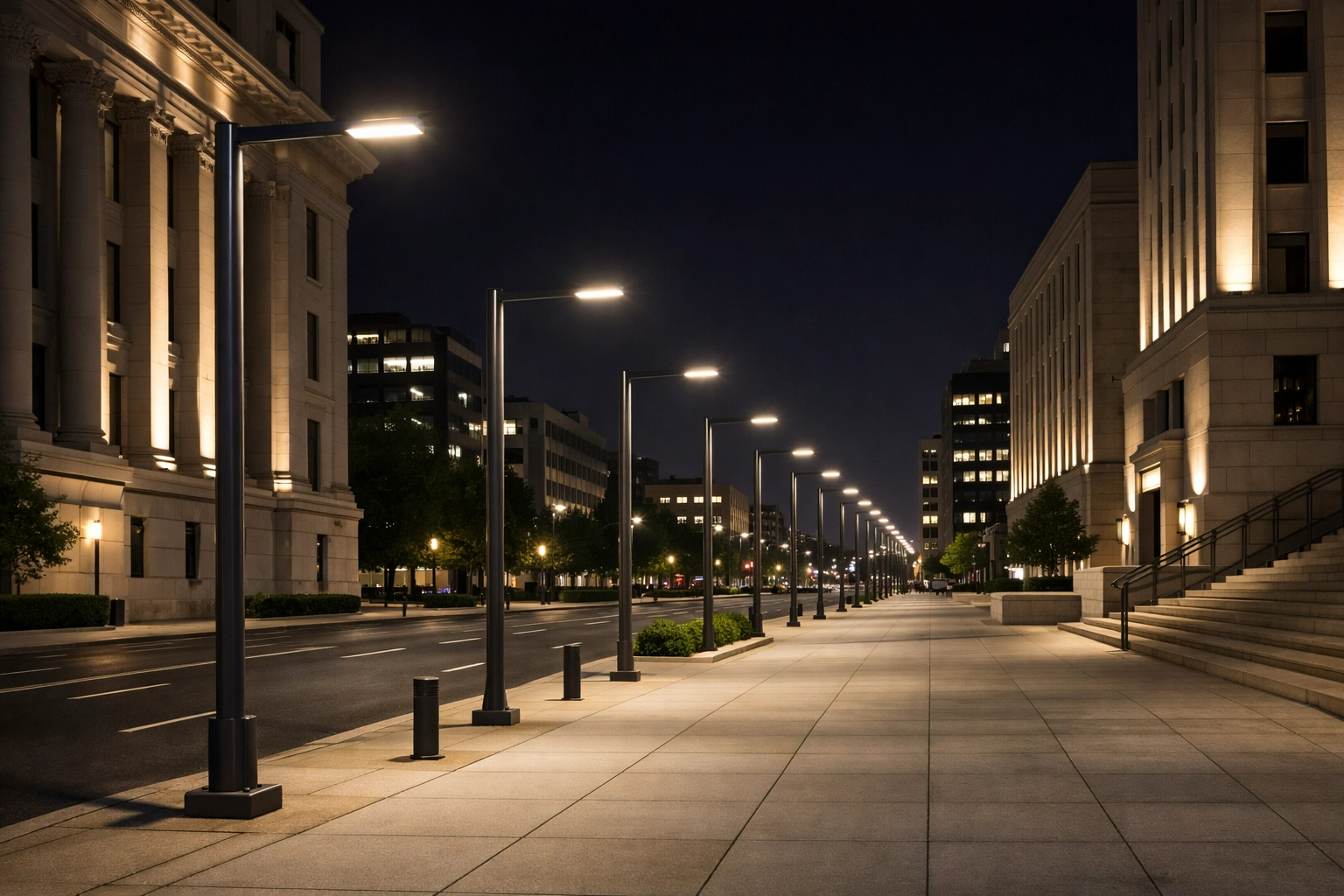
Why Aluminum Alloy Light Poles Are a Smarter Choice
Coastal infrastructure projects expose outdoor lighting assets to extreme environmental stressors, most notably salt spray, high humidity, and persistent wind loads. For B2B buyers, municipal planners, and infrastructure developers, selecting the optimal material for light poles dictates not only the initial capital expenditure but also the long-term operational viability of the installation.
While hot-dip galvanized steel has been a traditional default for street and commercial lighting, procurement teams are increasingly pivoting toward the aluminum alloy light pole. Understanding the precise commercial and structural advantages of this material shift is critical for value engineering in highly corrosive coastal zones.
Corrosion, Life-Cycle Cost, and Maintenance
The primary advantage of an aluminum alloy light pole in maritime environments lies in its natural passivation. Unlike steel, which requires a secondary zinc coating to prevent oxidation, aluminum alloys such as 6063-T6 naturally form a dense, self-repairing oxide layer when exposed to oxygen. This intrinsic resistance effectively eliminates the risk of structural rust.
From a life-cycle cost perspective, galvanized steel poles in coastal zones typically require rust remediation or recoating every 7 to 10 years, driving up maintenance budgets and requiring disruptive site work. Conversely, marine-grade aluminum poles routinely achieve a 30- to 50-year service life with near-zero structural maintenance, effectively reducing life-cycle upkeep costs by up to 60 percent for municipalities and commercial property managers.
Best-Fit Coastal Project Profiles
Certain infrastructure profiles yield the highest return on investment when utilizing aluminum. Beachfront resorts, port authority terminals, coastal highway networks, and municipal promenades are prime candidates. In these settings, aesthetic degradation from rust bleeds is unacceptable, and structural failure from hidden internal corrosion poses severe liability risks.
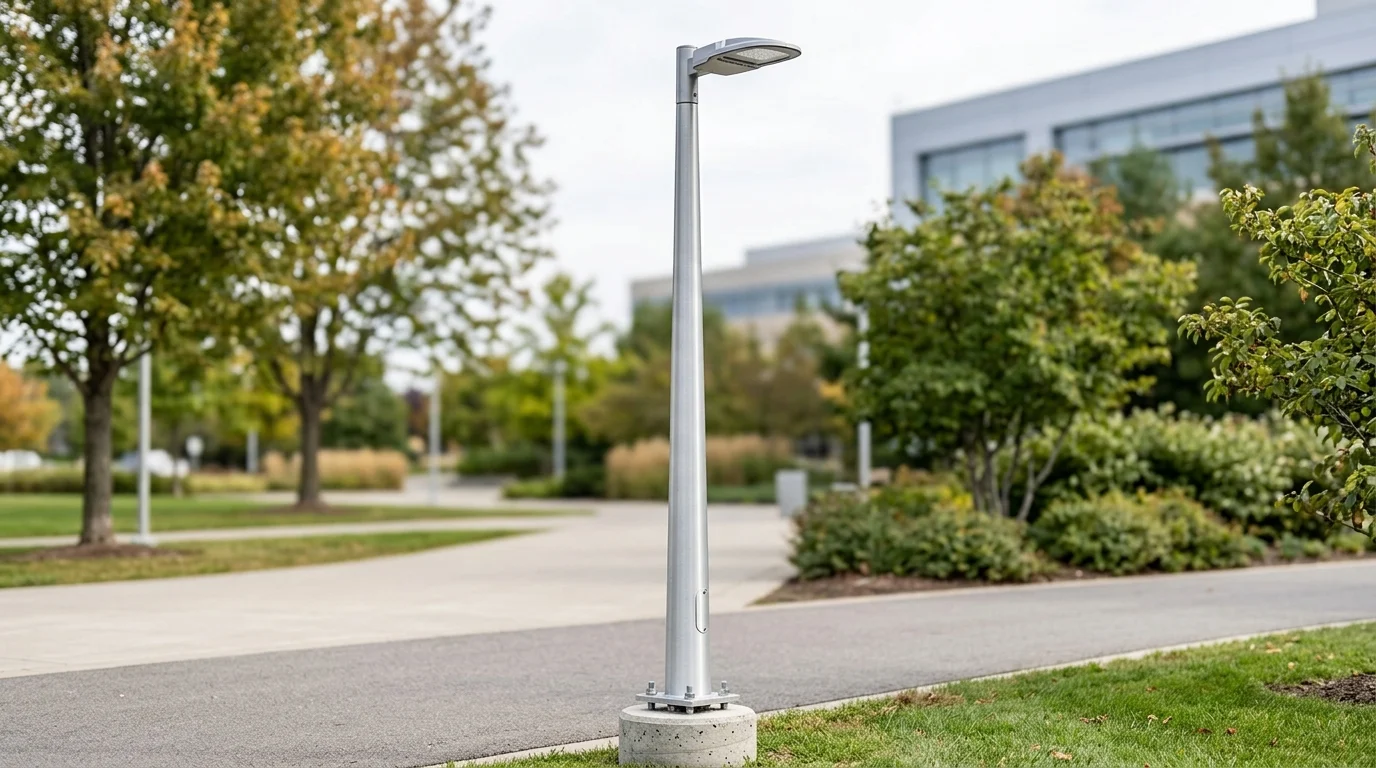
Products like the LOUVRE conical aluminum garden pole perfectly illustrate this fit. Engineered from 6063-T6 alloy with a robust 3mm wall thickness and a 114mm base diameter, it delivers the high durability required for coastal winds while maintaining the refined, modern aesthetics demanded by high-end commercial and municipal landscape designs. Such specifications ensure that buyers do not have to compromise between architectural beauty and environmental resilience.
How Procurement Teams Should Compare Material Options

Shifting from material theory to actionable procurement requires a rigorous comparison of specifications and supplier terms. Buyers must align technical requirements with commercial realities, ensuring the chosen aluminum alloy light pole meets regional wind load standards, logistics constraints, and project budgets.
Key Technical Specifications for Coastal Use
Technical specifications must be evaluated side-by-side to understand the structural and logistical trade-offs. Aluminum offers a distinct weight advantage, drastically reducing freight costs and simplifying heavy equipment requirements during installation. However, steel provides higher baseline yield strength, meaning aluminum poles must be properly engineered with appropriate wall thicknesses (typically 3mm to 5mm) to achieve equivalent wind load ratings, such as the standard 120 mph to 150 mph hurricane zone requirements.
| Specification | Aluminum Alloy (6063-T6) | Galvanized Steel (Q235/Q345) |
|---|---|---|
| Density / Weight | ~2.7 g/cm³ (Lightweight) | ~7.8 g/cm³ (Heavy) |
| Corrosion Resistance | Excellent (Inherent) | Moderate (Requires Coating) |
| Typical Wall Thickness | 3.0mm – 5.0mm | 3.0mm – 4.0mm |
| Coastal Lifespan | 30 – 50+ Years | 15 – 20 Years |
| Installation Labor | Low (Often manual placement) | High (Requires cranes) |
MOQ, Customization, and Supplier Comparison
Beyond structural specifications, sourcing dynamics play a critical role in material selection. Aluminum extrusion processes allow for highly customizable profiles, including seamless fluting, conical tapering, and integrated smart-pole channels, without exorbitant retooling costs. Procurement teams should expect Minimum Order Quantities (MOQs) for custom aluminum alloy light poles to hover between 50 and 100 units, depending on the complexity of the extrusion die.
Standardized steel poles might offer lower MOQs but severely lack aesthetic flexibility. Furthermore, lead times for aluminum production generally average 4 to 6 weeks. In contrast, steel poles often require 6 to 8 weeks due to the logistical bottlenecks of third-party hot-dip galvanizing facilities. Factoring in these lead times is essential for distributors managing tight project delivery schedules.
Best Buying Strategy for Aluminum Alloy Light Poles
Executing a successful sourcing strategy for an aluminum alloy light pole requires vetting manufacturing partners who control the entire production ecosystem. Relying on fragmented supply chains introduces quality control risks that can compromise the integrity of coastal installations.
How to Evaluate Factory Capability
A top-tier manufacturer must demonstrate comprehensive in-house capabilities. Procurement teams should audit suppliers for integrated processes, including precision cutting, CNC bending, automated spinning, robotic welding, and advanced surface treatments like anodizing or marine-grade powder coating. Outsourcing these critical steps often leads to inconsistent weld penetration or coating adhesion failures, which are catastrophic in salt-heavy environments.
Buyers should mandate a defect rate of less than 0.5 percent and require compliance with stringent international standards, such as ISO 9001 and AAMA 2604/2605 certifications for architectural coatings. Additionally, request documentation on rigorous salt-spray testing, typically 2,000 to 3,000 hours, to validate the finish’s longevity before committing to a high-volume purchase order.
Final Decision Framework for Cost and Performance
The ultimate decision framework for B2B buyers must balance the immediate CapEx against long-term OpEx. While an aluminum alloy light pole commands a 20 to 30 percent upfront price premium over its galvanized steel counterpart, the total cost of ownership tells a different story.
In aggressive coastal climates, the breakeven point typically occurs between years 5 and 7. After this period, the elimination of rust-remediation labor, zero replacement material costs, and reduced liability expenses generate pure operational savings. By partnering with a global manufacturer capable of delivering custom, high-strength solutions with rapid lead times, infrastructure buyers secure both immediate project efficiency and decades of guaranteed performance.
Key Takeaways
- Wholesale sourcing and supply-chain implications for Aluminum alloy light pole
- Specifications, compliance, and commercial terms buyers should validate
- Actionable recommendations for distributors and procurement teams
Frequently Asked Questions
Why are aluminum light poles better for coastal projects?
Aluminum forms a self-protecting oxide layer, so it resists salt-air corrosion without relying on galvanizing. That means less rust risk, fewer repairs, and longer service life near the coast.
How long can an aluminum alloy light pole last in coastal areas?
A properly specified 6063-T6 aluminum pole typically lasts 30 to 50+ years in coastal conditions, with very low structural maintenance compared with galvanized steel.
What wall thickness is suitable for coastal aluminum poles?
For many coastal projects, 3mm to 5mm is a practical range. Final thickness should be confirmed by wind load, pole height, arm outreach, and local code requirements.
Can Morelux customize aluminum poles for municipal or commercial projects?
Yes. Morelux supports custom pole dimensions, tapers, finishes, and application-specific designs, with technical drawings, engineer support, and fast quotations for project buyers.
What should buyers request before ordering aluminum light poles?
Ask for wind-load calculations, material grade, wall thickness, surface finish, base plate details, anchor bolt specs, drawings, lead time, and a clear quotation within your project standard.