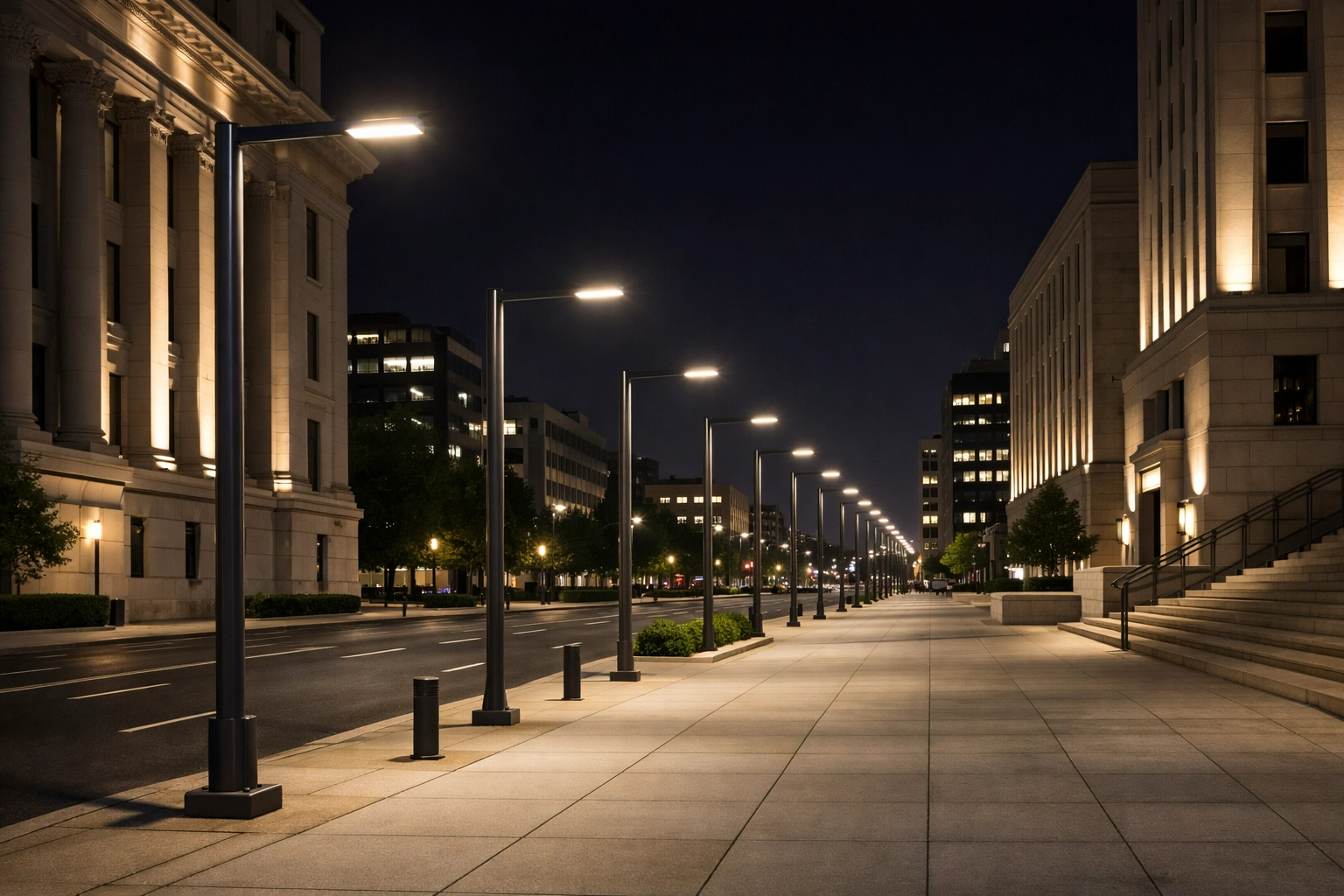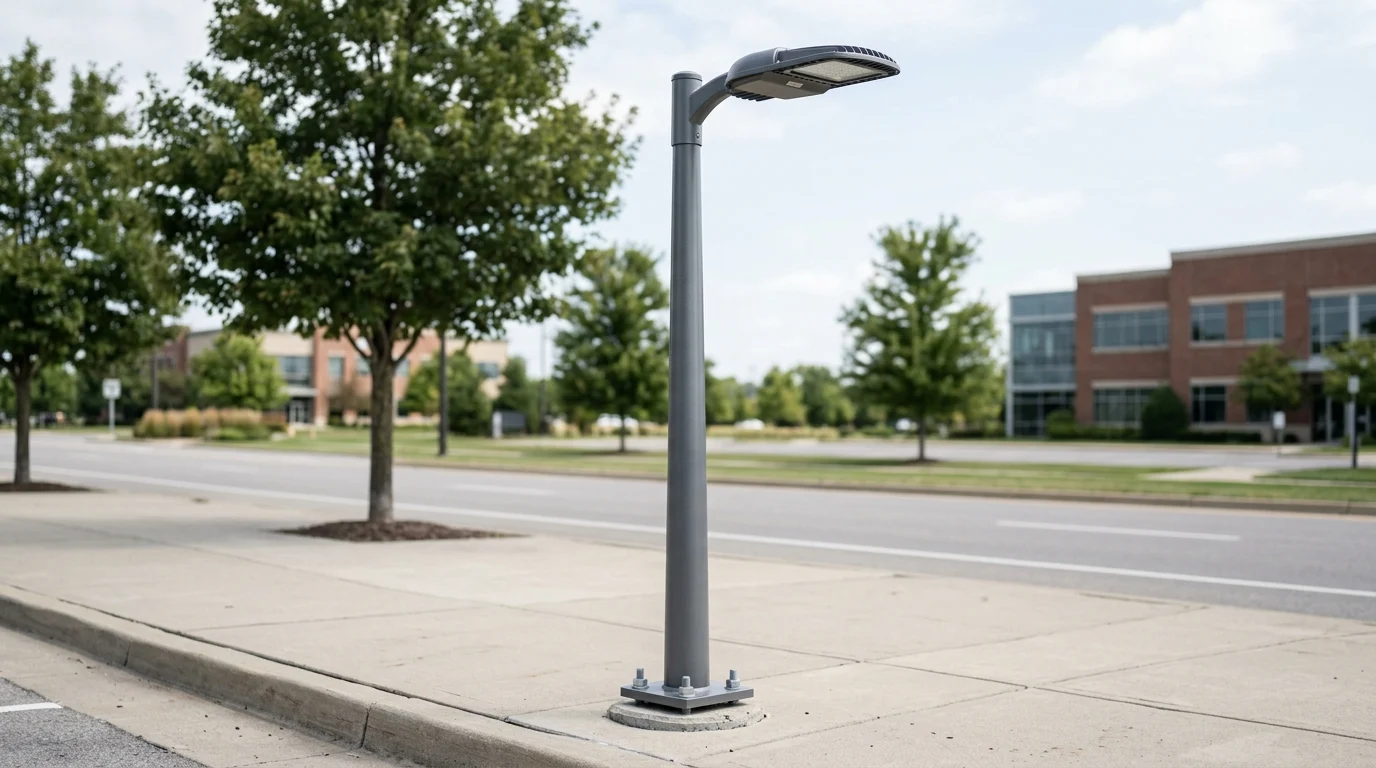
Introduction
Municipal street light pole procurement affects far more than unit price: it determines structural reliability, maintenance burden, streetscape consistency, and the ability to support future equipment such as cameras, sensors, or telecom attachments. A clear specification helps purchasing teams translate operational needs into measurable requirements for materials, loading, corrosion protection, dimensions, testing, and documentation. This article outlines the core elements a municipality should define before issuing bids so readers can compare suppliers on performance and lifecycle value rather than vague product descriptions and move into the detailed criteria with a shared technical baseline.
Why Street Light Pole Procurement Specifications Matter
Developing a robust street light pole procurement specification is paramount for municipalities seeking to balance public safety, aesthetic continuity, and long-term asset management. A precise specification mitigates structural failures and prevents excessive lifecycle costs associated with premature corrosion or fatigue.
Scope, Performance Goals, and Use Cases
The primary scope of a municipal procurement specification extends beyond the physical structure to encompass performance goals dictated by the surrounding environment. Urban environments now demand poles capable of supporting not only luminaires but also auxiliary attachments such as 5G small cells, surveillance cameras, and environmental sensors. Consequently, the specification must define the maximum Effective Projected Area (EPA) and allowable weight for all attachments. Municipalities must categorize use cases accurately to ensure structural integrity without over-engineering, which needlessly inflates capital expenditure.
Pole Types, Application Classes, and Assumptions
Application classes dictate the physical characteristics of the pole infrastructure. Arterial roadways typically require standard davit or truss-arm poles ranging from 30 to 50 feet in height, whereas residential and historic districts often necessitate decorative post-top poles under 20 feet. Specifications must state baseline assumptions regarding environmental exposure, mandating a minimum 50-year design life for the primary structural components. Furthermore, calculations must adhere to current standards, such as the AASHTO Standard Specifications for Structural Supports for Highway Signs, Luminaires, and Traffic Signals (LTS-6 or LTS-7), ensuring the infrastructure withstands localized maximum wind gusts, which can exceed 130 mph in coastal hurricane zones.
Core Technical Requirements for Street Light Poles
Translating high-level municipal goals into actionable engineering requirements requires rigorous definition of physical and material parameters. Ambiguity in this section directly correlates with inconsistent bids and a heightened risk of structural non-compliance.
Materials, Geometry, Loads, and Foundations
The selection of materials, geometric profiles, and foundation interfaces forms the core of the technical specification. Carbon steel remains the standard for high-mast and arterial applications due to its high tensile strength, typically requiring a minimum yield strength of 55,000 psi. Conversely, spun aluminum is preferred for corrosive coastal environments despite a higher initial material cost. Anchor bolt circles must be standardized to match existing municipal foundations, commonly utilizing a 1-inch to 1.25-inch bolt diameter on an 11-inch to 15-inch bolt circle.
| Material | Typical Yield Strength | Corrosion Resistance | Base Cost Index (Steel=1.0) | Standard Wall Thickness |
|---|---|---|---|---|
| Carbon Steel | 55,000 – 65,000 psi | Low (Requires Galvanizing) | 1.0x | 11-gauge (0.1196″) to 7-gauge (0.1793″) |
| Spun Aluminum | 25,000 – 35,000 psi | High | 1.4x – 1.8x | 0.125″ to 0.250″ |
| Fiberglass Composite | 30,000 – 40,000 psi | Excellent | 1.3x – 1.6x | Varies by manufacturer |
Manufacturing Quality, Coatings, and Inspection
Specifications must dictate stringent manufacturing tolerances and coating systems to achieve the targeted lifecycle. For steel poles, hot-dip galvanization strictly adhering to ASTM A123 is non-negotiable, requiring a minimum zinc coating thickness of 3.0 to 3.9 mils depending on the steel gauge. If a painted finish is desired for aesthetic integration, the specification should mandate a duplex system comprising the galvanized base layer followed by a TGIC polyester powder coat applied to a dry film thickness of 3.0 to 5.0 mils. Additionally, all longitudinal seam welds must undergo non-destructive testing (NDT), with a minimum of 10% requiring ultrasonic or magnetic particle inspection to guarantee structural soundness before leaving the factory.
Supplier Evaluation, Cost, and Compliance
Beyond technical parameters, a comprehensive specification must establish strict commercial and compliance guidelines to effectively evaluate suppliers. This ensures that the chosen vendor can deliver the specified infrastructure reliably and cost-effectively.
Supplier Comparison Criteria and Cost Factors
Evaluating prospective suppliers requires a standardized matrix of criteria, encompassing production capacity, historical defect rates, and total landed costs. Cost factors vary significantly based on material and scale; a standard 30-foot galvanized steel pole typically falls within an $800 to $1,200 cost band, whereas decorative aluminum variants can exceed $2,500 per unit. Procurement officers must also codify logistical expectations. Acceptable lead times generally range from 8 to 14 weeks, but supply chain volatility can stretch this to 20 weeks for specialized extrusions. Furthermore, establishing a Minimum Order Quantity (MOQ) of 25 to 50 units in the specification can help leverage economies of scale while ensuring the supplier is equipped for municipal-level volumes.
Turning Specifications into Bid and Contract Requirements
To transition from specification to an enforceable contract, the Request for Proposal (RFP) must explicitly link technical compliance to financial milestones. Suppliers must be required to provide stamped engineering submittals and wind load calculations from a licensed professional engineer (PE) prior to manufacturing authorization. The contract should mandate performance bonds and stipulate warranty periods, typically demanding 5 years for coating integrity and 10 years for structural components. By embedding these strict submittal, inspection, and warranty requirements directly into the bid documents, municipalities protect public funds, ensuring the delivered street light poles match the exact tolerances required for decades of continuous public service.
Key Takeaways
- The most important conclusions and rationale for street light pole procurement specification
- Specs, compliance, and risk checks worth validating before you commit
- Practical next steps and caveats readers can apply immediately
Frequently Asked Questions
What should a municipal street light pole specification include?
Include pole height, arm type, material, wind speed, EPA, attachment weight, foundation interface, coating system, and required standards such as AASHTO and ASTM.
Which material is better for municipal street light poles?
Steel is usually best for cost-sensitive roadway projects; aluminum is often better in coastal or corrosive areas where longer corrosion resistance matters.
How can municipalities compare pole suppliers effectively?
Check engineering support, test reports, coating compliance, lead time, drawing approval process, manufacturing capacity, and project communication responsiveness.
Why are technical drawings important before ordering poles?
Approved drawings confirm dimensions, bolt circle, handhole, arm details, and attachment loads, helping prevent fit-up errors and change orders on site.
Can Morelux support customized municipal pole procurement?
Yes. Morelux provides custom steel and aluminum pole solutions, technical drawings, engineer support, and fast quotes for infrastructure and public project buyers.