Introduction
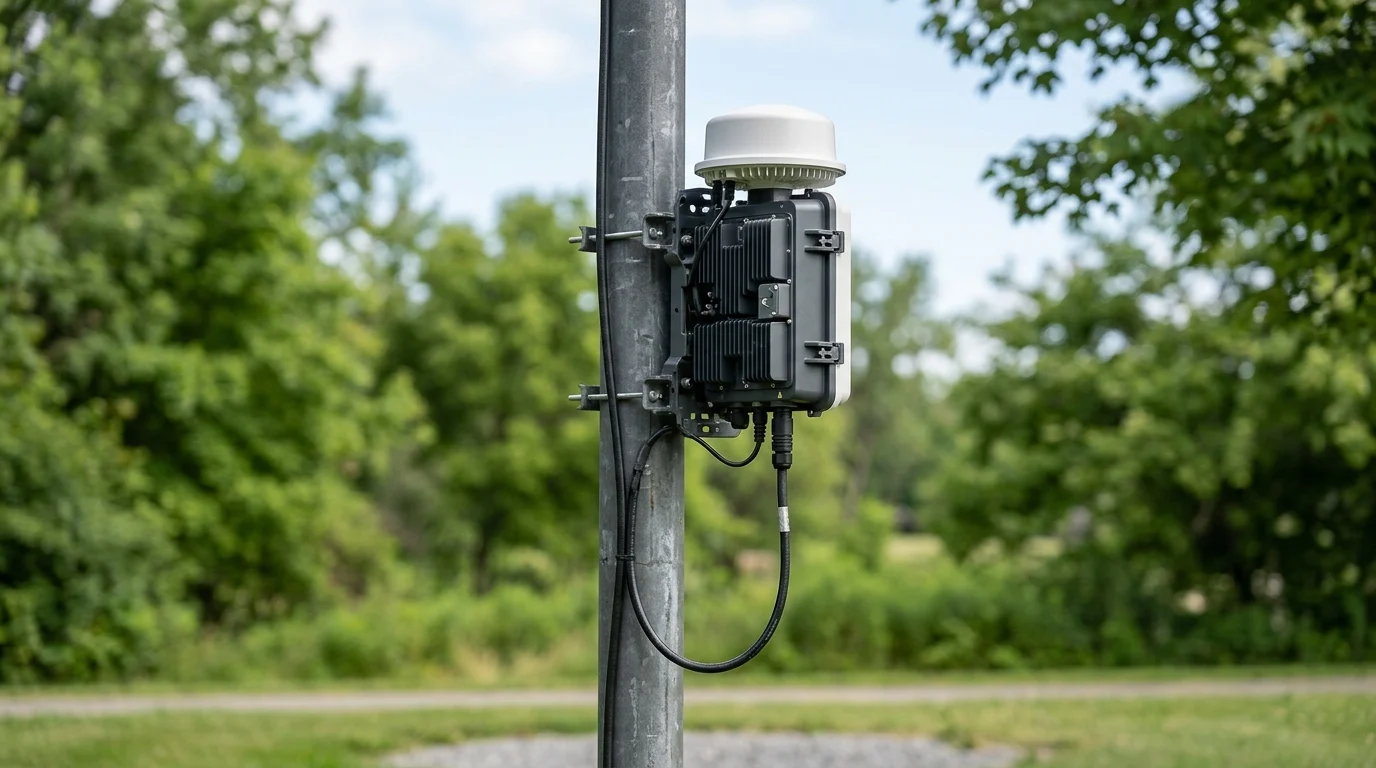
As 5G mmWave networks move into dense urban corridors, aluminum poles are becoming a practical platform for small-cell equipment, but compatibility is not simply a matter of mounting hardware. Structural loads, vibration, thermal behavior, corrosion control, cable routing, and concealment all affect whether a pole can support reliable radio performance and meet municipal design standards. This article explains how 5G millimeter wave pole requirements intersect with aluminum pole design, what operators and cities should evaluate before deployment, and where common integration challenges appear. The goal is to help readers assess whether an aluminum pole can serve as a compliant, durable, and efficient host for mmWave infrastructure.
Why 5G Millimeter Wave Pole Compatibility Matters for Aluminum Poles
The rapid expansion of 5G millimeter wave (mmWave) networks relies heavily on the densification of small cell infrastructure. Aluminum poles, traditionally utilized for street lighting and traffic management, are increasingly repurposed or replaced with purpose-built structures to house these high-frequency network nodes. Achieving seamless 5G millimeter wave pole compatibility with aluminum substrates is critical for municipalities and telecom operators aiming to balance structural integrity, aesthetic mandates, and rapid deployment schedules.
How deployment goals affect compatibility requirements
Urban densification strategies dictate that 5G mmWave nodes must be placed at intervals of 150 to 300 meters to overcome the inherent propagation limitations of high-frequency bands, which typically operate between 24 GHz and 39 GHz. This tight physical spacing forces network operators to utilize existing municipal right-of-way assets rather than acquiring new real estate. Aluminum poles offer a distinct deployment advantage due to their low weight—often 30% to 50% lighter than equivalent steel poles—facilitating easier installation in congested urban environments without requiring heavy lifting equipment.
However, the deployment goal of maximizing network coverage requires these poles to house multiple carrier radios, IoT sensors, and smart lighting controls. This multi-tenant approach significantly alters the original load profile of the infrastructure, shifting the engineering focus from simple illumination support to complex telecommunications hosting.
Which compatibility criteria matter most
The most critical compatibility criteria revolve around structural capacity, thermal management, and aesthetic concealment. Aluminum poles must possess the structural rigidity to support the added weight of Active Antenna Units (AAUs) and ancillary equipment, which frequently add 60 to 120 pounds to the upper mast of the pole.
Furthermore, the Effective Projected Area (EPA) is a paramount metric for determining structural safety. A standard aluminum street light pole may be rated for a maximum of 5.0 square foot EPA at 90 mph wind speeds. In contrast, a fully equipped 5G node with external antennas and shrouds can increase the aerodynamic drag beyond 8.0 square feet. Engineers must evaluate whether an existing aluminum pole requires internal structural reinforcement or if a complete replacement with a higher-gauge, multi-tenant smart pole is necessary to meet rigorous municipal safety codes.
Technical Factors That Determine 5G Millimeter Wave Pole Compatibility
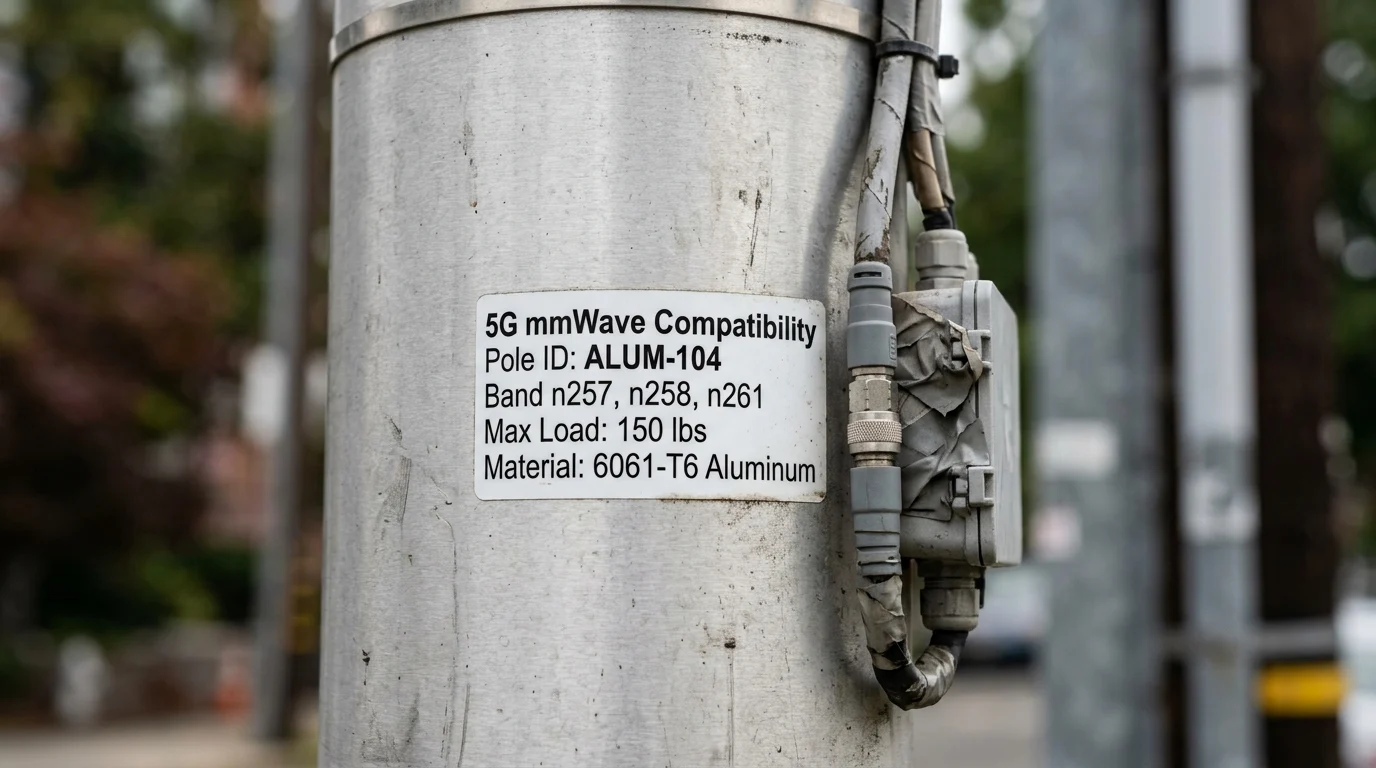
Integrating high-frequency telecom equipment onto aluminum structures requires rigorous engineering analysis. Unlike traditional lighting fixtures, 5G small cells impose complex dynamic loads and necessitate specialized internal pathways for power and fiber optics. Assessing 5G millimeter wave pole compatibility demands a holistic evaluation of structural dynamics, material science, and electromagnetic principles.
How structural and mounting requirements affect fit
Structural and mounting configurations directly dictate network performance. Millimeter wave signals utilize highly directional beamforming technology, which is exceptionally sensitive to physical misalignment. Industry standards typically mandate that the maximum allowable deflection at the antenna mounting elevation must not exceed 0.5 to 1.0 degrees under operational wind loads, often evaluated at 60 mph.
Because aluminum possesses a lower modulus of elasticity compared to steel (roughly 10 million psi versus 29 million psi), aluminum poles are inherently more susceptible to wind-induced sway and vibration. Consequently, mounting brackets must be engineered with vibration-damping isolators to maintain signal integrity. Additionally, the aluminum pole shafts frequently require increased wall thickness—shifting from a standard 0.156-inch wall to 0.250-inch or greater—to achieve the requisite stiffness for uninterrupted mmWave transmission.
Which electrical, RF, grounding, and corrosion factors matter
Electrical integration and material interactions introduce another layer of complexity. When mounting steel telecommunications brackets to aluminum poles, galvanic corrosion becomes a severe risk, particularly in coastal or high-humidity environments. Engineers must specify dielectric separators, such as neoprene gaskets or specialized polymer coatings, to isolate the dissimilar metals and prevent accelerated degradation.
Grounding is equally critical for operational safety and equipment longevity. Telecom standards require a ground resistance of less than 5 ohms to protect sensitive radio equipment from transient voltage spikes and lightning strikes. Because aluminum’s natural oxide layer acts as an electrical insulator, all grounding attachment points must be mechanically cleaned and treated with an antioxidant compound before bonding.
Furthermore, for aesthetically concealed nodes, the radome material surrounding the antenna must be highly RF-transparent. Polycarbonate or specialized fiberglass enclosures are specifically engineered to ensure signal attenuation remains below 1.0 dB in the 28 GHz and 39 GHz spectrums, preventing the concealment structure from degrading network performance.
| Material | Modulus of Elasticity | Relative Weight | Galvanic Risk w/ Steel Mounts | Typical Max EPA Capacity (90 mph) |
|---|---|---|---|---|
| Aluminum (6061-T6) | ~10 x 10^6 psi | Low (Base 1x) | High (Requires Isolation) | 6.0 – 10.0 sq ft |
| Galvanized Steel | ~29 x 10^6 psi | High (Base ~2.5x) | Low | 15.0 – 25.0 sq ft |
| Fiberglass/Composite | ~3 x 10^6 psi | Very Low (Base 0.7x) | None | 4.0 – 8.0 sq ft |
How to Compare, Specify, and Approve 5G Millimeter Wave Poles
Procuring the correct infrastructure requires navigating a complex matrix of telecommunications standards, municipal zoning ordinances, and supply chain realities. A systematic approach to specifying and approving 5G millimeter wave pole configurations ensures that deployments remain on schedule, within budget, and compliant with all jurisdictional safety mandates.
What criteria to use when comparing vendors
When evaluating vendors for aluminum 5G poles, procurement engineers must prioritize manufacturers with proven capabilities in custom aluminum extrusion and integrated thermal management. High-performance active antennas generate substantial heat; therefore, poles designed with internal heat sinks or passive cooling channels offer a distinct operational advantage over standard hollow shafts.
Modularity is another critical comparative metric.
Key Takeaways
- The most important conclusions and rationale for 5G Millimeter Wave Pole
- Specs, compliance, and risk checks worth validating before you commit
- Practical next steps and caveats readers can apply immediately
Frequently Asked Questions
Can existing aluminum poles support 5G millimeter wave equipment?
Sometimes. Capacity depends on pole wall thickness, height, EPA, and wind load. A structural review should confirm if reinforcement works or if a purpose-built 5G smart pole is safer.
What is the main risk when mounting steel telecom brackets on aluminum poles?
Galvanic corrosion. Use dielectric isolators, compatible coatings, and sealed hardware, especially for coastal or humid projects.
Why does pole stiffness matter for mmWave performance?
mmWave antennas are sensitive to sway and misalignment. The pole and bracket must limit deflection under wind so signal beamforming stays stable.
What should buyers prepare before requesting a 5G pole quote from Morelux?
Share pole height, equipment weight, EPA, wind speed, base details, finish, and cable-routing needs. This helps Morelux provide faster quotes, drawings, and engineering support.
Can Morelux customize aluminum poles for concealed 5G deployments?
Yes. Morelux can support custom pole structures, internal pathways, finishes, and coordinated engineering to meet project appearance and infrastructure requirements.