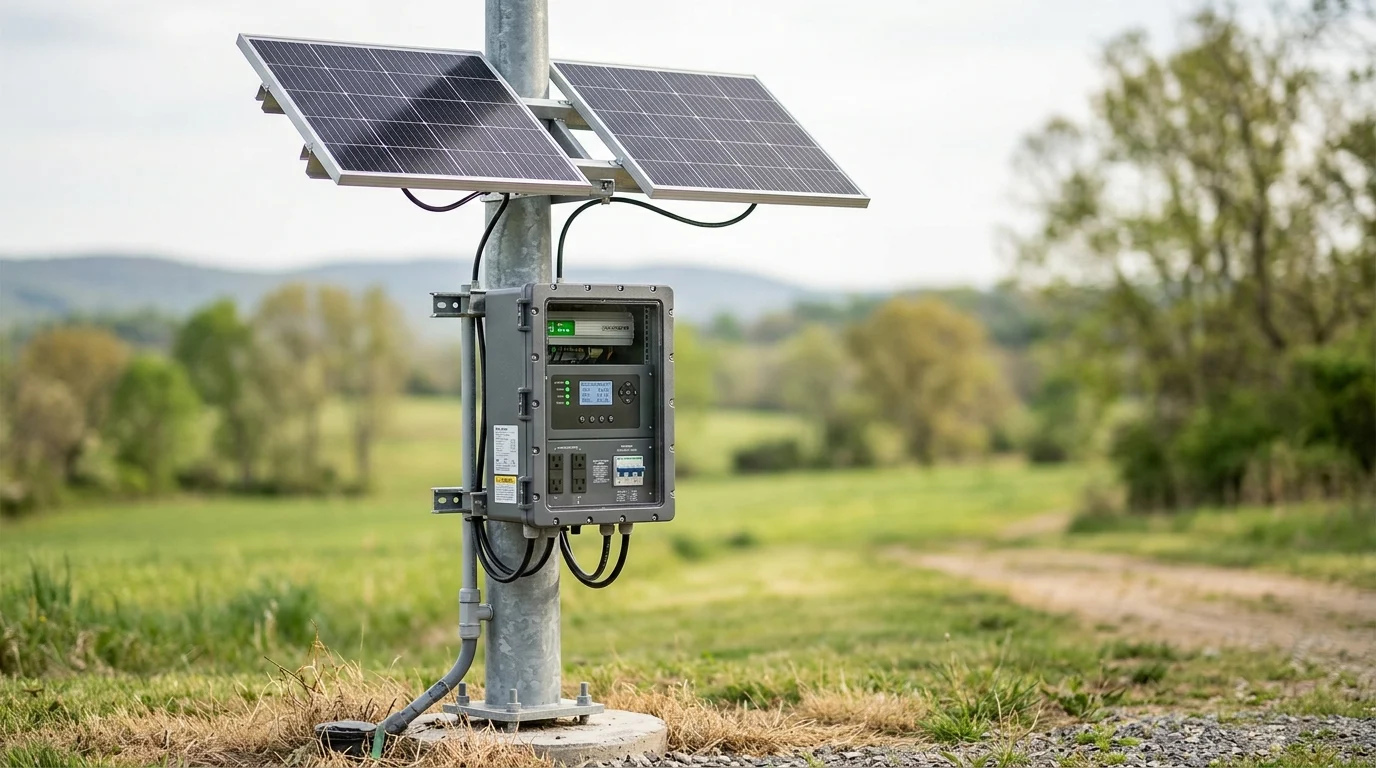
As cities modernize street infrastructure, solar pole microgrid endpoints are becoming a practical way to combine lighting, local power generation, storage, and device connectivity in a single streetside asset. Their value is not just technical: they can reduce trenching and utility dependency, improve resilience during outages, and support applications such as sensors, communications equipment, and public services in dense urban corridors. This article explains the core design considerations behind these endpoints, including energy balance, storage sizing, load priorities, hardware integration, and urban deployment constraints, so readers can better evaluate how the system works and where it fits in municipal streetscape projects.
Why Solar Pole Microgrid Endpoints Are Emerging
The transformation of municipal street lighting into active energy assets has accelerated the development of the solar pole microgrid endpoint. Rather than functioning solely as grid-dependent illumination, these vertical assets operate as decentralized energy generation, storage, and distribution nodes. This architecture enhances urban resilience and mitigates the vulnerability of centralized grid infrastructure during extreme weather events.
Framing the commercial case
The economic rationale for deploying a solar pole microgrid endpoint relies heavily on avoiding conventional infrastructure costs. Trenching and directional boring for new electrical conduit in dense urban environments typically range from $150 to $250 per linear foot. When outfitting a smart streetscape over a single mile, these civil engineering costs rapidly eclipse the capital expenditure of autonomous solar hardware.
Furthermore, capitalizing on off-grid endpoints shields municipalities from volatile peak-demand utility pricing. By localizing power generation and storage, cities can stabilize operational expenditures over a 20-year infrastructure lifecycle, transforming a historical sunk cost into a self-sustaining asset.
Urban use cases that justify adoption
Modern urban infrastructure demands continuous power for high-draw peripheral devices that exceed the capacity of legacy lighting circuits. A standard 5G small cell deployment requires 200W to 500W of continuous power, while integrated Level 2 EV charging interfaces can draw up to 7.2 kW during active sessions.
By establishing a solar pole microgrid endpoint, integrators can co-locate these high-demand applications alongside environmental sensors, edge computing nodes, and municipal surveillance equipment. The localized energy generation directly serves these payloads, ensuring uninterrupted uptime for critical smart city functions without triggering expensive utility grid capacity upgrades.
Design Criteria for High-Performance Solar Pole Microgrid Endpoints
Engineering a reliable solar pole microgrid endpoint requires balancing energy density with stringent structural constraints. Unlike traditional ground-mounted solar arrays, vertical deployments must maximize energy capture within a highly restricted footprint while adhering to municipal aesthetic standards and structural wind load limits.
Core specifications and subsystem choices
Subsystem integration dictates overall endpoint efficiency. The selection of photovoltaic materials directly impacts the Effective Projected Area (EPA), a critical metric for pole engineering. Designers must choose between traditional flat monocrystalline panels, which offer higher conversion efficiencies but increase wind resistance, and cylindrical thin-film wraps that conform flush to the pole.
Charge regulation relies on advanced Maximum Power Point Tracking (MPPT) controllers. These units must operate at efficiencies exceeding 98% to capture minimal solar insolation during winter months and ensure maximum energy transfer to the storage subsystem.
| PV Technology | Typical Efficiency | Wind Load Impact (EPA) | Optimal Application |
|---|---|---|---|
| Flat Monocrystalline | 20% – 22% | High (Requires heavy pole) | High-demand endpoints in low-wind zones |
| Flexible CIGS Wrap | 14% – 16% | Zero (Conforms to pole) | Aesthetically sensitive or high wind corridors |
| Cylindrical Monocrystalline | 18% – 19% | Moderate (Integrated sleeve) | Balanced power and structural profile |
Balancing autonomy, pole load, and battery chemistry
Achieving system autonomy—typically defined as maintaining critical loads for 3 to 5 days without direct sunlight—requires precise battery chemistry selection. Lithium Iron Phosphate (LiFePO4) has emerged as the industry standard for the solar pole microgrid endpoint. It delivers a cycle life of 4,000 to 6,000 cycles at an 80% Depth of Discharge (DoD) and exhibits superior thermal stability in extreme urban heat islands compared to standard lithium-ion NMC cells.
Engineers must meticulously calculate the structural limits of housing these heavy battery banks. Placing a 100Ah, 24V battery pack near the top of a 30-foot pole dramatically alters the bending moment. This structural reality often necessitates base-mounted or subterranean battery enclosures to ensure the endpoint can survive 130 mph wind gusts, which are commonly specified in coastal and high-velocity hurricane deployment zones.
How Cities and Integrators Should Evaluate Deployment

Transitioning a solar pole microgrid endpoint from a localized pilot program to a city-wide fleet requires rigorous evaluation of regulatory compliance, digital interoperability, and supply chain resilience. Procurement frameworks must prioritize long-term operational stability over initial capital expenditure.
Codes, permitting, and interoperability
Compliance with structural and electrical standards is non-negotiable for municipal deployments. Structural supports must adhere to AASHTO guidelines for highway signs, luminaires, and traffic signals, while the integrated energy storage systems must carry UL 9540 certification to mitigate fire risks in public rights-of-way. Furthermore, deployments must strictly align with ASCE 7-16 wind load specifications, which vary drastically by geographic region.
On the digital front, a solar pole microgrid endpoint must offer seamless interoperability with existing municipal management platforms. Controllers should utilize open networking protocols, such as OCPP 1.6 or 2.0.1 for EV charging payloads, and provide secure API access for centralized monitoring of battery state-of-charge, fault detection, and real-time solar yield.
Supplier selection and decision guidance
Vetting suppliers for grid-edge infrastructure requires analyzing both manufacturing capability and post-deployment support. Municipalities should seek manufacturers capable of supporting phased rollouts, starting with minimum order quantities (MOQs) of 10 to 50 units for field validation, before scaling to fleet deployments of 500 or more poles.
Warranty structures serve as a critical indicator of component quality and vendor confidence. Integrators should demand a minimum 10-year warranty on LiFePO₄ battery modules and 20-year structural guarantees on the pole assemblies. Evaluating a vendor’s supply chain transparency, particularly regarding the sourcing of photovoltaic materials and lithium cells, is also essential to navigate federal procurement mandates and secure infrastructure grant funding.
Key Takeaways
- The most important conclusions and rationale for solar pole microgrid endpoint
- Specs, compliance, and risk checks worth validating before you commit
- Practical next steps and caveats readers can apply immediately
Frequently Asked Questions
What is a solar pole microgrid endpoint?
It is a street pole that combines solar generation, battery storage, lighting, and optional smart-city devices into one localized power node for urban streets.
When is a solar pole microgrid endpoint a better choice than trenching new power lines?
It is often better where trenching is costly, streets are congested, or projects need faster deployment without major civil works or utility capacity upgrades.
Which battery type is best for urban solar pole microgrid endpoints?
LiFePO4 is usually the preferred choice because it offers long cycle life, strong thermal stability, and a practical 3-5 day autonomy design for municipal use.
How should wind load affect solar pole endpoint design?
Wind load should guide PV selection, pole sizing, and battery placement. In high-wind corridors, low-EPA solar wraps and base-mounted batteries are usually safer.
Can Morelux support custom solar pole microgrid endpoint projects?
Yes. Morelux can provide customized pole solutions, technical drawings, engineer support, and fast quotes for infrastructure buyers planning urban solar pole deployments.