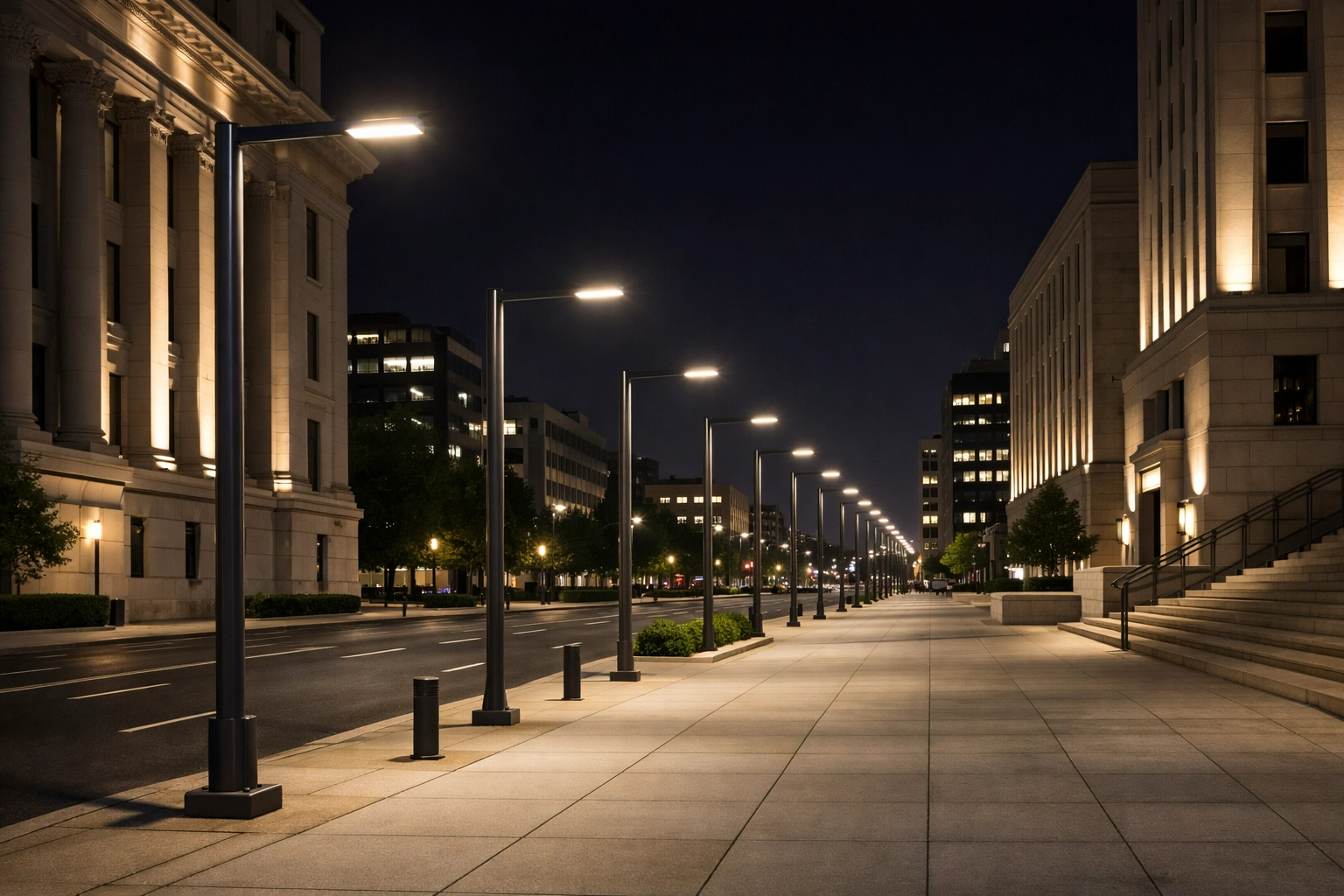
Introduction
Reliable lighting in remote areas depends on more than adding a solar panel to a pole. An effective off-grid solar street light must be designed as a self-contained system that matches local sunlight conditions, nighttime lighting needs, battery autonomy, and long-term maintenance limits. For projects in isolated roads, camps, borders, or rural communities, the wrong design can lead to poor illumination, short battery life, and costly replacements. This article explains the core design factors behind a dependable off-grid solar street light, including component sizing, energy balance, environmental durability, and operational tradeoffs, so readers can evaluate solutions with clearer technical and financial confidence.
Why Off-Grid Solar Street Light Design Matters in Remote Areas
Deploying illumination infrastructure in geographically isolated regions requires a shift from grid-tied paradigms to independent energy architectures. An off-grid solar street light operates entirely decoupled from centralised utility networks, making it the only viable solution where trenching cables is economically prohibitive or physically impossible. For industrial and municipal stakeholders managing mining camps, border patrol routes, or isolated eco-resorts, grid extension can easily exceed $50,000 per mile. Optimising off-grid systems requires balancing high initial capital expenditure against the promise of near-zero operational energy costs over a multi-decade lifecycle, which demands rigorous attention to component reliability.
What Defines an Off-Grid Solar Street Light
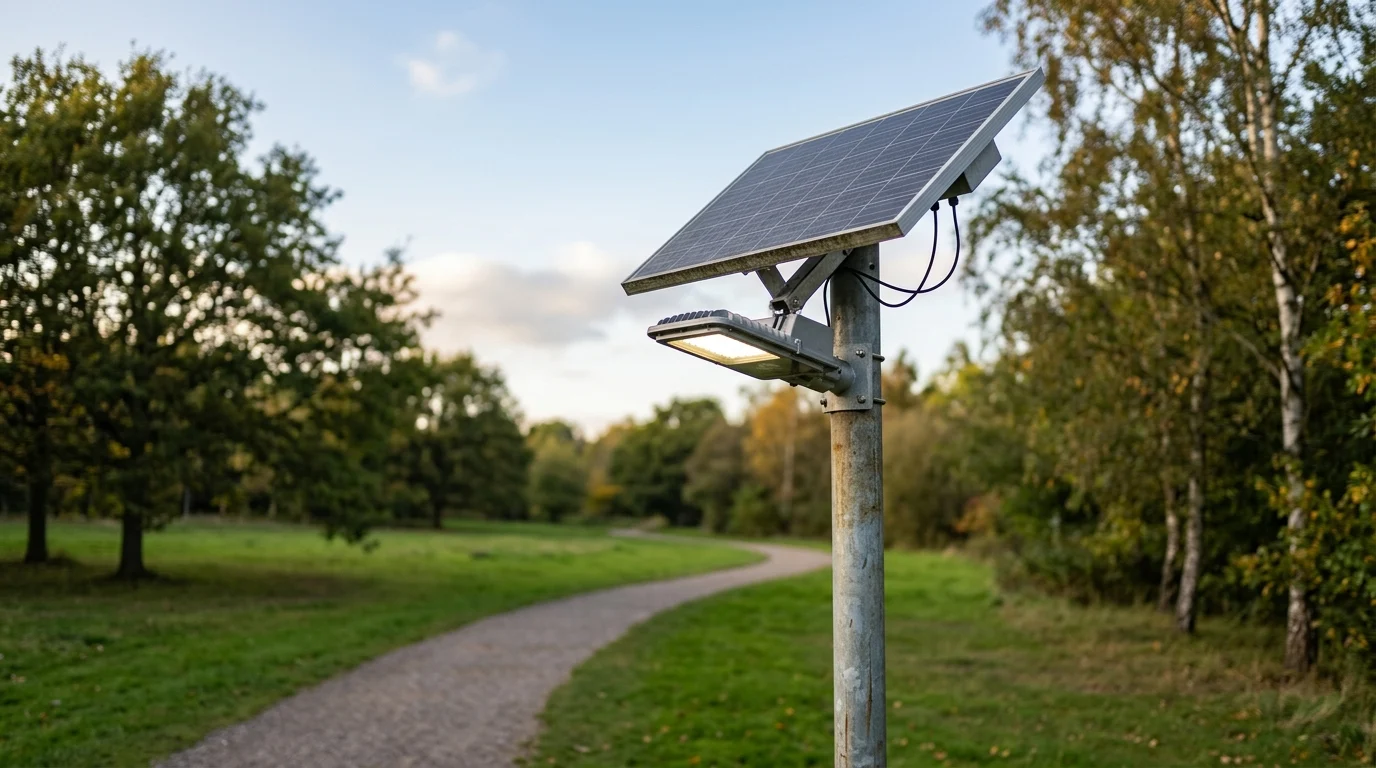
The fundamental architecture of an off-grid solar street light comprises four primary subsystems: a photovoltaic (PV) module for energy harvesting, a high-efficacy LED luminaire, a deep-cycle battery bank for energy storage, and an intelligent charge controller governing the electrical flow. Unlike grid-tied systems that use the utility grid as an infinite buffer, an off-grid unit must be entirely self-sustaining. This autonomy is quantified by the system’s ability to maintain acceptable illumination levels during continuous inclement weather. Industrial-grade systems are typically engineered for a strict three to five days of backup autonomy without any direct solar input, ensuring zero-point failure tolerance during extended overcast periods.
Which Remote-Area Constraints Drive Design
Designing for remote environments requires mitigating severe environmental and logistical constraints that degrade standard commercial hardware. Thermal extremes are a primary driver; systems deployed in arid deserts or subarctic regions must use batteries and microprocessors rated for operating temperatures spanning -20°C to +55°C. Furthermore, isolated coastal or mountainous installations frequently experience high transverse wind loads. Pole and mounting bracket designs must be aerodynamically optimised and structurally rated to withstand wind speeds up to 150 km/h. Because maintenance crews cannot easily access these sites, the Mean Time Between Failures (MTBF) for electronic components must exceed 50,000 hours. This necessitates hermetically sealed enclosures to prevent the abrasive dust and moisture ingress prevalent in undeveloped terrains.
How to Engineer an Off-Grid Solar Street Light
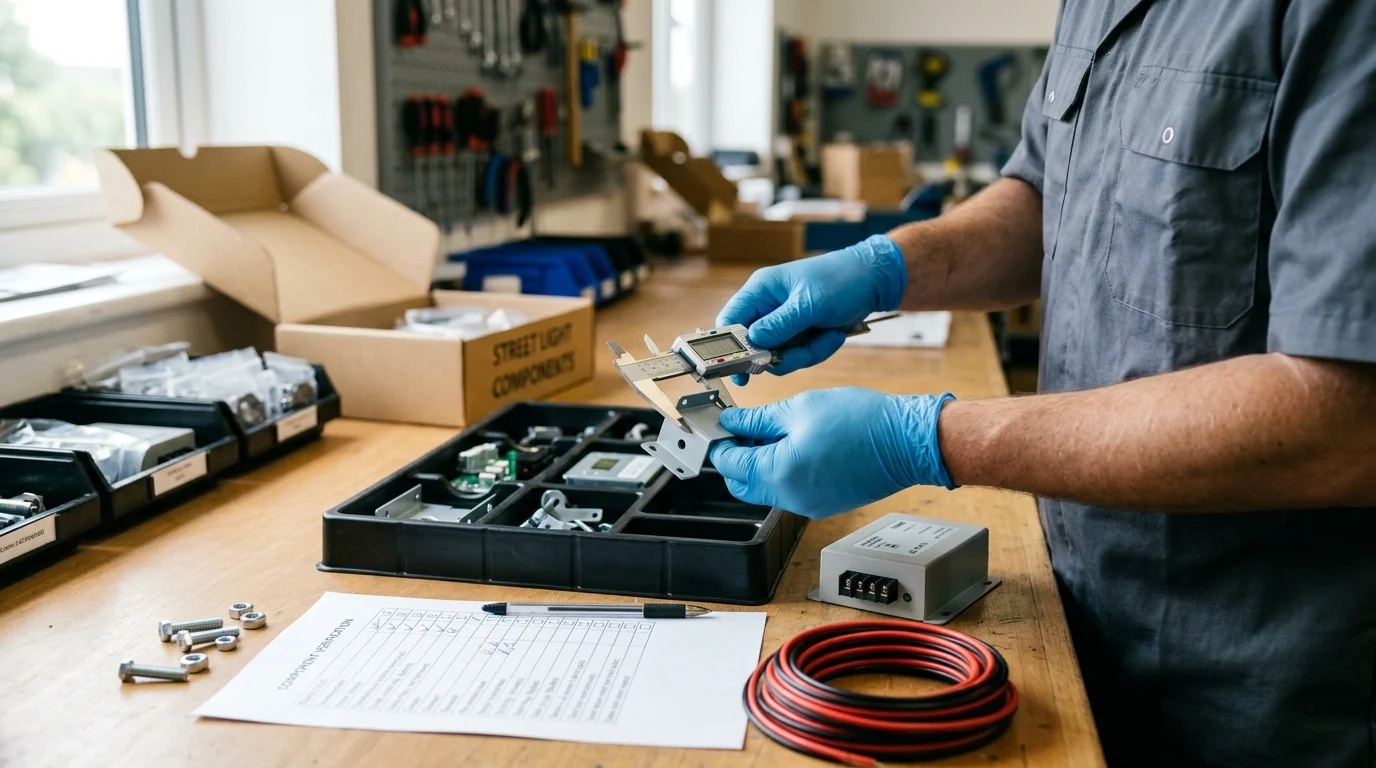
System engineering requires a rigorous, data-driven approach to balance energy generation capabilities with localised illumination demands. Oversizing components leads to unnecessary capital bloat and structural strain on the pole, while undersizing guarantees premature battery degradation and localised blackouts during winter months. Advanced modelling software is frequently deployed to simulate these variables before physical manufacturing begins.
How to Size Components and Set Control Strategy
Component sizing begins with calculating the specific location’s worst-case Peak Sun Hours (PSH) and aligning it with the required lumen output. Engineers must implement Maximum Power Point Tracking (MPPT) charge controllers, which achieve up to 99% DC-DC conversion efficiency. These controllers outperform legacy PWM alternatives by extracting 20% to 30% more energy during suboptimal lighting conditions. To further minimise the required battery capacity, advanced control strategies employ time-based or motion-sensed dimming profiles. A standard industrial profile for a 60W LED luminaire might run at 100% output for the first four hours of the evening, drop to a 30% baseline output to conserve power, and ramp back to 100% only when passive infrared (PIR) or microwave sensors detect physical movement.
How to Compare Battery and System Options
The battery bank remains the most critical and cost-intensive component in an off-grid solar street light. The industry has largely transitioned from legacy Valve-Regulated Lead-Acid (VRLA) or gel batteries to Lithium Iron Phosphate (LiFePO₄) chemistries due to superior energy density and thermal stability.
| Specification | LiFePO₄ (Lithium) | GEL (Lead-Acid) |
|---|---|---|
| Depth of Discharge (DoD) | 80% – 90% | 50% |
| Lifecycle (Cycles) | 3,000 – 5,000 | 800 – 1,200 |
| Operating Temp Range | -20°C to +60°C | -15°C to +45°C |
| Energy Density | ~130 Wh/kg | ~40 Wh/kg |
As demonstrated in the comparison, LiFePO₄ allows engineers to specify a smaller nominal capacity due to its higher usable DoD. While the upfront cost of lithium-based storage carries a premium, the extended lifecycle drastically reduces the Total Cost of Ownership (TCO) by eliminating the need for battery replacement within the first eight to ten years of remote deployment.
How to Evaluate Deployment and Suppliers

The ultimate success of a remote illumination project hinges not just on theoretical engineering but on practical deployment logistics and rigorous supplier vetting. Moving heavy, fragile equipment into areas with poor infrastructure introduces significant supply chain and installation risks. The total cost of ownership relies heavily on selecting partners capable of supporting the deployment strategy from the factory floor to the final installation site.
How to Reduce Installation and Logistics Risk
To mitigate logistics risk, project managers must carefully evaluate the form factor, selecting between split-type and all-in-one (integrated) designs. All-in-one units encapsulate the PV panel, battery, and LED into a single aerodynamic chassis. This modularity drastically reduces installation time to under 30 minutes per pole and maximises shipping density; a standard 40-foot high cube (40′ HQ) container can accommodate approximately 150 to 200 integrated units depending on the wattage. Conversely, split-type systems require complex onsite wiring and heavy lifting equipment for separate battery boxes and massive solar arrays. In remote areas where pouring concrete foundations is difficult, engineers often rely on helical piles, making the lower weight and reduced windage of integrated units highly advantageous.
How to Compare Suppliers, Warranties, and Certifications
Evaluating original equipment manufacturers (OEMs) requires looking past marketing claims to standardised certifications and warranty structures.
Key Takeaways
- The most important conclusions and rationale for off-grid solar street light
- Specs, compliance, and risk checks worth validating before you commit
- Practical next steps and caveats readers can apply immediately
Frequently Asked Questions
What autonomy should an off-grid solar street light have in remote areas?
For remote projects, design for 3 to 5 days of backup autonomy without sun. This helps maintain lighting during extended cloudy weather and reduces blackout risk.
Why is LiFePO4 usually better than GEL for off-grid solar street lights?
LiFePO4 offers deeper discharge, longer cycle life, lower weight, and wider temperature tolerance. It costs more upfront but usually lowers total ownership cost in remote sites.
How do you size an off-grid solar street light correctly?
Start with worst-case peak sun hours, target lux or lumen level, nightly runtime, and local weather data. Then match the panel, battery, controller, and pole strength to that load.
What pole features matter most for remote off-grid solar street lights?
Use poles rated for local wind load, corrosion exposure, and equipment weight. Morelux can support custom steel or aluminium pole designs with technical drawings for project approval.
Can Morelux support custom off-grid solar street light projects?
Yes. Morelux supports project buyers with custom pole solutions, engineering assistance, technical drawings, and fast quotations, which helps speed specification and sourcing for infrastructure projects.