Introduction
Cities are asking more from light poles than illumination alone; they now support sensors, communications equipment, cameras, and environmental monitoring across dense urban networks. A digital twin turns each pole into a continuously updated virtual asset, linking physical conditions, location, performance data, and maintenance history in one operational view. This article explains how that model improves the precision of urban management, from faster fault detection and more efficient maintenance planning to better coordination of traffic, energy use, and public services. It also outlines why digital twins are becoming a practical foundation for managing complex street-level infrastructure at scale.
Why Light Pole Asset Digital Twins Matter
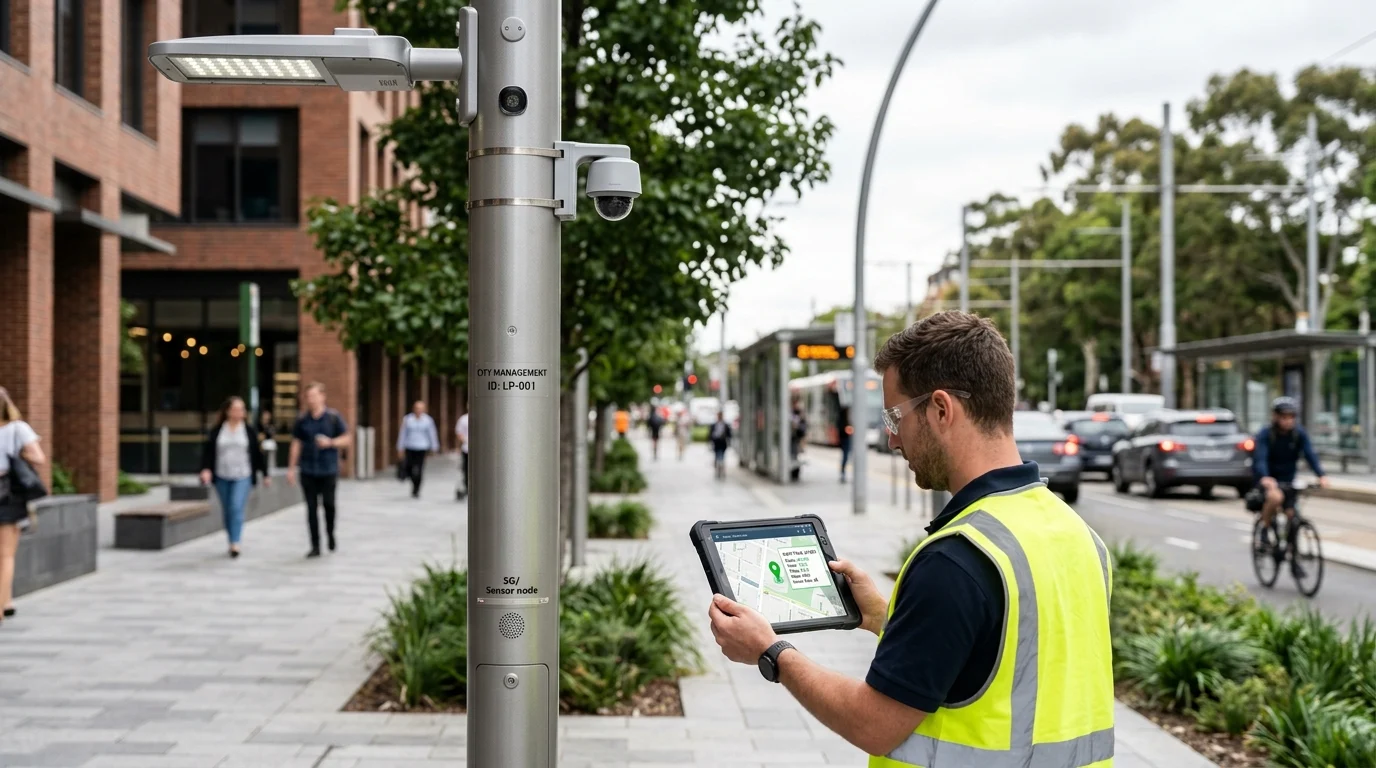
As urban infrastructure networks grow increasingly complex, physical hardware alone can no longer meet the demands of modern smart cities. To bridge the gap between physical infrastructure and digital oversight, municipalities rely on the digital twin of light pole assets, enhancing the precision of urban management. Smart poles are no longer just illumination points; they have evolved into high-density sensor hubs housing 5G antennas, environmental monitors, and traffic cameras. By virtualizing these assets, cities establish a dynamic, bidirectional data conduit that fundamentally upgrades how they monitor, analyze, and maintain their urban environments in real time.
Commercial and operational benefits
The transition from reactive maintenance to proactive, data-driven asset management yields immediate and substantial financial dividends. When deploying a comprehensive digital twin, municipalities typically observe a 25% to 40% reduction in operational expenditures (OPEX) directly related to field dispatches and truck rolls. By integrating real-time telemetry, predictive algorithms can identify subtle ballast degradation or LED driver voltage fluctuations weeks before a total failure occurs. This operational visibility allows maintenance teams to bundle repair tasks geographically and preemptively order necessary components, driving the Mean Time To Repair (MTTR) down from an industry average of 72 hours to strictly under 24 hours. Furthermore, synchronized dimming profiles executed through the twin can generate an additional 15% to 20% in energy savings over standard LED retrofits.
Priority urban management pain points
Municipalities consistently grapple with fragmented asset registries, undocumented legacy hardware, and exorbitant energy costs. Street lighting alone often consumes between 15% and 40% of a city’s total municipal energy budget. Without a centralized spatial intelligence platform, identifying phantom power draws, unauthorized grid attachments, or structurally compromised poles becomes a logistical nightmare. Digital twins map these spatial discrepancies, cross-referencing physical audits with digital models to resolve the chronic pain point of unverified asset inventories. By continuously monitoring the structural load and energy consumption of each pole, cities mitigate the systemic energy waste caused by static, unoptimized lighting schedules and prevent catastrophic structural failures resulting from unapproved third-party hardware attachments.
What Makes a High-Value Light Pole Asset Digital Twin

A high-value digital twin transcends a mere 3D CAD visualization or a static geographic map. It requires a robust, interoperable architecture capable of ingesting massive, diverse data streams in real time. The critical distinction between a basic digital model and a highly functional digital twin lies in the depth of its data integration, its temporal fidelity, and its capacity for autonomous analytical processing to support complex urban ecosystems.
Core data layers and integration requirements
The foundation of this system rests on three interconnected core data layers: geospatial intelligence (GIS), physical asset characteristics (BIM), and dynamic telemetry (IoT). To ensure precise urban management, high-frequency sensor data—such as ambient light levels, particulate matter (PM2.5) indices, and vehicular traffic flow metrics—must be integrated with sub-500 millisecond latency. This telemetry layer must seamlessly communicate with the central asset management system via RESTful APIs or lightweight MQTT protocols. This integration ensures that the digital replica strictly mirrors the physical pole’s real-time state, including its current electrical load, active voltage (typically ranging from 120 V to 277 V), and environmental stress factors. Furthermore, establishing a continuous digital thread allows operators to track the asset’s lifecycle from initial fabrication through deployment and eventual decommissioning.
Maturity models and deployment options
The capability and maturity of a digital twin are evaluated using a structured framework. Progressing from basic descriptive models to advanced prescriptive systems significantly scales both implementation complexity and operational value. Selecting the appropriate deployment tier dictates the required municipal investment and the expected financial return. To guide these deployments, the following maturity matrix aligns city budgets with operational goals.
| Maturity Level | Analytical Capability | Data Frequency | Est. Implementation Cost per Pole | Expected ROI Timeline |
|---|---|---|---|---|
| Level 1: Descriptive | 3D visual mapping & static GIS | Monthly / Manual | $15 – $30 | 5 – 7 years |
| Level 2: Diagnostic | Real-time IoT condition monitoring | Sub-minute | $45 – $80 | 3 – 5 years |
| Level 3: Predictive | AI-driven failure forecasting | Continuous streaming | $100 – $150 | 2 – 4 years |
| Level 4: Prescriptive | Autonomous control & optimization | Edge-processed (Sub-second) | $200+ | 1.5 – 3 years |
By leveraging this model, municipalities can strategically phase deployments, ensuring that foundational data is secured before investing in Level 4 edge-computing capabilities.
How to Implement and Evaluate a Light Pole Asset Digitally
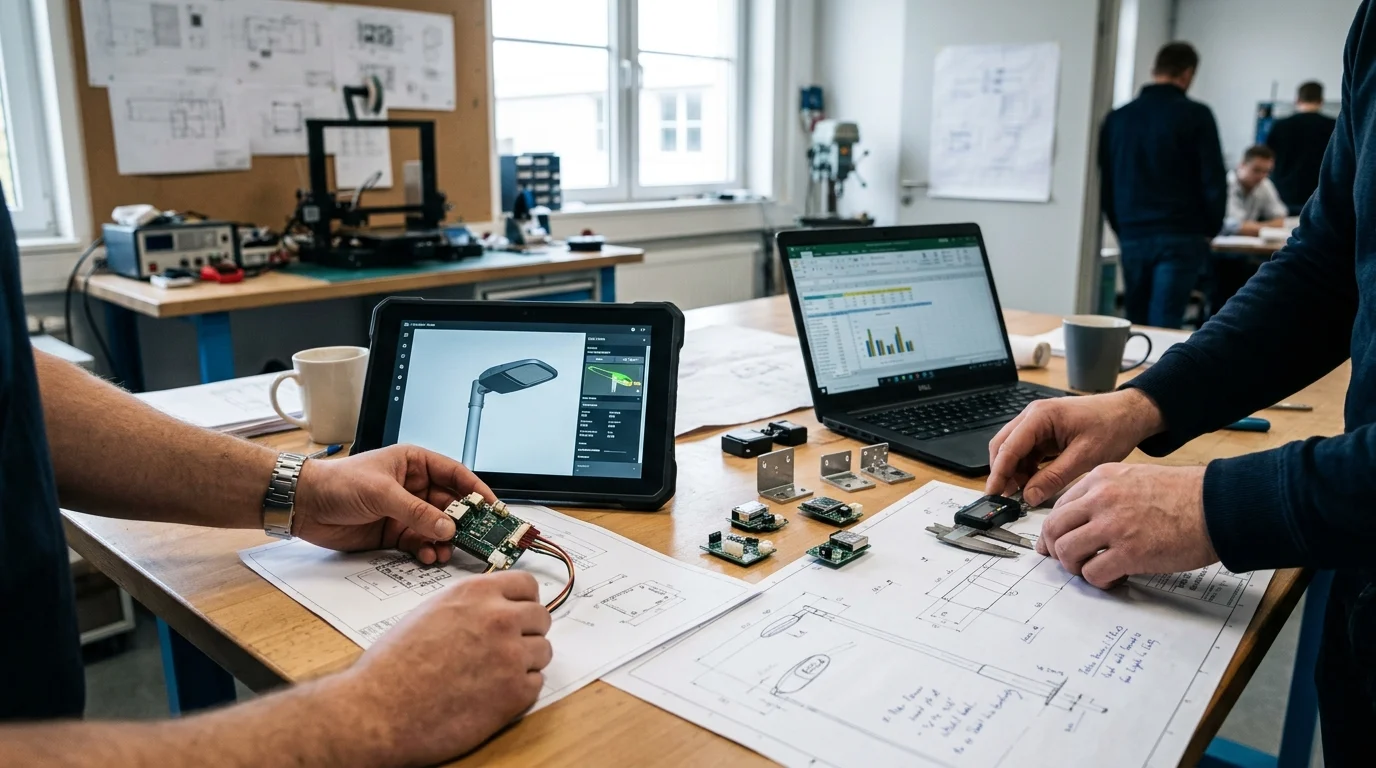
Moving from conceptual architecture to active deployment requires rigorous planning and cross-departmental coordination. Implementation should be approached as a carefully phased rollout, prioritizing data accuracy, interoperability, and system security before scaling the virtualized network across an entire metropolitan grid.
Implementation steps, governance, and compliance
The initial implementation phase demands high-fidelity data capture to build the foundational geometry. Mobile LiDAR scanning combined with photogrammetry is deployed to generate point clouds with a density exceeding 100 points per square meter. This ensures structural dimensions, luminaire heights, and critical tilt angles are recorded with millimeter accuracy. Following data ingestion, strict governance frameworks must be established to manage data ownership and access rights. Because modern smart poles often house sensitive 5G small cells and public surveillance equipment, compliance with global cybersecurity standards like ISO/IEC 27001 is non-negotiable. Enforcing AES-256 end-to-end encryption for all IoT telemetry payloads protects municipal data from interception, ensuring that command-and-control functions cannot be compromised by bad actors.
Decision criteria and trade-offs
When evaluating vendor solutions and architectural designs, decision-makers must carefully balance initial capital expenditures (CAPEX) against long-term operational scalability and the potential risks of vendor lock-in.
Key Takeaways
- The most important conclusions and rationale for the digital twin of Light Pole Assets: Enhancing the Precision of Urban Management
- Specs, compliance, and risk checks worth validating before you commit
- Practical next steps and caveats readers can apply immediately
Frequently Asked Questions
What is a digital twin for light pole assets?
It is a live digital model of each pole, combining location, pole specifications, and sensor data to monitor status, energy use, and maintenance needs in real time.
How does a digital twin improve urban light pole management?
It helps cities move from reactive repairs to predictive maintenance, reduce field visits, verify asset inventories, and optimize dimming schedules for lower energy costs.
What data should a high-value light pole digital twin include?
It should include GIS location, pole design and material data, electrical load, voltage, maintenance history, and IoT telemetry such as lighting status, traffic, or environmental readings.
Can Morelux support projects that need poles ready for digital twin integration?
Yes. Morelux provides custom steel and aluminum poles, technical drawings, engineer support, and manufacturing options that help buyers prepare assets for smart city and connected infrastructure projects.
How can buyers start a smart pole or digital twin project faster?
Prepare pole height, load requirements, mounting details, and project standards first. With clear specifications, Morelux can respond quickly with quotes, drawings, and engineering support.