Introduction
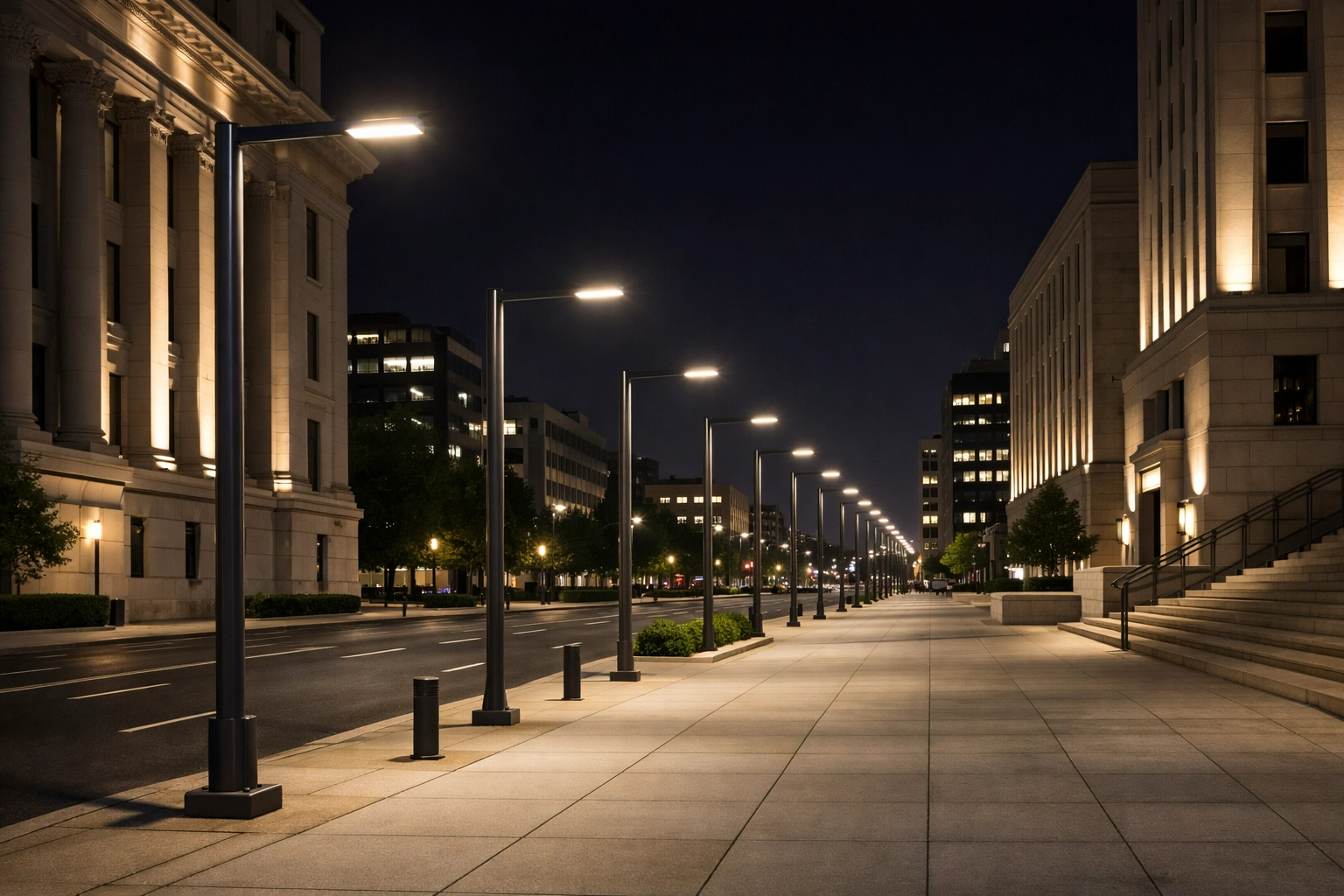
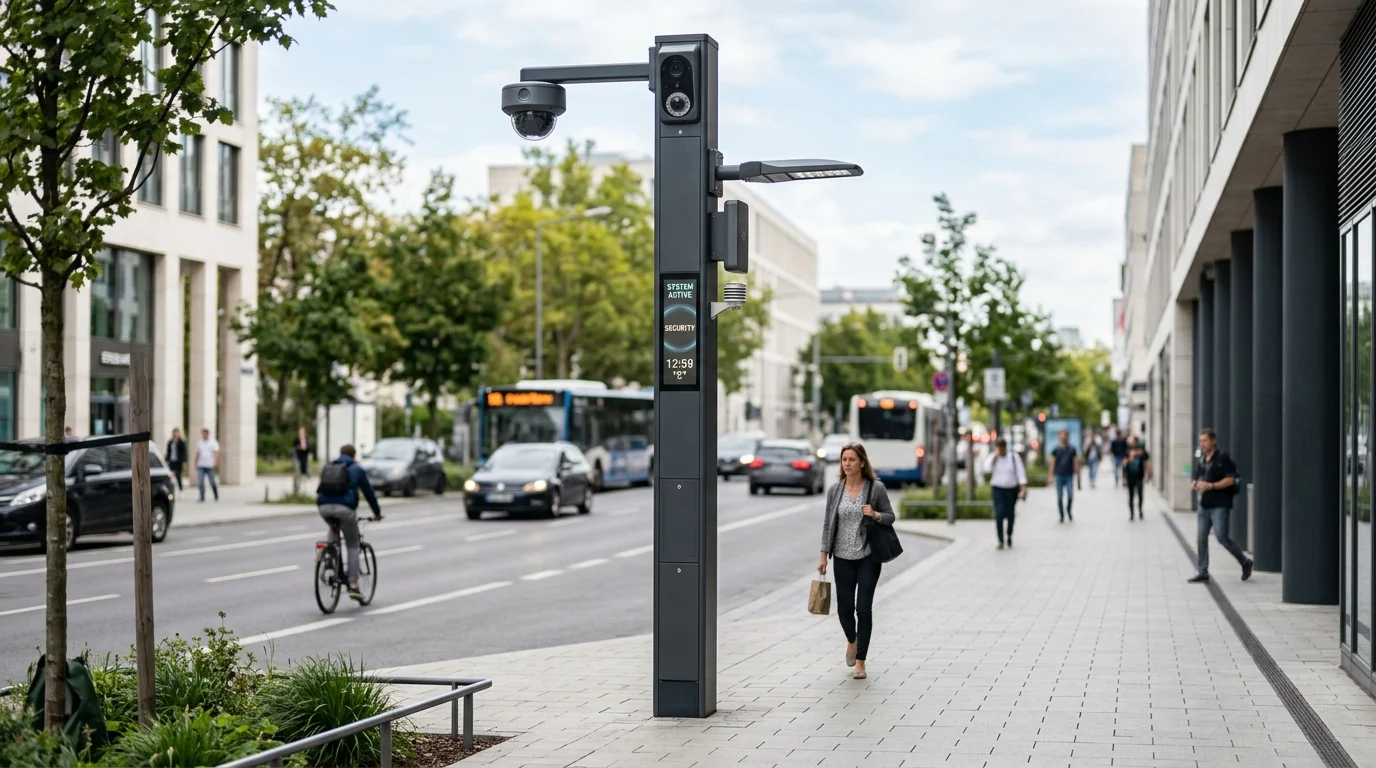
As cities push more intelligence into street-level infrastructure, smart light poles are becoming far more than connected lamps. When AI vision is built directly into these poles, they can interpret traffic flow, detect unusual behavior, and support faster, more targeted public safety responses without relying on passive video review alone. This article explains how that deeper integration works, what technical capabilities make it possible, and why municipalities are adopting it to improve safety, mobility, and infrastructure efficiency. It also sets up the practical shift from simple monitoring toward proactive security, where urban systems can identify risks early and trigger action in real time.
Why deep integration of AI vision technology matters in smart
Smart light poles have evolved from simple illumination assets to critical nodes in urban Internet of Things (IoT) networks. The deep integration of AI vision technology marks a paradigm shift from passive video recording to proactive security and real-time situational awareness. By moving computational intelligence directly into the urban canopy, municipalities can transform existing right-of-way infrastructure into an active, responsive grid.
How does it support safety, traffic, and infrastructure goals
By embedding high-definition optical sensors paired with advanced machine learning algorithms—such as convolutional neural networks (CNNs)—directly into municipal infrastructure, cities achieve multi-modal data fusion. AI vision supports traffic management by analyzing vehicle density, trajectory, and pedestrian movement, which can dynamically adjust traffic signal timing and reduce intersection wait times by up to 25%. For proactive safety, automated anomaly detection replaces human monitoring fatigue. Algorithms trained to identify unattended objects, recognize aggressive behavior patterns, or detect unauthorized perimeter breaches trigger immediate alerts to law enforcement. This proactive capability can drop average emergency response times from over 10 minutes to under 3 minutes, neutralizing threats before they escalate.
What market and public-sector pressures are driving adoption
Rapid urbanization places unprecedented strain on municipal resources, forcing city planners to maximize the utility of existing physical assets. Global smart pole market projections indicate a robust 19.5% compound annual growth rate (CAGR) through 2030, driven heavily by public-sector mandates for operational efficiency and smart city grants. Cities face mounting pressure to consolidate hardware and reduce visual clutter; integrating AI vision payloads directly into light poles eliminates the need for separate camera gantries. This consolidation reduces installation costs by $2,000 to $4,500 per intersection. Furthermore, environmental pressures demand lower energy consumption. AI-driven poles can dim lighting when no human or vehicular presence is detected, cutting energy usage by up to 40% while maintaining a baseline of proactive security monitoring.
How to design the right AI vision architecture

Architecting an effective AI vision network on smart light poles requires balancing computational power, thermal management, and data transmission constraints. Engineers must design systems capable of operating autonomously within harsh environmental parameters, maintaining high-fidelity data throughput while adhering to strict municipal budgets and privacy frameworks.
What matters most: edge AI versus cloud processing
The dichotomy between edge AI and cloud processing dictates the fundamental structure of smart pole deployments. Edge computing embeds dedicated Neural Processing Units (NPUs) directly within the pole’s camera housing or base cabinet, enabling localized inference. This architecture processes high-resolution video feeds at 30 frames per second with sub-50-millisecond latency, a critical specification for instantaneous proactive security alerts. Conversely, cloud processing relies on continuous high-bandwidth transmission to centralized servers, which is better suited for longitudinal traffic pattern analysis rather than split-second incident response. Strict data privacy regulations—such as GDPR or regional equivalents—further favor edge architectures. By processing video at the edge, only anonymized metadata and alert triggers are transmitted over the network, drastically reducing the risk of intercepting personally identifiable information.
Which technical trade-offs should decision-makers compare
Decision-makers must evaluate several technical trade-offs when specifying AI vision payloads, primarily balancing computational capability against thermal limits and power draw. Smart pole enclosures typically lack active cooling to maintain IP66 or IP67 weatherproofing standards, necessitating fanless edge AI processors that operate within a strict thermal envelope. Hardware is often restricted to a power budget of 15W to 25W per vision node while still requiring 15 to 30 Tera Operations Per Second (TOPS) to run complex object detection models.
| Architecture Type | Typical Latency | Bandwidth Requirement | Processing Location | Hardware Cost per Pole |
|---|---|---|---|---|
| Pure Cloud | 200ms – 500ms | High (20-50 Mbps) | Centralized Server | Lower ($300 – $500) |
| Hybrid Edge-Cloud | 50ms – 100ms | Medium (5-10 Mbps) | Local Gateway & Cloud | Moderate ($600 – $900) |
| Heavy Edge AI | < 20 ms | Low (< 1 Mbps) | On-Device NPU (20+ TOPS) | Higher ($1,000 – $1,500) |
Beyond initial capital expenditure, engineers must consider the mean time between failures (MTBF) for edge components. Industrial-grade hardware typically requires a minimum MTBF rating of 50,000 hours to ensure sustainable municipal maintenance cycles and avoid costly bucket truck rollouts for repairs.
How organizations can implement AI vision effectively
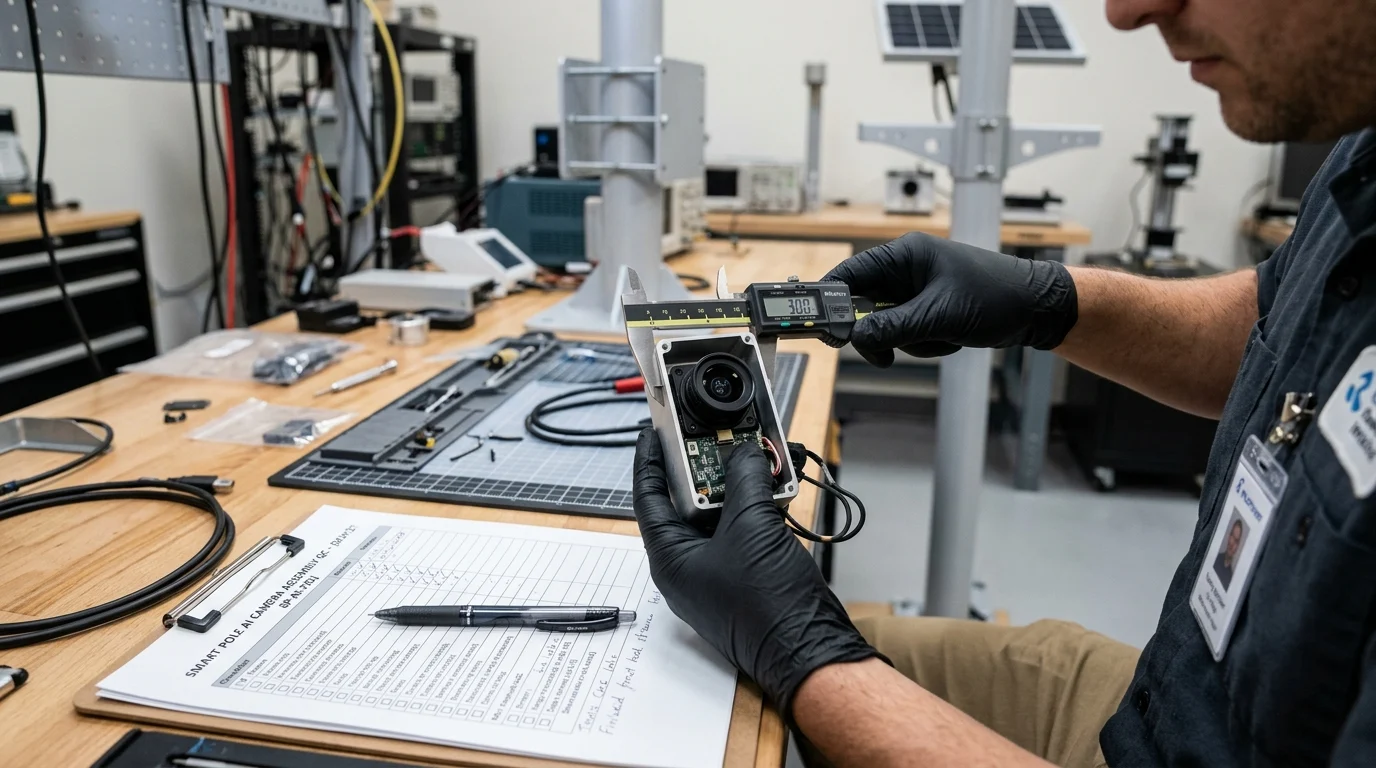
Transitioning an AI vision architecture from proof-of-concept to a city-wide deployment involves navigating complex logistical, regulatory, and infrastructural challenges. Successful implementation demands a rigorous, phased methodology that aligns technological capabilities with municipal governance, backend integration, and public acceptance.
What deployment steps reduce risk and improve rollout success
Risk mitigation relies heavily on structured, localized pilot programs before committing to municipal-wide scaling. An optimal initial deployment typically involves outfitting 50 to 100 smart light poles in high-density or high-incident zones to establish baseline performance metrics. During this 90-to-120-day evaluation period, engineers must calibrate AI models against environmental variables such as seasonal glare, heavy precipitation, and nighttime occlusion. Establishing a robust fiber-optic or 5G backhaul network during the pilot ensures that data transmission bottlenecks do not compromise proactive security triggers. Furthermore, organizations must formalize data governance policies early and integrate the new data streams into existing video management systems (VMS). Achieving a false-positive alert rate of less than 2% during the pilot phase is a critical benchmark before expanding the network footprint.
Which criteria should guide use-case prioritization
Prioritizing use cases requires municipal leaders to assess both immediate return on investment and critical safety metrics.
Key Takeaways
- The most important conclusions and rationale for Deep integration of AI vision technology in smart light poles: from monitoring to proactive security
- Specs, compliance, and risk checks worth validating before you commit
- Practical next steps and caveats readers can apply immediately
Frequently Asked Questions
What is the main benefit of AI vision in smart light poles?
It turns poles from passive lighting assets into active safety and traffic nodes, enabling instant alerts, traffic flow analysis, and faster incident response without adding separate roadside structures.
Should a smart pole project use edge AI or cloud processing?
Use edge AI for low-latency security alerts and privacy-sensitive deployments. Use cloud tools mainly for long-term traffic analytics and centralized reporting.
Can Morelux support customized smart pole structures for AI vision projects?
Yes. Morelux supplies custom steel and aluminum smart poles with engineering support, technical drawings, and manufacturing suited for municipal and infrastructure projects.
What technical factors matter most when specifying AI vision smart poles?
Focus on power budget, thermal control, IP66/IP67 protection, bandwidth, pole load capacity, and space for cameras, edge processors, and communication devices.
How can project buyers get a fast quote for AI-ready smart poles?
Send pole height, arm layout, equipment load, wind rating, coating needs, and project quantity to MoreLux. Their team can provide fast quotes and technical support, often within 24 hours.