Introduction
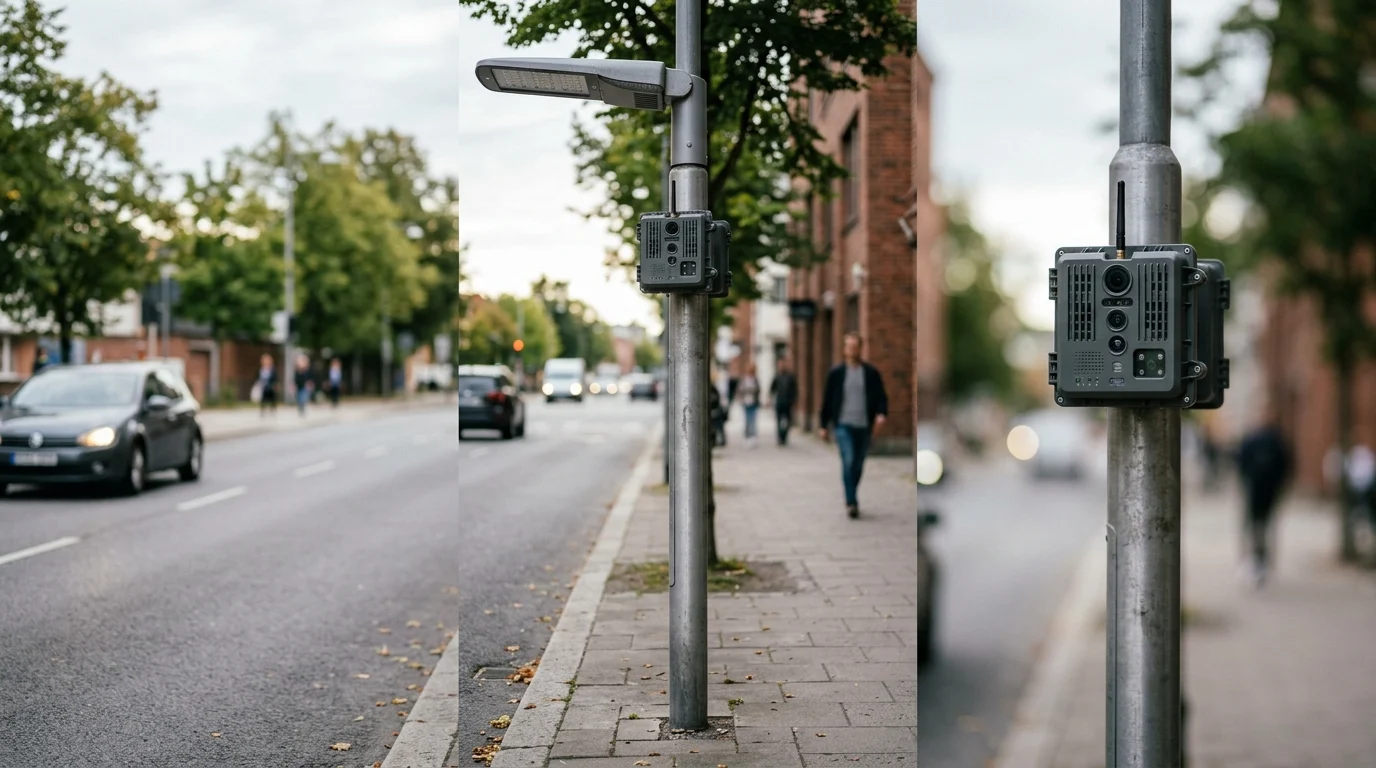
Cities are moving beyond basic remote lighting controls toward digital twins that model each streetlight as a live, data-rich asset. This shift matters because it connects infrastructure condition, energy use, location, and surrounding activity in one operational view, helping municipalities make faster and more accurate decisions. Instead of reacting to outages or relying on fixed dimming schedules, teams can anticipate failures, optimize maintenance, and adapt lighting levels to real conditions on the street. The discussion that follows explains why digital twin street lighting is becoming central to urban asset management, what technical capabilities make it different from conventional systems, and how it can improve efficiency, resilience, and service delivery across a city network.
Why Digital Twin Street Lighting Matters
The transition from rudimentary central management systems (CMS) to digital twin street lighting represents a critical evolution in urban asset management. A digital twin does not merely control a luminaire; it establishes a high-fidelity, real-time virtual replica of the physical lighting infrastructure. By contextualizing spatial, electrical, and environmental data, municipalities can shift from reactive maintenance to proactive, predictive urban management.
Energy, maintenance, and resilience drivers
While traditional LED retrofits combined with basic smart controls typically yield energy savings in the 40% to 60% range, digital twin architectures push these efficiencies to 70% to 75%. They achieve this by using hyper-localized data—such as real-time traffic flow, ambient light levels, and pedestrian density—to execute dynamic, predictive dimming profiles rather than relying on static schedules.
Beyond energy consumption, the operational resilience of the lighting network is vastly improved. By analyzing voltage anomalies and driver temperature degradation over time, digital twins can forecast luminaire failures before they occur. This predictive capability reduces reactive maintenance truck rolls by an estimated 30% to 40%, optimizing labor allocation and minimizing disruptions to urban mobility.
Key stakeholders and benefits
The utility of a digital twin street lighting network extends far beyond the municipal lighting department. City planners use the 3D spatial data to assess urban canopy interference and optimize pole placement for 5G small cell deployments. Meanwhile, utility managers leverage the granular power consumption data for precise grid load balancing. By breaking down data silos, the digital twin serves as a foundational layer for broader smart city initiatives, aligning the interests of public works, telecommunications partners, and environmental monitoring agencies.
What Defines a Digital Twin Street Lighting System
Defining a digital twin street lighting system requires distinguishing it from conventional telemetry. It is an integrated ecosystem comprising physical edge devices, secure communication networks, and a cloud-based spatial computation layer that continuously synchronizes the virtual model with its physical counterpart.
Core data layers and asset attributes
The foundation of the twin lies in its multi-layered data architecture. The geospatial layer uses high-precision GIS to map the exact coordinates, elevation, and orientation of the luminaire. The photometric layer tracks lumen depreciation, color temperature shifts, and light distribution patterns. Crucially, the structural data layer monitors the physical integrity of the pole itself, tracking attributes such as material fatigue, age, and wind load capacity—often engineered to withstand up to 120 mph gusts. Together, these attributes create a comprehensive, computable asset profile.
Interoperability and system requirements
For a digital twin to function effectively across heterogeneous urban environments, strict adherence to interoperability standards is mandatory. Systems must support open API frameworks, such as those defined by the TALQ Consortium or uCIFI, ensuring that the central platform can ingest data from multi-vendor hardware. Network requirements demand high reliability and low latency; critical alerts, such as a pole knockdown or exposed live wires, require sub-500ms transmission latency to trigger immediate safety protocols.
Digital twin vs smart lighting controls
The distinction between legacy smart lighting and true digital twin architecture lies in spatial awareness and predictive modeling. Traditional systems act as remote switches, while digital twins act as analytical engines.
| Feature | Smart Lighting (CMS) | Digital Twin Street Lighting |
|---|---|---|
| Asset Representation | 2D map coordinates with basic status | 3D spatial model with physical and electrical attributes |
| Predictive Capabilities | Threshold-based alarms (e.g., lamp failure) | AI-driven degradation models and lifecycle forecasting |
| Cross-Domain Integration | Siloed to lighting control | Integrated with traffic, air quality, and grid demand |
| Data Update Frequency | Polled intervals (e.g., 15-30 minutes) | Real-time telemetry and state synchronization |
How to Evaluate Architecture and Performance
Evaluating the architecture of a digital twin system requires rigorous scrutiny of the entire technology stack. Decision-makers must assess edge computing capabilities, network topologies, and the scalability of the cloud infrastructure to ensure long-term viability.
Hardware, network, software, and integration criteria
At the hardware level, edge nodes must use standardized interfaces, such as NEMA 7-pin or Zhaga Book 18 receptacles, to allow for sensor modularity without replacing the luminaire. The network layer must be evaluated based on the specific urban topology; LoRaWAN offers excellent penetration for dense, low-bandwidth sensor arrays, while cellular IoT (NB-IoT or LTE-M) provides higher bandwidth for edge-processed analytics. The software integration criteria demand that the platform can ingest massive telemetry streams, often requiring the capacity to manage 100,000+ nodes simultaneously with 99.9% uptime.
Vendor comparison factors
When comparing vendors, cities must actively mitigate vendor lock-in. A proprietary mesh network or closed software ecosystem severely limits future sensor expansion. Evaluation should prioritize vendors that offer decoupled architectures—where the hardware, network, and software platform can be sourced and upgraded independently. Furthermore, vendors must be assessed on their data export capabilities, ensuring that the municipality retains full ownership and unthrottled access to raw telemetry.
Core KPIs and performance metrics
Establishing stringent Key Performance Indicators (KPIs) is essential during the procurement and proof-of-concept phases. These metrics provide objective benchmarks for system acceptance.
| Metric Category | Specific KPI | Target Benchmark |
|---|---|---|
| Reliability | Edge Node Uptime | > 99.5% availability |
| Latency | Control Command Response | < 2.0 seconds (end-to-end) |
| Accuracy | GIS Asset Positioning | < 0.5 meters deviation |
| Scalability | Concurrent Node Management | 100,000+ nodes per instance |
How to Implement With Lower Risk
Deploying a digital twin across thousands of urban assets introduces significant logistical and technical risks. A highly structured, methodical implementation strategy is required to prevent data misalignment, cost overruns, and operational disruption.
Phased rollout and asset digitization
Implementation should follow a phased rollout strategy. Initial asset digitization often leverages mobile LiDAR scanning, capturing millions of data points per second to generate a highly accurate baseline point cloud of existing infrastructure. Phase 1 typically involves a pilot deployment of 500 to 1,000 nodes in a geographically diverse zone to validate network penetration and API integrations. Only after the pilot achieves a 99% success rate in telemetry synchronization should the municipality proceed to Phase 2 (zonal expansion) and ultimately Phase 3 (city-wide deployment).
Governance, procurement, privacy, and compliance
Robust data governance and compliance frameworks are non-negotiable. Because digital twin nodes frequently host ancillary sensors—such as optical traffic counters or environmental monitors—they must comply with regional privacy regulations like GDPR or CCPA. Edge processing should ensure that no personally identifiable information (PII) is transmitted to the cloud. Furthermore, procurement contracts must mandate ISO 27001 certification for data security and define strict data retention policies, such as a maximum 30-day rolling retention for raw telemetry, to minimize liability.
How to Build the Investment Case
Securing funding for digital twin street lighting requires a sophisticated investment case. Stakeholders must look beyond simple energy arbitrage to quantify the holistic financial, operational, and strategic value of digitized urban infrastructure.
Financial, operational, and resilience trade-offs
The financial model must account for the shift from CAPEX to OPEX, particularly in Software-as-a-Service (SaaS) platform fees and cellular connectivity costs. While basic photocell nodes cost roughly $50, advanced twin-enabled edge controllers range from $150 to $300 per unit. However, the comprehensive operational savings—derived from optimized energy use, extended asset lifecycles, and minimized maintenance dispatches—typically yield a break-even timeline of 5 to 7 years. Additionally, the enhanced resilience against grid fluctuations and storm damage provides unquantified but critical value in risk mitigation.
Selection priorities for city leaders
For city leaders, selection priorities must center on future-proofing the public right-of-way. A digitized lighting pole is no longer just a source of illumination; it is a monetizable vertical asset. By designing the digital twin infrastructure to accommodate third-party attachments, municipalities can generate significant revenue. For example, leasing pole space for telecommunications 5G small cells can generate $200 to $500 per pole annually. Consequently, the investment case should frame the digital twin not merely as a lighting upgrade, but as the foundational operating system for the future smart city.
Key Takeaways
- The most important conclusions and rationale for Digital Twin Street Lighting
- Specs, compliance, and risk checks worth validating before you commit
- Practical next steps and caveats readers can apply immediately
Frequently Asked Questions
What makes digital twin street lighting different from basic smart lighting controls?
A digital twin adds a real-time 3D asset model with electrical, spatial, and structural data. It supports predictive maintenance, dynamic dimming, and broader urban system integration beyond simple on/off control.
How much energy can a digital twin street lighting system save?
Typical LED plus basic controls save about 40% to 60%. A well-designed digital twin system can reach roughly 70% to 75% by using traffic, ambient light, and pedestrian data for adaptive dimming.
What pole data should be included in a street lighting digital twin?
Include pole material, height, foundation details, wind load rating, age, location, orientation, bracket configuration, and maintenance history. This helps cities manage structural risk and plan upgrades accurately.
Can Morelux support custom poles for digital twin street lighting projects?
Yes. Morelux supplies customized steel and aluminum poles, technical drawings, engineer support, and manufacturing for roadway, traffic, solar, and smart pole projects, helping buyers match physical assets to digital twin requirements.
What should project buyers check before sourcing poles for a digital twin network?
Verify sensor interface compatibility, load capacity, corrosion protection, foundation design, wind resistance, and drawing accuracy. Ask for fast quotes, engineering review, and manufacturing testing to reduce project risk and integration issues.