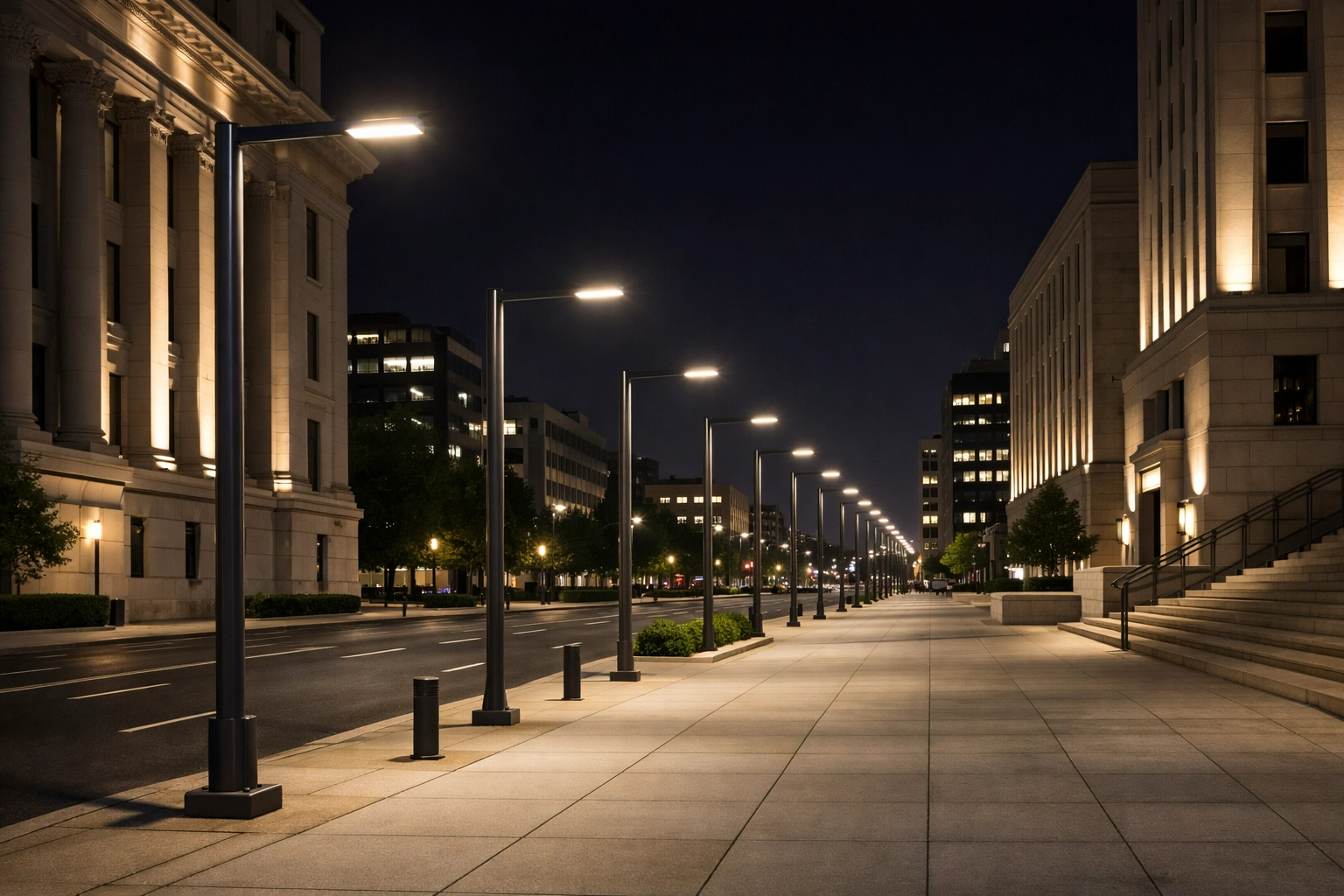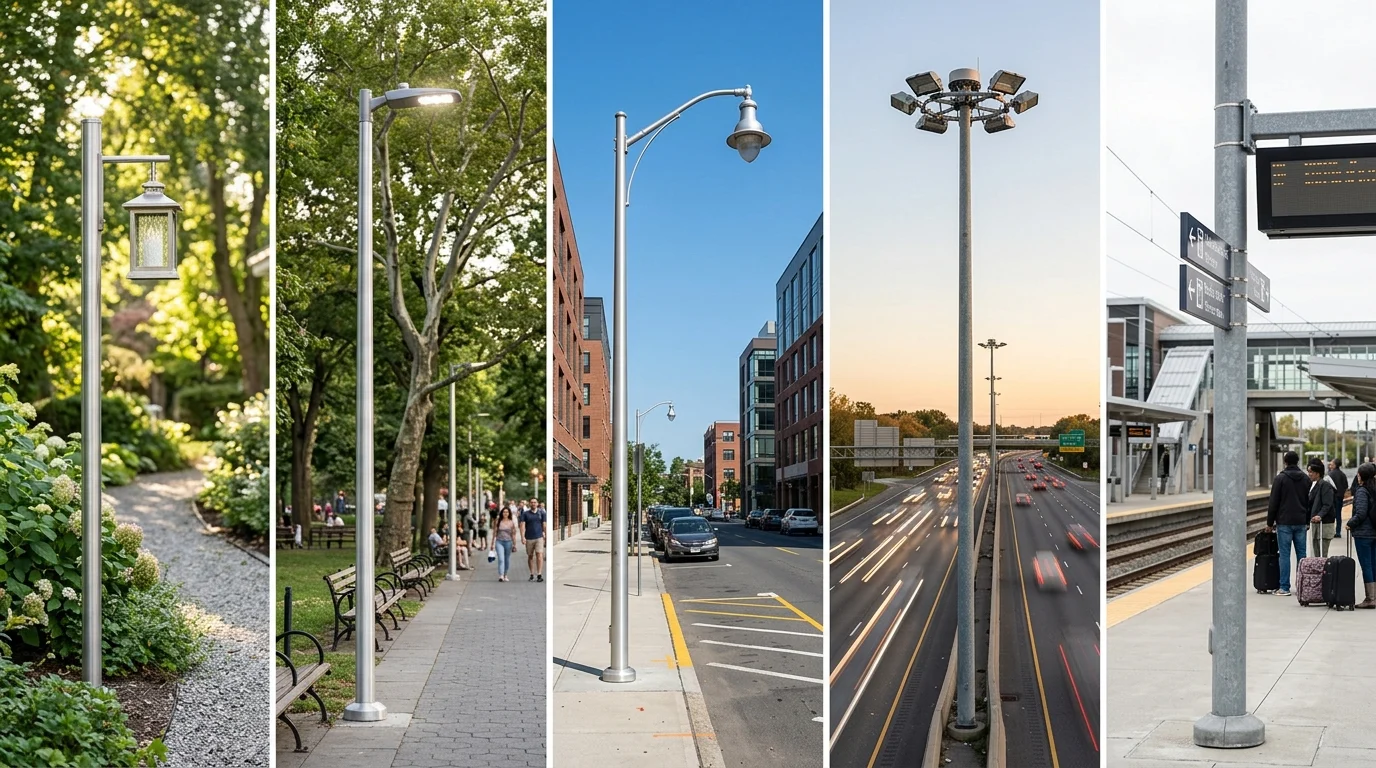
Choosing an aluminum pole starts with the demands of the site, not the fixture alone. A pole that performs well in a quiet garden may be unsuitable for a public park, a highway shoulder, or a busy transport hub where wind load, mounting method, traffic exposure, and attached equipment change the engineering requirements. This guide explains how to match pole height, wall thickness, base type, corrosion resistance, and load capacity to each application. By the end, readers will have a practical framework for comparing options across low-impact landscape settings and high-demand transportation environments, making it easier to specify poles that are safe, durable, and appropriate for long-term use.
Match Aluminum Poles to Application Needs
When designing lighting and infrastructure networks, selecting the correct aluminum pole requires far more than matching aesthetic preferences. From tranquil botanical gardens to high-velocity transport hubs, the structural demands placed on these vertical assets vary significantly. We must evaluate each project’s unique microclimate, pedestrian interaction level, and vehicular proximity to ensure long-term stability, safety, and code compliance.
Define Environmental and Mounting Requirements
To accurately specify a pole, we begin by calculating the local wind load requirements and the geotechnical realities of the installation site. For instance, a pole installed in a coastal transport hub might need to withstand sustained wind speeds exceeding 130 mph, necessitating a robust anchor base and specialized vibration dampening. Furthermore, we must account for mounting constraints; direct-burial poles require specific soil-bearing capacities, whereas anchor-base installations demand precise concrete footing depths to mitigate torsional forces.
When evaluating the Effective Projected Area (EPA), we are not merely looking at the light fixture itself but also at brackets, banners, and security cameras that add to the aerodynamic drag. A standard public park pole might only need to support an EPA of 2.0 square feet, whereas a transport hub pole could be burdened with an EPA exceeding 8.0 square feet due to massive floodlights and surveillance equipment.
Compare Garden, Street, and Highway Use Cases
The operational environment directly dictates the pole’s physical profile and safety engineering. Garden poles typically support lighter, decorative fixtures at lower elevations, whereas highway poles must carry heavy, multi-arm luminaires while absorbing constant vibrations from heavy freight traffic.
| Application | Typical Height | Wind Load Requirement | Primary Stress Factor |
|---|---|---|---|
| Garden / Pathway | 10 ft – 15 ft | 80 mph – 90 mph | Vandalism / Aesthetics |
| Public Park | 15 ft – 20 ft | 90 mph – 100 mph | Pedestrian Safety / Impact |
| Highway | 30 ft – 40 ft | 110 mph – 130 mph | Heavy Vibration / Wind Load |
| Transport Hub | 40 ft – 50+ ft | 130+ mph | High Mass Load / Continuous Stress |
For highway applications, we must also integrate breakaway bases that shear upon vehicular impact. Adhering strictly to Federal Highway Administration (FHWA) guidelines, these breakaway mechanisms are non-negotiable for minimizing fatal collisions in high-speed corridors, a feature entirely unnecessary for a 12-foot garden pathway light.
Evaluate Key Aluminum Pole Specifications
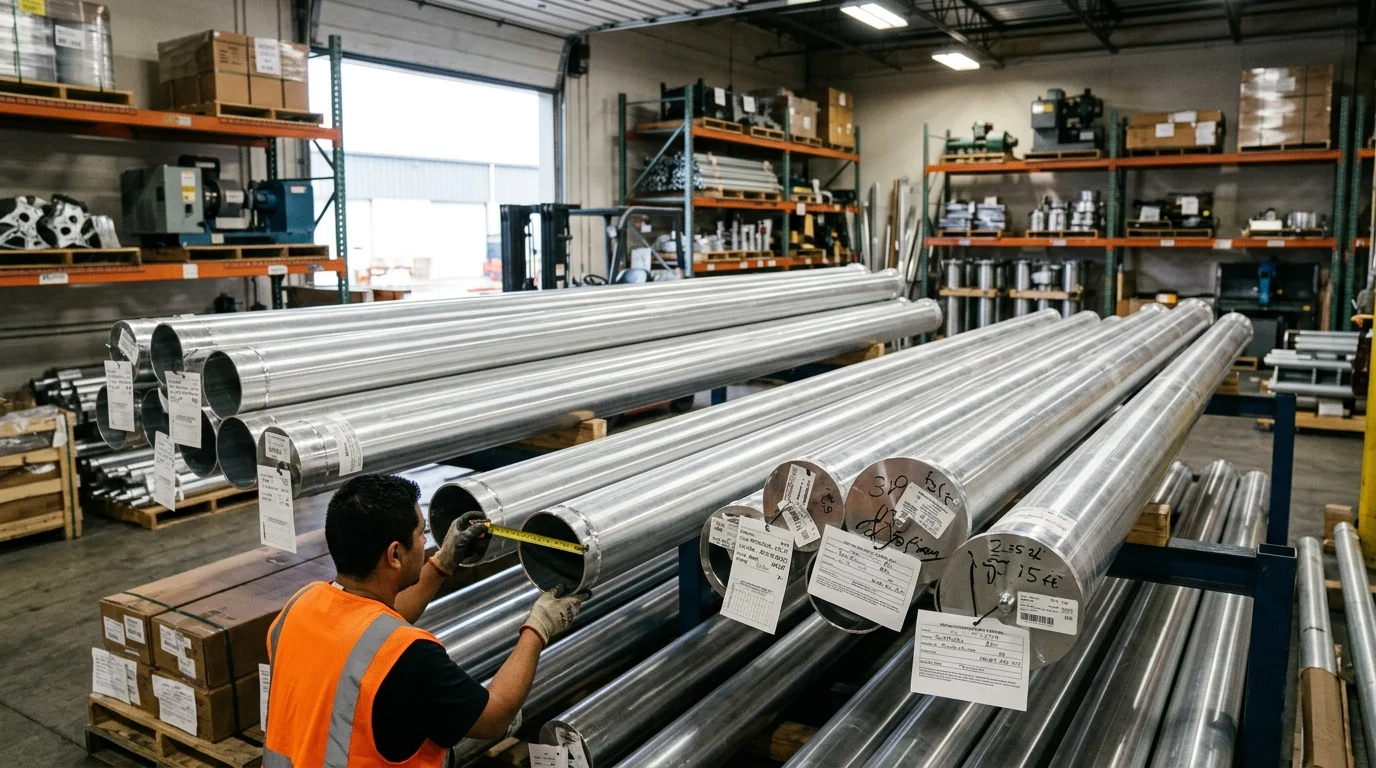
Once we establish the environmental baseline, our focus shifts to the structural anatomy of the aluminum pole. The inherent advantage of aluminum lies in its high strength-to-weight ratio, but unlocking this potential requires us to specify the exact metallurgical composition and geometric extrusion that aligns with our calculated loads.
Compare Material Grade, Pole Shape, and Wall Thickness
We primarily rely on two aluminum alloys for structural poles: 6063-T6 and 6061-T6. For garden and park applications, 6063-T6 offers excellent extrudability and surface finish, making it ideal for decorative fluted shapes with standard wall thicknesses of 0.125 inches (11-gauge). Conversely, highway and transport hub poles demand the superior yield strength of 6061-T6, which often exceeds 35,000 psi. These high-stress environments typically require spun-tapered tubular designs with wall thicknesses scaling up to 0.250 inches or more, providing the necessary rigidity to support massive mast arms without yielding to fatigue.
The cross-sectional shape also plays a critical role in our engineering calculations. Square straight poles are frequently chosen for their ease of mounting multiple fixtures on flat planes, making them highly efficient for public park parking lots. However, round tapered poles offer superior aerodynamic performance, minimizing wind resistance and vortex shedding—a critical advantage for 40-foot highway installations.
Assess Strength, Weight, and Corrosion Trade-Offs
We must constantly balance structural integrity against material weight and environmental resilience. Aluminum weighs approximately one-third as much as steel, drastically reducing heavy machinery requirements and labor costs during transport hub installations. Yet, despite its inherent oxide layer, raw aluminum still requires protection in aggressive environments.
To maximize its natural corrosion resistance, especially in coastal or heavily salted highway environments, we specify advanced surface treatments. A Class 1 clear anodized finish, typically measuring 18 to 25 microns in thickness, seals the aluminum pores, preventing pitting and galvanic corrosion. This specification ensures the pole maintains its structural integrity over a 30-year lifecycle, even when subjected to harsh winter chemical de-icers or constant marine moisture.
Make the Final Pole Selection
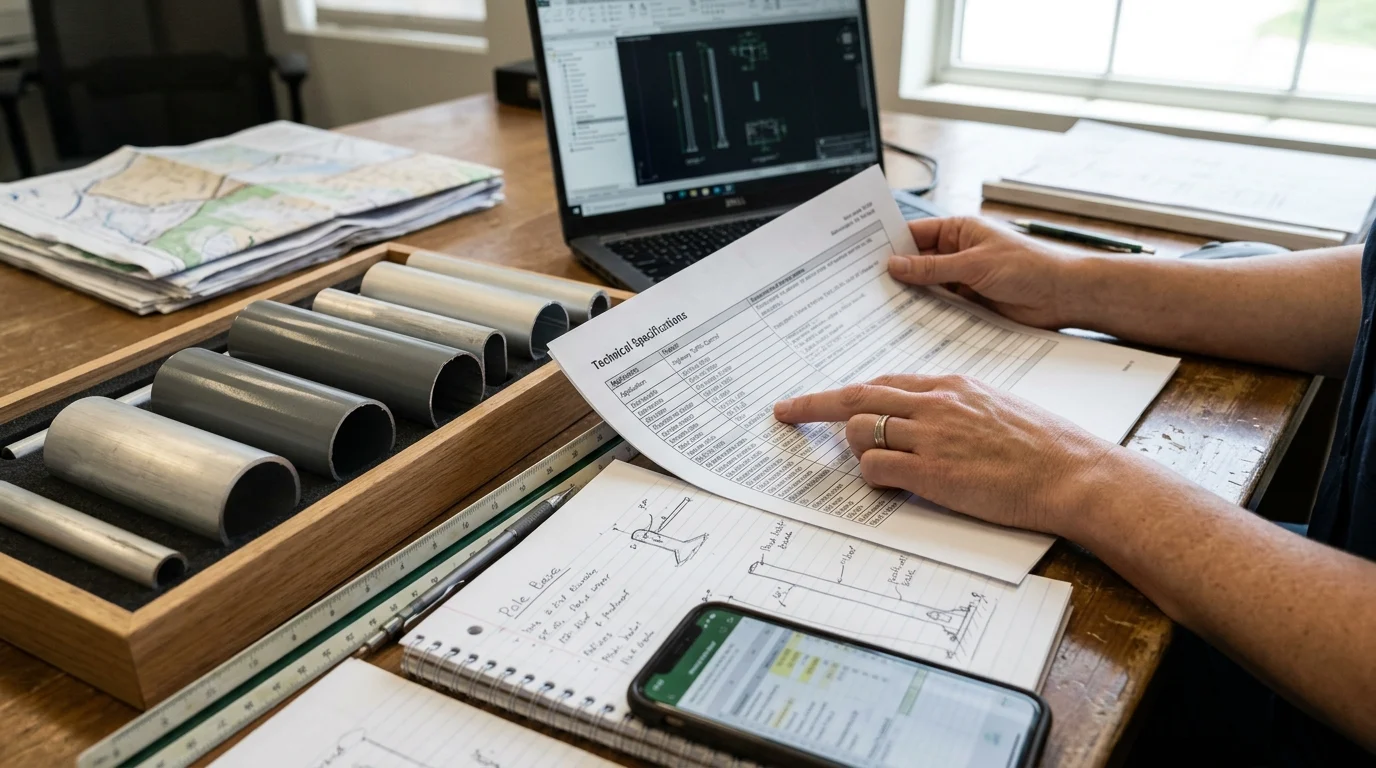
The final phase of our specification process bridges theoretical engineering with practical procurement and site execution. We must synthesize our load calculations, material selections, and budget constraints into a cohesive procurement strategy that guarantees seamless installation.
Align Drawings, Loads, and Installation Conditions
Before finalizing any order, we cross-reference the manufacturer’s submittal drawings against our site’s civil engineering plans. It is critical to verify that the anchor bolt circle diameters exactly match our pre-poured concrete foundations, which typically range from 10 to 15 inches for standard streetlights but can exceed 24 inches for massive transport hub high masts. Additionally, we evaluate the luminaire tenon sizing and ensure the pole’s internal wireway accommodates the necessary gauge of electrical conduit, leaving no room for on-site modification errors.
If we are dealing with high-water-table soils in a public park, we might opt for a specialized epoxy coating on the base flange to prevent premature subterranean degradation. Logistically, coordinating the delivery of 40-foot continuous extrusions requires specialized flatbed transport and crane-assisted offloading, which must be explicitly factored into the overall project timeline and site staging plans.
Confirm the Best Fit for Performance and Cost
Ultimately, we must validate that our selected pole delivers the required performance within the project’s financial and logistical parameters.
Key Takeaways
- The most important conclusions and rationale for From Garden to Highway: Matching the Right Aluminum Pole to Your Project Application
- Specs, compliance, and risk checks worth validating before you commit
- Practical next steps and caveats readers can apply immediately
Frequently Asked Questions
How do I choose the right aluminum pole height for gardens, parks, highways, or transport hubs?
Match height to use: 10–15 ft for gardens, 15–20 ft for parks, 30–40 ft for highways, and 40–50+ ft for transport hubs; then confirm wind load and fixture weight.
Which aluminum alloy is better for decorative parks versus high-load highway projects?
Use 6063-T6 for decorative garden and park poles with good finish quality. Choose 6061-T6 for highways and transport hubs where higher strength and fatigue resistance are required.
What pole features are critical for highway and transport hub applications?
Specify higher wind ratings, larger EPA capacity, thicker walls, and round tapered designs. For highways, include FHWA-compliant breakaway bases to improve roadside safety.
Can Morelux provide custom pole drawings and fast quotations for infrastructure projects?
Yes. Morelux supports project buyers with customized pole solutions, technical drawings, and engineer assistance and typically provides quotes within 24 hours.
What finish is best for aluminum poles in coastal or salted-road environments?
Use protective finishes such as anodizing or durable coating systems to improve corrosion resistance. This is especially important for coastal transport hubs and highways exposed to salt.