Introduction
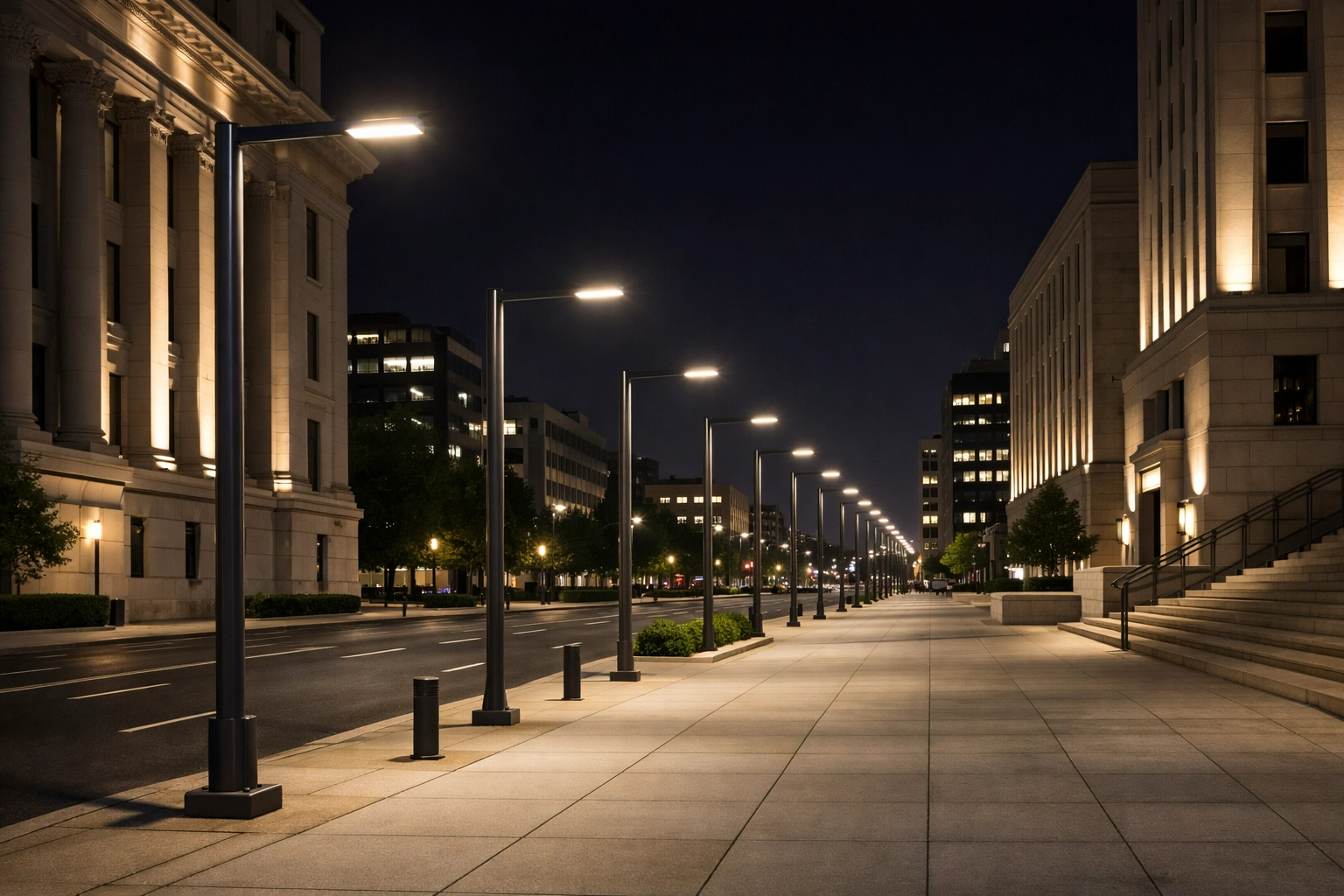
Lighting in urban wetland parks has to do two difficult jobs at once: keep paths legible for visitors and leave surrounding habitat as undisturbed as possible. That balance depends heavily on pole design, not just lamp selection. Pole height, arm geometry, shielding, mounting location, and maintenance access all influence glare, spill light, skyglow, and long-term performance in damp, sensitive environments. This article explains how dark-sky-friendly poles support ecological protection, safety targets, and municipal design standards at the same time, while showing what planners, landscape architects, and specifiers should evaluate before moving from concept to installation.
Why Dark-Sky-Friendly Pole Design Matters in Urban Wetlands
Urban wetlands present a unique paradox for municipal planners: they require sufficient illumination for pedestrian safety while demanding strict darkness to preserve fragile ecological networks. Implementing a dark-sky-friendly pole strategy is not merely an aesthetic choice but a regulatory and ecological imperative for modern landscape architecture.
As cities expand into natural aquatic boundaries, the friction between human accessibility and environmental conservation intensifies. Lighting infrastructure stands at the center of this conflict, making specialized pole and luminaire design critical to minimizing the anthropogenic footprint on sensitive wetland biomes.
Habitat protection, visitor safety, and city image
The primary objective of a dark-sky-friendly pole is to mitigate ecological disruption. Artificial light at night (ALAN) significantly alters the behavioral patterns of nocturnal fauna. Research indicates that unshielded 4000K LED lighting can reduce amphibian mating calls by up to 30% and disorient migratory birds navigating via celestial cues. Conversely, highly controlled illumination preserves the natural circadian rhythms of these species.
Simultaneously, specialized optics ensure that lighting is directed strictly onto pathways. This maintains the minimum illuminance of 0.5 foot-candles required for ADA compliance and pedestrian safety without contributing to skyglow. By achieving this balance, municipalities actively enhance their environmental stewardship profiles and foster a safer, more natural visitor experience.
Project risks from poor wetland lighting design
Failure to implement appropriate lighting infrastructure introduces severe project liabilities. From a regulatory standpoint, non-compliant installations risk violating municipal light trespass ordinances or federal environmental protection mandates, potentially triggering costly retrofits and legal injunctions.
Ecologically, excessive lumen output or improper shielding can decimate local insect populations, which serve as the foundational food source for wetland ecosystems. Financial risks also manifest through energy waste; poorly directed light results in an estimated 35% loss of generated lumens into the atmosphere or surrounding water bodies, unnecessarily inflating long-term operational expenditures.
What Defines a Dark-Sky-Friendly Pole for Urban Wetlands
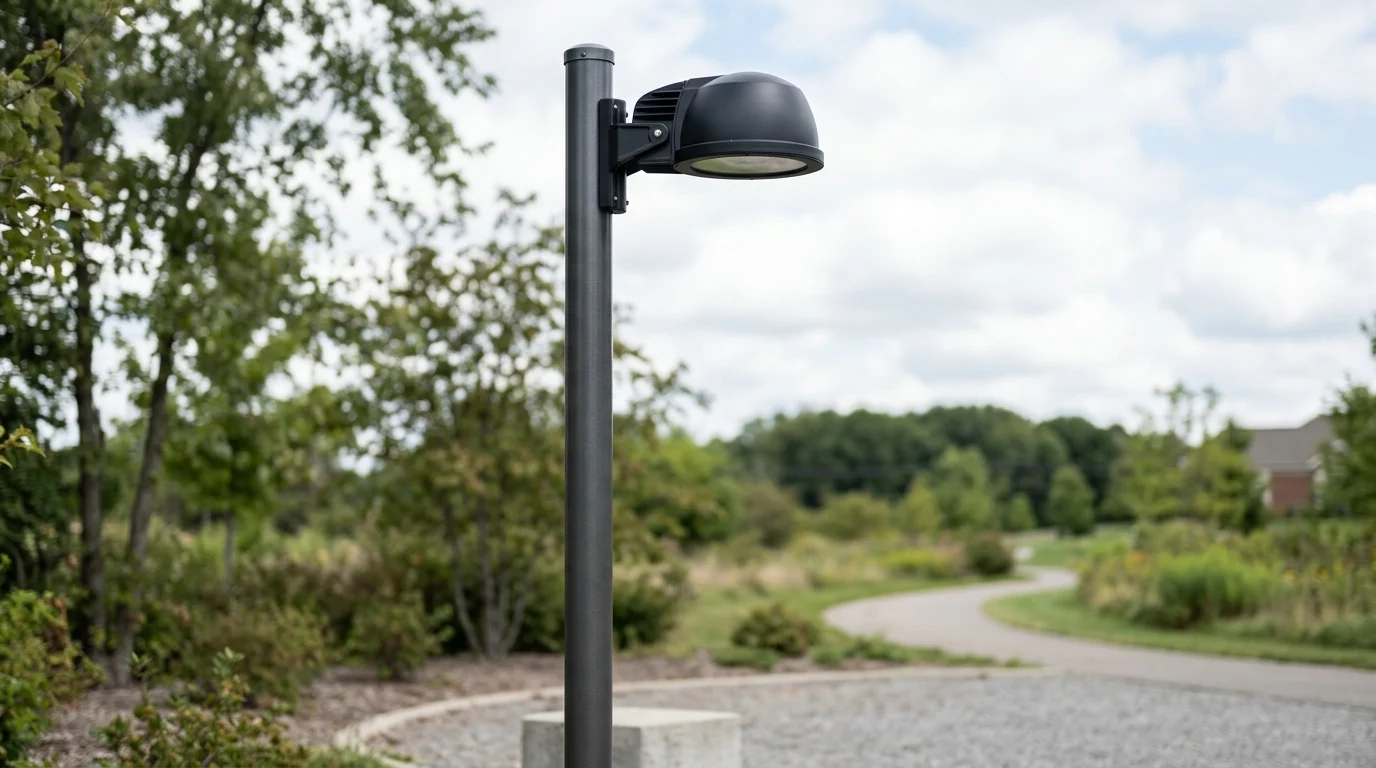
A dark-sky-friendly pole system is engineered to eliminate uplight, minimize glare, and restrict light trespass beyond the intended functional area. In wetland environments, these parameters are enforced with maximum stringency to protect adjacent habitats from photopollution.
Pole, luminaire, mounting, and shielding features
The structural and optical configuration of the pole assembly must adhere to stringent International Dark-Sky Association (IDA) guidelines. Luminaires must feature full-cutoff shielding, achieving an uplift rating of U0 under the Backlight-Uplight-Glare (BUG) classification system. Mounting arms and brackets are typically fixed at a 0-degree tilt to prevent accidental uplight deviation during installation or maintenance.
Furthermore, the light source itself must utilize a warm correlated color temperature (CCT). While 2700K is often the maximum permitted, many ecologically sensitive sites now mandate Phosphor-Converted (PC) amber LEDs emitting at a narrow wavelength of 590–595 nanometers. This specific spectrum is virtually invisible to many nocturnal insects and aquatic species, drastically reducing the ecological impact of the luminaire.
How wetland needs differ from standard urban lighting
Standard urban lighting prioritizes broad vehicular visibility and crime deterrence, often utilizing 25- to 30-foot poles with wide distribution patterns. In contrast, wetland applications require localized, low-level illumination to protect the surrounding biome.
Pole heights in wetlands are typically restricted to 10 to 14 feet to keep the light source below the tree canopy, minimizing volumetric light scatter across the water surface. Additionally, wetland poles demand advanced corrosion-resistant finishes due to persistent high humidity, fluctuating water levels, and potential salinity.
| Feature | Standard Urban Pole | Wetland Dark-Sky Pole |
|---|---|---|
| Typical Height | 25–35 feet | 10–14 feet |
| CCT | 3000K–4000K | < 2700K or PC Amber |
| BUG Uplight Rating | U1–U2 | U0 (Strictly Enforced) |
| Finish Durability | Standard Powder Coat | Marine Grade (3,000-hr salt spray test) |
How to Compare Dark-Sky-Friendly Pole Options
Evaluating dark-sky-friendly pole options requires a rigorous analysis of photometric performance, structural integrity, and site-specific environmental constraints. Decision-makers must look beyond initial aesthetic appeal to assess long-term ecological compatibility and mechanical resilience.
Key criteria: height, setback, finish, and optics
When comparing systems, height and setback distance are inextricably linked. A pole positioned 50 feet from a wetland boundary will require a different optical distribution (e.g., Type II or Type III) compared to one situated directly on a boardwalk. Optics must feature deep-recessed LEDs or internal louvers to achieve a stringent Glare rating of G0 or G1, ensuring light does not spill into adjacent habitats.
Finish quality is another critical differentiator. Aluminum poles must be anodized or powder-coated to a minimum thickness of 3.0 mils to prevent degradation in damp microclimates. Furthermore, the pole’s shaft must be engineered to withstand local Effective Projected Area (EPA) wind load requirements, which frequently exceed 90 mph in coastal or open-water wetland zones.
Regional codes, ordinances, and wetland permitting
Procurement must align with a complex web of regional ordinances and environmental permits. Many jurisdictions now incorporate the Model Lighting Ordinance (MLO) into their zoning codes, designating wetlands as Lighting Zone 0 (LZ0) or Lighting Zone 1 (LZ1), which strictly caps the total site lumens per square foot.
Permitting bodies, such as local conservation commissions or federal wildlife agencies, may require detailed point-by-point photometric calculations proving zero foot-candles of light trespass at the water’s edge. Selecting a manufacturer experienced in providing these verified IES files is essential to avoid permitting delays and ensure compliance with localized environmental statutes.
How to Specify and Procure with Lower Risk
Mitigating risk during the specification and procurement phases ensures that the installed infrastructure performs exactly as modeled. Ambiguous specifications frequently lead to value-engineering substitutions that compromise dark-sky compliance and ecological safety.
Writing procurement-ready specifications
Procurement documents must explicitly define the non-negotiable parameters of the dark-sky-friendly pole assembly. Specifications should mandate exact phrases such as “U0 uplight rating,” “zero-degree tilt mounting,” and “maximum 2700K CCT.” Vague language invites contractors to substitute cheaper, non-compliant alternatives.
To prevent the substitution of inferior optics, specifiers should require third-party LM-79 and LM-80 test reports. Additionally, the specification must detail the finish warranty, requiring a minimum 10-year guarantee against blistering or peeling in high-humidity environments.
| Component | Critical Parameter | Acceptable Specification Range |
|---|---|---|
| Luminaire | Color Temperature | Max 2700K (PC Amber preferred) |
| Optics | BUG Rating | B1-U0-G1 maximum |
| Pole Shaft | Wind Load (EPA) | > 90 mph standard, > 120 mph coastal |
| Coating | Salt Spray Resistance | > 3,000 hours per ASTM B117 |
Lead times, installation sequencing, and quality control
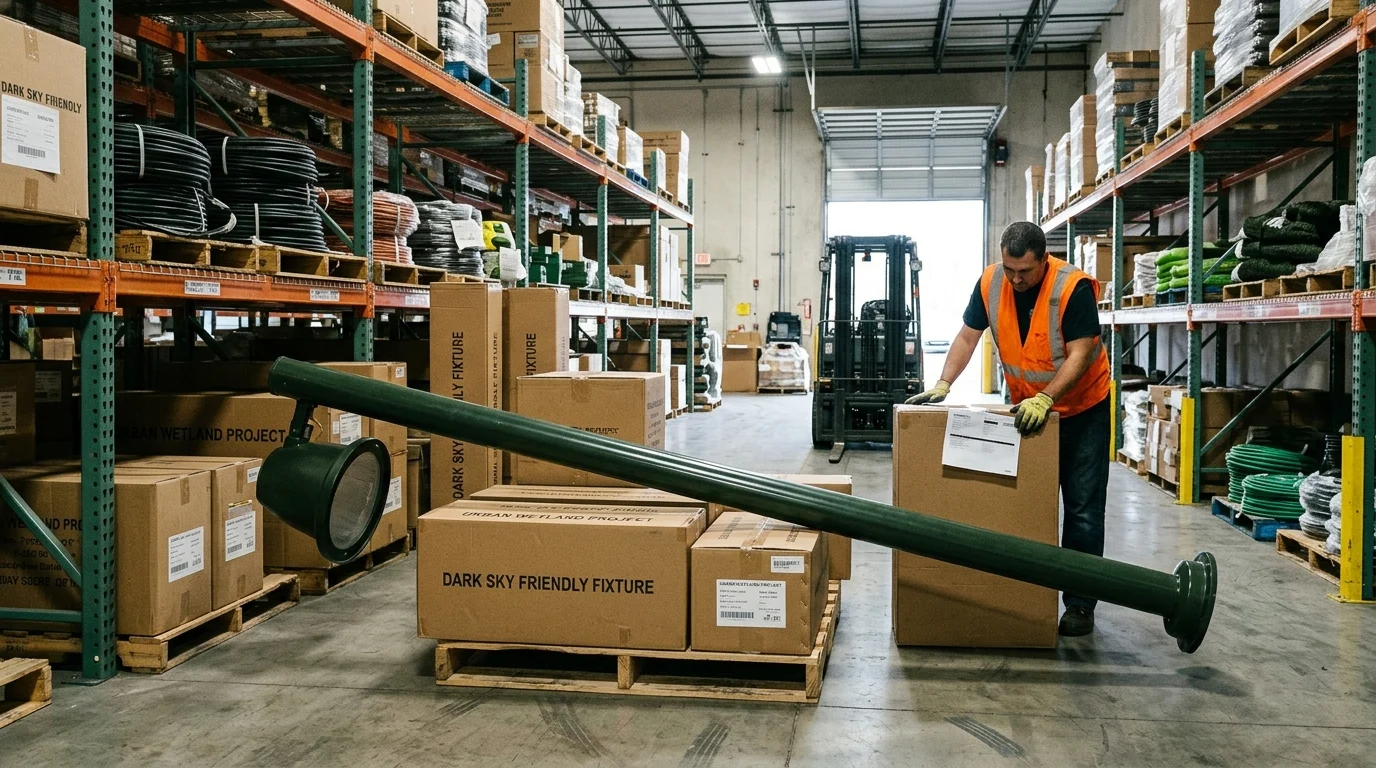
Specialized ecological lighting systems operate on different supply chain timelines than commercial off-the-shelf streetlights. Custom PC Amber LED arrays and specialized internal shielding often extend manufacturing lead times to 12 to 16 weeks.
Project managers must factor these lead times into the construction schedule, ensuring poles arrive precisely when the site is prepared. This sequencing minimizes the risk of component damage during on-site storage in harsh wetland conditions. Furthermore, procurement contracts should specify an allowance for attic stock—typically 5% to 10% of the total order volume—to guarantee that identical, ecologically compliant replacements are immediately available in the event of future damage.
Choosing the Best Strategy for an Urban Wetland Project
Finalizing a dark-sky-friendly pole strategy for an urban wetland requires harmonizing upfront capital expenditures with long-term ecological preservation and maintenance realities. A successful project integrates these competing demands into a cohesive, sustainable infrastructure plan.
Balancing cost, ecology, and maintenance
The financial calculus for wetland lighting is distinct from standard infrastructure. While a highly engineered, marine-grade dark-sky pole assembly may command a premium—typically ranging from $1,800 to $3,200 per unit depending on height and custom optics—this initial cost is frequently offset by long-term operational efficiencies.
Precision optics allow for wider pole spacing without sacrificing uniformity, potentially reducing the total fixture count by 10% to 15% across a large park layout. Additionally, robust marine-grade finishes reduce the frequency of maintenance interventions, significantly lowering the total cost of ownership over a standard 20-year asset lifecycle.
A decision framework for public-sector teams
Public-sector teams should employ a multidisciplinary decision framework when selecting infrastructure. This framework must weigh the photometric precision required to protect nocturnal species against the mechanical durability necessitated by the challenging wetland environment.
By prioritizing fixtures with verified U0 ratings, sub-2700K outputs, and extended maintenance intervals (such as a 50,000-hour L70 life), municipalities can successfully deliver safe, accessible wetland parks. Ultimately, rigorous specification and thoughtful procurement transform standard municipal lighting projects into benchmarks for environmental stewardship and sustainable urban planning.
Key Takeaways
- The most important conclusions and rationale for Dark Sky Friendly Pole
- Specs, compliance, and risk checks worth validating before you commit
- Practical next steps and caveats readers can apply immediately
Frequently Asked Questions
What pole height is best for urban wetland dark-sky lighting?
Most wetland paths use 10–14 ft poles to keep light below the canopy and reduce spillover water while maintaining safe walkway illumination.
Which light color is recommended for a dark-sky-friendly pole?
Use LEDs below 2700K or specify PC Amber at 590–595 nm for highly sensitive wetland habitats to limit impact on insects, birds, and amphibians.
What fixture specification helps eliminate uplight in wetland parks?
Choose full-cutoff luminaires with BUG uplight rating U0 and keep brackets at 0-degree tilt to prevent unintended skyglow.
How should project buyers compare pole finishes for wetland environments?
Look for corrosion-resistant steel or aluminum poles with marine-grade coating and verified salt-spray performance, especially for humid or saline wetland sites.
Can Morelux support custom dark-sky-friendly pole projects?
Yes. Morelux provides customized steel or aluminum pole solutions, technical drawings, engineer support, and fast quotations for infrastructure and park lighting projects.