Introduction
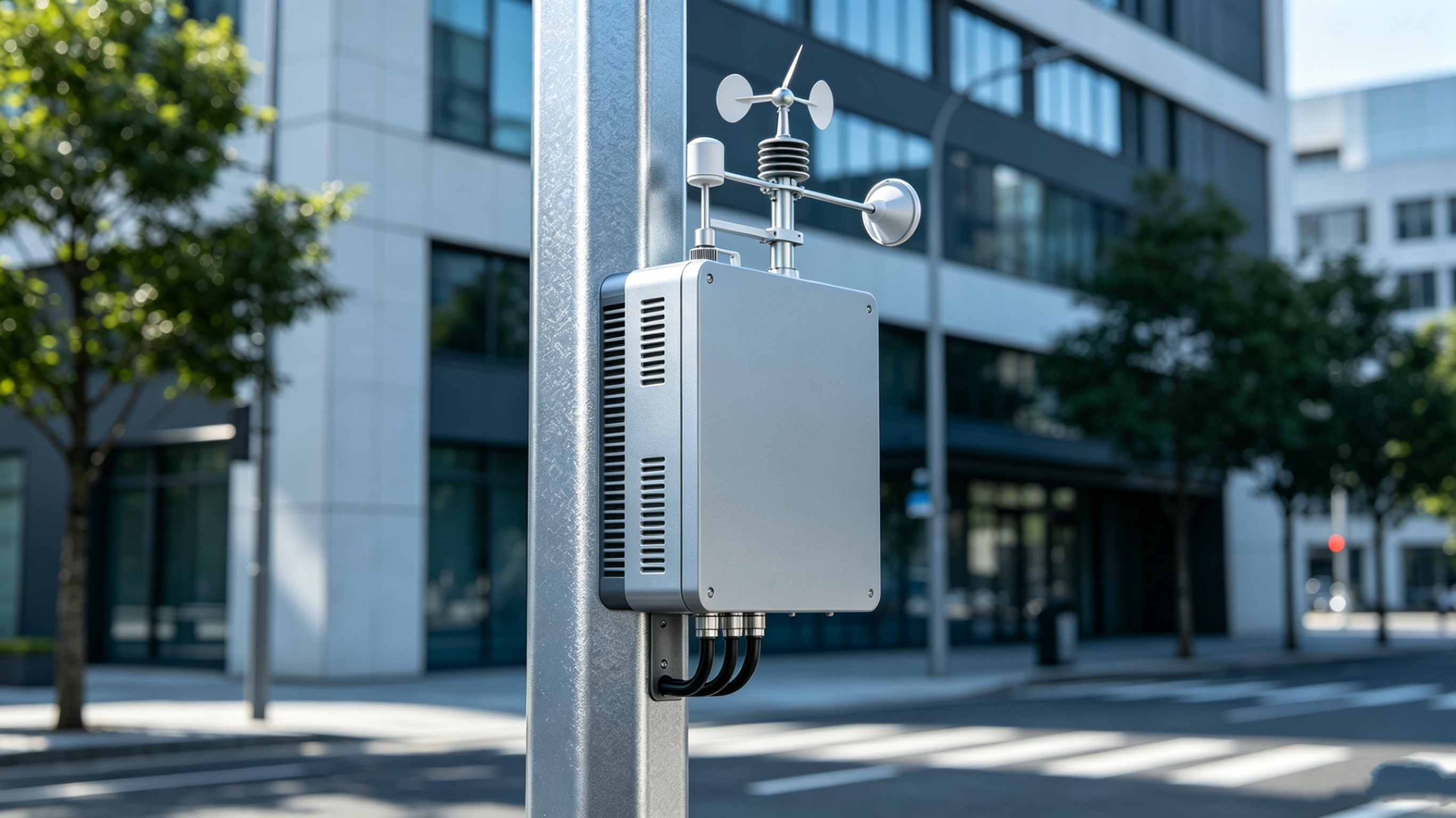
Cities and industrial sites need environmental data at street level, not just broad regional forecasts. AI microclimate monitoring built into aluminum smart poles makes that possible by combining distributed sensors, edge processing, and durable urban infrastructure in a single system. This article explains how these networks capture hyper-local temperature, humidity, wind, and air-quality conditions; why aluminum is a practical structural platform; and where the approach delivers measurable value. From heat-island mitigation to smarter maintenance and planning, the discussion sets up the technical and operational factors that shape effective deployment.
Why AI Microclimate Monitoring with Aluminium Smart Poles Matters
Urban infrastructure is rapidly evolving to support hyper-local environmental data collection. Integrating AI microclimate monitoring systems into aluminium smart poles provides municipalities and industrial operators with real-time, actionable meteorological insights. Unlike traditional macro-meteorological weather stations that cover broad geographical areas, smart pole networks deliver high-resolution spatial data directly at street level. This granular data is critical for mitigating the Urban Heat Island (UHI) effect, managing localized air quality, and optimizing smart city operations. Extruded aluminum serves as the ideal structural backbone for these networks, offering a superior balance of aesthetic adaptability, structural integrity, and thermal conductivity.
Operational and Commercial Benefits
The deployment of these integrated systems yields significant operational and commercial advantages. Extruded aluminum poles provide an exceptional strength-to-weight ratio, reducing foundation requirements and lowering heavy machinery installation costs by up to 30% compared to traditional galvanized steel structures. Furthermore, the inherent corrosion resistance of marine-grade aluminum—particularly 6000 series alloys—ensures a functional lifespan exceeding 50 years, minimizing lifecycle maintenance expenditures. At the end of the deployment lifecycle, aluminum offers a near 100% recyclability rate, providing a high residual scrap value that improves the overall Total Cost of Ownership (TCO). Commercially, the granular data collected—ranging from particulate matter levels to localized temperature inversions—enables the dynamic optimization of HVAC systems in adjacent smart commercial buildings. Implementing AI-driven predictive climate controls based on this localized data can yield building energy savings of 12% to 18% annually.
Definitions, System Boundaries, and Performance Goals
A robust AI microclimate monitoring ecosystem comprises strictly defined system boundaries: the physical mounting structure, the sensor payload, the edge computing node, and the cloud analytics back-end. The primary performance goal of this architecture is to achieve hyper-local environmental mapping with a spatial resolution of 100 square meters or less. Edge AI algorithms process raw sensor streams directly within the pole’s housing, filtering out anomalous readings caused by transient events like passing exhaust fumes. By executing data aggregation locally, the system reduces cellular data transmission payloads by up to 40%. This localized processing ensures sub-second latency for critical environmental alerts—such as sudden wind shear detection or flash flood warnings—allowing the system to interface seamlessly with autonomous traffic management and emergency response networks.
How to Evaluate System Design and Sensor Specifications
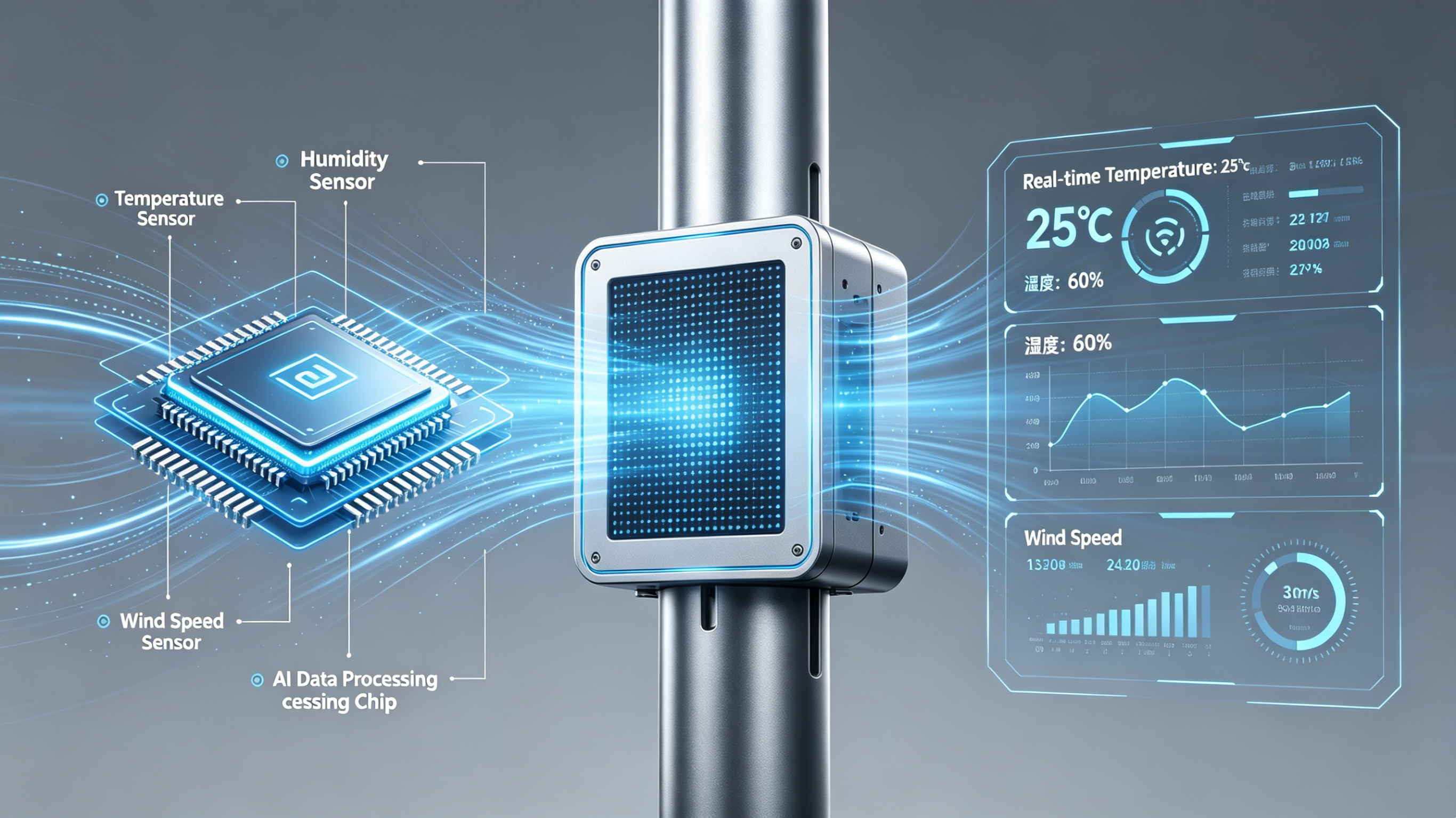
Specifying the optimal architecture for AI microclimate monitoring requires a holistic approach that evaluates both the structural capabilities of the aluminum smart pole and the precision of the integrated sensor suite. The physical infrastructure must support modular payloads, secure internal cable routing, and effective thermal management. Because aluminum acts as a highly efficient passive heat sink, it helps dissipate the thermal load generated by internal edge computing hardware and solar radiation, thereby protecting sensitive meteorological instruments from heat-induced drift.
Key Technical Specifications and Comparison Criteria
When evaluating technical specifications, engineers must prioritize sensor resolution, drift rates, and Mean Time Between Failures (MTBF). The integration of solid-state meteorological sensors—such as ultrasonic anemometers and optical particulate counters—eliminates moving parts, significantly increasing reliability in harsh urban environments. Baseline specifications must ensure that the data ingested by the AI models is of sufficient fidelity to prevent algorithmic bias or false predictive generation.
| Sensor Type | Target Measurement Range | Minimum Acceptable Accuracy | Optimal Polling Rate |
|---|---|---|---|
| Ambient Temperature | -40°C to +60°C | ±0.2°C | 1 Hz |
| Particulate Matter (PM2.5) | 0 to 1,000 µg/m³ | ±10 µg/m³ or ±10% | 0.1 Hz |
| Wind Speed (Ultrasonic) | 0 to 60 m/s | ±0.5 m/s | 10 Hz |
| Relative Humidity | 0% to 100% RH | ±2% RH | 1 Hz |
Comparing Sensor Accuracy, Edge AI, and Connectivity
Beyond raw sensor accuracy, the system’s efficacy relies heavily on edge AI capabilities and robust connectivity infrastructure. Deploying edge computing modules equipped with dedicated Neural Processing Units (NPUs) capable of executing 2 to 5 Tera Operations Per Second (TOPS) allows the system to run complex predictive climate models locally. This edge inference capability is critical for distinguishing between a genuine microclimate shift and a temporary localized anomaly. Connectivity protocols must be tailored to the specific data requirements of the network. 5G provides the high bandwidth and low latency required for transmitting raw acoustic or visual environmental data to central servers. Conversely, LoRaWAN offers a highly energy-efficient alternative for transmitting compressed, AI-processed telemetry, achieving reliable communication ranges of up to 15 kilometers in line-of-sight conditions.
Implementation, Compliance, and Vendor Selection
Transitioning an AI microclimate monitoring concept into a fully operational smart city network demands strict adherence to structural, environmental, and data governance standards. The physical deployment must balance rigorous meteorological best practices with the spatial constraints and regulatory frameworks of existing urban topography. Successful implementation relies on a highly structured approach to siting, ongoing maintenance, and strategic vendor partnerships.
Siting, Installation, Calibration, and Maintenance
Siting requires careful consideration of World Meteorological Organization (WMO) guidelines, specifically adapted for complex urban canyons. Sensors must be mounted at a standardized height—typically 3 to 4 meters above the surface—to avoid localized thermal interference from asphalt heat radiation. The lightweight nature of aluminium smart poles allows for rapid, modular installation. Crews can often utilize helical pile foundations rather than deep concrete footings, requiring only a 4-person team and standard lifting equipment, which cuts deployment time by up to 40%. Post-installation, the network necessitates a rigorous calibration schedule. Solid-state sensors generally require field calibration verification every 12 to 18 months to account for particulate accumulation and inherent sensor drift, ensuring the AI models continue to ingest high-fidelity baseline data.
Procurement Framework and Vendor Evaluation
Establishing a robust procurement framework requires evaluating vendors on both their metallurgical manufacturing expertise and their IoT integration capabilities.
Key Takeaways
- The most important conclusions and rationale for AI Microclimate Monitoring
- Specs, compliance, and risk checks worth validating before you commit
- Practical next steps and caveats readers can apply immediately
Frequently Asked Questions
Why use aluminium smart poles for AI microclimate monitoring?
Aluminium offers low weight, corrosion resistance, and strong heat dissipation. This helps support sensors, edge devices, and internal cabling while reducing installation cost and long-term maintenance.
What sensor accuracy should buyers specify for street-level monitoring?
Use practical minimums such as ±0.2°C for temperature, ±2% RH for humidity, ±0.5 m/s for wind speed, and ±10 µg/m³ or ±10% for PM2.5.
Can Morelux customize smart poles for different project requirements?
Yes. Morelux supports custom pole sizes, mounting interfaces, internal cable routing, finishes, and technical drawings to match city, campus, and commercial infrastructure needs.
How does edge AI improve a microclimate monitoring pole network?
Edge AI filters abnormal readings locally, reduces data traffic, and enables faster alerts. This improves data quality and supports sub-second response for wind, flood, or air-quality events.
How quickly can Morelux support a smart pole sourcing project?
Morelux typically provides fast quotes within 24 hours and can assist with engineering review, drawings, and manufacturing coordination for customized infrastructure projects.