Introduction
In coastal and high-salinity settings, light pole selection is less about upfront cost and more about how each material performs under constant chloride exposure, humidity, wind, and maintenance pressure. This article compares aluminum poles and hot-dip galvanized steel poles from a full life-cycle perspective, including corrosion behavior, coating durability, structural reliability, inspection demands, and replacement risk. By the end, readers will have a clearer basis for choosing the right pole system for marine roads, ports, waterfront developments, and other aggressive environments where long-term protection and predictable operating costs matter most.
Why light pole selection matters in coastal and high-salinity areas
Coastal and high-salinity environments present severe operational challenges for outdoor lighting infrastructure. The constant exposure to airborne chlorides, high humidity, and extreme weather accelerates material degradation. In these aggressive zones, the structural integrity of light poles shifts from a standard design consideration to a critical engineering priority requiring specialized metallurgical solutions.
Corrosion exposure, asset criticality, and maintenance needs
Coastal zones typically fall under ISO 9223 C5 (Very High) or CX (Extreme) corrosivity categories. In these environments, airborne chloride deposition rates frequently exceed 3.0 mg/(m²·d), driving rapid electrochemical oxidation in unprotected or poorly specified metals. Asset criticality in these regions is heightened by the potential for catastrophic structural failure during high-wind storm events. Consequently, maintenance needs escalate dramatically. Routine inspections for micro-cracking, coating delamination, and basal rust become mandatory to prevent sudden pole collapse. The continuous presence of moisture, combined with salt accumulation, creates an electrolyte-rich surface that aggressively attacks standard carbon steel and inferior alloys.
Commercial risks in coastal light pole projects
The commercial implications of premature pole failure in marine environments extend far beyond initial procurement expenses. When standard commercial-grade poles are deployed in high-salinity zones, localized pitting corrosion can compromise structural integrity within 5 to 7 years. Replacement operations in coastal municipalities often incur a 40% to 60% cost premium due to specialized labor requirements, complex traffic rerouting, and emergency structural assessments. Furthermore, compromised lighting assets introduce severe liability risks and potential localized blackouts. Municipalities and port authorities must implement rigorous life-cycle planning and risk modeling to mitigate these unforeseen capital expenditures and avoid disruptive emergency replacements.
Aluminum vs. hot-dip galvanized steel poles
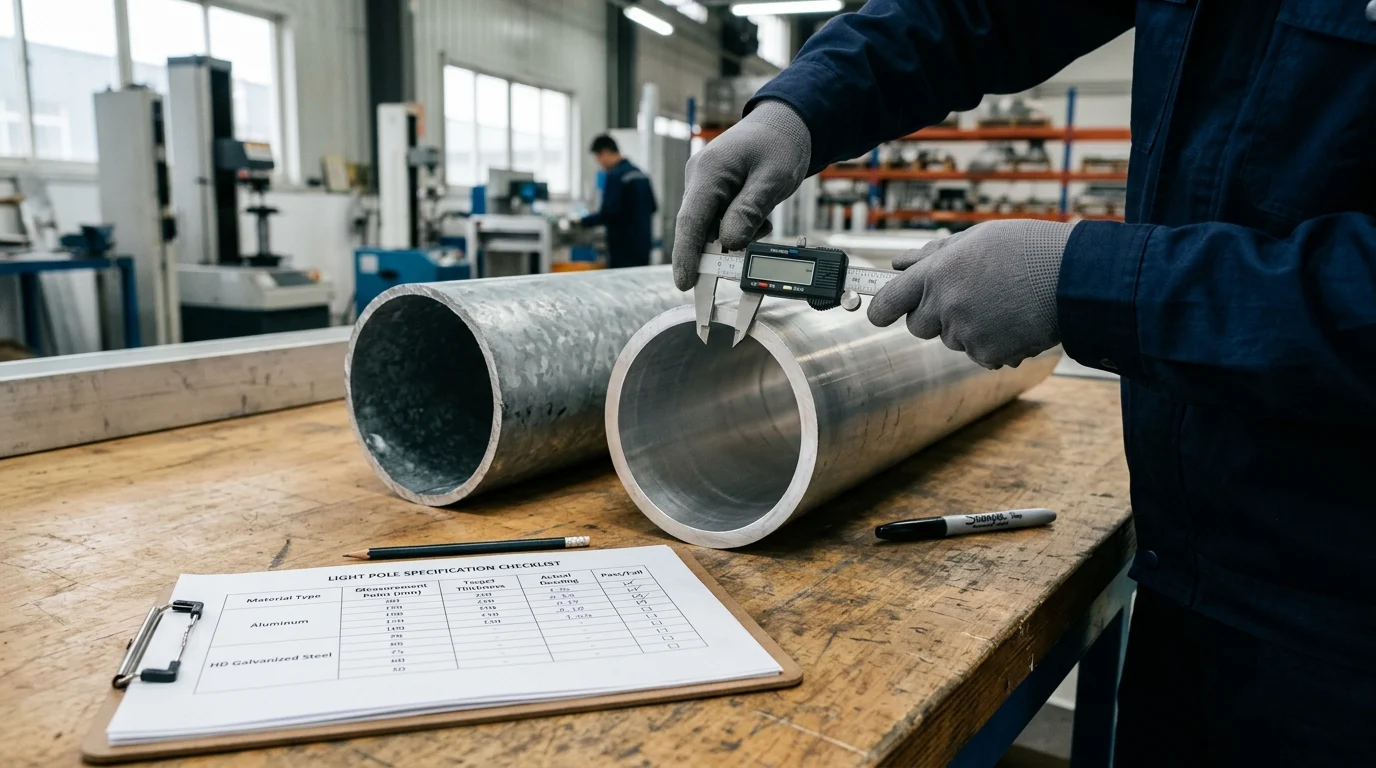
Selecting the optimal substrate for coastal lighting requires balancing metallurgical performance, aesthetic longevity, and capital constraints. The primary engineering debate centers on extruded aluminum alloys versus hot-dip galvanized (HDG) carbon steel, with each material offering distinct life-cycle trajectories, structural capacities, and maintenance requirements under constant saline exposure.
Material performance and corrosion resistance
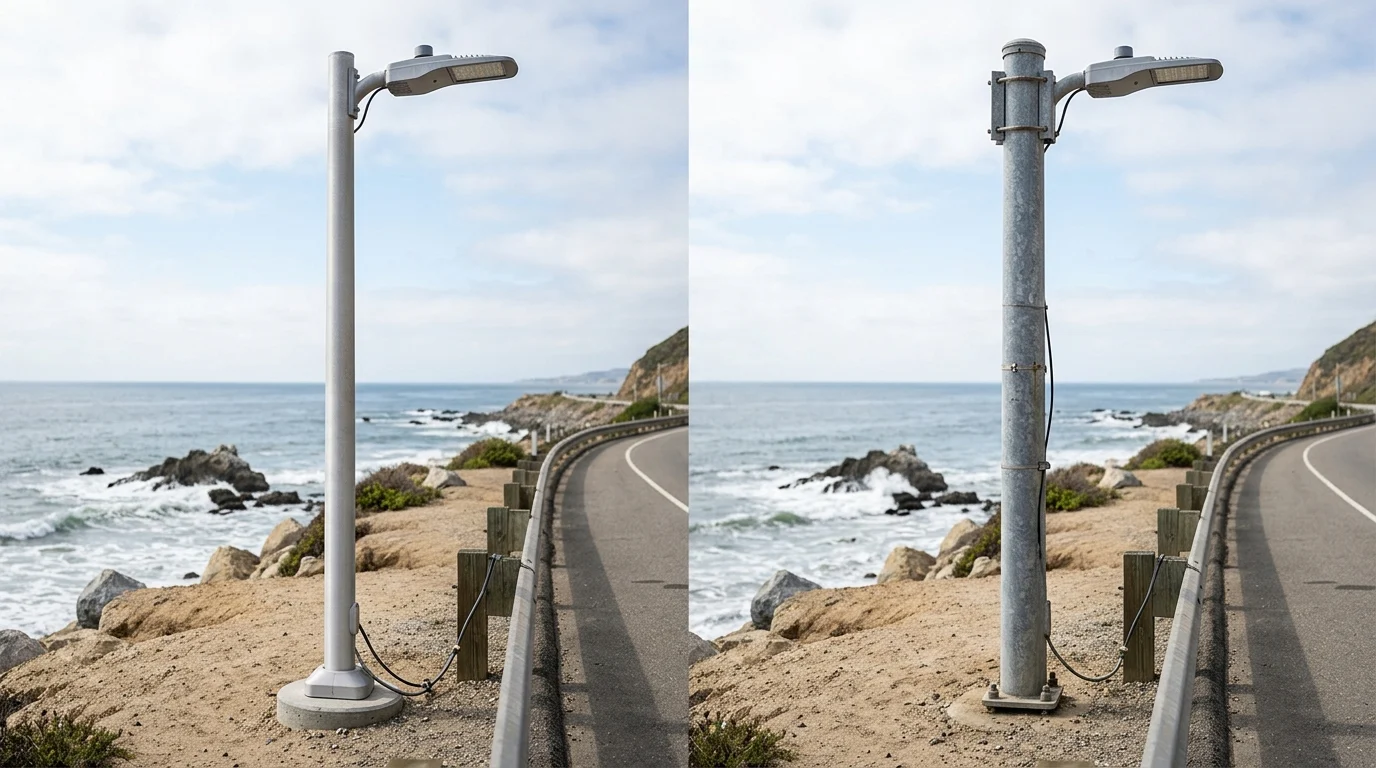
Aluminum inherently resists deep saline corrosion by forming a self-healing, impermeable aluminum oxide passivation layer. Alloys such as 6061-T6 provide exceptional longevity, though they yield lower tensile strength than steel. Conversely, hot-dip galvanized steel relies on a sacrificial zinc coating to protect the underlying carbon steel. Under ASTM A123 standards, a minimum zinc thickness of 85 µm is required. However, continuous chloride bombardment and coastal humidity can deplete this sacrificial layer at an accelerated rate of 2 to 4 µm per year, eventually exposing the vulnerable steel core to rapid oxidation.
| Material Specification | Initial Cost Premium | Typical Yield Strength | Marine Lifespan | Minimum Coating Requirement |
|---|---|---|---|---|
| Aluminum (6061-T6) | +20% to 35% | ~275 MPa | 40-50 years | Anodized / Powder Coat |
| HDG Carbon Steel | Baseline | ~350 MPa | 15-25 years | Marine-Grade Duplex System |
Life-cycle cost and procurement factors
While aluminum poles typically demand a 20% to 35% higher initial capital outlay compared to HDG steel, their life-cycle cost profile is significantly flatter. The lightweight nature of aluminum reduces freight expenses and simplifies installation, often requiring less heavy lifting equipment and smaller crew sizes. The return on investment for aluminum typically breaks even around year 12 of a project’s lifespan. However, HDG steel remains highly competitive for projects requiring massive luminaire arrays or strict wind load ratings, provided a duplex coating system is applied to extend the asset’s functional lifespan beyond the standard 20-year threshold.
Life-cycle protection and specification best practices
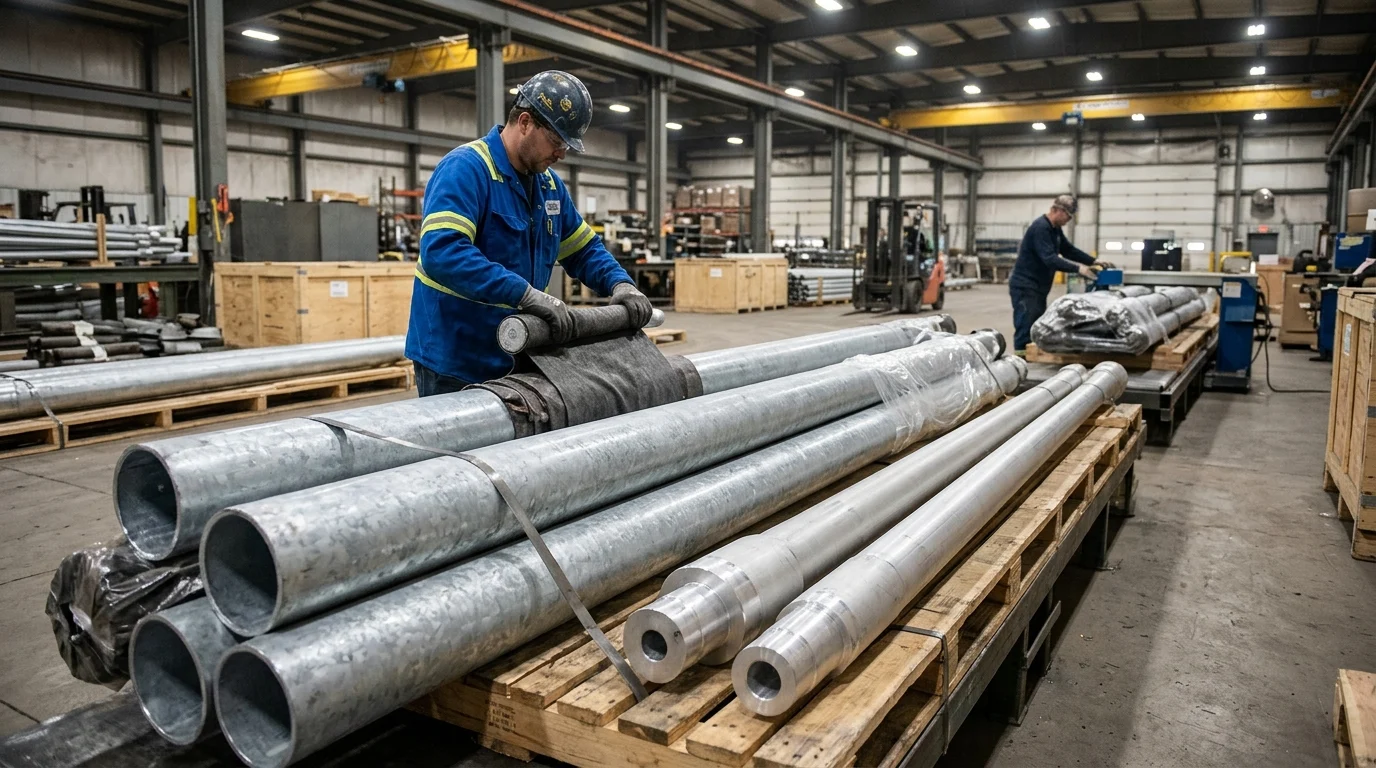
Securing long-term reliability in high-salinity zones demands stringent adherence to specification frameworks and rigorous quality assurance protocols. Procurement teams must look beyond baseline material data and structural dimensions to mandate comprehensive environmental protection systems that account for the unique physics of coastal weathering.
Specification, sourcing, and quality control steps
Effective specification begins with precise coating requirements. For HDG steel, best practices mandate a duplex system featuring a minimum 3.0 mil (75 µm) epoxy primer beneath a UV-resistant polyurethane topcoat. Quality control during sourcing must verify that galvanization complies with ISO 1461, ensuring complete coverage of both internal and external surfaces. Internal corrosion is a frequent failure point in coastal steel poles. For aluminum, a Class 1 anodic coating (minimum 0.7 mil thickness) or a high-performance architectural thermosetting powder coat complying with stringent AAMA 2604 or 2605 standards is essential to prevent surface degradation and maintain structural integrity.
Final selection criteria for project teams
Project teams must synthesize metallurgical data with site-specific environmental load parameters. Final selection criteria should incorporate rigorous Effective Projected Area (EPA) calculations to ensure the pole withstands regional wind loads, which frequently exceed 140 mph in coastal hurricane zones. Furthermore, engineers must specify structural isolation protocols, utilizing dielectric neoprene gaskets or specialized isolation pads, to separate dissimilar metals at the base plate and luminaire tenon. Utilizing Type 316 stainless steel for all anchor bolts and mounting hardware is non-negotiable. By integrating these targeted specifications, municipalities and developers can guarantee their coastal lighting infrastructure achieves a 30-plus year operational mandate.
Key Takeaways
- The most important conclusions and rationale for Light pole selection in coastal and high-salinity areas: Full life-cycle protection solutions for aluminum poles vs. hot-dip galvanized steel poles
- Specs, compliance, and risk checks worth validating before you commit
- Practical next steps and caveats readers can apply immediately
Frequently Asked Questions
Which pole material lasts longer in coastal high-salinity areas?
Aluminum usually lasts longer, often 40–50 years with anodizing or powder coating. HDG steel can perform well, but in marine zones it should use a duplex system to reach a reliable 15–25 year service life.
When is hot-dip galvanized steel a better choice?
Choose HDG steel when your project needs higher strength, heavier fixtures, or tighter upfront budgets. For coastal use, specify ASTM A123 galvanizing plus a marine-grade topcoat system.
What protection system should buyers specify for coastal poles?
For aluminum, specify marine-grade anodizing or powder coating. For steel, require hot-dip galvanizing with duplex coating, sealed details, and inspection points at base plates, welds, and handholes.
How can Morelux support coastal pole procurement?
Morelux can provide customized pole designs, technical drawings, engineer support, and fast quotes for coastal projects. Ask for corrosion-focused specifications, coating options, and manufacturing details matched to your site conditions.
What is the key life-cycle cost difference between aluminum and steel poles?
Aluminum costs more upfront but usually needs less maintenance and fewer replacements in salt-heavy environments. HDG steel starts lower in price, but coating upkeep and earlier replacement can raise long-term project cost.