Introduction
The manufacturing method has a direct impact on how an aluminum light pole performs in service and how refined it looks after finishing. The key difference between spin-formed and welded poles is not just how they are made, but how each process changes grain structure, seam integrity, wall uniformity, and surface continuity. These factors influence resistance to wind-induced stress, long-term fatigue behavior, dimensional consistency, and the quality of anodized or painted finishes. This article compares the two processes in practical engineering terms, helping readers understand where seamless spin forming offers measurable advantages and where welded construction may still be suitable depending on design, budget, and appearance requirements.
Spin Forming vs. Welding for Aluminum Light Poles
The manufacturing methodology applied to aluminum light poles dictates both ultimate structural capacity and architectural finish. In the commercial and municipal lighting sectors, engineers typically specify 6063-T6 or 6061-T6 aluminum alloys, manufactured via either seamless spin forming or seam welding.
While both techniques yield functional luminaire supports, their distinct metallurgical mechanics fundamentally alter the pole’s performance under dynamic wind loads and compatibility with high-end surface treatments. Understanding the engineering trade-offs between these two fabrication methods is critical for specifying durable, code-compliant lighting infrastructure.
Key differences in process and structure
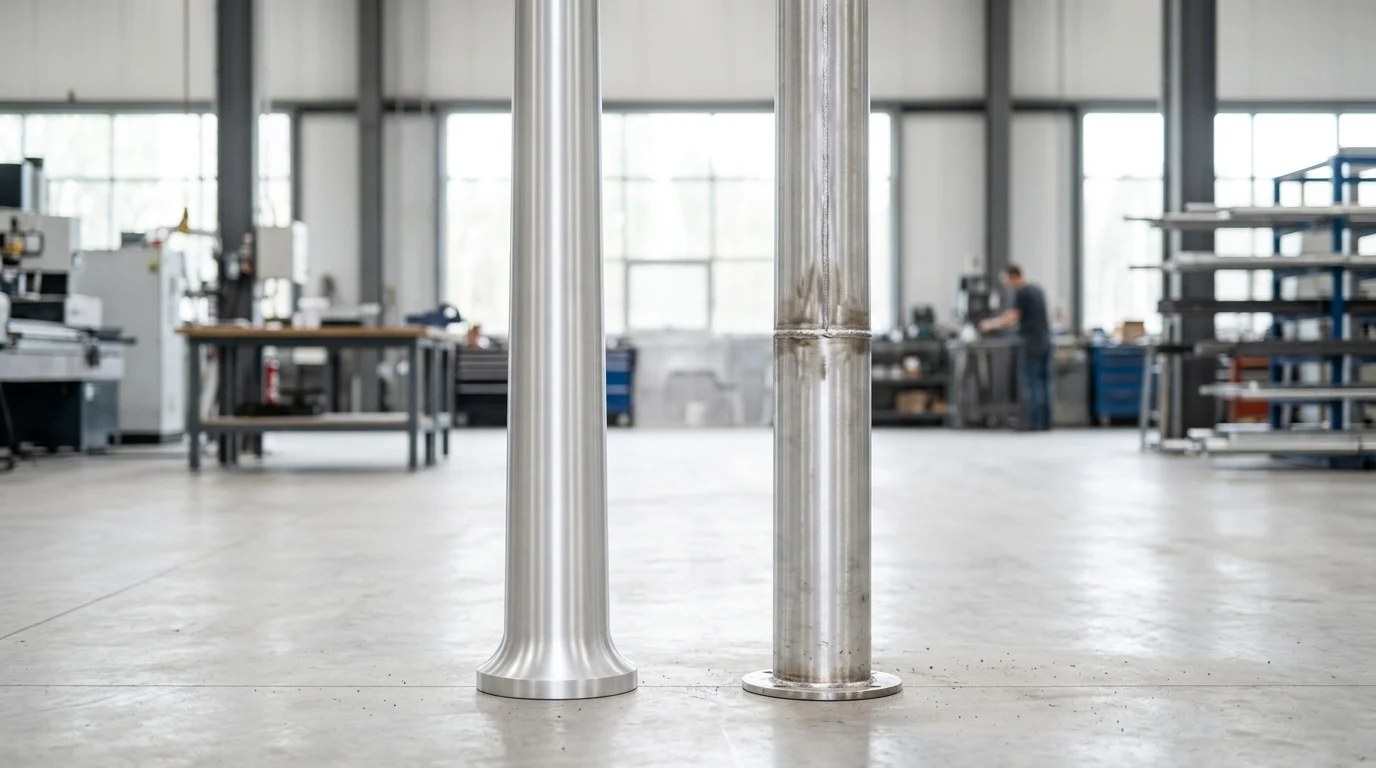
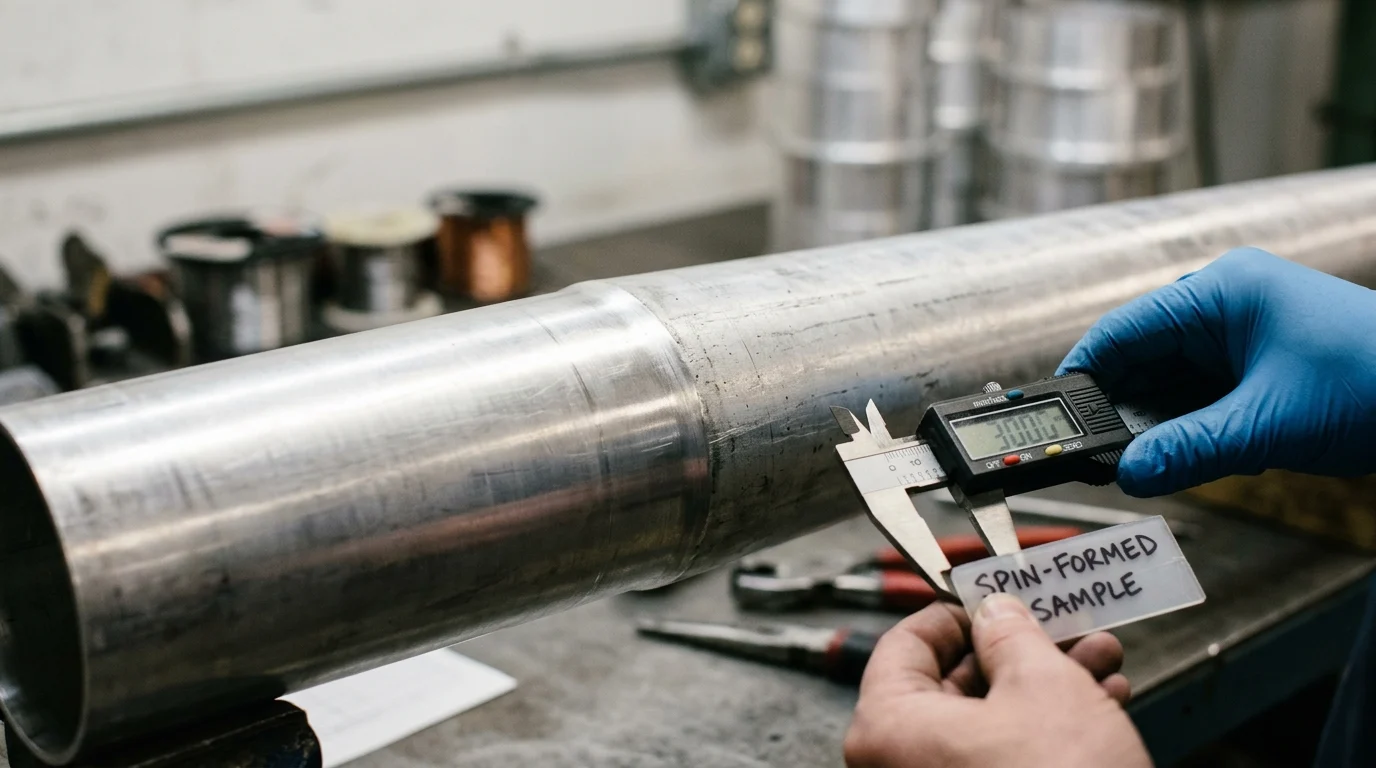
Spin forming, also known as shear spinning or rotary extrusion, involves rotating an extruded aluminum tube on a heavy-duty CNC lathe while applying localized pressure via a hardened steel roller. This cold-working process plastically deforms the material over a tapered mandrel, creating a seamless, uniform shaft. A critical structural advantage of spin forming is work hardening; the intense mechanical pressure aligns the metallurgical grain structure parallel to the pole’s longitudinal axis. This process can increase the localized yield strength of a standard 6063-T6 aluminum alloy by 15% to 20% compared to its pre-spun state, while simultaneously reducing the wall thickness by up to 30% in targeted zones to optimize the strength-to-weight ratio.
In contrast, welded aluminum poles are fabricated by rolling aluminum sheet or plate into a conical or cylindrical shape and joining the edges via longitudinal gas tungsten arc welding (GTAW/TIG) or gas metal arc welding (GMAW/MIG). The primary structural limitation of this method is the introduction of a thermal cycle, which creates a Heat-Affected Zone (HAZ) adjacent to the weld bead. Within the HAZ, the T6 temper of the aluminum is partially annealed. This thermal degradation can reduce local tensile strength by 30% to 40% relative to the parent metal. To compensate for this localized weakness, engineers must either specify a thicker wall for the entire pole shaft or mandate post-weld artificial aging heat treatments, which significantly increase production complexity.
Impact on risk, cost, and appearance
Structural risk profiles diverge significantly between the two manufacturing methods. The longitudinal seam in a welded pole inherently introduces stress concentrators. Under cyclic dynamic loading from vortex shedding and wind gusts, these micro-imperfections can serve as initiation sites for fatigue cracking. Spin-formed poles lack these longitudinal seams, offering a uniform, 360-degree stress distribution that provides superior resistance to high-cycle fatigue, effectively lowering the risk of catastrophic failure in high-wind zones.
From a financial and logistical perspective, spin forming requires a substantial initial capital expenditure. Heavy-duty CNC spinning equipment and custom steel mandrels represent significant tooling investments. Consequently, manufacturers typically enforce Minimum Order Quantities (MOQs) of 50 to 100 units to properly amortize these setup costs. Conversely, welding operations rely on standard press brakes and automated welding tractors. This lower barrier to entry allows for the profitable production of highly customized, low-volume orders, with MOQs frequently as low as 1 to 5 units.
Aesthetically, spin forming delivers a flawless, seamless surface. This is particularly crucial for poles requiring clear or color-anodized finishes, as the electrochemical anodizing process highlights any metallurgical inconsistencies. Welded poles require aggressive grinding and blending of the seam. Even with meticulous mechanical finishing, the distinct grain structure and silicon content of the weld filler wire will often “read” through an anodized finish as a discolored stripe. Therefore, opaque polyester powder coating is generally the mandatory finishing specification for welded aluminum variants.
How to Choose the Right Process
Selecting the optimal fabrication method requires engineers and lighting specifiers to balance structural safety margins, project scale, and architectural intent. There is no universally superior process; rather, the decision hinges on aligning the manufacturing constraints with the specific deployment environment.
Specifiers must rigorously evaluate the luminaire’s Effective Projected Area (EPA), the pole’s target mounting height, and the localized environmental stressors before committing to a structural specification.
Best-fit applications for each option
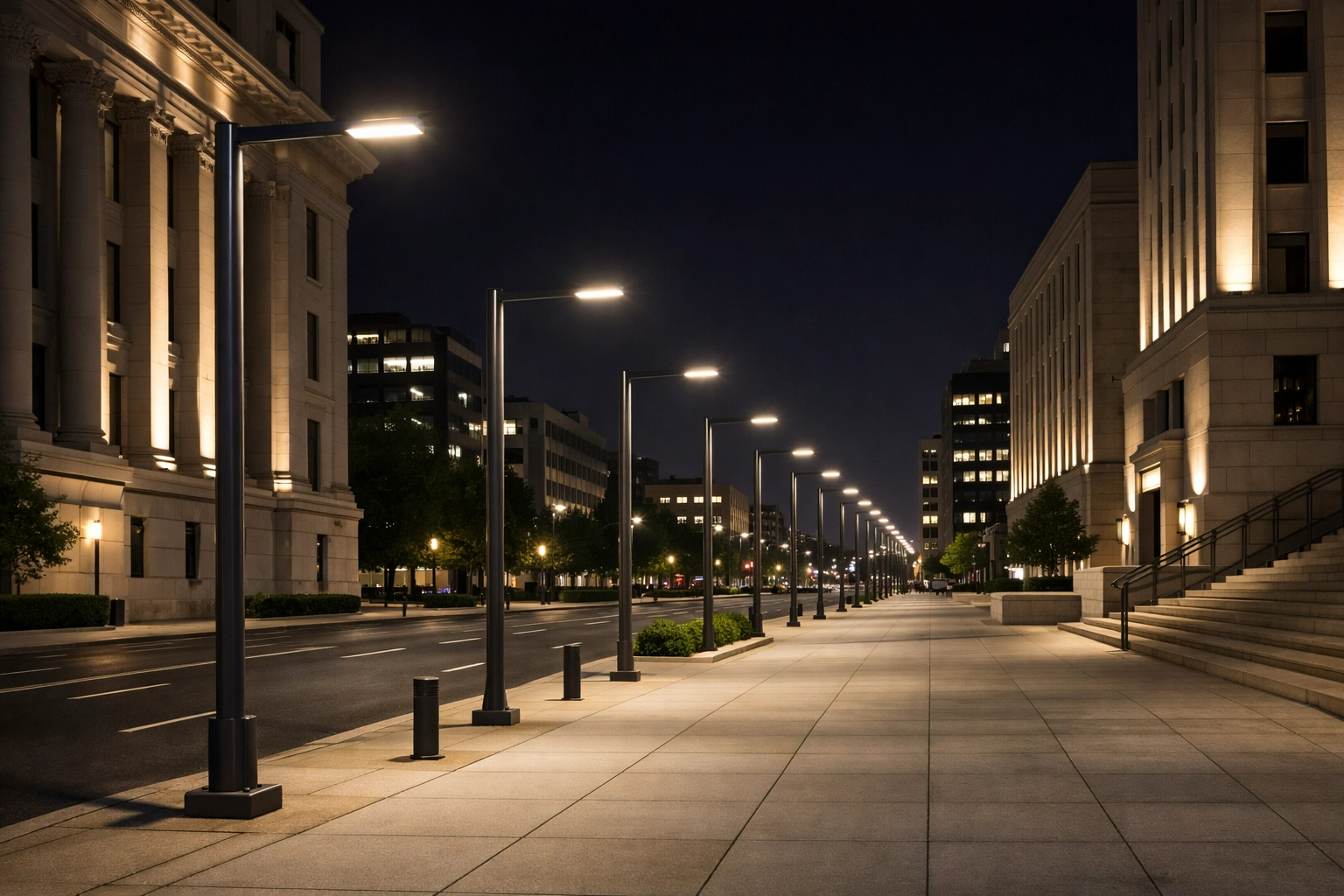
Spin-formed poles are the industry standard for high-volume municipal streetscapes, residential subdivisions, and Department of Transportation (DOT) roadway lighting. Their superior fatigue resistance makes them ideal for high-wind environments, routinely specified in AASHTO-rated 130+ mph wind zones. They are heavily favored when mounting heights range from 10 to 40 feet and wall thicknesses are maintained between 0.125 and 0.250 inches, where the spinning process is most cost-effective.
Welded fabrication excels in bespoke architectural applications and heavy-duty high-mast lighting. When a project demands complex geometries—such as sharp stepped transitions, square-to-round profiles, or massive base diameters exceeding standard spinning lathe capacities (which are often capped around 14 to 16 inches in diameter)—welding becomes the only viable path. Additionally, for high-mast structural poles exceeding 50 feet that require wall thicknesses greater than 0.500 inches to manage immense base moments, plate-rolled and welded construction is mandatory.
| Feature / Metric | Spin Forming | Welding |
|---|---|---|
| Optimal Volume (MOQ) | High (50+ units) | Low (1 to 10 units) |
| Structural Integrity | High (Seamless, work-hardened) | Moderate (HAZ strength reduction) |
| Wall Thickness Limits | Typically up to 0.312 inches | Virtually unlimited (>0.500 inches) |
| Anodizing Compatibility | Excellent (Uniform grain structure) | Poor (Weld seam telegraphing) |
| Fatigue Resistance | Superior | Moderate (Requires rigorous NDT) |
Practical evaluation steps for specifiers
To ensure long-term reliability and compliance with standards such as AASHTO LTS-6, specifiers should execute a sequential evaluation process. First, calculate the total EPA and weight of the luminaire and any attached appendages, such as banners or security cameras. If the combined fixture weight exceeds 150 lbs on a standard 30-foot pole, the structural engineer must verify whether a standard spun pole offers sufficient stiffness. Under severe loading, engineers typically limit the maximum allowable deflection to 5% to 10% of the total pole height under 3-second gust wind speeds, which may dictate a shift to a heavy-wall welded design.
Second, define the surface finish requirements early in the design phase.
Key Takeaways
- The most important conclusions and rationale for Spin forming vs. welding processes—How manufacturing processes for aluminum light poles affect structural strength and appearance quality
- Specs, compliance, and risk checks worth validating before you commit
- Practical next steps and caveats readers can apply immediately
Frequently Asked Questions
When should I choose spin-formed aluminum light poles?
Choose spin-formed poles for municipal streetscapes, high-wind areas, and premium projects needing seamless appearance, better fatigue resistance, and anodized finishes.
Are welded aluminum light poles strong enough for infrastructure projects?
Yes, if properly engineered. Welded poles can meet project needs, but the weld heat-affected zone may require thicker walls or added treatment to maintain strength.
Which process gives a better surface finish for anodizing?
Spin forming. Its seamless surface gives a cleaner anodized result, while welded seams often remain visible as a stripe even after grinding and blending.
Is welding a better option for small custom pole orders?
Usually yes. Welding supports low MOQs and flexible customization, making it practical for small batches, prototypes, or special infrastructure layouts.
Can Morelux support process selection and custom drawings?
Yes. Morelux provides engineer support, technical drawings, and fast quotes to help buyers choose the right aluminum pole process for project requirements.